Using Lunar Craters as Free Radiation Shields for Moon Base Nuclear Reactors
Powering any future lunar base represents one of the most formidable engineering challenges humanity has ever contemplated. The Moon's brutal 14-day lunar night — a consequence of its roughly 29.5-day synodic period — can drain even the most capable batteries charged during the equally long lunar day. Compounding matters, surface temperatures during the lunar night can plunge to as low as -173°C (-280°F), stressing battery chemistry and solar panel integrity to their absolute limits. For decades, engineers and mission planners have converged on a singular solution: a nuclear fission reactor capable of delivering reliable, continuous power regardless of solar conditions or temperature extremes.
A compelling new paper from a multi-institutional research team — drawing experts from Los Alamos National Laboratory, NASA Glenn Research Center, Oak Ridge National Laboratory, Idaho National Laboratory, and Lockheed Martin — offers an elegantly simple solution to one of the most stubborn obstacles facing lunar nuclear power: radiation shielding. Presented at the American Nuclear Society's Nuclear and Emerging Technologies for Space (NETS) conference in April, the study proposes leveraging the Moon's own ancient geology to do what would otherwise require thousands of kilograms of material launched from Earth.
The State of Space Nuclear Power: The SPARC Program
Space-based nuclear power is currently advancing under a dedicated NASA initiative known as the Space Power and Reactor Capabilities (SPARC) program. This ambitious effort aims to develop a 40-kilowatt-class fission surface power system — a substantial step up from the 10-kilowatt Kilopower reactor concept that NASA and the Department of Energy successfully demonstrated in ground tests. For context, 40 kilowatts is enough to power roughly eight to ten average American homes, and it could sustain a crewed lunar outpost through continuous lighting, life support, scientific instrumentation, and In-Situ Resource Utilization (ISRU) operations.
One crucial and unforgiving constraint embedded in the SPARC design philosophy is a strict mass limit of 6,000 kilograms. Any reactor system must stay beneath this threshold to be transportable on a mobile rover across the lunar surface. This is not an arbitrary figure; it reflects the payload limitations of near-future landers and the practical realities of surface mobility on a world where rovers must navigate craters, slopes, and loose regolith. Six thousand kilograms sounds substantial — until you begin itemizing all that a working nuclear reactor requires: the reactor core itself, neutron reflectors, control rods, power conversion systems, heat rejection radiators, and, critically, radiation shielding.
"Shielding is simultaneously one of the most important safety components of any nuclear reactor and one of its heaviest. Finding ways to minimize its mass without compromising crew safety is central to making lunar nuclear power viable."
The Weight Problem: Why Shielding Is So Difficult in Space
On Earth, nuclear reactors are typically surrounded by thick containment structures made from reinforced concrete and steel, sometimes meters deep, that absorb neutrons and gamma rays. Such a solution is simply not feasible in space. Even lead, one of the denser and more effective shielding materials available, would constitute a prohibitive mass fraction in any space mission. To address this, space reactor designers have historically employed what are known as directional "shadow shields."
Rather than encasing the entire reactor in absorptive material, a shadow shield is positioned between the reactor and the most sensitive components — primarily control electronics, power conditioning systems, and any nearby crew habitation areas — in a single direction. These shields typically combine lightweight hydrogen-rich materials such as lithium hydride (LiH), which is highly effective at moderating and absorbing fast neutrons, with dense metals like tungsten or depleted uranium for gamma-ray attenuation. The design philosophy is pragmatic: accept that radiation will spray in most directions, and simply make sure that the most critical hardware and people are standing in the one protected "shadow."
The limitation of this approach becomes immediately apparent when human settlements enter the picture. Directional shields leave the surrounding environment largely unprotected. Research has shown that even at a distance of 1 kilometer from an unshielded reactor site, radiation doses could reach lethal levels over time, far exceeding safe occupational exposure thresholds. Hauling additional heavy shielding from Earth to protect a habitation zone is extraordinarily expensive — estimates for lunar surface delivery costs run into the tens of thousands of dollars per kilogram — making a purely hardware-based solution impractical at any realistic mission scale.
A Geological Solution: Harnessing Lunar Terrain
To crack this problem, the research team — led by Los Alamos researcher Alex Levinsky — turned not to exotic new materials or engineering wizardry, but to something the Moon has in extraordinary abundance: craters, ridges, and hills. The logic is beautifully straightforward. Radiation, like light, travels in straight lines. If you can interrupt the direct line of sight between a reactor and a habitat using a natural geological feature, you can block the overwhelming majority of harmful radiation without adding a single gram to your launch manifest.
Since constructing a physical lunar nuclear reactor mockup and sourcing hundreds of tons of lunar regolith was not within the budget of this research effort, the team turned to sophisticated computer modeling. They employed Monte Carlo N-Particle (MCNP) transport code — a premier simulation tool developed at Los Alamos that tracks the probabilistic trajectories of millions of individual subatomic particles — to model radiation behavior across a range of terrain configurations. The reactor was modeled at 1.5 meters above the ground, representing its position atop a wheeled transport rover.
Results from Idealized Terrain Models
Initial simulations explored idealized landscape features to establish a performance baseline. The researchers modeled two simple scenarios:
- A three-meter-deep crater depression positioned between the reactor and the habitat zone
- A gently sloping three-meter-high dirt hill serving as a natural berm
Both configurations proved highly effective. In each case, radiation reaching the simulated habitat zone was reduced to approximately one-tenth of a rem per year — roughly fifty times lower than the five-rem-per-year limit established for reactor-generated radiation above the Moon's natural background. This natural background radiation, it should be noted, is itself considerably higher on the Moon than on Earth's surface, due to the absence of a protective magnetosphere and atmosphere. The fact that a modest terrain feature could reduce reactor radiation to well below this threshold represents a significant finding.
Modeling a Real Lunar Environment: Connecting Ridge at the South Pole
Emboldened by these results, the team moved to model an actual, mapped lunar location. They selected Connecting Ridge, a mountain ridge situated near the iconic Shackleton Crater at the Lunar South Pole. This region has emerged as the premier candidate for humanity's first permanent lunar outpost, and for good reason — it offers a rare combination of features that are exceptionally valuable for long-duration human presence:
- Near-permanent sunlight: Certain ridge tops receive solar illumination 80–90% of the time, enabling supplemental solar power generation and maintaining more moderate surface temperatures.
- Proximity to Permanently Shadowed Regions (PSRs): These eternally dark craters, never touched by sunlight since their formation billions of years ago, harbor deposits of water ice confirmed by instruments including NASA's LCROSS mission. Water ice is indispensable for life support (drinking water and oxygen generation via electrolysis) and rocket propellant production (liquid hydrogen and oxygen).
- Scientific value: The ancient, undisturbed nature of PSR ice makes it a potential archive of the solar system's early volatile history.
When placing the simulated reactor within this realistic terrain, the research team carefully respected the mechanical constraints of a rover system — particularly a maximum navigable slope of 18 degrees. Despite this constraint, they successfully identified a natural depression in the terrain that could be separated from a simulated base camp by a staggering 120-meter-high crater wall. The results were dramatic: with this geological barrier in place, radiation reaching the habitat from the reactor fell to approximately four-hundredths of a rem per year — essentially negligible, and well within any rational safety margin. This allowed the reactor's onboard shadow shield to be optimized purely for protecting nearby electronics, potentially freeing up significant mass budget for other mission systems.
The Atmospheric Advantage: No "Skyshine" on the Moon
One fortuitous advantage of operating a nuclear reactor on the airless Moon is the elimination of a phenomenon that complicates reactor siting on Earth: "skyshine." On our planet, radiation emitted upward from a reactor can interact with air molecules in the atmosphere — particularly through scattering processes — and redirect a portion of that radiation back downward onto structures and personnel that might otherwise be in the geometric shadow of a shield. This effect means that terrestrial reactor designers cannot rely solely on direct line-of-sight blockage; they must account for radiation arriving from above.
The Moon's near-perfect vacuum eliminates this complication entirely. With no atmosphere to scatter radiation, any particles emitted upward simply continue into space and are gone. This means that a geological barrier providing line-of-sight blockage on the Moon is essentially a perfect shield in that direction — a significant engineering simplification that makes terrain-based shielding even more effective than analogous approaches would be on Earth.
Tradeoffs and Operational Hazards
For all its elegance, the terrain-shielding approach introduces serious operational constraints that mission planners will need to address carefully. Chief among these is the nature of the space immediately surrounding the reactor itself.
While the crater wall or terrain feature effectively protects the distant habitat, the interior of the reactor's operational zone becomes an intense radiation environment. Any astronaut who entered this area while the reactor was running would face acute radiation exposure, with risks of radiation sickness developing within hours depending on proximity and dose rate. This means that any maintenance, inspection, or emergency intervention requiring human presence near the reactor core would require meticulous operational protocols — either automated robotic systems, carefully timed shutdowns, or heavily shielded teleoperation.
A second, perhaps less intuitive constraint involves the reflective properties of lunar regolith. Studies of regolith composition have shown that it is a moderately effective neutron reflector — a consequence of its silicon, oxygen, and magnesium content. When neutrons from the reactor strike the surrounding regolith, a portion are scattered upward rather than absorbed, effectively turning the ground around the reactor into a broad, diffuse source of secondary neutron radiation directed toward space. This creates a no-fly exclusion zone directly above the reactor site, as any spacecraft, lander, or astronaut passing overhead could be exposed to elevated neutron flux. Future lunar traffic management — already a nascent field of consideration — will need to incorporate reactor exclusion zones as a fundamental planning element.
Broader Implications for Lunar Infrastructure
The findings of Levinsky and colleagues carry implications that extend well beyond the specific problem of shielding. They demonstrate a broader design philosophy that may become central to planetary surface infrastructure development: the deliberate integration of natural geological features into engineering systems. Rather than treating the lunar landscape purely as an obstacle to be overcome or a resource to be mined, this approach treats topography itself as functional infrastructure.
This philosophy resonates with other proposals in the lunar architecture community, including the use of lava tubes as pre-built habitat structures, the exploitation of PSR geometry for passive thermal management, and the use of ridgelines for communications relay positioning. As humanity begins to think seriously about permanent lunar settlements, the ability to work with the Moon's environment rather than against it may prove to be one of the most important engineering principles of the coming decades.
From a purely economic standpoint, the mass savings enabled by terrain shielding are substantial. If terrain can reduce the required onboard shielding mass by even a few hundred kilograms, the cost savings at current lunar delivery prices could run into hundreds of millions of dollars — funds that could instead be directed toward scientific instruments, life support redundancy, or expanded crew capacity. For a program like NASA's Artemis, where every kilogram of payload is precious, this kind of leverage is invaluable.
Looking Ahead
The research team's simulations represent a critical early step, but significant work remains before terrain shielding becomes a certified component of a real lunar nuclear power system. Future efforts will need to validate MCNP simulation results against physical experiments where possible, refine terrain models using increasingly high-resolution Lunar Reconnaissance Orbiter Camera (LROC) topographic data, and develop operational protocols for the no-go zones that reactor placement will create. Questions of long-term regolith activation — the process by which neutron bombardment can make surrounding soil mildly radioactive over time — also warrant careful investigation.
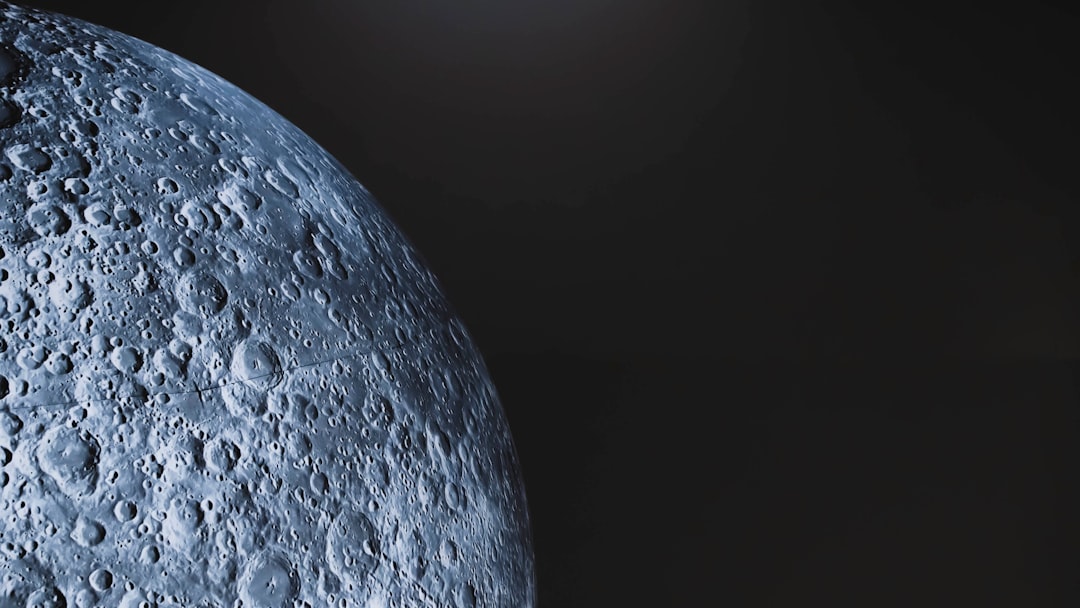
Nevertheless, the core finding is both robust and inspiring: the Moon's own ancient, cratered geology — the cumulative record of billions of years of meteorite impacts — may turn out to be one of humanity's most valuable assets in building a safe, sustainable, and affordable presence on our nearest celestial neighbor. The same craters that have long symbolized the Moon's harsh and unforgiving nature may ultimately serve as the foundations of a thriving human outpost.
"By placing a nuclear reactor in a natural lunar depression and leveraging the terrain as shielding, mission planners may be able to save thousands of kilograms in launch mass while achieving radiation protection levels that far exceed occupational safety standards — a result that could prove transformative for the economics and feasibility of permanent lunar habitation."
As the SPARC program advances and the Artemis era brings crewed missions back to the lunar surface, studies like this one will prove instrumental in translating nuclear power from a compelling theoretical option into a certified, deployable reality. The dream of continuous, reliable power during the long, cold lunar night — and the permanent human settlements that dream enables — has taken a meaningful step closer to the light of day.
Key Takeaways
- A multi-institutional team has demonstrated via simulation that natural lunar terrain features can reduce reactor radiation at a habitat site to approximately 0.04 rem per year — far below established safety limits.
- The approach leverages the Moon's lack of atmosphere to eliminate skyshine, making line-of-sight terrain blockage essentially perfect.
-
Frequently Asked Questions
Quick answers to common questions about this article
1 Why do lunar bases need nuclear reactors instead of solar panels?
The Moon experiences roughly 14 consecutive days of complete darkness each lunar cycle. Solar panels generate zero power during this period, and temperatures drop to -173°C, which degrades battery performance. Nuclear fission reactors provide steady, uninterrupted electricity regardless of sunlight availability or extreme temperature swings.2 How do moon craters naturally shield nuclear reactors from radiation?
Researchers propose positioning reactors inside existing lunar craters so that billions of years of accumulated rock and regolith form the crater walls act as natural radiation barriers. This eliminates the need to launch heavy shielding material from Earth, using the Moon's own ancient geology as a free engineering resource.3 What is NASA's SPARC program and how powerful is it?
SPARC stands for Space Power and Reactor Capabilities, a NASA initiative developing a 40-kilowatt fission reactor for lunar surface use. That output could power eight to ten average American homes simultaneously, supporting life support, lighting, scientific instruments, and resource extraction operations at a crewed outpost.4 Why is the 6,000 kilogram weight limit for the lunar reactor so important?
Any reactor must be transported across the Moon's surface by rover, navigating craters, slopes, and unstable regolith. The 6,000 kg ceiling reflects real lander payload constraints and rover mobility limitations. Exceeding it would make the entire system impractical to deliver and deploy on the lunar surface.5 Which organizations are working together on lunar nuclear power research?
The research collaboration includes Los Alamos National Laboratory, NASA Glenn Research Center, Oak Ridge National Laboratory, Idaho National Laboratory, and aerospace company Lockheed Martin. Their joint findings were presented at the American Nuclear Society's Nuclear and Emerging Technologies for Space conference in April.6 How long is a lunar night and why does it make powering a moon base so difficult?
A lunar night lasts approximately 14 Earth days, the result of the Moon's 29.5-day orbital cycle around Earth. No sunlight means no solar generation for two full weeks at a time, while brutal cold simultaneously stresses battery chemistry, making reliable alternative power sources like nuclear fission absolutely essential for sustained human habitation.Related Articles