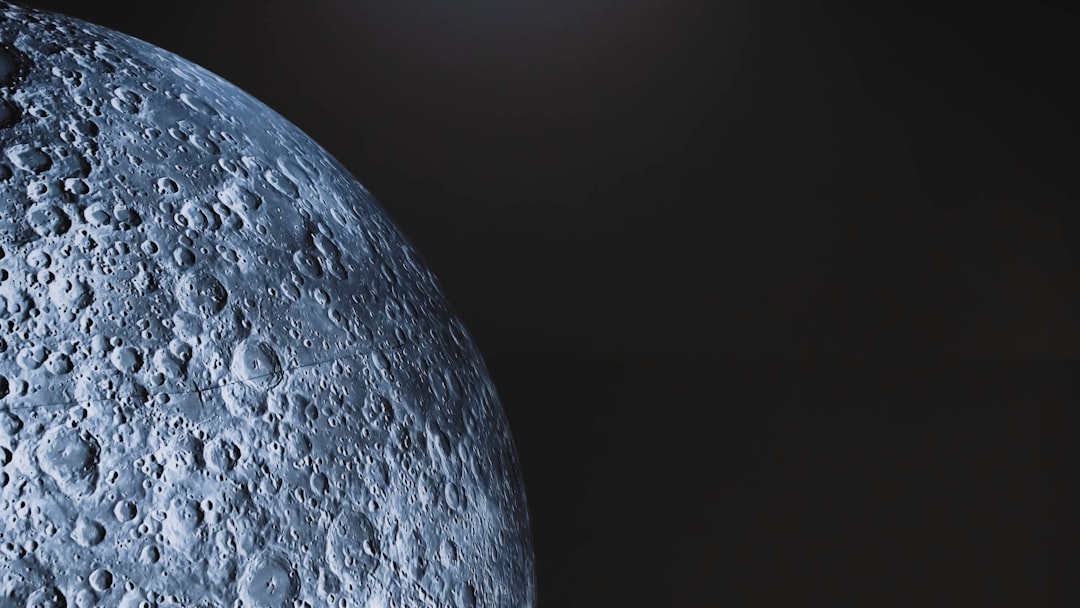
When the Apollo astronauts first set foot on the lunar surface, they encountered an adversary that would prove far more persistent than anticipated. The fine, abrasive particles of lunar regolith—electrically charged and incredibly clingy—infiltrated every seal, abraded optical equipment, and stubbornly adhered to spacesuits despite repeated attempts at removal. Commander Eugene Cernan famously declared this pervasive dust to be among the most vexing challenges of lunar exploration. Now, more than half a century after those pioneering missions, as international space agencies prepare for sustained human presence on the Moon through programs like NASA's Artemis initiative, understanding and mitigating the lunar dust problem has evolved from a mere inconvenience into a mission-critical imperative.
A groundbreaking theoretical framework developed by an international collaboration of Chinese researchers may finally provide the mathematical foundation needed to combat this sticky situation. Scientists from the Beijing Institute of Technology, the China Academy of Space Technology, and the Chinese Academy of Sciences have constructed an unprecedented detailed model that precisely characterizes how electrically charged dust particles behave during low-velocity collisions with spacecraft surfaces—a phenomenon that occurs millions of times during lunar operations.
Their research, which combines electrostatic field theory with contact mechanics, represents a significant leap forward in our ability to predict, prevent, and manage dust accumulation on lunar equipment. This mathematical approach doesn't just explain what happens when dust meets spacecraft; it provides actionable engineering solutions for designing the next generation of lunar exploration hardware.
The Electrically Charged Lunar Environment
The Moon's surface exists in a state of constant electrical flux, creating conditions unlike anything experienced on Earth. Without the protective shield of an atmosphere or magnetic field, the lunar surface faces the full brunt of solar radiation and the charged particle stream known as the solar wind. According to research conducted by NASA's Lunar Reconnaissance Orbiter, these environmental factors create dramatically different electrical conditions depending on whether a surface is in sunlight or shadow.
During the lunar day, intense ultraviolet and X-ray photons from the Sun strike both the regolith and any spacecraft present, ejecting electrons through the photoelectric effect. This process leaves surfaces positively charged and creates a hovering cloud of liberated electrons called a photoelectron sheath, extending several meters above the ground. The strength of this charging can reach potentials of several volts, sufficient to levitate the finest dust particles.
The nightside presents an entirely different electrical landscape. Here, in the absence of solar radiation, surfaces instead accumulate electrons from the tenuous plasma environment surrounding the Moon, becoming negatively charged. This creates what physicists call a Debye sheath—a boundary layer where the electrical potential transitions from that of the surface to the ambient plasma. The solar wind, a continuous stream of charged particles emanating from the Sun's corona, adds yet another layer of complexity, with velocities reaching 400 kilometers per second and densities varying with solar activity.
Three Forces Governing Dust Behavior
Within this electrically dynamic environment, individual dust particles—themselves charged through contact with the regolith and exposure to radiation—experience a complex interplay of forces as they approach spacecraft surfaces. The Chinese research team's model identifies and mathematically characterizes three distinct electrostatic mechanisms that govern dust particle trajectories before contact occurs.
The first and most intuitive is the electric field force, which acts directly on the net charge residing on a particle's surface. When a negatively charged dust grain approaches a positively charged spacecraft, or vice versa, this Coulombic attraction pulls the particle toward the surface. Conversely, like charges create a repulsive force. The magnitude of this force depends on both the charge density on the particle and the electrical potential of the spacecraft, following relationships described by classical electromagnetic theory developed by pioneers like James Clerk Maxwell.
More subtle but equally important is the dielectrophoretic force. This phenomenon arises because dust particles, being dielectric materials, distort the non-uniform electric fields surrounding spacecraft. Even an uncharged particle experiences this force, which always attracts it toward regions of stronger field intensity. This explains why dust accumulates preferentially on edges, corners, and protruding equipment—exactly the locations where electric fields are most concentrated. Research from the European Space Agency's plasma physics division has documented similar effects in Earth's ionosphere.
The third electrostatic mechanism, the image force, emerges from a beautiful principle of electrostatics. When a charged particle approaches a conductive surface, it induces an opposite charge distribution in that surface—like a mirror image of itself. This induced charge then attracts the original particle, creating an additional adhesive force. The effect is analogous to how a statically charged balloon adheres to a wall, and it operates regardless of whether the spacecraft itself carries a net charge.
"Understanding the relative contributions of these three electrostatic forces under varying lunar conditions is essential for predicting dust behavior and designing effective mitigation strategies. Our model shows that their importance changes dramatically depending on particle size, charge state, and approach velocity," the research team explains in their theoretical framework.
The Critical Moment of Contact
While electrostatic forces dominate dust particle trajectories during approach, an entirely different set of physical principles takes over at the moment of contact. The researchers' model recognizes that for the low-velocity impacts typical of lunar operations—where particles drift or are gently kicked up rather than explosively ejected—molecular-scale adhesive forces become paramount.
Chief among these are van der Waals forces, the weak but ubiquitous attractions between molecules that arise from quantum mechanical fluctuations in electron distributions. Despite their individual weakness, when billions of molecules at the contact interface between a dust grain and spacecraft coating interact simultaneously, van der Waals forces generate surprisingly strong adhesion. Studies of similar phenomena in Earth-based applications, documented in materials science journals, show that these forces can exceed the particle's weight by factors of thousands for micrometer-sized grains.
The collision process itself unfolds in three mathematically distinct phases, each characterized by different dominant forces and energy transformations. During the initial adhesive elastic loading phase, the particle compresses against the coating while both materials deform elastically—meaning they'll return to their original shapes if the forces are removed. Simultaneously, attractive forces between the surfaces grow as more molecules come into close proximity.
If the impact energy exceeds a critical threshold, the system transitions into a plastic deformation regime. Here, the coating material begins to yield permanently, dissipating kinetic energy as heat and structural rearrangement. This energy dissipation is crucial because it determines whether the particle will have sufficient energy to rebound.
Finally, during the unloading stage, the compressed materials attempt to spring back to their original configurations. Whether the particle bounces away or remains adhered depends on a delicate balance: if the elastic energy stored during compression exceeds the work required to overcome adhesive forces, the particle escapes. If not, it becomes a permanent addition to the spacecraft's dust coating.
Practical Engineering Insights
The true value of this theoretical model lies in its practical implications for spacecraft design. By quantifying the relative importance of different physical mechanisms under various conditions, the research provides actionable guidance for engineers developing the next generation of lunar exploration equipment.
One key finding concerns the properties of dielectric coatings—insulating materials applied to spacecraft surfaces. The model demonstrates that coatings with greater thickness and lower permittivity (a measure of how easily a material can be polarized by an electric field) substantially reduce electrostatic attraction between charged dust and spacecraft. This occurs because such materials are less effective at responding to the approaching particle's electric field, thereby weakening both the image force and dielectrophoretic effects. Materials like polytetrafluoroethylene (PTFE) or certain ceramic composites, already used in space applications, show particular promise.
Surprisingly, the research reveals that the particle's surface charge density exerts more influence on electrostatic force magnitude than the spacecraft's electrical potential. This finding has important implications for active dust mitigation strategies. Rather than attempting to control the spacecraft's charge state—which is difficult in the dynamic lunar environment—engineers might achieve better results by developing techniques to neutralize particle charges before they reach critical surfaces.
Perhaps most counterintuitively, for particles carrying typical charge densities below 0.1 milliCoulombs per square meter (a common range measured during Apollo missions), van der Waals adhesive forces completely dominate electrostatic effects during actual contact. This suggests that purely electrostatic mitigation strategies, such as electrodynamic dust shields that attempt to repel particles, may prove less effective than approaches targeting adhesive forces directly.
Material Selection and Surface Engineering
The model points toward specific material characteristics that minimize dust adhesion. Coatings fabricated from low surface energy materials—substances to which other materials don't readily stick—combined with deliberately roughened textures, significantly reduce the contact area between dust grains and spacecraft surfaces. This reduces the number of molecular interactions and thereby weakens van der Waals adhesion.
Research conducted at NASA's Jet Propulsion Laboratory has explored similar concepts, developing superhydrophobic coatings inspired by lotus leaves. These surfaces feature microscopic roughness that minimizes contact area, causing water droplets—and potentially dust particles—to roll off rather than adhere.
The model also reveals that particle size plays a crucial role in adhesion probability. Larger particles tend to have higher coefficients of restitution, meaning they're more likely to bounce away after impact rather than stick. This occurs because their greater kinetic energy at impact more easily overcomes adhesive forces. However, larger particles also cause more damage when they do impact, abrading optical surfaces and penetrating deeper into fabric seals—a classic engineering trade-off.
The Critical Velocity Window
One of the model's most intriguing predictions concerns the existence of a critical velocity range for negatively charged particles. Within this window, adhesion becomes highly probable; impacts occurring at velocities either slower or faster than this range allow particles to escape. This non-monotonic relationship arises from the complex interplay between kinetic energy, elastic deformation, and adhesive forces.
At very low velocities, particles approach so gently that they never fully engage the elastic properties of the coating material, failing to store sufficient energy for rebound. At very high velocities, the kinetic energy overwhelms adhesive forces, allowing particles to bounce away despite strong molecular attractions. Only within the intermediate critical range does the unfortunate combination of moderate impact energy and maximum adhesive engagement occur.
This finding suggests a counterintuitive mitigation strategy: in some circumstances, allowing dust particles to impact at higher velocities might actually reduce accumulation. However, this must be carefully balanced against increased abrasion damage from energetic impacts.
Implications for Future Lunar Operations
As humanity prepares for sustained lunar presence through international programs including ESA's Moon Village concept and commercial ventures, this mathematical framework provides essential tools for mission planning and hardware design. The model enables engineers to predict dust accumulation patterns on complex spacecraft geometries, identifying vulnerable areas that require special protection or frequent cleaning.
For long-duration missions, where astronauts might spend weeks or months on the lunar surface, preventing dust accumulation becomes critical for maintaining equipment functionality. Solar panels must remain clean to generate power, thermal radiators need clear surfaces to reject heat, and optical instruments require pristine lenses. The Chinese team's model can guide the selection of appropriate surface coatings for each application, balancing dust resistance against other requirements like thermal properties or radiation hardness.
The research also informs the design of active dust removal systems. Electrodynamic dust shields, which use alternating electric fields to shake particles loose, can be optimized based on the model's predictions about which particle sizes and charge states are most susceptible to electrical manipulation. Mechanical systems like brushes or gas jets can be designed to operate at velocities that maximize particle removal while minimizing surface damage.
Looking further ahead, this theoretical framework may prove valuable for exploration of other airless bodies in our solar system. Asteroids, Mercury, and the moons of Mars all present similar challenges with charged dust in vacuum environments. The mathematical principles developed for lunar applications should translate readily to these destinations, though the specific environmental parameters—solar radiation intensity, plasma density, surface composition—will differ.
From Annoyance to Engineering Challenge
Eugene Cernan's frustration with lunar dust during the Apollo 17 mission in 1972 has evolved into a sophisticated engineering discipline. What once seemed an intractable nuisance now yields to mathematical analysis and systematic design approaches. The Chinese research team's theoretical model represents a significant milestone in this evolution, transforming qualitative observations into quantitative predictions.
As missions grow more ambitious—from brief surface visits to permanent habitats, from robotic explorers to human settlements—the stakes continue to rise. Dust that merely annoyed Apollo astronauts could disable critical life support systems or contaminate sensitive scientific instruments during extended operations. The mathematical solution to the sticky problem of lunar dust may ultimately prove as important to sustainable lunar exploration as advances in propulsion or life support.
The model's publication marks not an ending but a beginning: a foundation upon which engineers worldwide can build practical solutions, test hypotheses, and refine our understanding of this uniquely challenging environment. Each future lunar mission will provide opportunities to validate predictions, measure actual dust behavior, and improve the theoretical framework—a cycle of observation, modeling, and engineering that exemplifies the scientific method at its finest.