The James Webb Space Telescope has unveiled an extraordinary chemical treasure trove within a nearby galaxy, revealing an unexpectedly rich inventory of organic molecules that challenges our understanding of cosmic chemistry. This groundbreaking discovery, made by an international team of researchers, provides compelling new evidence that the fundamental building blocks necessary for life are not only abundant in space but may form through processes far more complex than previously imagined.
In a comprehensive study of the ultra-luminous infrared galaxy IRAS 07251-0248, scientists have detected an astonishing diversity of both gaseous and solid-state organic compounds, including several hydrocarbon molecules never before observed in another galaxy. This discovery adds another crucial piece to the growing body of evidence suggesting that the chemical precursors to life originate in the cosmos itself, from amino acids found in asteroids to complex organic molecules forming in the harsh environments surrounding supermassive black holes.
The research, led by Dr. Ismael García Bernete from the Centro de Astrobiología (CAB) in Spain and conducted in collaboration with scientists from the University of Oxford and other international institutions, represents a significant milestone in astrochemistry. Their findings, published in Nature Astronomy, demonstrate the unprecedented capability of Webb's infrared instruments to peer through cosmic dust and reveal the chemical complexity hidden within galactic cores.
Unveiling the Chemistry of an Obscured Galactic Nucleus
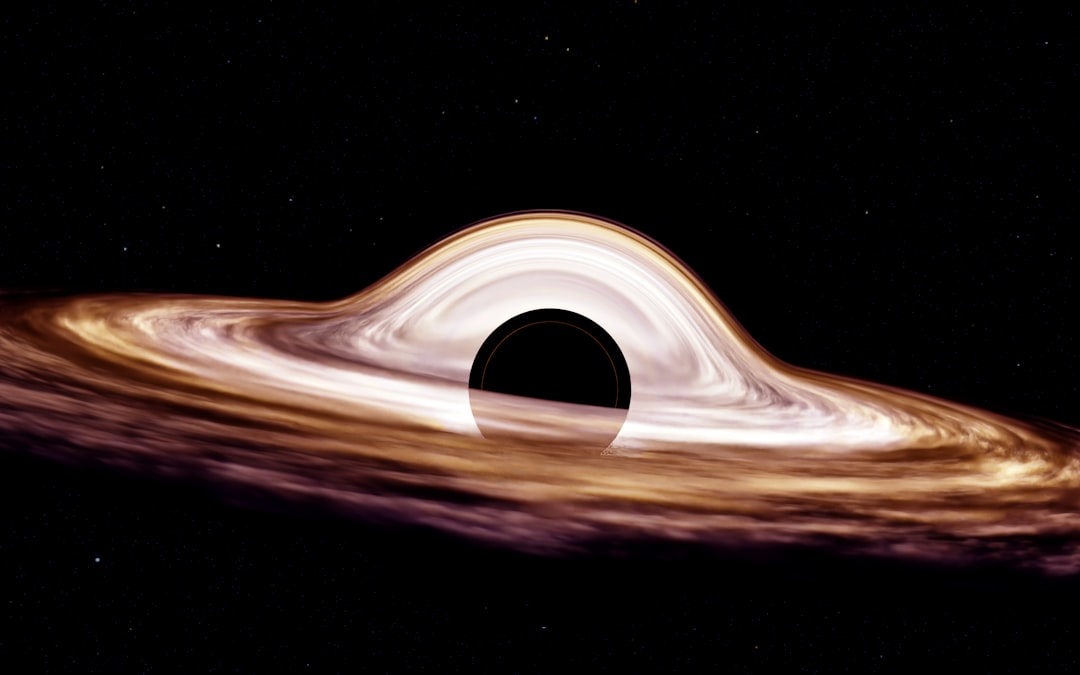
The target of this investigation, IRAS 07251-0248, presents unique challenges and opportunities for astronomical observation. This ultra-luminous infrared galaxy (ULIRG) harbors an active galactic nucleus powered by a voracious supermassive black hole, but its central region is shrouded behind dense veils of gas and dust. These obscuring materials absorb most of the visible and ultraviolet light emanating from the galactic core, making traditional optical telescopes virtually blind to the processes occurring within.
However, this cosmic dust cloud inadvertently creates an ideal laboratory for studying organic chemistry in extreme environments. The absorbed energy is re-radiated as infrared light, essentially transforming the galaxy into a brilliant infrared beacon. This is precisely where the James Webb Space Telescope excels, equipped with the most sensitive infrared instruments ever deployed in space.
The research team utilized a powerful combination of Webb's Near-Infrared Spectrometer (NIRSpec) and Mid-Infrared Instrument (MIRI) to dissect the infrared light from IRAS 07251-0248 into its constituent wavelengths. This spectroscopic analysis acts like a cosmic fingerprint reader, allowing scientists to identify specific molecules based on their unique absorption and emission patterns at different infrared wavelengths. The technique also enables researchers to determine not only which molecules are present but also their relative abundances and physical temperatures.
A Remarkable Catalog of Cosmic Organic Molecules
The spectroscopic data revealed an unexpectedly rich chemical inventory that far exceeds theoretical predictions. Among the most significant discoveries was the first-ever detection of the methyl radical (CH₃) in an external galaxy. This highly reactive molecular fragment plays a crucial role in organic chemistry, serving as a building block for more complex molecules.
The team also identified an impressive array of hydrocarbon molecules in gaseous form, including:
- Benzene (C₆H₆): A fundamental aromatic hydrocarbon consisting of a six-carbon ring, considered one of the most important building blocks in organic chemistry
- Methane (CH₄): The simplest hydrocarbon and a key component in the chemistry of planetary atmospheres and interstellar clouds
- Acetylene (C₂H₂): A two-carbon molecule that serves as an important intermediate in the formation of larger organic compounds
- Diacetylene (C₄H₂): A more complex four-carbon chain molecule found in various cosmic environments
- Triacetylene (C₆H₂): An even larger six-carbon chain molecule, representing significant chemical complexity
Beyond these gaseous compounds, the observations revealed substantial quantities of solid-phase organic materials, including carbonaceous grains and water ice. This dual-phase detection is particularly significant, as it suggests active chemical processing that transforms molecules between gaseous and solid states.
"We found an unexpected chemical complexity, with abundances far higher than predicted by current theoretical models. This indicates that there must be a continuous source of carbon in these galactic nuclei fuelling this rich chemical network," explained Dr. Ismael García Bernete, the study's lead author.
The Role of Polycyclic Aromatic Hydrocarbons
A crucial component of the team's analysis involved sophisticated theoretical models of polycyclic aromatic hydrocarbons (PAHs) developed by researchers at Oxford University. PAHs are large, complex molecules consisting of multiple fused benzene rings, and they represent some of the most abundant organic compounds in the universe. These molecules are thought to account for a significant fraction of all carbon in interstellar space and play important roles in the chemistry of star-forming regions and planetary nebulae.
The researchers' models suggest that the observed abundance of smaller organic molecules cannot be explained solely by conventional mechanisms such as high temperatures or turbulent gas dynamics. Instead, the evidence points to a more violent process: the fragmentation of PAHs and carbon-rich dust grains through bombardment by cosmic rays—highly energetic particles that pervade space and are particularly abundant in active galactic nuclei.
Cosmic Rays: The Unexpected Architects of Organic Chemistry
The team's interpretation represents a paradigm shift in understanding how organic molecules form and persist in the extreme environments near supermassive black holes. When high-energy cosmic rays collide with large PAH molecules and carbonaceous dust grains, they can break chemical bonds and fragment these structures into smaller, simpler molecules—precisely the types of compounds detected by Webb.
This cosmic-ray-driven chemistry is supported by comparative studies of similar galaxies, which have revealed a clear correlation between the abundance of gaseous hydrocarbons and the intensity of cosmic-ray ionization. In active galactic nuclei, where matter spiraling into the supermassive black hole generates powerful magnetic fields and particle acceleration, cosmic rays are produced in copious quantities, creating ideal conditions for this chemical processing.
Professor Dimitra Rigopoulou from the University of Oxford, a co-author of the study, emphasized the broader implications of these findings:
"Although small organic molecules are not found in living cells, they could play a vital role in prebiotic chemistry, representing an important step towards the formation of amino acids and nucleotides—the fundamental building blocks of proteins and DNA."
Implications for Astrobiology and the Origins of Life
This discovery fits within a rapidly expanding framework of evidence suggesting that the universe is a remarkably efficient factory for producing prebiotic molecules. Recent years have witnessed a cascade of related discoveries: amino acids in carbonaceous meteorites, fatty acids on Mars detected by the Curiosity rover, sulfur-bearing molecules in interstellar clouds observed by radio telescopes, and laboratory experiments demonstrating that peptides can form spontaneously under space-like conditions.
The detection of such a rich organic inventory in IRAS 07251-0248 suggests that even the most extreme cosmic environments—those dominated by supermassive black holes and intense radiation fields—can serve as chemical laboratories for producing life's building blocks. This has profound implications for astrobiology and our understanding of how life might arise in the universe.
If organic molecules can form and survive in the harsh conditions near an active galactic nucleus, they can certainly exist in more benign environments such as protoplanetary disks around young stars or the surfaces of icy moons in our own solar system. These molecules could be distributed throughout galaxies by stellar winds, supernova explosions, and other dynamic processes, potentially seeding countless worlds with the chemical precursors necessary for life.
The Chemical Evolution of Galaxies
Beyond its astrobiological significance, this research illuminates the broader process of chemical evolution in galaxies. The continuous production and processing of organic molecules in galactic nuclei contributes to the overall chemical enrichment of galaxies over cosmic time. As these molecules are dispersed into the interstellar medium, they become incorporated into new generations of stars and planetary systems, gradually increasing the chemical complexity available for planet formation and potentially for life.
The findings also demonstrate that dusty galactic nuclei, far from being chemically inert regions, are actually sites of vigorous and complex chemistry. This challenges earlier assumptions and opens new avenues for understanding how different galactic environments contribute to the cosmic carbon cycle and the distribution of organic matter throughout the universe.
Webb's Revolutionary Capabilities and Future Prospects
This study showcases the transformative impact of the James Webb Space Telescope on infrared astronomy and astrochemistry. Webb's unprecedented sensitivity and spectral resolution enable scientists to detect and characterize molecules in environments that were previously inaccessible to detailed study. The telescope's ability to observe simultaneously in multiple infrared wavelength ranges provides a comprehensive view of molecular inventories and physical conditions.
The success of this investigation opens exciting possibilities for future research. Scientists can now systematically survey other dust-obscured galaxies to determine whether the rich organic chemistry observed in IRAS 07251-0248 is common or exceptional. Such studies will help establish whether galactic nuclei universally serve as organic molecule factories or whether specific conditions are required.
Furthermore, Webb's capabilities will enable researchers to study the formation and processing of organic molecules in a variety of cosmic environments, from protoplanetary disks around young stars to the atmospheres of exoplanets. Each new observation adds to our understanding of how the building blocks of life are created, distributed, and transformed throughout the cosmos.
Connecting the Dots in the Search for Life Beyond Earth
When combined with other recent discoveries—from biosignature gases in exoplanet atmospheres to the detection of organic compounds on Mars and in the plumes of Saturn's moon Enceladus—this finding strengthens the case that the universe is awash in the chemical ingredients necessary for life. The spontaneous formation of complex organic molecules in diverse cosmic settings suggests that the emergence of life may be a natural consequence of cosmic chemistry rather than an improbable accident.
For scientists engaged in the search for extraterrestrial life and intelligence, these results are profoundly encouraging. They suggest that wherever we look in the universe—from nearby planetary systems to distant galaxies—we are likely to find the molecular building blocks that could, under the right conditions, assemble into living systems. The question is no longer whether the ingredients for life exist elsewhere in the cosmos, but rather how commonly those ingredients successfully combine to produce actual living organisms.
As Webb continues its mission and future observatories come online, our understanding of cosmic organic chemistry will only deepen. Each new discovery brings us closer to answering one of humanity's most profound questions: Are we alone in the universe? The rich organic chemistry revealed in IRAS 07251-0248 suggests that, at least from a chemical perspective, the cosmos is well-prepared to support life wherever conditions allow.