What Could Split a Black Hole in Two?
We all know that black holes can collide. It has happened since these extraordinary cosmic objects began to form early in cosmic time, mere hundreds of millions of years after the Big Bang. The result is always a cataclysmic clash that radiates gravitational waves — ripples in the very fabric of spacetime — and releases enormous amounts of energy. Since black holes possess the most powerful gravitational fields in the known universe, it is almost impossible to imagine any physical force capable of breaking one apart. Yet that is precisely the challenge a team of European scientists set for themselves, asking a question that borders on the provocative: could a black hole ever split into two?
The answer, it turns out, is a deeply qualified — but scientifically fascinating — maybe.
The Science Behind Black Hole Fragmentation
In a detailed study of the possible mechanisms for black hole fragmentation, Francesco Sannino of the University of Naples Federico II in Italy and the Quantum Field Theory Center at the University of Southern Denmark, along with colleagues Giacomo Cacciapaglia of the Laboratoire de Physique Théorique et Hautes Énergies and Manuel Del Piano and Vania Vellucci from the Quantum Field Theory Center, conducted a series of sophisticated calculations showing that under very specific conditions, a black hole could theoretically split into two distinct black holes.
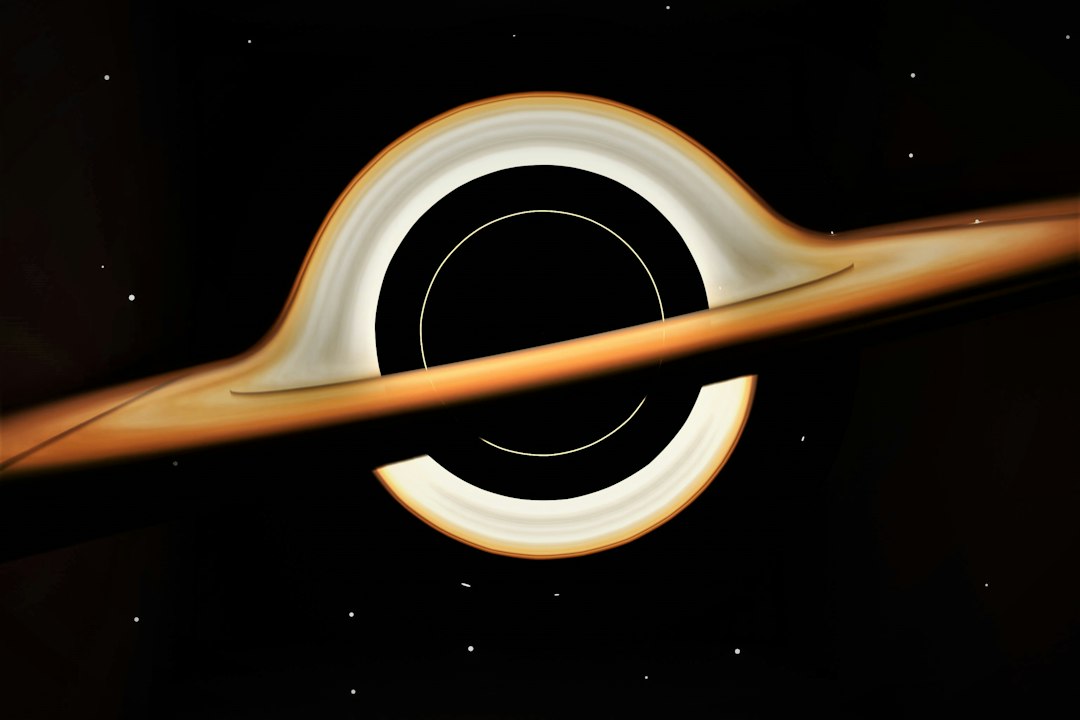
To appreciate why this is so remarkable, consider what a black hole actually is: a region of spacetime where gravity has become so overwhelmingly strong that nothing — not matter, not light, not any known force — can escape from within its event horizon. Black holes are described by just three classical parameters: mass, electric charge, and angular momentum (spin). This simplicity, sometimes called the "no-hair theorem," makes them among the most elegant objects in the universe, but it also makes the idea of splitting one apart seem almost paradoxical.
The team's calculations reveal that it is not enough for a black hole to simply break apart. The conditions governing what happens next are equally stringent.
"The two resulting black holes must also be able to separate rather than immediately fall back together. When we include this requirement, the window largely closes again, except possibly for black holes rotating close to their maximum possible rate." — Francesco Sannino
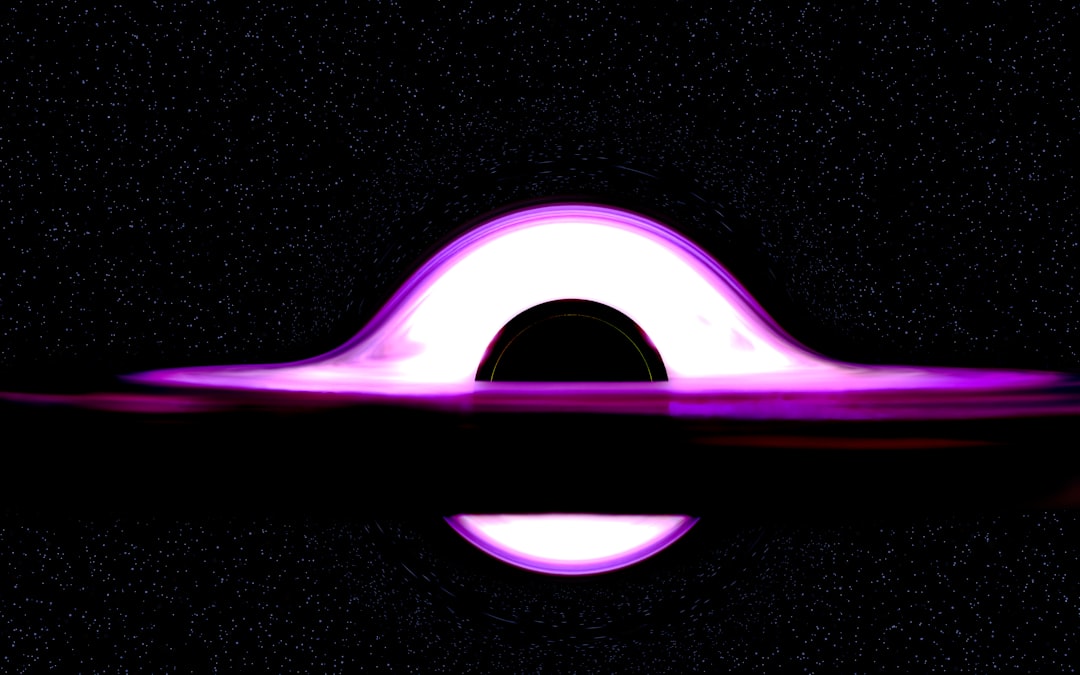
If such a split were to occur, the event horizon of the black hole would adopt a remarkable shape during the process — one that physicists describe as a "pair-of-pants topology." Visualize the event horizon as a surface that, as the black hole begins to divide, stretches and bifurcates into two separate lobes, much like the legs of a pair of trousers. This topological transformation is not merely a metaphor; it is a rigorous mathematical description of how the geometry of spacetime would evolve during such an extraordinary event.
The Thermodynamic Barrier: Why Entropy Is the Enemy
There is one formidable obstacle standing in the way of any black hole fragmentation scenario, and it comes from one of the most fundamental principles in all of physics: the second law of thermodynamics. This law, broadly stated, holds that the total entropy of a closed system can never decrease over time.
Entropy is the measure of how many different microscopic configurations a physical system can have while still appearing the same from the outside — essentially, a quantification of disorder or randomness. For black holes, entropy is not an abstract concept. Stephen Hawking and Jacob Bekenstein famously demonstrated in the 1970s that a black hole's entropy is directly proportional to the area of its event horizon, not its volume — a discovery that continues to reverberate through theoretical physics to this day. You can learn more about this at the NASA Black Holes resource page.
The problem for black hole splitting is straightforward: when one black hole breaks into two smaller ones, the combined surface area — and therefore the combined entropy — of the two smaller black holes is less than that of the original. This means the process would violate the second law of thermodynamics, making it not just unlikely but, for a simple non-rotating black hole, essentially forbidden by nature's own bookkeeping.
- A single non-rotating black hole of mass M has an event horizon area proportional to M².
- Two black holes each of mass M/2 have a combined area proportional to 2 × (M/2)² = M²/2 — exactly half of the original.
- This dramatic reduction in entropy is the primary thermodynamic barrier to black hole fragmentation.
- For rotating (Kerr) black holes, the relationship between mass, spin, and entropy becomes far more complex, potentially opening a narrow thermodynamic window.
The Crucial Role of Rotation: Kerr Black Holes and Maximum Spin
This is where spin — or angular momentum — enters the picture as a potential game-changer. Most black holes in the real universe are believed to be rotating. When a massive star collapses or when black holes merge, they inherit the angular momentum of the matter or objects that formed them. A rotating black hole is described by the Kerr metric, a solution to Einstein's field equations developed by Roy Kerr in 1963, and it has very different properties from its non-rotating cousin.
Crucially, a Kerr black hole can spin at rates approaching — but never exceeding — a theoretical maximum, known as the extremal limit. At this limit, the relationship between mass, angular momentum, and entropy is altered in profound ways. The team found that it is precisely in this regime — black holes spinning close to their maximum possible rate — where the thermodynamic barriers to fragmentation might, under specific conditions, be overcome.
For such a split to be successful, the physics demands an extraordinary set of requirements:
- The parent black hole must be rotating at or near its maximum (extremal) spin rate.
- The two daughter black holes must separate rapidly after the split to avoid immediately recollapsing under mutual gravitational attraction.
- Both resulting black holes must themselves continue rotating at or near maximum speed, preserving the system's overall angular momentum budget.
- The combined entropy of the two fragments must not violate the Bekenstein-Hawking entropy bound.
- The process likely requires physics beyond Einstein's general relativity to fully explain the triggering mechanism.
The rotation fundamentally alters the mathematical relationship between a black hole's mass, its angular momentum, and its entropy. This altered landscape is what makes fragmentation — however narrowly — a theoretical possibility rather than an outright impossibility. To explore the geometry of rotating black holes further, HubbleSite's Black Holes section provides excellent visual and conceptual resources.
Could This Actually Happen in Our Universe?
The image of M87* — the supermassive black hole at the centre of galaxy Messier 87, captured in 2019 by the Event Horizon Telescope Collaboration — has a measurably significant spin. Theoretically, this means that if conditions were exactly right, it falls within the class of objects the team's framework applies to. Yet it is essential to emphasize that the conditions required are extraordinarily specific, and no such fragmentation event has ever been observed.
Sannino is careful not to overstate the likelihood of such events occurring in the astrophysical black holes we observe today — the stellar-mass and supermassive black holes that populate our universe. Instead, the team's analysis points toward a more exotic population of objects: primordial black holes.
"We expect small primordial black holes to be more prone to splitting than much larger astrophysical black holes. We may detect a split indirectly: gamma-ray telescopes such as Fermi-LAT can search for signals from tiny black-hole fragments that might form during mergers." — Francesco Sannino
Primordial black holes are hypothetical objects thought to have formed in the extreme density fluctuations of the very early universe, long before the first stars ignited. Unlike stellar black holes, they could in principle have a wide range of masses — some potentially very small, where quantum gravitational effects become significant. It is in this extreme regime, where quantum gravity and classical general relativity must ultimately be reconciled, that black hole fragmentation is considered most plausible by the research team.
Beyond Einstein: Quantum Gravity and the Road Ahead
One of the most intellectually honest and scientifically important aspects of this research is its acknowledgment of what we do not yet know. General relativity — Einstein's masterwork, now over a century old — is our best theory of gravity and the framework within which black hole physics is typically described. But it is almost certainly incomplete. The singularities at the heart of black holes, where density becomes infinite and spacetime curvature diverges, are widely understood to signal the breakdown of the theory rather than a description of physical reality.
A true theory of quantum gravity — one that seamlessly unifies quantum mechanics with general relativity — remains one of the greatest unsolved problems in physics. Candidate frameworks such as string theory, loop quantum gravity, and others each make different predictions about what happens at these extreme scales. The probability and mechanism of black hole fragmentation, the team acknowledges, depend critically on how gravity behaves in this beyond-Einstein regime.
"We cannot yet give a single probability for a black hole to split. It depends on how gravity behaves beyond Einstein's theory, and we are working to quantify this." — Francesco Sannino
This research is therefore not merely a curiosity — it is a probe of fundamental physics at its most extreme boundaries. The team's work suggests several observational avenues that could indirectly confirm or constrain the fragmentation scenario:
- Gravitational wave observatories such as LIGO and Virgo could potentially detect the distinctive gravitational wave signatures produced during a black hole splitting event or an unusual merger involving near-extremal spinning black holes.
- Gamma-ray telescopes — particularly the Fermi Large Area Telescope (Fermi-LAT) — could search for high-energy photon signals from tiny black hole fragments produced during mergers.
- Future space-based gravitational wave detectors such as LISA (the Laser Interferometer Space Antenna), planned by the European Space Agency, will open entirely new windows on black hole physics at mass scales inaccessible to ground-based detectors.
- Studies of the cosmic gravitational wave background may contain imprints of primordial black hole activity in the early universe, including possible fragmentation events.
Why This Matters
At first glance, the question of whether a black hole can split in two might seem like a purely academic exercise — a theoretical puzzle with no practical consequences. But the implications run far deeper. Every constraint we place on what black holes can and cannot do sharpens our understanding of the laws that govern the universe at its most fundamental level. The interplay between thermodynamics, general relativity, and quantum mechanics in black hole physics has already given us Hawking radiation, the black hole information paradox, and the holographic principle — ideas that have transformed our conception of reality itself.
The possibility of black hole fragmentation, however remote or conditional, adds another remarkable chapter to this story. It reminds us that the universe's most extreme objects still have secrets to reveal — and that the scientists asking the most audacious questions are often the ones who push physics forward into genuinely new territory.