Where Can I Take Off My Space Helmet? A Scientific Guide to Surviving Without One
It's been a while since I last reviewed the NASA manual on space helmet operation, but if I recall correctly, the document really does have just one overriding rule. When you go to space, keep your space helmet on. Full stop. No exceptions. No asterisks. No footnotes written in tiny print that might give you a loophole to exploit.
I don't care what haunting music those beguiling space sirens are playing. It doesn't matter if you've got a serious case of space madness and you're hallucinating that you're back on your Iowa farm, surrounded by your loved ones. Even if you just turned on an ancient terraforming machine and you're stumbling around the surface of Mars like an idiot — you keep your helmet on.
Not convinced? Allow me to explain, with the full weight of astrophysics behind me, precisely what happens when you decide to break that rule.
The Brutal Physics of Space Exposure
Without a helmet, and without your own personal Earth-like atmosphere surrounding you, you will be exposed to the hard vacuum of space. This is not the dramatic, explosive decompression you might have seen in Hollywood blockbusters. The reality is simultaneously more mundane and more terrifying.
Within moments, all the air will rush out of your lungs. You'll fall unconscious in approximately 45 seconds, starved of oxygen. Death by suffocation follows in just a couple of minutes. After that, your body will freeze solid and drift through the void — just another meat asteroid in the Solar System, subject to the same orbital mechanics as any other piece of debris.
The scientific community has a reasonable understanding of this process, partly informed by NASA's extensive research into spacewalk physiology and a handful of accidental exposure incidents during early space exploration. One of the most notable involved a technician at a NASA facility in 1966, who briefly lost consciousness when his spacesuit accidentally depressurized — and later reported that the last thing he remembered was the saliva on his tongue beginning to boil, a phenomenon caused by ebullism, the vaporization of bodily fluids at very low pressures.
"The vacuum of space is not an environment that negotiates. It operates on physics alone, and physics is entirely indifferent to your survival."
What Your Body Actually Needs to Survive
Before we go looking for helmet-free zones across the Solar System, it helps to understand exactly what conditions the human body requires to survive. The requirements are surprisingly specific, and rather demanding from a planetary engineering perspective.
- Atmospheric Pressure: The human body needs pressure surrounding it to keep the lungs inflated and bodily fluids in their liquid state. Earth's atmosphere provides this by stacking a vast, dense column of air above you. Too little pressure, and your lungs empty violently and your blood begins to boil. Too much, and your lungs crush and your cardiovascular system fails. The survivable sweet spot sits between roughly 0.5 and 5 times Earth's atmospheric pressure — though long-term comfort narrows that range considerably.
- Temperature: The human body is a finely tuned thermal machine, and it doesn't tolerate extremes well. Hypothermia sets in when core body temperature drops below 35°C, and becomes fatal not long after. On the heat end, sustained exposure to temperatures above 60°C for even a few minutes will cause organ failure. The universe, unfortunately, is mostly either far colder or far hotter than this narrow survivable band.
- Breathable Atmosphere: Ideally, you want a mixture of nitrogen and oxygen similar to Earth's — approximately 78% nitrogen and 21% oxygen. Carbon dioxide, methane, or hydrogen will cause rapid asphyxiation. Even pure oxygen at high pressure, while breathable briefly, poses serious risks of oxygen toxicity and fire.
Note that pressure can technically be provided by a liquid medium rather than a gas — water, for example, provides excellent pressure support. You won't be able to breathe it, but it will keep your body structurally intact while you hold your breath.
The Best Helmet-Free Destination: Venus's Cloud Tops
Your single best bet — and this is admittedly a low bar — is the upper atmosphere of Venus. Not the surface, where temperatures hover around 465°C (hot enough to melt lead) and atmospheric pressure is a crushing 90 times that of Earth. The surface of Venus is one of the most hostile environments in the known Solar System, and no spacecraft has survived there for longer than about two hours.
But ascend to approximately 52.5 kilometers above the Venusian surface, right up into the cloud layer, and things become remarkably more Earth-like. At that altitude, the temperature is a warm but survivable 37°C, and atmospheric pressure sits at roughly 65% of Earth's sea-level pressure — comfortably within the survivable range. You could, in principle, remove your pressure helmet and your body would hold together just fine.
The catch, of course, is that Venus's atmosphere is composed almost entirely of carbon dioxide, meaning you would asphyxiate if you tried to breathe it. Worse, the cloud layer at that altitude consists of dense droplets of concentrated sulphuric acid, which would cause severe chemical burns to your eyes, skin, and lungs if inhaled. So while your body might not be crushed or flash-frozen, you would still very much die — just in a different, arguably more unpleasant way.
That said, the prospects for life in the Venusian cloud tops have attracted serious scientific attention. NASA's Venus exploration program and independent researchers have floated the tantalizing hypothesis that microbial life could potentially survive in these clouds, sheltered within acid droplets. The detection of phosphine in Venus's atmosphere in 2020 — though contested and still under investigation — briefly electrified the scientific community with exactly that possibility.
Titan: The Moon That Doesn't Need a Pressure Helmet
Saturn's largest moon, Titan, holds a genuinely remarkable distinction among all the worlds in our Solar System. It is the only place other than Earth with a dense, nitrogen-rich atmosphere and stable liquid bodies on its surface — though those lakes and seas are filled with liquid methane and ethane rather than water. More remarkably for our purposes, Titan's surface atmospheric pressure is 1.45 times that of Earth's.
This means that on Titan, you would not need a pressure suit at all. Your body would experience no dangerous pressure differential. A warm suit — a very, very warm suit — would be your primary requirement, since the surface temperature on Titan is approximately -179°C, cold enough to liquify natural gas and freeze human tissue almost instantly.
You could theoretically remove your thermal helmet for a brief moment and survive — but don't inhale. Titan's atmosphere is primarily nitrogen with traces of methane and complex organic compounds. Breathing it would cause rapid asphyxiation, and the extreme cold would inflict severe damage to your respiratory tract within seconds. The Cassini-Huygens mission, which studied Titan in extraordinary detail between 2004 and 2017, confirmed just how alien yet eerily Earth-like this distant moon truly is.
The Subsurface Oceans: Diving In Without a Helmet
One of the most exciting scientific discoveries of recent decades is the growing evidence that vast liquid water oceans exist beneath the icy surfaces of several moons in the outer Solar System. Europa, one of Jupiter's largest moons, is thought to harbor an ocean up to 100 kilometers deep — more liquid water than exists on the entire surface of Earth — kept liquid by the powerful tidal forces exerted by Jupiter. Similar subsurface oceans are suspected beneath Enceladus, Ganymede, Callisto, and even distant Pluto and its moon Charon.
If you were somehow to drill down through the ice sheet and plunge into those lightless, frigid waters, the ocean itself would provide the pressure your body needs. You would not be crushed — at least not immediately, and not in the shallow regions near the ice ceiling. You would, of course, be extremely cold and unable to breathe. But you could survive as long as you could hold your breath and withstand the thermal shock, which, practically speaking, would be a matter of seconds. Still, technically, helmet-optional.
These oceans are also among the most compelling candidates in the search for extraterrestrial life. NASA's Europa Clipper mission, launched in 2024, is currently en route to conduct detailed reconnaissance of Europa's habitability. If microbial life exists anywhere else in the Solar System, the deep ocean beneath Europa's ice may be its most likely address.
Falling Into a Gas Giant: The Bittersweet Silver Lining
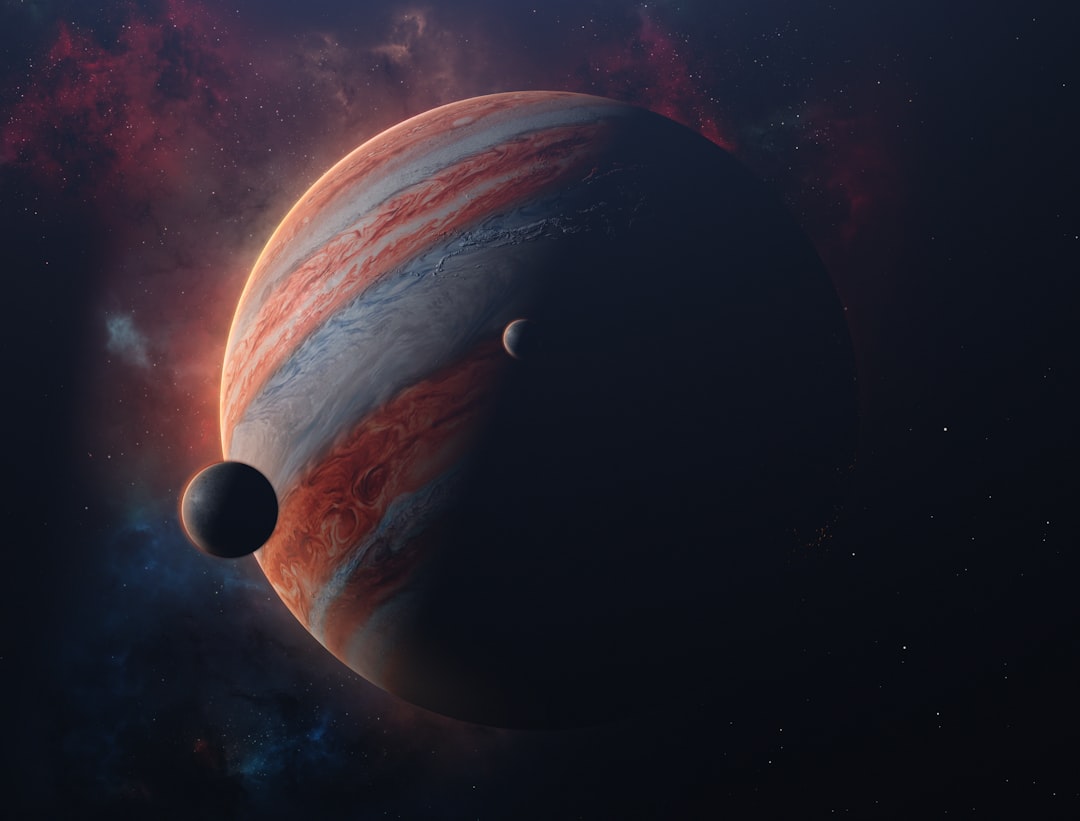
Let's say, hypothetically, that you have found yourself falling toward Jupiter. Perhaps a thruster misfired. Perhaps you made a catastrophic navigation error. Whatever the cause, the outcome is not good — but there is, tucked within the tragedy, one tiny, absurd silver lining.
As you fall through Jupiter's layered atmosphere — through its ammonia ice clouds, its ammonium hydrosulphide layer, and deeper still — there will be a fleeting moment, a specific altitude band, where the temperature and pressure roughly correspond to conditions survivable by the human body. For a few extraordinary seconds, you could remove your helmet and your body would not immediately register a complaint.
The key word is immediately. Jupiter's atmosphere is overwhelmingly hydrogen and helium, entirely unbreathable, and the window of survivable temperature and pressure is vanishingly brief as gravitational acceleration carries you deeper into increasingly extreme conditions. According to NASA's data on Jupiter's atmospheric structure, pressures and temperatures escalate rapidly with depth — within minutes, you would experience pressures that would crush any human-made vessel, let alone a human body. But for that one moment: helmet off, eyes open, the most dramatic view any human being has ever witnessed.
The Last Resort: Helmet Off in Open Space
And finally, if you find yourself in the cold vacuum of space itself, facing a situation where the helmet simply must come off — to escape a xenomorph clinging to your leg, to make a desperate leap to an open airlock, or because life has simply taken an extraordinary turn — there is a procedure.
First, exhale completely. This is critical. Attempting to hold a lungful of air during sudden decompression will cause your lungs to rupture from the inside as the expanding gas has nowhere to go. Exhale fully, and the risk of barotrauma drops dramatically. Then you have approximately 45 seconds of useful consciousness before hypoxia takes hold and you lose the ability to act purposefully. Use them wisely.
45 seconds is enough time to traverse a considerable distance in microgravity, seal an airlock, or solve at least one immediate life-threatening problem. It is not enough time to make peace with your choices, but then, that's what the helmet was for.
The Bigger Picture: Planetary Habitability and Human Limits
This somewhat irreverent tour of the Solar System's most marginally survivable environments actually illuminates a genuinely profound scientific point. The conditions that make Earth habitable — its precise pressure, temperature, atmospheric composition, and magnetic shielding — are the product of an extraordinarily specific set of circumstances. No other world in our Solar System comes close to offering all of those conditions simultaneously at the surface level.
The cloud tops of Venus, the subsurface oceans of icy moons, the transient pressure bands of gas giants — these are not places where humans could thrive. They are places where, under very particular circumstances, the laws of physics permit us to technically survive for a few moments without immediately dying. There is a vast and humbling difference between the two.
As space agencies around the world look toward future crewed missions to the Moon, Mars, and eventually beyond, the challenge of providing Earth-like conditions for human beings in profoundly un-Earth-like environments remains one of the central engineering and biological problems of our era. ESA's human spaceflight research programs continue to push the boundaries of what we understand about long-duration human survival in space.
"The universe is not hostile, nor yet is it friendly. It is simply indifferent." — John H. Holmes
So the next time you find yourself suited up and heading out into the void, remember: the NASA space helmet rule exists for very good reasons. But now you know the fine print. There are a handful of exotic corners of the Solar System where, just for a moment, you might get away with bending that rule — as long as you don't breathe, don't freeze, don't get dissolved in acid, and don't plunge into a gas giant. Simple enough. Keep your helmet on.