Why Astronauts' Lower Eyelids "Let Go" in Space
It's no secret that spending time in space takes a profound toll on the human body. Thanks to decades of rigorous research from international spaceflight programs and the International Space Station (ISS), scientists have established that extended periods in microgravity lead to a cascade of physiological changes — from muscle atrophy and bone density loss to alterations in organ function, eyesight, and the central nervous system. Yet the more researchers look, the more they find that even the most seemingly minor anatomical structures are affected by the absence of gravity. In a striking new example, a recent peer-reviewed study has turned its focus to one of the most delicate and overlooked regions of human anatomy during spaceflight: the lower eyelids.
The findings not only illuminate a fascinating quirk of human physiology in microgravity, but also raise important questions about long-term ocular health for astronauts on future deep-space missions to the Moon, Mars, and beyond.
The Research Team and the Study
The international research team behind this investigation brought together expertise from some of the world's leading institutions in space medicine and ophthalmology. Collaborating institutions included the School of Medicine at Western Sydney University (WSU) in Australia, the Center for Space Medicine and Extreme Environments Berlin, the Aotearoa New Zealand National Eye Center, Otago University, and the Saarland University Medical Center in Germany — a coalition reflecting the increasingly global nature of human spaceflight research.
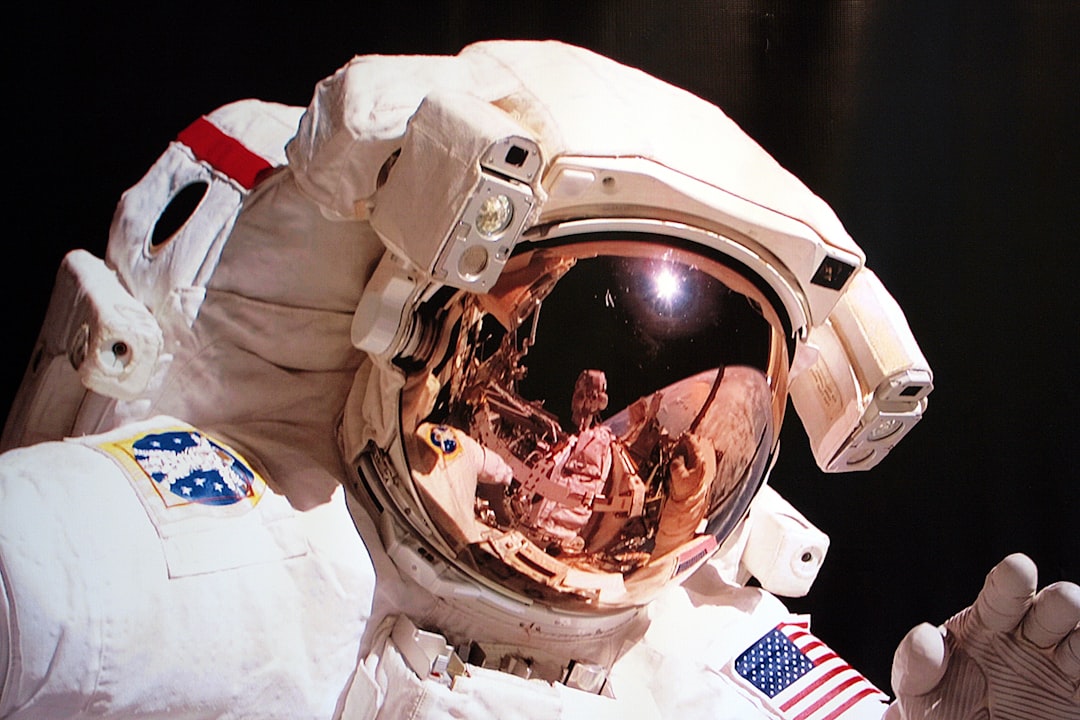
Their study, titled "The effect of short-term microgravity and hypergravity on eyelid and brow position," was published in the journal Eye & ENT Research. By analyzing 115 NASA photographs taken across 13 astronauts during spaceflight, the team was able to conduct a systematic, quantitative assessment of eyelid position changes under genuine microgravity conditions — a methodological approach that lends considerable weight to their conclusions.
What Happens to the Lower Eyelid in Microgravity?
During spaceflight, the lower eyelids naturally rise in response to the absence of gravitational pull. Over time, this upward creep can lead to a condition known as reverse ptosis — a relatively rare clinical finding in which the lower eyelid sits abnormally high on the eye, covering part of the lower edge of the cornea. Unlike classical ptosis, which refers to drooping of the upper eyelid and is commonly seen in aging or neurological conditions on Earth, reverse ptosis of the lower lid is seldom encountered outside of specific medical contexts.
To quantify this change, the researchers measured the Marginal Reflex Distance 2 (MRD2) — the distance from the center of the corneal light reflex to the lower eyelid margin. This is a standard clinical metric used by ophthalmologists to assess lower eyelid position. Their analysis revealed that MRD2 decreased by an average of 1 mm across all astronauts surveyed, a statistically meaningful shift in ocular anatomy.
"All astronauts surveyed exhibited signs of reverse ptosis, with 62% showing a change greater than 1 mm — a finding that underscores how rapidly and consistently microgravity reshapes even the most delicate facial structures."
These results are particularly notable because they are comparable to changes observed in astronauts after short-term parabolic flights — the so-called "vomit comet" maneuvers that simulate microgravity for only 20–30 seconds at a time. That similar eyelid changes appear both in brief parabolic exposures and during long-duration ISS missions suggests that the phenomenon occurs rapidly, likely within the first hours of weightlessness, and then persists and potentially compounds throughout longer stays in orbit.
The Mechanisms Behind the Change
To explain why lower eyelids migrate upward in space, the study's authors proposed two primary physiological mechanisms, both rooted in well-established principles of how the human body responds to the removal of gravitational loading.
1. Cephalad Fluid Shift
One of the most well-documented and dramatic physiological responses to microgravity is cephalad fluid shift — a headward redistribution of bodily fluids that occurs almost immediately upon entering weightlessness. On Earth, gravity keeps roughly 2 liters (approximately half a gallon) of fluid pooled in the lower extremities. In microgravity, this fluid migrates toward the upper body and head, causing the characteristic "puffy face" that astronauts and their ground teams are familiar with. Approximately 50 ml (~1.7 oz) of this redistributed fluid infiltrates the soft tissues of the head and neck, including the pretarsal area — the region of tissue directly over the tarsal plate of the eyelid. This localized swelling exerts mechanical pressure that physically forces the lower eyelid upward.
Cephalad fluid shift is also implicated in a broader and more serious condition known as Spaceflight-Associated Neuro-Ocular Syndrome (SANS), which affects a significant proportion of long-duration astronauts and involves changes to intracranial pressure, optic disc swelling, and vision impairment. The connection between fluid dynamics in the head and ocular health is, therefore, an active and critical area of space medicine research. More information on SANS can be found through NASA's Human Research Program.
2. Elastic Recoil of Facial Tissues
The second proposed mechanism involves the intrinsic elastic properties of periorbital facial tissues. On Earth, gravitational force constantly pulls facial soft tissues downward, creating a baseline tension that counteracts the natural elastic recoil of skin, muscle, and connective tissue. In microgravity, with gravitational loading removed, these elastic forces are no longer opposed, and tissues reposition themselves to minimize mechanical tension. For the lower eyelid and surrounding periorbital structures, this means an upward displacement — the tissues essentially "spring back" toward a neutral, gravity-free equilibrium. This mechanism parallels observations made during parabolic flight studies and is consistent with broader reports of facial puffiness and soft-tissue repositioning throughout spaceflight.
Why This Matters: Health Implications for Astronauts
At first glance, a 1 mm shift in eyelid position might seem trivial. But ophthalmologists and space medicine specialists are paying close attention, because the potential downstream effects on visual health are significant. The study's authors highlight several key concerns:
- Changes in corneal shape (keratometry): Persistent mechanical pressure from a displaced lower eyelid can subtly alter the curvature of the cornea, potentially inducing or worsening astigmatism in astronauts who must rely on precise visual acuity for mission-critical tasks.
- Reduced visual field: When the lower eyelid encroaches on the cornea, it can mechanically narrow the inferior visual field, limiting the range of vision in a direction that matters during activities requiring spatial awareness.
- Diminished visual acuity: Corneal distortion and partial obstruction by the eyelid margin can degrade overall sharpness of vision, compounding other spaceflight-associated vision changes.
- Compounding effects with SANS: Given that approximately 30% of astronauts report visual disturbances during or after spaceflight, understanding the contribution of lower eyelid changes to this symptom profile is a pressing research priority.
- Implications for long-duration missions: Future crewed missions to the Moon under NASA's Artemis Program and eventual missions to Mars will expose astronauts to microgravity for months or years at a time — potentially amplifying all of these effects far beyond what has been observed aboard the ISS.
It is worth noting that while this study does not yet establish a direct causal link between reverse ptosis and the vision symptoms reported by astronauts, it compellingly opens the door to that line of investigation. As the European Space Agency's Human and Robotic Exploration program and NASA continue to push the boundaries of long-duration spaceflight, understanding every facet of how the human body adapts — or struggles to adapt — to weightlessness becomes ever more critical.
The Bigger Picture: Ocular Health in Space
The eye has emerged as one of the most sensitive and vulnerable organs in the spaceflight environment. Beyond eyelid changes, long-duration astronauts have been found to experience optic disc edema (swelling of the optic nerve head), choroidal folds, globe flattening, and shifts in refractive error — all components of the increasingly well-characterized SANS. Research published through institutions like the NASA Human Health and Performance directorate and the Space Telescope Science Institute continues to refine our understanding of how microgravity, cosmic radiation, and elevated intracranial pressure conspire to reshape the astronaut eye over time.
The lower eyelid study adds a new and previously underappreciated layer to this picture. By focusing on the mechanical and fluid-dynamic forces acting on periorbital tissues, researchers are broadening the framework through which spaceflight-induced visual changes are understood — moving beyond intracranial pressure alone to consider the full biomechanical environment of the eye and its surrounding structures.
The Road Ahead: Future Research Priorities
The authors of the study are clear that their work is a beginning, not a conclusion. They call for standardized imaging protocols to be incorporated into pre-flight, in-flight, and post-flight medical assessments, enabling a more rigorous, longitudinal tracking of eyelid position changes across diverse astronaut populations. Such protocols would allow researchers to disentangle the relative contributions of fluid shift versus elastic recoil, determine whether the changes are fully reversible upon return to Earth's gravity, and assess whether certain individuals are more susceptible than others based on anatomy, age, or mission duration.
Additionally, as commercial spaceflight begins to carry a broader and more diverse range of individuals into orbit — including older passengers and those with pre-existing ocular conditions — understanding the full spectrum of ocular responses to microgravity will become a matter of public health as much as exploration medicine. Organizations such as the NASA Human Spaceflight program are already investing in precisely these questions.
"As we prepare for missions to the Moon, Mars, and beyond, no physiological detail is too small to investigate. The eye that navigates a spacecraft, docks a module, or conducts a spacewalk must function flawlessly — and every millimeter of eyelid position may ultimately count."
From the subtle upward drift of a lower eyelid to the complex remodeling of the optic nerve, space continues to teach us that the human body — shaped by millions of years of evolution under Earth's gravitational embrace — faces extraordinary challenges when that embrace is removed. Each new finding not only brings us closer to protecting the health of astronauts on ambitious future missions, but also deepens our fundamental understanding of human physiology right here on Earth.