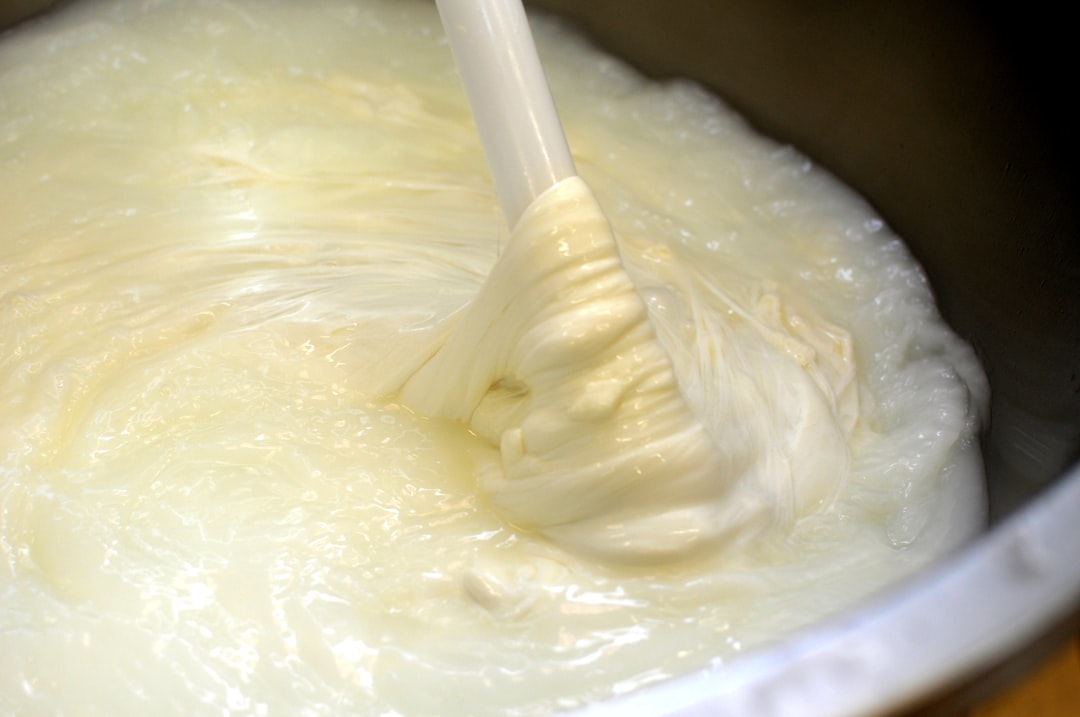
In laboratories around the world, scientists are grappling with a peculiar challenge: understanding why everyday products mysteriously transform over time. The sunscreen bottle tucked away in your medicine cabinet gradually loses its protective properties. The jar of mayonnaise in your refrigerator slowly develops an oily layer on top. That expensive prescription cream becomes less effective as months pass. These seemingly unrelated phenomena share a common thread—they're all examples of soft matter, a fascinating class of materials that includes gels, foams, emulsions, and colloids, whose internal structures reorganize themselves in ways scientists are only beginning to understand.
For decades, researchers have struggled to unravel the mysteries of how these materials age and change. The culprit behind their difficulties? Gravity itself. Even when sitting motionless on a shelf, Earth's constant gravitational pull influences how microscopic particles within these substances settle, cluster, and rearrange themselves over time. This gravitational interference has made it nearly impossible to observe the true, intrinsic behavior of soft matter. Now, an international team of scientists from Politecnico di Milano and the Université de Montpellier has taken their research to the one place where gravity's influence disappears entirely: the International Space Station.
The Revolutionary COLIS Laboratory Takes Flight
The answer to this gravitational conundrum is COLIS (Colloids in Space), a cutting-edge experimental facility now operational aboard the International Space Station. This sophisticated laboratory represents the culmination of more than a quarter-century of collaboration between Luca Cipelletti, a distinguished physicist at the Laboratoire Charles Coulomb, and Roberto Piazza, who directs the Soft Matter laboratory at Politecnico di Milano. Their partnership has finally borne fruit in the form of a space-based research platform that promises to revolutionize our understanding of materials science.
The COLIS facility employs advanced optical techniques to peer inside materials without physically disturbing their delicate internal structures. At its heart is a dynamic light scattering system that analyzes how laser beams pass through samples, revealing intricate variations called speckle patterns. These patterns serve as a window into the molecular world, showing researchers exactly how gels and other soft materials restructure themselves over time. The facility can also precisely heat samples to trigger aging processes in controlled, reproducible ways, then observe the resulting changes at the molecular level with unprecedented clarity.
Understanding Soft Matter: The Science Behind Everyday Materials
To appreciate the significance of this space-based research, it's essential to understand what makes soft matter so unique and challenging to study. Unlike crystalline solids with rigid, ordered structures, or simple liquids with freely flowing molecules, soft matter exists in a fascinating middle ground. These materials—which include everything from yogurt and shaving cream to biological tissues and advanced drug delivery systems—contain structures that are large on a molecular scale but small enough to be influenced by thermal fluctuations.
The defining characteristic of soft matter is its ability to reorganize internally over extended periods. A colloid, for instance, consists of tiny particles suspended in a liquid medium. Over time, these particles can cluster together, separate, or form networks, fundamentally changing the material's properties. In Earth's gravitational field, denser particles naturally sink while lighter components rise, a process called sedimentation. This gravitational sorting happens constantly, making it extraordinarily difficult to distinguish between changes caused by the material's intrinsic properties and those induced by gravity's relentless pull.
The Gravitational Interference Problem
Scientists have long suspected that gravity plays a significant role in how soft matter behaves, but the extent of its influence remained unclear. Traditional laboratory experiments on Earth cannot separate gravitational effects from the materials' natural aging processes. Even sophisticated techniques like drop towers and parabolic flights, which provide brief periods of microgravity, offer only fleeting glimpses lasting seconds to minutes—far too short to observe the slow, gradual transformations that occur over months or years.
The International Space Station's permanent microgravity environment changes everything. Here, samples can be observed for extended periods without gravitational interference, allowing researchers to witness the true nature of soft matter evolution. Early results from COLIS have already yielded surprising discoveries that challenge existing theories about material behavior.
"It's amazing to see how much gravity, so familiar in our daily lives, acts behind the scenes to shape the materials we use every day. What we're learning in space is forcing us to reconsider fundamental assumptions about how these materials behave," said Roberto Piazza from the Soft Matter laboratory at Politecnico di Milano.
Breakthrough Findings and Unexpected Discoveries
The preliminary data emerging from COLIS has already surprised the research team. Gravity's influence on soft matter structure appears to be even more dramatic than theoretical models predicted, affecting material properties across timescales ranging from hours to months. These findings have profound implications for how we formulate and manufacture countless everyday products.
One particularly striking observation involves the aging dynamics of colloidal gels. On Earth, these materials appear to stabilize relatively quickly, reaching what seems like an equilibrium state. However, in microgravity, the same gels continue to evolve and reorganize for much longer periods, suggesting that what we observe on Earth may be a gravitationally-constrained state rather than the material's true equilibrium configuration. This discovery could explain why some products fail unexpectedly after extended storage, despite passing stability tests that assumed they had reached a stable state.
Real-World Applications: From Pharmaceuticals to Food Science
The practical implications of this research extend far beyond academic curiosity. Multiple industries stand to benefit enormously from a deeper understanding of soft matter behavior in the absence of gravitational effects:
- Pharmaceutical Development: Drug manufacturers need medications that remain stable and effective for years, often under varying storage conditions. Understanding how active pharmaceutical ingredients suspended in creams, gels, or liquid formulations truly behave could lead to more stable formulations and longer shelf lives, potentially saving millions of dollars in waste and improving patient outcomes.
- Cosmetics Industry: High-end cosmetic companies invest heavily in creating creams and lotions that maintain their texture and effectiveness throughout their shelf life. The insights from COLIS could help formulators design products that resist separation and maintain consistency without requiring excessive stabilizers or preservatives.
- Food Technology: Emulsions are ubiquitous in food products, from salad dressings to ice cream. Understanding their fundamental stability mechanisms could revolutionize food formulation, leading to products with better texture, longer shelf life, and potentially fewer artificial additives.
- Advanced Materials: Beyond consumer products, soft matter principles apply to advanced technologies including 3D printing materials, self-healing polymers, and smart materials that respond to environmental changes.
The European Space Agency's Vision
COLIS operates under the European Space Agency's comprehensive "Colloids in Space" programme, which receives additional support from the Italian Space Agency (ASI) and the French space agency (CNES). This multi-national collaboration reflects the growing recognition that space-based research platforms offer unique opportunities to answer fundamental scientific questions that cannot be addressed on Earth.
The facility is currently analyzing carefully selected samples of colloidal nanoparticles specifically chosen for their ideal properties for investigating internal reorganization and aging mechanisms. These samples were transported to the ISS aboard recent cargo resupply missions, carefully packaged to survive launch conditions while maintaining their scientific integrity.
Future Horizons: What Comes Next
The success of COLIS opens exciting possibilities for future research. The team plans to expand their investigations to include a broader range of soft matter systems, including biological materials like proteins and cellular structures. Understanding how these materials behave in microgravity could have implications for long-duration space missions, where crew members will need stable pharmaceuticals, food products, and personal care items that function reliably for months or years.
Moreover, the experimental techniques pioneered by COLIS could be adapted for other space-based research facilities. The dynamic light scattering methodology developed for this project represents a non-invasive approach that could be applied to studying crystal growth, protein crystallization for drug development, and even the behavior of complex fluids in space-based manufacturing processes.
As humanity looks toward establishing permanent presence beyond Earth—including lunar bases and eventual Mars missions—understanding how everyday materials behave in reduced gravity environments becomes increasingly critical. The insights gained from COLIS will inform the design of life support systems, food storage solutions, and medical supplies for future space explorers.
The seemingly simple question of why mayonnaise separates in your refrigerator has led scientists to conduct experiments 400 kilometers above Earth's surface. This journey from kitchen curiosity to space-based research exemplifies how fundamental scientific questions often lead to unexpected places—and how the pursuit of understanding can yield practical benefits that touch our daily lives in ways we never anticipated. As COLIS continues its mission aboard the International Space Station, each data point brings us closer to mastering the subtle science of soft matter, potentially transforming industries and improving countless products we use every single day.