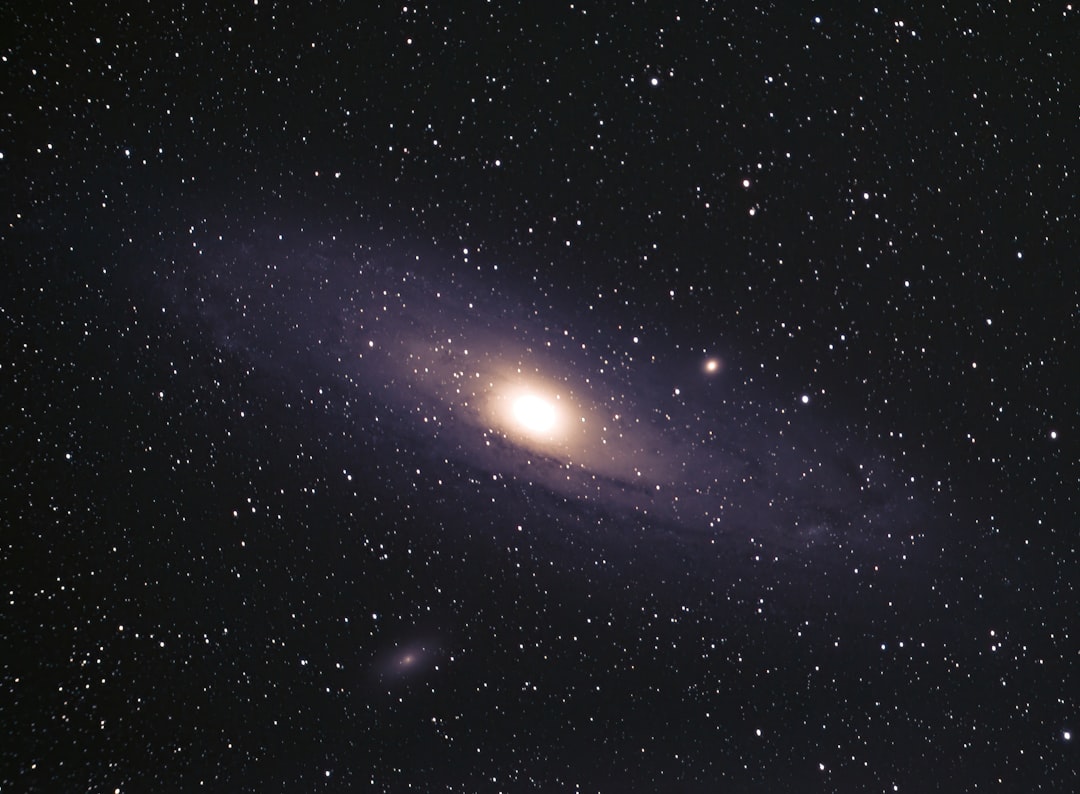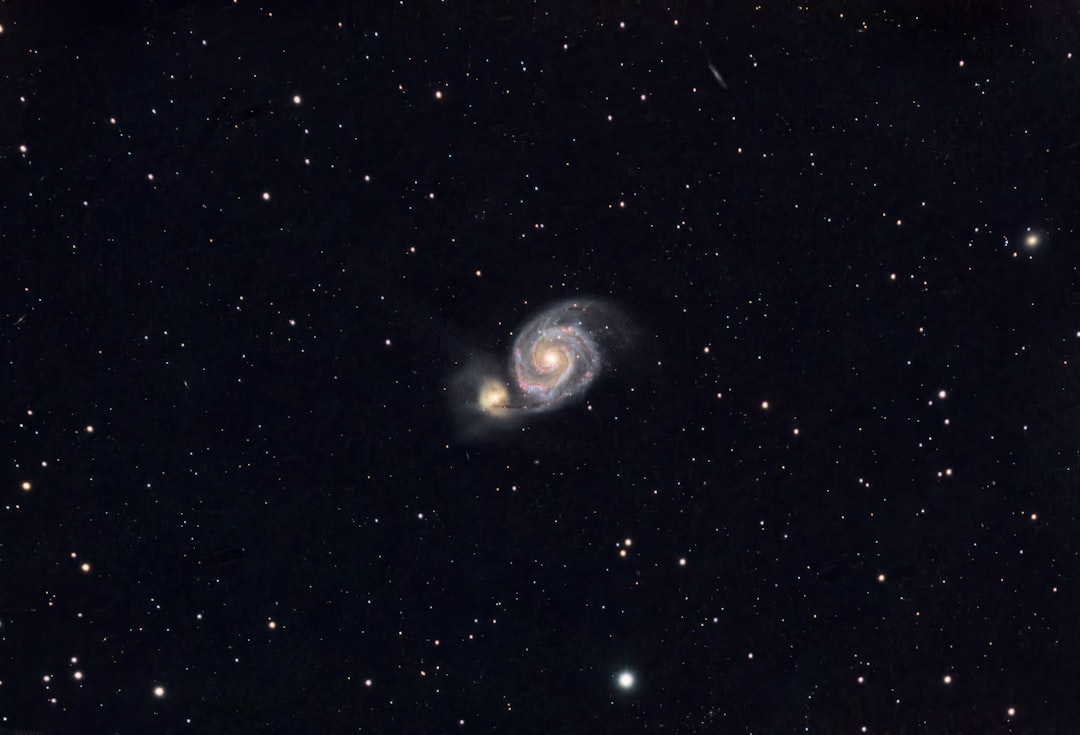
Imagine conducting a comprehensive population survey by flying over a city and photographing every building from above. You'd capture stunning aerial imagery and create detailed maps, but you'd remain fundamentally ignorant about the inhabitants—their ages, occupations, languages, or stories. This is precisely the predicament facing modern astronomy as we stand on the cusp of an unprecedented era of cosmic cartography. Next-generation survey telescopes like the European Space Agency's Euclid mission and the Vera Rubin Observatory are poised to photograph more than 30 billion galaxies—a number so vast it defies human comprehension. Yet without detailed spectroscopic analysis of each galaxy's light, these images remain beautiful but scientifically incomplete snapshots of our universe.
The challenge is monumental: transforming billions of galaxy photographs into actionable scientific knowledge requires measuring each object's spectroscopic signature—its redshift revealing cosmic distance, its chemical composition telling stories of stellar evolution, and its velocity mapping the universe's dynamic structure. This painstaking process demands enormous amounts of telescope time, creating a critical bottleneck in our quest to understand the cosmos. We're drowning in data while thirsting for knowledge, possessing more cosmic photographs than we can possibly analyze with current technology.
The Current State of Spectroscopic Surveys
Today's champion in the spectroscopic arena is DESI, the Dark Energy Spectroscopic Instrument, which operates from Kitt Peak National Observatory in the high desert of Arizona. This remarkable instrument represents the cutting edge of current technology, simultaneously capturing spectra from 5,000 celestial objects during each observation. DESI has already achieved the extraordinary feat of constructing the largest three-dimensional map of the universe ever created, charting the positions and distances of millions of galaxies with unprecedented precision. The instrument's 5,000 robotic fiber positioners work in concert, each one a miniature robot capable of pointing at a different galaxy, collecting its light, and feeding it to spectrographs that break that light into its component wavelengths.
Yet despite DESI's impressive capabilities and groundbreaking achievements, the mathematics of the challenge are sobering. When confronted with catalogues containing tens of billions of galaxies, even 5,000 simultaneous measurements seem inadequate—analogous to attempting to empty an ocean using a bucket, and not a particularly large bucket at that. At current rates, completing spectroscopic surveys of all catalogued galaxies would require centuries of continuous observation. The astronomical community has recognized this limitation as one of the most significant obstacles to advancing our understanding of cosmic structure and evolution.
Engineering Marvel: The MUltiplexed Survey Telescope
Enter MUST—the MUltiplexed Survey Telescope—a revolutionary instrument currently under construction that promises to transform our approach to cosmic spectroscopy. Led by Tsinghua University and positioned at a breathtaking altitude of 4,380 meters in Qinghai province, China, MUST represents a quantum leap in survey capability. The telescope's location at such extreme elevation places it above approximately 40% of Earth's atmosphere, significantly reducing atmospheric interference and providing exceptionally clear views of the cosmos.
At the heart of MUST's revolutionary design lies an unprecedented technological achievement: a focal plane array containing more than 20,000 robotic fiber positioners. Each positioner functions as an independent, miniaturized robotic arm capable of precisely targeting and locking onto a different galaxy in mere seconds. This represents four times the multiplexing capability of DESI and creates a system of unparalleled efficiency. The focal plane covers a field of view approximately 20 times the area of the full moon as seen from Earth—a vast swath of sky that can be simultaneously analyzed in exquisite spectroscopic detail.
"MUST will be ten times more powerful in survey efficiency than anything operating today, fundamentally changing the pace at which we can map the universe's large-scale structure and unlock the secrets of cosmic evolution," according to the project's technical specifications.
The telescope's primary mirror spans an impressive 6.5 meters in diameter, gathering vast amounts of light from distant cosmic sources. But perhaps even more remarkable is its five-lens wide-field corrector system, crowned by the largest aspheric lens ever manufactured for astronomical purposes. This optical masterpiece ensures extraordinarily sharp, distortion-free images across the entire expansive field of view—a critical requirement when 20,000 individual fibers must be precisely positioned to capture light from 20,000 different targets simultaneously. The engineering tolerances are unforgiving; even microscopic errors in positioning could compromise the quality of spectroscopic data.
Scientific Objectives and Cosmic Questions
Beginning in the early 2030s, MUST will embark on an ambitious eight-year observational campaign with goals that extend far beyond simple galaxy counting. The mission aims to measure precise redshifts for more than 100 million galaxies and quasars, constructing the most detailed and comprehensive three-dimensional map of cosmic structure ever assembled. This won't be merely an exercise in cartography—it represents a fundamental probe into the deepest mysteries of physics and cosmology.
The scientific questions MUST will address include some of the most profound puzzles facing modern physics:
- The Nature of Dark Energy: By mapping how cosmic expansion has evolved over billions of years, MUST will provide crucial constraints on the mysterious force driving the universe's accelerating expansion, potentially distinguishing between competing theoretical models.
- Neutrino Mass Determination: The subtle influence of neutrino mass on the clustering of galaxies across cosmic scales will be detectable in MUST's vast dataset, helping to resolve one of particle physics' outstanding questions.
- Testing General Relativity: Einstein's theory has passed every test in our solar system, but MUST will examine whether it holds true across billions of light-years, potentially revealing modifications to gravity on cosmic scales.
- The Early Universe: By studying distant quasars and galaxies from the universe's first billion years, MUST will illuminate the cosmic "dark ages" and the epoch when the first stars and galaxies ignited, transforming the cosmos from darkness to light.
- Galaxy Evolution: Tracing how galaxies have grown, merged, and evolved over cosmic time will provide unprecedented insights into the processes that created the diverse galaxy population we observe today.
Technological Innovation and International Collaboration
The development of MUST showcases the remarkable advancement in precision robotics and optical engineering that modern astronomy demands. Each of the 20,000 fiber positioners must operate with exceptional reliability, positioning accuracy measured in micrometers, and the ability to reconfigure for new targets in seconds. The control systems managing this robotic army represent a significant computational challenge, requiring sophisticated algorithms to optimize target selection, minimize fiber collisions, and maximize scientific return from each observation.
The project exemplifies the growing importance of international collaboration in big science endeavors. While led by Tsinghua University, MUST benefits from expertise and technology developed through decades of spectroscopic survey experience worldwide, building upon lessons learned from pioneering instruments like the Sloan Digital Sky Survey, which revolutionized our understanding of cosmic structure in the early 2000s.
The Future of Cosmic Cartography
When MUST achieves first light in the 2030s, it will inaugurate a new era in observational cosmology—one where our capacity to analyze the universe finally begins to match our ability to photograph it. The instrument's data will feed into broader efforts to understand cosmic structure formation, working synergistically with imaging surveys from Euclid, the Rubin Observatory, and future missions like NASA's Nancy Grace Roman Space Telescope.
The sheer volume of spectroscopic data MUST will generate—100 million galaxy spectra over eight years—will create new challenges and opportunities in astronomical data analysis. Machine learning algorithms and artificial intelligence will play crucial roles in extracting maximum scientific value from this unprecedented dataset, identifying subtle patterns and correlations that might escape human analysis.
Perhaps most importantly, MUST represents a philosophical shift in how we approach cosmic surveys. We're moving beyond the era of simply cataloguing what exists in the universe toward truly understanding the physical processes, evolutionary histories, and fundamental forces that have shaped the cosmos over 13.8 billion years. Each spectrum MUST captures is not just a data point but a time machine, revealing the state of a galaxy as it existed millions or billions of years ago, when its light began its journey across the universe.
As we stand at this technological threshold, the promise is clear: the 2030s will be remembered as the decade when humanity finally stopped merely photographing the universe and began genuinely comprehending it. With 20,000 robotic eyes simultaneously probing the cosmos, MUST will help answer questions we've pondered for generations while undoubtedly revealing new mysteries we haven't yet imagined. The universe is about to become far less mysterious—and far more wondrous—than we ever thought possible.