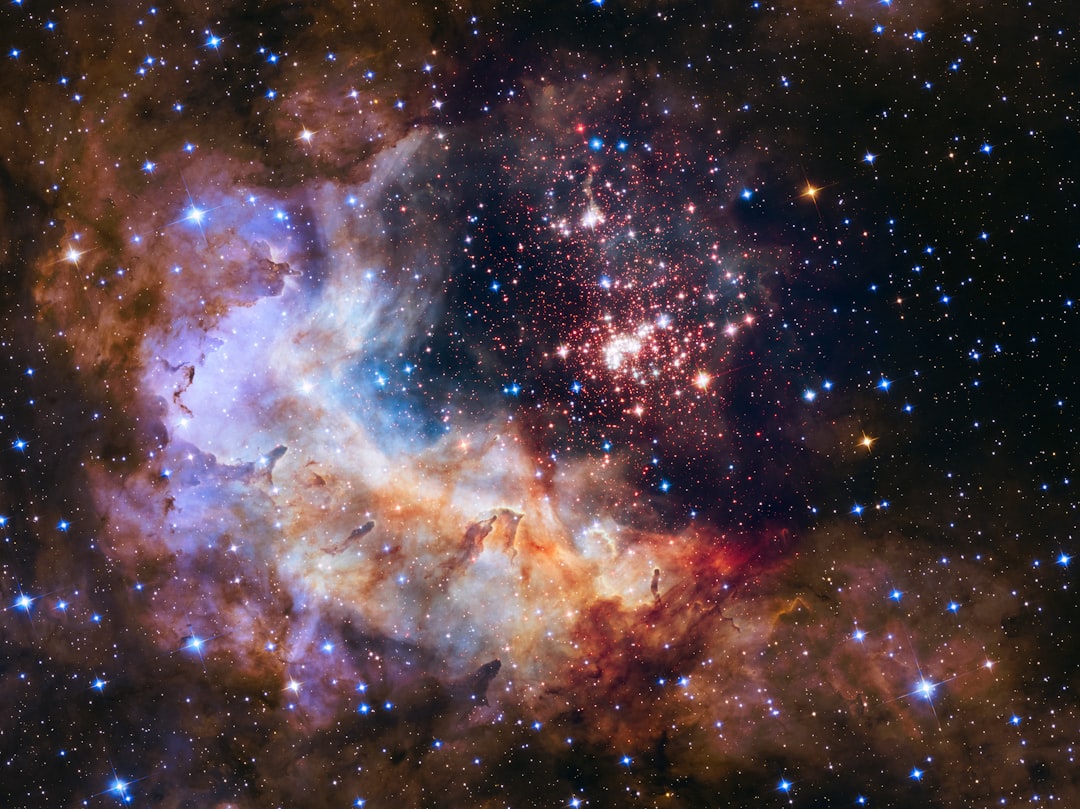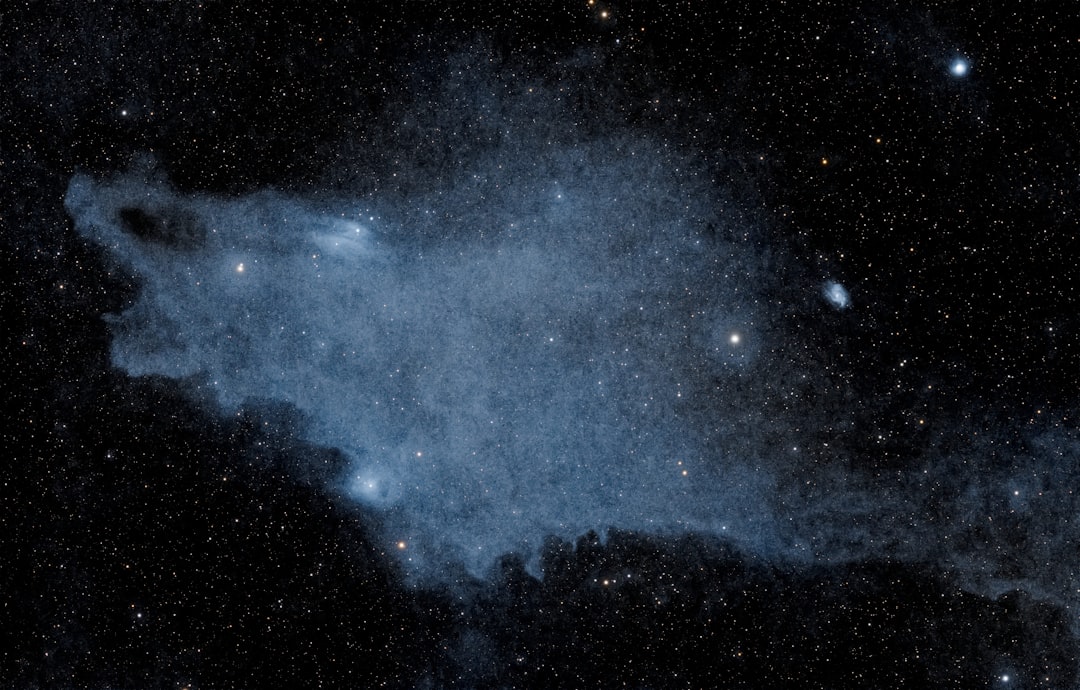
In the vast cosmic neighborhood surrounding our Milky Way galaxy, two irregular dwarf galaxies have captivated astronomers for centuries with their proximity and scientific potential. The Large and Small Magellanic Clouds, positioned at distances of approximately 163,000 and 206,000 light-years respectively, serve as invaluable cosmic laboratories where scientists can observe galactic processes that remain obscured within our own galaxy. Now, a groundbreaking five-year spectroscopic survey promises to unlock unprecedented insights into these enigmatic stellar systems, addressing fundamental questions about galaxy formation, stellar evolution, and cosmic interactions that have puzzled researchers for decades.
The newly established research initiative at the Leibniz Institute for Astrophysics Potsdam (AIP) represents a paradigm shift in how astronomers study our galactic neighbors. Led by Dr. Lara Cullinane, this ambitious project leverages the revolutionary capabilities of 4MOST (four-metre Multi-Object Spectrograph Telescope), a cutting-edge instrument mounted on the VISTA telescope at Chile's Paranal Observatory. Unlike previous photometric surveys that captured only light intensity and color information, this comprehensive spectroscopic investigation will dissect the light from half a million individual stars, revealing their chemical compositions, velocities, and evolutionary histories with unprecedented precision.
The significance of this research extends far beyond cataloging stellar properties. By analyzing the kinematics and chemical abundances of diverse stellar populations across both Magellanic Clouds, scientists aim to reconstruct the complex gravitational dance these galaxies have performed over billions of years. This cosmic choreography involves not only their interactions with each other but also their potentially first-time encounter with the Milky Way—a revelation suggested by recent data from the ESA's Gaia mission that has fundamentally challenged our understanding of these satellite galaxies' orbital history.
Cosmic Laboratories on Our Doorstep: Why the Magellanic Clouds Matter
The Large and Small Magellanic Clouds occupy a unique position in astronomical research, offering advantages that make them irreplaceable natural laboratories for studying galactic evolution. Their relative proximity allows astronomers to resolve individual stars with clarity impossible for more distant galaxies, while their external vantage point provides a comprehensive view unavailable for our own Milky Way, where our position within the galactic disk obscures large-scale structures and processes.
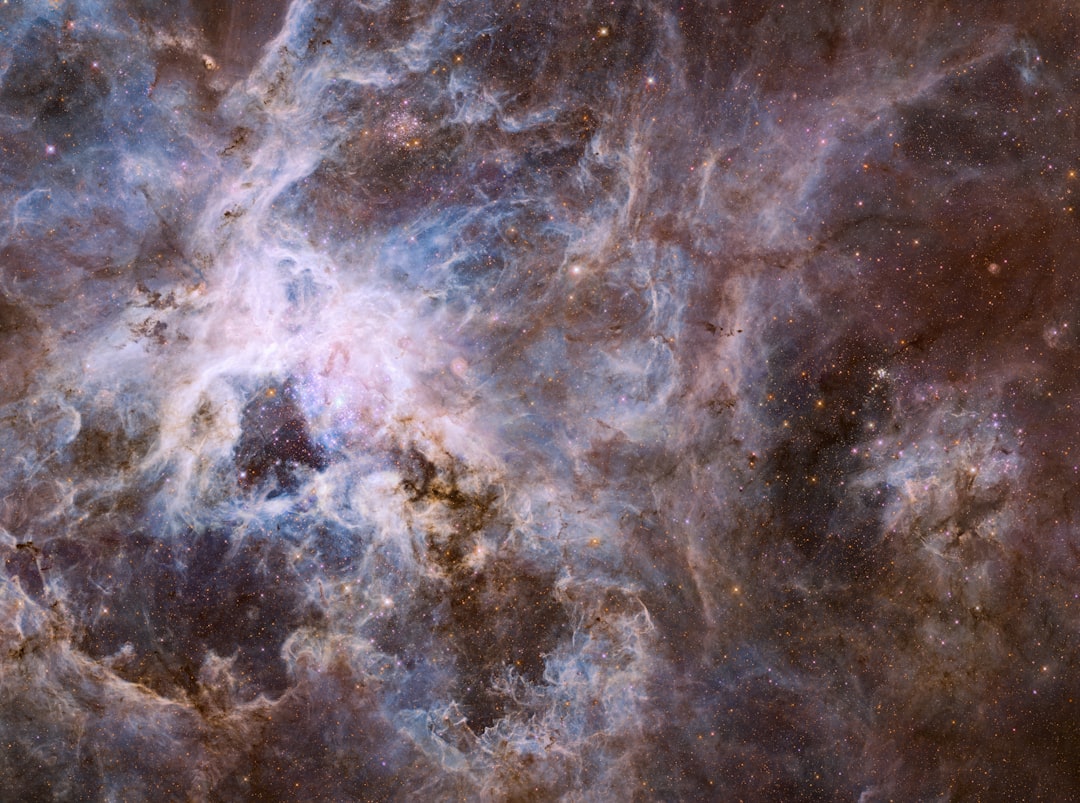
These dwarf galaxies harbor some of the universe's most spectacular stellar phenomena. The Large Magellanic Cloud hosts the magnificent Tarantula Nebula (30 Doradus), an extraordinarily active star-forming region spanning nearly 1,000 light-years across. This stellar nursery contains some of the most massive stars known to science, including R136a1, which tips the scales at approximately 265 solar masses. Meanwhile, the Small Magellanic Cloud features NGC 346, an open star cluster that continues to forge massive stars at a prodigious rate, providing astronomers with a real-time laboratory for studying high-mass stellar birth.
Beyond their spectacular nebulae and star clusters, the Magellanic Clouds contain populations of Cepheid variable stars—pulsating giants whose predictable brightness variations serve as cosmic yardsticks. These stellar beacons played a crucial role in Edwin Hubble's revolutionary discovery of the universe's expansion and continue to anchor the cosmic distance ladder that astronomers use to measure vast intergalactic distances. The clouds also host numerous RR Lyrae variables, another class of standard candles that help trace the structure and history of these ancient stellar systems.
Revolutionary Technology: 4MOST and the VISTA Telescope
The technological foundation of this ambitious survey rests on the remarkable capabilities of the VISTA (Visible and Infrared Survey Telescope for Astronomy), a 4.1-meter wide-field telescope specifically designed to survey the southern sky in near-infrared wavelengths. As the world's largest survey telescope dedicated to near-infrared observations, VISTA features a massive three-ton, 67-megapixel digital camera that can detect extremely faint celestial sources across a wide field of view—capabilities essential for capturing the full extent of the Magellanic Clouds and their surrounding structures.
The 4MOST instrument, which achieved first light in October 2024 and is currently undergoing commissioning, represents a quantum leap in spectroscopic survey technology. This fiber-fed spectrograph can simultaneously observe hundreds of celestial objects, gathering detailed spectra that reveal not just what stars are made of, but how fast they're moving and how their chemical compositions evolved over cosmic time. According to the European Southern Observatory, full science operations are scheduled to commence in the second quarter of 2026, marking the beginning of a dedicated five-year survey period during which VISTA and 4MOST will focus exclusively on predetermined survey programs.
"My work involves looking in detail at the photometric, kinematic, and chemical properties of resolved stellar populations in nearby galaxies in order to trace their history, and learn more about the processes that drive their evolution across cosmic time," explains Dr. Lara Cullinane, who will lead the new research group at AIP.
The One Thousand and One Magellanic Fields Survey: Unprecedented Scope and Ambition
The One Thousand and One Magellanic Fields (1001MC) survey, for which Dr. Cullinane serves as co-Principal Investigator, represents one of the most comprehensive spectroscopic investigations of the Magellanic system ever undertaken. This ambitious program will acquire high-resolution spectra for approximately half a million stars distributed across both clouds and their outlying regions, creating an unprecedented dataset that will enable chemical tagging—a powerful technique for tracing the birth origins and evolutionary paths of stellar populations.
The survey's strategic design ensures comprehensive coverage of the Magellanic Clouds' diverse stellar populations and substructures. By targeting stars at various evolutionary phases—from ancient red giants that formed billions of years ago to young, hot blue stars still in their stellar infancy—astronomers will reconstruct a detailed timeline of star formation spanning cosmic epochs. The spatial distribution of survey targets extends well beyond the clouds' visible boundaries, capturing outlying stars and structures that trace the gravitational interactions and tidal disruptions these galaxies have experienced.
What distinguishes this survey from previous investigations is its emphasis on high-resolution spectroscopy capable of measuring precise chemical abundances for multiple elements. While earlier surveys like the VISTA survey of the Magellanic Clouds system (VMC), the Survey of the MAgellanic Stellar History (SMASH), and the Optical Gravitational Lensing Experiment (OGLE) provided valuable photometric data, they lacked the spectroscopic depth necessary for detailed chemical analysis. As noted in the ESO documentation, this spectroscopic deficiency has been a critical gap in our understanding of the clouds' formation and evolution.
Unraveling Cosmic Mysteries: Key Questions Driving the Research
The Magellanic Clouds present astronomers with a constellation of interconnected mysteries, each offering insights into fundamental processes governing galactic evolution. Among the most intriguing questions is the nature of the clouds' orbital relationship with the Milky Way. Traditional models assumed these satellite galaxies had been orbiting our galaxy for billions of years, gradually losing mass through tidal interactions. However, precise proper motion measurements from the Gaia spacecraft suggest a dramatically different scenario: the Magellanic Clouds may be on their very first passage by the Milky Way, a revelation that fundamentally alters our understanding of their evolutionary history.
The mysterious Magellanic Stream—a colossal ribbon of neutral hydrogen gas stretching across more than 200 degrees of the southern sky—poses another compelling puzzle. This enormous structure, containing roughly a billion solar masses of gas, trails behind the clouds like a cosmic wake, extending through the Milky Way's southern galactic pole. Ahead of the clouds lies the Leading Arm, a complementary feature that suggests complex gravitational interactions. Scientists debate whether ram pressure from the Milky Way's hot gaseous halo, tidal stripping from gravitational forces, or interactions between the clouds themselves created these structures. The 1001MC survey's kinematic data will help discriminate between these competing mechanisms.
Episodic Star Formation and Chemical Evolution
Unlike the Milky Way's relatively steady star formation rate, the Magellanic Clouds exhibit episodic bursts of stellar birth—periods of intense star formation punctuated by relative quiescence. Understanding what triggers these bursts remains a fundamental challenge. Do gravitational interactions with the Milky Way or between the clouds themselves compress gas clouds and ignite star formation? Or do internal processes, such as supernova feedback from previous stellar generations or the accumulation of gas beyond critical density thresholds, drive these episodes?
The clouds' chemical compositions add another layer of complexity. Both galaxies are significantly more gas-rich than the Milky Way, with hydrogen and helium constituting a larger fraction of their total mass. Paradoxically, they exhibit lower metallicity—fewer heavy elements forged in stellar furnaces—despite hosting stellar populations spanning from ancient to newly formed. This metallicity distribution isn't uniform; gradients exist across the clouds' structures, reflecting complex histories of gas flows, mixing, and enrichment from successive generations of stars.
By measuring precise chemical abundances for hundreds of thousands of stars, the 1001MC survey will map how metallicity and individual element ratios vary across the clouds' spatial extents and among different stellar age groups. These chemical abundance patterns serve as archaeological records, preserving information about the conditions under which stars formed and the sources of their constituent elements. For instance, the ratio of alpha elements (like oxygen and magnesium) to iron reveals whether stars formed from material enriched primarily by massive stars' core-collapse supernovae or by Type Ia supernovae from white dwarf systems—processes operating on different timescales.
Building on Legacy: Previous Surveys and the Spectroscopic Gap
The 1001MC survey builds upon decades of observational campaigns that have mapped the Magellanic Clouds across multiple wavelengths. The VISTA survey of the Magellanic Clouds system (VMC) provided deep near-infrared photometry, revealing stellar populations obscured by dust and tracing the three-dimensional structure of these galaxies. The SMC in Time: Evolution of a Prototype interacting late-type dwarf galaxy (STEP) survey focused specifically on the Small Magellanic Cloud's star formation history, while SMASH mapped stellar populations across unprecedented spatial scales.
These photometric surveys, along with data from NASA's Hubble Space Telescope and the Gaia spacecraft, have created comprehensive catalogs of millions of stars, characterizing their brightnesses, colors, and positions with exquisite precision. However, photometry alone cannot reveal the detailed chemical compositions and precise radial velocities essential for understanding stellar origins and kinematics. As the ESO documentation emphasizes, there exists "a pronounced lack of spectroscopic observations across the range of stellar populations and substructures of the Magellanic Clouds."
Existing spectroscopic studies, while valuable, have been limited in scope and resolution. Many focused on specific stellar types or regions rather than providing comprehensive coverage. Others lacked the high spectral resolution necessary for chemical tagging—measuring abundances for multiple elements with sufficient precision to identify stars born from the same molecular cloud. The 1001MC survey addresses these limitations by combining wide spatial coverage, large sample sizes, and high-resolution spectroscopy capable of measuring abundances for numerous chemical elements.
Implications for Galactic Evolution and Cosmology
The insights gained from studying the Magellanic Clouds extend far beyond these particular galaxies, informing our understanding of galaxy evolution across cosmic time. As relatively low-mass, gas-rich systems, the clouds represent the most common type of galaxy in the universe—dwarf galaxies that constitute the fundamental building blocks of cosmic structure in hierarchical formation models. Understanding how these systems form stars, retain or lose gas, and respond to environmental influences provides crucial constraints on theoretical models of galaxy evolution.
The clouds' interaction with the Milky Way offers a local laboratory for studying processes that shape galaxies throughout the universe. Galaxy interactions and mergers have played fundamental roles in cosmic evolution, triggering star formation, redistributing gas, and transforming galactic structures. By resolving individual stars in the Magellanic Clouds and tracing their kinematic and chemical properties, astronomers can reconstruct the detailed history of these interactions with a precision impossible for more distant systems.
Furthermore, the variable stars in the Magellanic Clouds continue to refine the cosmic distance ladder, the hierarchical system of measurement techniques that extends from our solar system to the observable universe's edge. Precise distances to the clouds, combined with studies of their Cepheid and RR Lyrae variables, help calibrate these standard candles, ultimately improving measurements of the Hubble constant—the rate of the universe's expansion—and constraining cosmological models.
Looking Forward: A New Era of Magellanic Cloud Science
As the 4MOST instrument completes commissioning and begins full science operations in 2026, the astronomical community anticipates a transformative dataset that will reshape our understanding of the Magellanic Clouds. The half-million stellar spectra from the 1001MC survey will enable statistical studies impossible with smaller samples, revealing subtle patterns in chemical abundances, kinematic structures, and stellar populations that trace the clouds' complex histories.
Dr. Cullinane's research group at AIP will play a central role in analyzing this wealth of data, focusing particularly on the clouds' outer regions where tidal interactions leave their clearest signatures. By comparing the kinematics and chemical compositions of stars in different locations and evolutionary phases, researchers will reconstruct how the clouds have exchanged material with each other and with the Milky Way, how their star formation has responded to gravitational perturbations, and how their chemical enrichment has proceeded over billions of years.
The survey's legacy will extend beyond its five-year operational period. The comprehensive spectroscopic database will serve as a reference for future studies, enabling comparisons with observations from next-generation facilities and supporting investigations of specific stellar populations, clusters, and substructures. Combined with ongoing photometric surveys and future missions, the 1001MC data will help answer longstanding questions about our nearest galactic neighbors while raising new puzzles that will drive Magellanic Cloud research for decades to come.
In an era when astronomers routinely observe galaxies billions of light-years distant, the Magellanic Clouds remind us that some of the most profound insights into cosmic evolution come from studying our immediate neighborhood. These irregular dwarf galaxies, visible to the naked eye from Earth's southern hemisphere, continue to challenge our understanding and reward careful investigation with discoveries that illuminate the nature of galaxies throughout the universe.