A Thermal Camera Trick Could Let LIGO See Twice as Far
There is a delicious irony buried at the heart of this story. One of the most sensitive instruments ever constructed by human hands — a machine capable of measuring distortions smaller than one ten-thousandth the width of a proton — has been quietly constrained by something as stubbornly mundane as heat. And the fix, as it turns out, is not some exotic quantum sensor or a billion-dollar engineering program. It is a thermal camera that you could genuinely order off the shelf.
The finding, led by Jonathan Richardson and his team at the University of California, Riverside, represents one of the most elegantly simple instrumentation advances in the history of gravitational wave astronomy — and it could ultimately allow LIGO to survey a volume of the universe more than twice as large as it can today.
How LIGO Hears the Universe
To appreciate why this matters, it helps to understand what LIGO — the Laser Interferometer Gravitational-Wave Observatory — actually does. When cataclysmic cosmic events occur, such as two black holes spiraling into each other or two neutron stars colliding in a blaze of gamma-ray fire, they send ripples propagating outward through the very fabric of spacetime itself. These are gravitational waves, first predicted by Albert Einstein in his General Theory of Relativity in 1916, but not directly detected until a century later, in September 2015, when LIGO registered the signal now designated GW150914.
LIGO detects these cosmic whispers by splitting a laser beam and sending each half down one of two four-kilometre vacuum arms arranged in an L-shape. When a gravitational wave passes through Earth, it compresses space along one arm and stretches it along the other by a fractional amount. The two beams, upon returning and recombining, fall slightly out of phase with each other — and that infinitesimal mismatch is precisely what LIGO measures. The displacements involved are staggering in their smallness: on the order of 10⁻¹⁸ metres, or roughly 1,000 times smaller than a proton.
"LIGO's mirrors are among the purest optical components ever manufactured by humanity, yet even they are not perfect — and in an instrument this sensitive, imperfection has consequences."
To achieve the extraordinary sensitivity required, LIGO circulates laser light within its arm cavities at effective power levels approaching one megawatt — many times greater than the original input laser power, amplified through a technique called Fabry-Pérot resonant cavities. This ferocious amplification is what gives LIGO its reach. But it is also, it turns out, its Achilles heel.
The Hidden Enemy: Thermal Distortion
LIGO's test mass mirrors are marvels of optical engineering. Manufactured from some of the purest fused silica glass ever produced, their reflective coatings are so refined that they absorb only a few parts per million of the light striking them. But when you are circulating nearly a megawatt of laser power, even a few parts per million represents a meaningful amount of absorbed energy. That energy becomes heat, and heat warps the mirror's surface — by just a few nanometres, admittedly, but in a machine measuring distances at the sub-attometre scale, a few nanometres is catastrophic.
This phenomenon, known as thermal lensing, causes the mirror to act like a subtly misshapen optical element. The laser beam that bounces off it is no longer perfectly shaped; it accumulates wavefront errors that propagate through the entire optical system. The practical result is a quiet but persistent erosion of the detector's sensitivity — exactly the kind of insidious degradation that is hardest to fight because it is difficult to precisely characterise in real time.
Scientists have long understood the physics of this problem. The established solution is compensation heating: applying carefully controlled infrared radiation from a separate heating element to induce a counter-distortion that cancels out the thermally induced warp. The challenge was always precision. To correct a distortion accurately, you need to know its exact spatial profile across the mirror's face. And that, until now, was the missing piece.
The Elegant Fix: Reading the Mirror's Temperature from the Outside
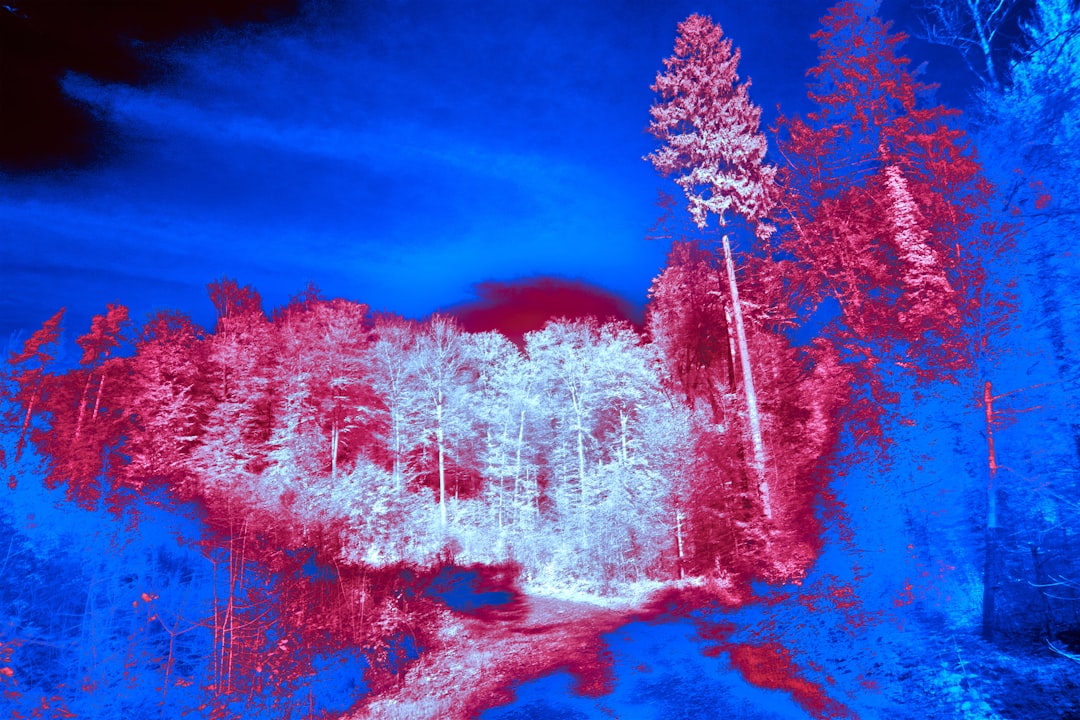
What Richardson's team at UC Riverside has accomplished is conceptually straightforward, yet its implications are profound. The approach works as follows: an infrared thermal camera, mounted externally to the interferometer, photographs the surface temperature distribution of a mirror. This temperature map is then fed into a sophisticated finite-element thermal model — a computer simulation of how heat flows and distributes itself through the glass substrate — which reconstructs the three-dimensional distortion profile of the mirror in its entirety.
Richardson himself offered a characteristically accessible analogy for the technique:
"It's much like a mechanic reading a car engine's temperature pattern from the outside to work out what's happening inside."
The beauty of the method lies in its non-invasiveness. The thermal camera sits entirely outside the interferometer's vacuum envelope. It requires no modification to the core optics, no new internal hardware, and no disruption to ongoing observations. For an instrument as exquisitely delicate as LIGO — where even the act of upgrading hardware risks introducing new noise sources — this is an almost unprecedented advantage.
Perhaps most remarkably, this breakthrough was not even the team's original objective. Richardson's group was investigating a new adaptive optics system designed to physically reshape LIGO's mirrors in real time. Only in the course of testing that system did the researchers realise that the surface temperature maps alone, interpreted through a good thermal model, could independently reconstruct the full internal distortion. The discovery was, in the best scientific tradition, a serendipitous one.
Quantifying the Gain: More Sensitivity, Far More Science
Running the numbers, the implications are striking. The team estimates that implementing this technique in the planned LIGO A+ upgrade — the next major enhancement to the existing detectors, expected to begin operations in the mid-2020s — could improve strain sensitivity by as much as 31%. In practical terms, this translates to LIGO being able to detect binary neutron star mergers at distances roughly 33 million light years greater than currently possible.
Thirty-three million light years may not sound dramatic in the context of a universe spanning 93 billion light years in diameter. But the mathematics of cosmic surveying turns modest linear gains into enormous volumetric ones. The volume of space accessible to a gravitational wave detector scales with the cube of the detection distance. A 31% improvement in sensitivity, translated into a proportional increase in detection range, yields a potential increase in the surveyed cosmic volume of more than a factor of two. That means, in principle, more than twice as many detectable events — more binary black hole mergers, more neutron star collisions, more opportunities to probe the extremes of physics.
- Strain sensitivity improvement: Up to 31% with the LIGO A+ upgrade
- Extended detection range: Approximately 33 million additional light years for binary neutron star mergers
- Volumetric gain: Observable universe volume more than doubled, due to the cubic relationship between range and volume
- Hardware requirement: A commercially available infrared thermal camera — no bespoke instrumentation required
- Integration status: Already incorporated into the baseline design for Cosmic Explorer, the proposed next-generation US gravitational wave observatory
That last point deserves particular emphasis. Cosmic Explorer, a proposed 40-kilometre arm-length detector that would dwarf even LIGO's impressive scale, represents the future of gravitational wave astronomy in the United States. The fact that Richardson's technique has already been folded into its foundational design — with Richardson himself leading its sensing and control system architecture — speaks volumes about the scientific community's confidence in the approach.
Why This Matters for Multi-Messenger Astronomy
The scientific stakes here extend well beyond mere detector engineering. The detection of GW170817 in August 2017 — the first observed collision of two neutron stars, simultaneously seen in gravitational waves by LIGO and Virgo, and in electromagnetic light by dozens of telescopes around the world — demonstrated the extraordinary power of multi-messenger astronomy. That single event confirmed that neutron star mergers produce short gamma-ray bursts, generate heavy elements like gold and platinum through a process called the r-process, and offered an independent measurement of the universe's expansion rate, the Hubble constant.
Every additional neutron star merger that LIGO can detect is another opportunity to refine these measurements, resolve the persistent tension in Hubble constant measurements, and potentially reveal entirely new physics. Extending LIGO's reach by 33 million light years — and doubling its surveyed volume — could transform what is currently a trickle of such events into a rich, statistically robust dataset.
For a technology as foundational as an off-the-shelf thermal camera, the scientific return is almost absurdly large.
A Lesson in Scientific Progress
This story carries a broader lesson about the nature of scientific advancement. The popular imagination tends to picture progress in astronomy as a relentless march toward bigger telescopes, bolder missions, and ever more exotic technologies. And indeed, projects like Cosmic Explorer and the ESA's LISA space-based gravitational wave detector represent genuine leaps of ambition and engineering.
But some of the most consequential advances come not from building something bigger, but from understanding something already built more completely. Richardson's team did not redesign LIGO. They simply found a better way to read it — to translate the language its mirrors were already speaking through their thermal signatures into actionable knowledge about the instrument's optical state.
It is, in the end, a profoundly satisfying reminder that even the most sophisticated instruments in human history still have secrets to yield, and that sometimes the key to unlocking them is not a revolutionary new sensor, but a careful eye and a clever model.