The question of whether the universe is infinite has fascinated scientists and philosophers for centuries. While the surface of the Earth is finite and measurable, the nature of the cosmos beyond our observable horizon remains a tantalizing mystery. A recent analysis, published in the Journal of Cosmology and Astroparticle Physics, explores the potential geometries and topologies that could define the shape and extent of our universe.
The Observable Universe
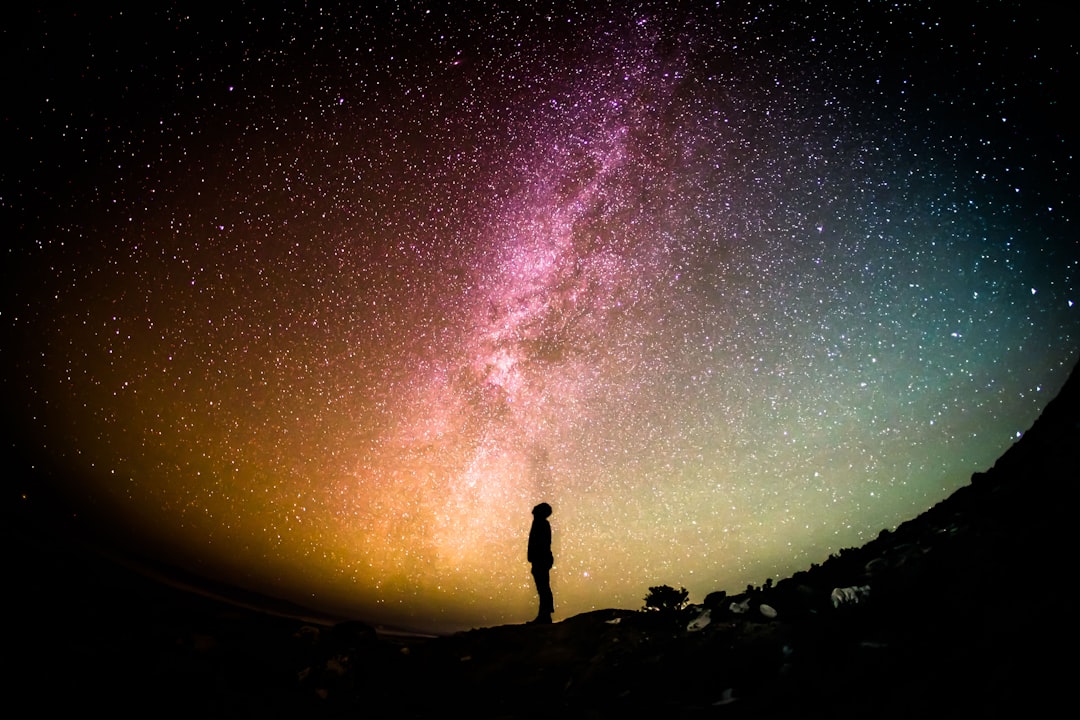
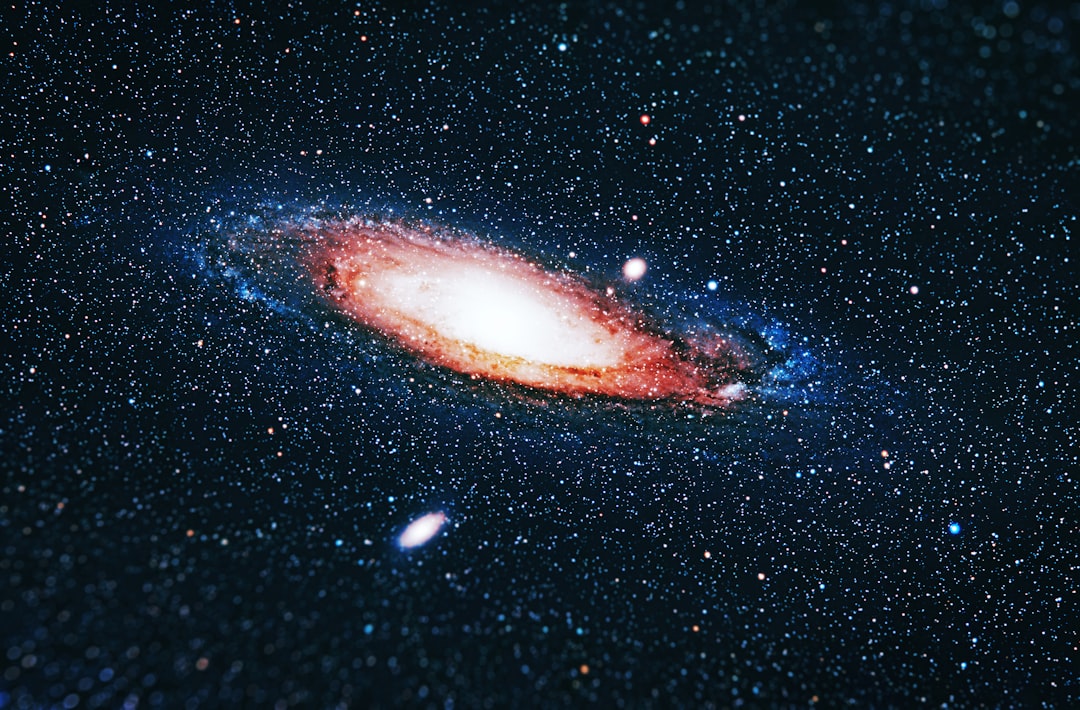
Our current understanding of the universe is limited to the observable sphere, a region approximately 93 billion light-years in diameter. Within this cosmic bubble, we can detect galaxies, stars, and the faint afterglow of the Big Bang known as the cosmic microwave background (CMB). However, the observable universe is not synonymous with the entire universe.
"The observable limit is just that – a limit. It's not just a limit to what we can see. It's a limit to what we can know," explains Dr. Emily Johnson, a cosmologist at the University of Cambridge. "There's a total amount of information contained in the universe, and a finite amount of information that we could ever hope to receive even in the infinite future."
Curvature and Topology
To determine the shape of the universe, scientists study its curvature and topology. Curvature refers to the geometry of space, while topology describes how dimensions connect. Measurements of the CMB have revealed that the universe appears to be geometrically flat within our observable bubble.
However, flatness does not necessarily imply infinity. Just as the surface of the Earth is finite yet has no edge, a universe with closed topologies could be finite but borderless. Theoretical possibilities include:
- Cylindrical universe: One or more dimensions wrap around while maintaining geometric flatness
- Toroidal universe: A donut-shaped topology where traveling far enough in one direction returns you to your starting point
- Mobius strip or Klein bottle: Exotic geometries involving rotations and self-intersection
Searching for Closed Topologies
Researchers have searched for evidence of closed topologies by analyzing the CMB for repeating patterns or intersection points. The Planck satellite, operated by the European Space Agency, provided high-resolution maps of the CMB for this purpose. However, no convincing signatures have been found, suggesting that if the universe is closed, its scale must be much larger than our observable bubble.
Implications and Future Research
The question of the universe's shape and extent has profound implications for our understanding of cosmology and fundamental physics. An infinite universe would align with the concept of cosmic inflation, an exponential expansion in the early universe that could have generated an endless expanse of space.
On the other hand, a finite universe with closed topologies would require new theoretical frameworks and could hint at the existence of other universes or higher dimensions. Future missions, such as ESA's Euclid telescope and NASA's Nancy Grace Roman Space Telescope, will provide even more precise measurements of cosmic geometry, potentially revealing the ultimate shape of our universe.
While we may never know with certainty the full extent of the cosmos, the pursuit of this knowledge continues to drive scientific curiosity and exploration. As Dr. Johnson reflects, "All we can do is guess, but in that guessing, we uncover the fundamental laws and mysteries that define our existence in this vast and wondrous universe."