Are Alien Probes Hiding in Our Backyard? A New Study Says We've Barely Looked
Even at this early stage in our spacefaring age, humanity has already begun dispatching robotic ambassadors that will eventually drift beyond the gravitational embrace of our solar system. Five robotic explorers — Pioneer 10 and Pioneer 11, Voyager 1 and Voyager 2, and New Horizons — are all traveling at escape velocity, destined to wander interstellar space for billions of years. While interstellar travel was never their primary mission, these spacecraft serve as a profound proof of concept: a technologically capable civilization will, given enough time and motivation, build probes capable of crossing the void between stars. Which raises an obvious, unsettling, and deeply exciting question — has any other civilization already done the same, and sent their own robotic emissaries to our solar system? A recent paper, published in the Proceedings of the IAU Centenary Symposium, by astronomer Dr. T. Joseph W. Lazio of NASA's Jet Propulsion Laboratory confronts a painful truth: we still have no idea whether such artifacts exist here, and our current technology is nowhere near sufficient to find out definitively.
The concept of searching for physical extraterrestrial artifacts within our own solar system — sometimes called the Search for ExtraTerrestrial Artifacts (SETA) — is in many ways the logical complement to the more familiar Search for ExtraTerrestrial Intelligence (SETI), which focuses on detecting electromagnetic signals from distant civilizations. Rather than listening across light-years of space, SETA proposes we look closer to home, in our own cosmic neighborhood, for the physical fingerprints of another civilization's curiosity or ambition. The idea is not new — physicist Freeman Dyson and astronomer Ronald Bracewell speculated decades ago that advanced civilizations might seed the galaxy with autonomous relay probes — but it has rarely received serious, systematic scientific scrutiny until now.
A Framework for the Search
To assess where humanity currently stands in its ability to detect what scientists call technosignatures — measurable evidence of technology created by an intelligent species — Dr. Lazio employs a structured analytical tool: a four-quadrant matrix originally developed in a W.M. Keck Institute for Space Studies report. This elegant framework categorizes any potential extraterrestrial artifact by two key properties: its location (free-floating in space versus resting on a surface) and its operational status (active or passive). The four resulting categories are:
- Passive Probes — Dead or inert objects drifting through the solar system, likely on a hyperbolic trajectory, no longer transmitting or maneuvering. Think of our own Voyager probes in a future epoch when their power sources have failed.
- Active Probes — Operational spacecraft using either internal power (such as nuclear sources) or harvested solar energy to conduct measurements, transmit data, and maneuver deliberately through space.
- Passive Surface Artifacts — Impact remnants, crashed probes, or leftover hardware silently sitting on the surface of a moon, planet, or asteroid, slowly being eroded by cosmic forces.
- Active Surface Artifacts — Still-operational machinery on the surface of a planetary body, such as an automated monitoring station, a long-running beacon, or even a resource extraction facility.
In his paper, Dr. Lazio frames his analysis around a single, falsifiable scientific hypothesis: One or more physical extraterrestrial technosignatures are present in the Solar System today. The central question he asks is whether humanity, at its current technological stage, possesses the capability to falsify this hypothesis — that is, to either confirm it or rule it out with reasonable confidence. His conclusion is sobering: we are nowhere close to being able to do so.
The Challenge of Finding a Needle in a Cosmic Haystack
To be fair, we do have a reasonable chance of detecting a defunct interstellar probe if it happens to be drifting through our inner solar system. The fundamental challenge, however, is not detection itself — it is differentiation. How do you distinguish an alien artifact from the millions of perfectly natural asteroids, comets, and other debris that populate our solar system?
Every time a new interstellar visitor is identified, public and even scientific excitement runs high. The detection of 'Oumuamua in 2017 — the first confirmed interstellar object ever observed passing through our solar system — ignited a fierce debate that included serious peer-reviewed papers exploring whether it might be an artificial construct, largely due to its anomalous, non-gravitational acceleration and unusual elongated shape. More recently, the discovery of 3I/ATLAS has reignited similar discussions. NASA's ongoing survey programs continue to catalog such objects, yet distinguishing the natural from the artificial remains an immense scientific and technological challenge.
Perhaps no story better illustrates this difficulty than the curious case of object 2020 SO. Detected in 2020 and initially classified as an asteroid due to its orbital characteristics, it soon attracted closer scrutiny because of its anomalously low density and unusual trajectory. Spectroscopic analysis revealed a critical clue: its near-infrared spectra matched almost precisely the reflective signature of stainless steel and polyvinyl fluoride — the materials used in a specific piece of human hardware. It turned out that 2020 SO was not a space rock at all, but a Centaur rocket booster from NASA's 1966 Surveyor 2 lunar mission, returning to Earth's vicinity after more than half a century of wandering. This case is both reassuring and humbling: our instruments can identify anomalous objects, but only when they happen to be in our neighborhood and we dedicate significant resources to investigating them.
"The problem is not simply detecting an object — it is proving that object is not just one of the millions of passive rocks floating throughout the solar system." — Dr. T. Joseph W. Lazio
Surface Artifacts: The Resolution Problem
What about the possibility of artifacts resting on the surface of a moon or planet? After all, humanity's own orbiters around Mars have been able to image parachutes, heat shields, and even the wheel tracks left by surface rovers. Surely similar techniques could reveal an alien artifact if one existed?
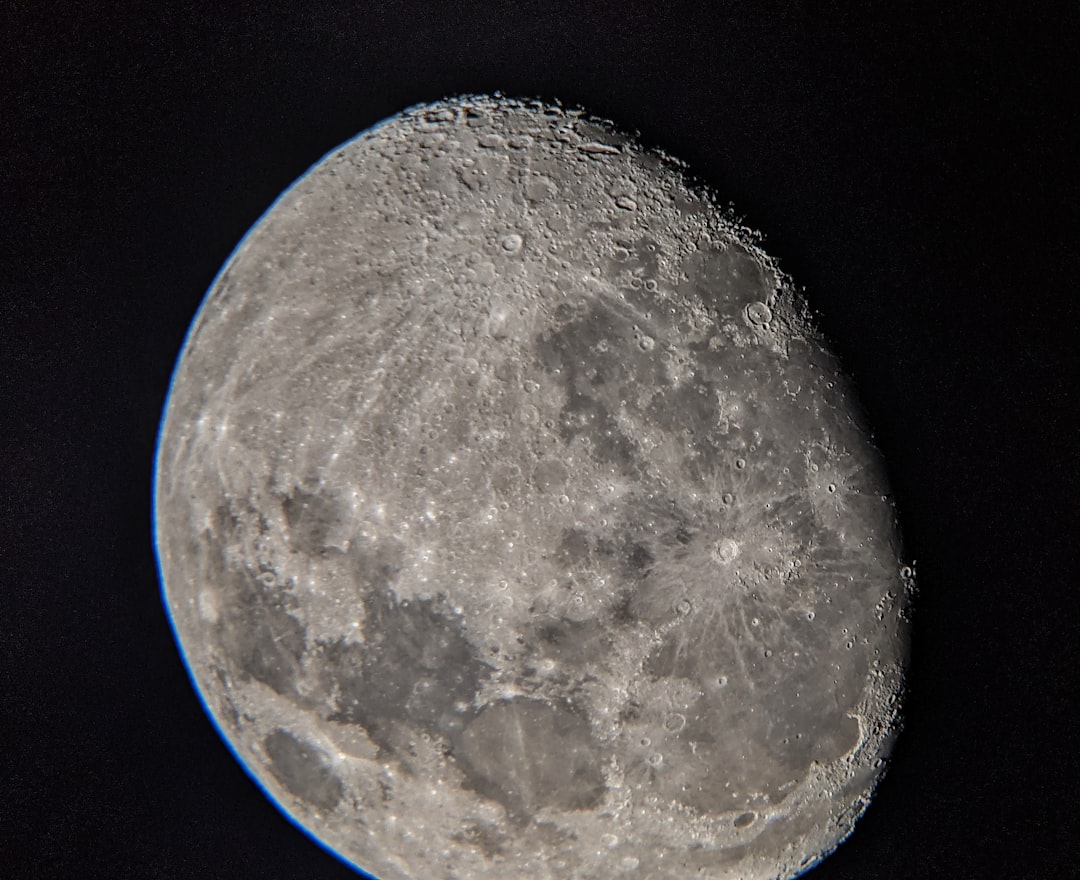
In principle, yes — but the reality of our current surveying capabilities makes this extraordinarily difficult. The critical issue is resolution. The vast majority of solid bodies in the solar system have been imaged at resolutions that would fail to detect anything smaller than a structure that absolutely dwarfs anything humanity has ever built. On the moons of Saturn, for example, our best imagery currently achieves a resolution of only around 1 kilometer per pixel — meaning any artifact smaller than a modest-sized town would be completely invisible to us. Even on the Moon, where we have achieved a best-case resolution of approximately 0.5 meters per pixel using the Lunar Reconnaissance Orbiter Camera (LROC), only a small fraction of the total lunar surface has been imaged at that level of detail. The remainder has been surveyed at far coarser scales.
There is also the profound problem of preservation. Even if an artifact were placed on a planetary surface at some point in the geological past, there is no guarantee it would survive intact to the present day. On a dynamic body like Mars, the relentless combination of micrometeorite impacts, intense solar ultraviolet radiation, and global dust storms can erode and bury a passive surface artifact within a few million years — a cosmically brief moment in a solar system that is 4.6 billion years old. On the Moon, with no atmosphere to cause weathering, objects can survive longer, but they are still subject to micrometeorite gardening of the regolith. On geologically active worlds like Europa or Io, any ancient artifact would likely have been destroyed or buried entirely. The window of detectability for passive surface artifacts is, geologically speaking, remarkably narrow.
Active Probes: Thermodynamics to the Rescue?
If passive artifacts are so difficult to find, active probes might seem like easier targets. After all, an operational spacecraft must obey the immutable laws of physics — including the Second Law of Thermodynamics. Any device performing work, processing information, or transmitting signals must generate waste heat, and that heat must be radiated away into space. This means an active probe would appear anomalously warm relative to a passive rock of similar size and distance from the Sun — a detectable thermal signature, at least in principle.
Large-scale infrared sky surveys have already proven their ability to flag thermally anomalous objects. NASA's Wide-field Infrared Survey Explorer (WISE) mission catalogued hundreds of millions of objects and identified several with unusual thermal properties that remain incompletely explained. However, accurately modeling the thermal behavior of small solar system bodies is notoriously complex — factors such as surface composition, rotation rate, thermal inertia, and albedo all interact in ways that can produce apparent anomalies from entirely natural objects. Without dedicated follow-up resources to monitor each flagged object over extended periods, no definitive conclusions can be drawn.
Furthermore, an advanced civilization might design its probes specifically to minimize detectable signatures — engineering them to be thermally quiet, electromagnetically stealthy, and physically inconspicuous. A probe optimized for long-duration, covert observation might be extraordinarily difficult to distinguish from background noise even with our best future instruments. This introduces a fundamental epistemological problem: the very sophistication that would make an alien probe worth finding might be the same sophistication that makes it nearly impossible to detect.
The Coming Wave of Survey Missions
Despite the formidable challenges, the scientific community is not without hope. A new generation of powerful survey instruments is poised to transform our census of the solar system with unprecedented depth and breadth. The Vera C. Rubin Observatory's Legacy Survey of Space and Time (LSST) will image the entire visible sky every few nights, generating a torrent of data on millions of solar system objects and enabling the detection of subtle dynamical anomalies that earlier surveys would have missed entirely. Meanwhile, SPHEREx, NASA's upcoming all-sky spectroscopic survey, will provide spectral information across hundreds of infrared wavelengths for an enormous number of objects, potentially flagging those with unusual compositional signatures. The Near-Earth Object Surveyor Mission (NEO Surveyor) will add dedicated infrared sensitivity specifically tuned for detecting and characterizing small solar system bodies that pose impact risks — but whose data will also be invaluable for SETA research.
Together, these missions will generate object profiles of unprecedented quality and quantity. The challenge will then shift from detection to analysis — sifting through vast catalogs to identify the handful of truly anomalous objects worthy of intensive follow-up. This is precisely the kind of problem for which machine learning and AI-assisted data analysis show enormous promise, allowing researchers to rapidly flag statistical outliers from populations of millions of catalogued objects.
"Sorting through these data treasure troves could lead to the identification of highly anomalous objects that are worth a much closer look — but until we can dispatch an actual probe to investigate one directly, certainty will remain elusive." — Dr. T. Joseph W. Lazio
A Call for Systematic Scientific Attention
What Dr. Lazio's paper ultimately argues for is not sensationalism or unfounded speculation, but rather a systematic, scientifically rigorous approach to a question that has profound implications for humanity's understanding of its place in the cosmos. The SETI Institute and allied research groups have long advocated for broader technosignature research, and recent years have seen growing institutional support, including dedicated funding discussions at NASA for technosignature science as a legitimate field of inquiry.
The key scientific points to bear in mind are:
- Humanity's own five interstellar-bound probes demonstrate that sending artifacts across interstellar distances is achievable even at early stages of technological development.
- Our current solar system survey capabilities leave enormous gaps — most solid bodies have been imaged at resolutions wholly inadequate for detecting human-scale artifacts, let alone smaller ones.
- The distinction between natural and artificial objects requires detailed spectroscopic, thermal, and dynamical analysis — resources we have not yet applied systematically to the problem.
- Preservation timescales for passive surface artifacts are geologically brief, meaning the search may inherently favor either very recent placements or actively maintained systems.
- Next-generation survey facilities will dramatically improve our detection capability, but physical rendezvous with anomalous objects may ultimately be necessary to achieve certainty.
The Search for ExtraTerrestrial Artifacts may finally be entering a golden era — not because we have found anything, but because we are for the first time assembling the tools that might allow us to look properly. Whether our solar system is empty of alien visitors or quietly harboring a patient robotic emissary from a distant civilization, we owe it to our scientific tradition to search with rigor, humility, and open eyes. The universe has surprised us before.