As SpaceX Crew-12 prepares for launch to the International Space Station (ISS) no earlier than Wednesday, February 11th, NASA scientists are gearing up for an ambitious series of medical investigations that could revolutionize our understanding of human physiology in space. The four-person crew—comprising NASA astronauts Jessica Meir (commander) and Jack Hathaway (pilot), along with ESA astronaut Sophie Adenot and Russian cosmonaut Andrey Fedyaev as mission specialists—will serve as both explorers and research subjects in groundbreaking studies examining how prolonged exposure to microgravity fundamentally alters human biology.
These investigations come at a critical juncture in human space exploration. With NASA's Artemis program planning sustained lunar operations and eventual crewed missions to Mars, understanding the physiological toll of extended spaceflight has never been more urgent. The research conducted during Crew-12's mission will directly inform medical protocols, spacecraft design, and crew training programs for future deep-space exploration missions that could last months or even years.
Understanding Microgravity's Impact on Human Physiology
Decades of research aboard the ISS have painted a comprehensive picture of how the human body responds to weightlessness, yet critical questions remain unanswered. When astronauts enter microgravity environments, their bodies undergo dramatic physiological changes within hours. Without the constant pull of Earth's gravity, bones begin losing density at rates of 1-2% per month—roughly ten times faster than osteoporosis patients on Earth. Muscles atrophy without the resistance training provided by simply standing or walking, and the cardiovascular system undergoes significant restructuring as it no longer needs to pump blood upward against gravity.
Perhaps most concerning are the subtle changes that accumulate over time. NASA's landmark Twin Study, which compared astronaut Scott Kelly during his year-long ISS mission with his Earth-bound identical twin Mark, revealed genetic changes, alterations in cognitive function, and shifts in the gut microbiome that persisted months after returning to Earth. Vision problems, collectively known as Spaceflight-Associated Neuro-ocular Syndrome (SANS), have affected nearly two-thirds of astronauts on long-duration missions, with some experiencing permanent changes to their eyesight.
Investigating Blood Clot Risks Through the Venous Flow Study
The Venous Flow investigation represents one of the mission's most critical medical studies, addressing a potentially life-threatening complication of spaceflight. In microgravity, the normal patterns of blood circulation are fundamentally disrupted. On Earth, gravity pulls blood and bodily fluids downward, requiring the cardiovascular system to work constantly to maintain proper circulation. In space, this gravitational pull disappears, causing approximately two liters of fluid to shift from the lower body toward the head and chest—a phenomenon that gives astronauts their characteristic "puffy face" appearance.
This fluid redistribution creates conditions that may increase the risk of blood clot formation, or thrombosis. Blood clots pose severe health risks including stroke, heart attack, pulmonary embolism, and deep vein thrombosis (DVT). During a 2019 ISS mission, an astronaut developed a jugular vein thrombosis that required medical intervention, highlighting the real-world dangers of this phenomenon. The Venous Flow study will employ ultrasound imaging technology to monitor blood vessel changes throughout the mission, with crew members performing self-administered jugular vein examinations while in orbit.
"Our goal is to use this information to better understand how fluid shifts affect clotting risk, so that when astronauts go on long-duration missions to the Moon and Mars, we can build the best strategies to keep them safe," explained Dr. Jason Lytle, a physiologist at NASA's Johnson Space Center who leads the investigation.
The comprehensive monitoring protocol includes preflight and postflight MRI scans, ultrasound examinations, blood pressure measurements, and blood sample collection. These data points will allow researchers to track how circulatory patterns evolve during spaceflight and identify early warning signs of clot formation. The findings will be instrumental in developing preventive measures and treatment protocols for future missions, where immediate medical evacuation to Earth may not be possible.
Manual Piloting Assessment: Preparing for Gravitational Transitions
Another groundbreaking investigation, the Manual Piloting study, addresses a challenge that becomes increasingly relevant as humanity ventures beyond low Earth orbit: the disorientation astronauts experience when transitioning between different gravitational environments. While modern spacecraft employ sophisticated automated landing systems, crew members must maintain the ability to assume manual control during emergencies or system failures—a task that becomes exponentially more difficult after months of adaptation to weightlessness.
The study will examine how astronauts' spatial orientation, motor control, and decision-making abilities are affected by gravitational transitions. Crew members will perform multiple simulated lunar landings targeting the Moon's South Pole-Aitken Basin—the planned destination for Artemis III and subsequent missions. These simulations will assess whether cognitive and motor skills degrade after extended periods in microgravity and evaluate the effectiveness of training exercises conducted near mission's end.
Dr. Scott Wood, a neuroscientist at NASA Johnson coordinating the investigation, emphasized the study's critical importance:
"Astronauts may experience disorientation during gravitational transitions, which can make tasks like landing a spacecraft challenging. This study will help us examine astronauts' ability to operate a spacecraft after adapting from one gravity environment to another, and whether training near the end of their spaceflight can help prepare crews for landing."
The Mars Mission Challenge
The gravitational transition challenge becomes particularly acute for Mars missions. After spending six to nine months in microgravity during the journey to Mars, astronauts will need to land and operate on a planet with approximately 38% of Earth's gravity—a significant gravitational field compared to the Moon's 16.5%. The longer astronauts spend in weightlessness, the more pronounced their adaptation becomes, and consequently, the more difficult the readjustment to gravity.
For this investigation, researchers plan to recruit a diverse study population: seven astronauts from short-duration commercial missions (up to 30 days) and fourteen from long-duration ISS expeditions (at least 106 days). A control group performing identical tasks on Earth will provide baseline comparison data. This comprehensive approach will allow scientists to map how disorientation risk scales with mission duration.
Comprehensive Medical Monitoring and Vision Research
Beyond the primary investigations, Crew-12 will participate in several additional medical studies that address other critical health concerns. One investigation will explore potential treatments for Spaceflight-Associated Neuro-ocular Syndrome (SANS), a condition that has emerged as one of the most perplexing medical challenges of long-duration spaceflight. SANS causes structural changes to the eye, including optic disc edema, globe flattening, and choroidal folds, leading to vision impairment that can persist long after returning to Earth.
The syndrome appears related to increased intracranial pressure caused by fluid shifts in microgravity, but the exact mechanisms remain poorly understood. Current research at the European Space Agency and NASA is investigating whether countermeasures such as lower body negative pressure devices or specialized exercise protocols can mitigate these effects.
Landing Injury Documentation Study
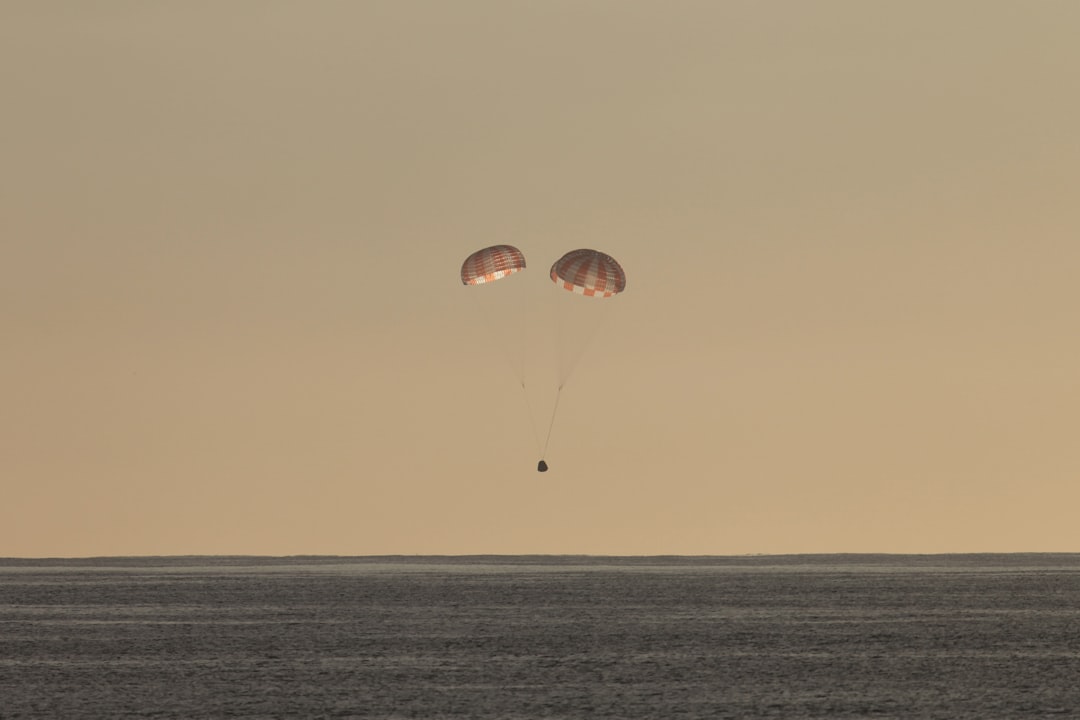
A final investigation will systematically document injuries occurring during spacecraft landing and the transition back to Earth's gravity—the mission phase when injury risk dramatically increases. After months of bone density loss and muscle atrophy, astronauts' bodies are poorly prepared for the sudden return to full gravity and the impact forces of splashdown. The SpaceX Crew Dragon capsule, which uses parachutes and ocean splashdown for recovery, subjects returning astronauts to significant deceleration forces that can cause injuries ranging from minor bruising to more serious musculoskeletal trauma.
This research will inform improved spacecraft design, enhanced safety systems, and optimized crew positioning during landing. The data collected will be particularly valuable for designing future vehicles intended for Mars missions, where landing forces may differ significantly from Earth splashdowns.
Implications for Future Deep Space Exploration
The research conducted during the Crew-12 mission represents far more than academic curiosity—it provides essential data for humanity's expansion into the solar system. The findings will directly influence multiple aspects of future exploration programs:
- Medical Protocols: Development of evidence-based countermeasures, preventive treatments, and emergency medical procedures for deep space missions where immediate return to Earth is impossible
- Spacecraft Design: Engineering improvements to crew quarters, exercise equipment, and landing systems that minimize physiological stress and injury risk
- Mission Planning: Optimization of mission durations, crew rotation schedules, and activity timelines based on physiological adaptation curves
- Training Programs: Enhanced pre-flight preparation and in-flight training protocols that maintain crew performance capabilities throughout extended missions
- Crew Selection: Refined medical screening criteria that identify individuals with genetic or physiological characteristics associated with better adaptation to spaceflight
As NASA advances its Moon-to-Mars architecture, these investigations provide critical building blocks for sustainable human presence beyond Earth. The Artemis program aims to establish a permanent lunar base that could serve as a proving ground for Mars technologies and procedures. Understanding how to keep crews healthy and capable during extended missions in partial gravity environments is essential for this vision to succeed.
The Broader Context of Human Space Medicine
The Crew-12 medical investigations build upon decades of research in space medicine and human factors engineering. Since the earliest days of human spaceflight, medical concerns have shaped mission design and capabilities. The Soviet Union's early space program documented severe disorientation and motion sickness in cosmonauts, leading to the development of specialized training protocols. NASA's Skylab program in the 1970s provided the first long-duration data on bone loss and cardiovascular deconditioning.
The ISS, continuously occupied since 2000, has served as an unparalleled laboratory for studying human adaptation to spaceflight. Over 250 individuals from 20 countries have lived and worked aboard the station, generating an extensive database of physiological measurements and medical observations. This research has revealed that individual responses to microgravity vary considerably—some astronauts experience minimal bone loss while others lose density rapidly; some develop significant vision problems while others remain unaffected.
Understanding this variability is crucial for future missions. If genetic factors influence adaptation to spaceflight, it may eventually be possible to predict which individuals will fare best on long-duration missions and to develop personalized countermeasure programs tailored to individual physiology.
Looking Toward the Future
As the Crew-12 mission prepares for launch, it represents another step in humanity's gradual adaptation to life beyond Earth. The medical knowledge gained from this and subsequent missions will prove invaluable not only for government space programs but also for the emerging commercial spaceflight industry. Companies planning space tourism ventures, orbital research facilities, and even space manufacturing operations will need robust medical protocols to protect their personnel.
The transition from brief visits to permanent human presence in space requires solving fundamental challenges of human biology and medicine. Each mission adds to our understanding, bringing us closer to the day when humans can safely live and work throughout the solar system. The Crew-12 astronauts, by serving as research subjects while conducting their mission, contribute directly to this grand endeavor—pioneering not just new destinations, but new knowledge about human potential and adaptability in the space environment.
For more information about the mission and ongoing research, visit NASA's Human Spaceflight program page and the agency's Human Research Program website.