Astronomers Catch Black Hole Spewing Matter After Feeding: A Breakthrough in Understanding Stellar Consumption
Black holes remain among the most awe-inspiring and enigmatic objects in the known universe. Despite decades of observation and theoretical modeling, astronomers continue to grapple with the underlying mechanisms that govern their formation, evolution, and ultimate fate. Because no light can escape a black hole's event horizon — the boundary beyond which gravity becomes inescapable — these cosmic giants cannot be imaged directly against the vast, dark backdrop of space. Instead, researchers rely on indirect evidence, most notably the spectacular, violent light shows that occur when a black hole consumes nearby matter, such as a companion star.
Yet even that dramatic process raises profound questions. What precisely happens to the material that falls into a black hole? Is it all consumed, or does some fraction escape? And how does this feeding process shape the evolution of entire star systems and galaxies? A landmark new study has brought scientists significantly closer to answering these questions — and the results are reshaping our understanding of how black holes behave.
A New Window Into Black Hole Feeding
An international team of scientists, led by researchers at the University of Warwick, has published compelling new findings in the prestigious journal Monthly Notices of the Royal Astronomical Society. Their study focuses on a binary black hole system designated Swift J1727.8−1613, located in our own Milky Way galaxy. This system consists of a stellar-mass black hole — estimated at approximately ten times the mass of our Sun — locked in a gravitational embrace with a normal companion star, whose outer layers the black hole is actively stripping away and consuming.
What makes this discovery particularly remarkable is the evidence it presents for a process that has long been theorized but rarely observed in such detail: the violent expulsion of consumed material back out into space in the form of powerful winds and relativistic jets. Far from being a passive, one-way cosmic drain, Swift J1727.8−1613 appears to be a dynamic, churning engine — one that takes in matter, processes it, and ejects a significant portion back into its surroundings.
The Observation: Catching a Black Hole in the Act
The breakthrough was made possible by the European Southern Observatory's Very Large Telescope (VLT), one of the world's most powerful and sophisticated ground-based observatories, situated on the Atacama Desert plateau in northern Chile. The VLT observed a dramatic 2023 outburst from Swift J1727.8−1613 — a period of intense activity during which the system flared brilliantly across multiple wavelengths. Crucially, rather than capturing a single snapshot of the event, the research team utilized the VLT to conduct time-resolved spectroscopic observations, monitoring the system repeatedly over time to reconstruct the full sequence of events from initial accretion through peak eruption and beyond.
This temporal approach proved essential. By watching the system evolve in near real-time, astronomers could distinguish between the material being drawn into the black hole and the material being forcefully ejected. The observations revealed both a disk wind — a slower, thermally driven outflow of gas from the surface of the accretion disk — and collimated, high-velocity jets of plasma being launched perpendicular to the disk plane at speeds approaching a significant fraction of the speed of light.
"People often imagine black holes simply swallowing everything around them. What we're seeing is a much more complex process. Matter falls in, the system processes it, and a surprising amount is expelled again. If black holes can continue shedding material even after their largest outbursts, it means they may be much less efficient eaters than we previously assumed. A significant fraction of the meal may never reach the black hole at all, changing our understanding of how binary stars in galaxies evolve."
— Dr. Noel Castro Segura, Postdoctoral Fellow, University of Warwick, and lead author of the study
Understanding the Binary System: Swift J1727.8−1613
To fully appreciate the significance of this discovery, it helps to understand what a low-mass X-ray binary (LMXB) system like Swift J1727.8−1613 actually is. These systems form when a massive star in a binary pair exhausts its nuclear fuel, collapses under its own gravity, and explodes as a supernova — leaving behind an ultra-dense stellar remnant, in this case a black hole. The surviving companion star continues to orbit this remnant, and if the orbital geometry is favorable, the black hole's intense gravitational field begins to strip material from the companion's outer envelope.
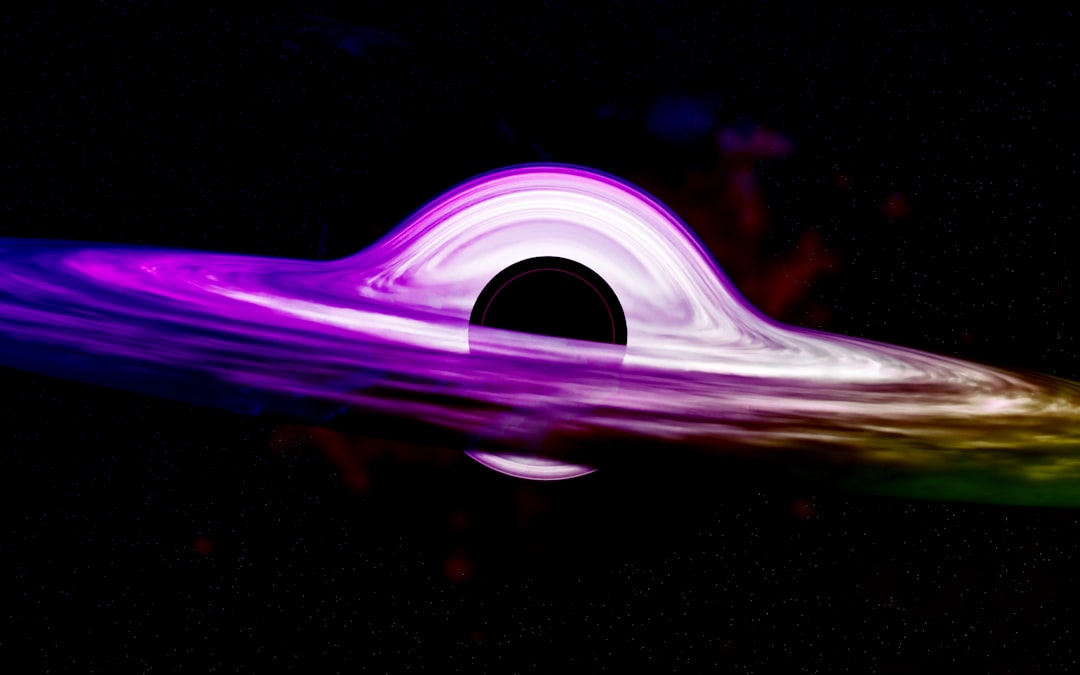
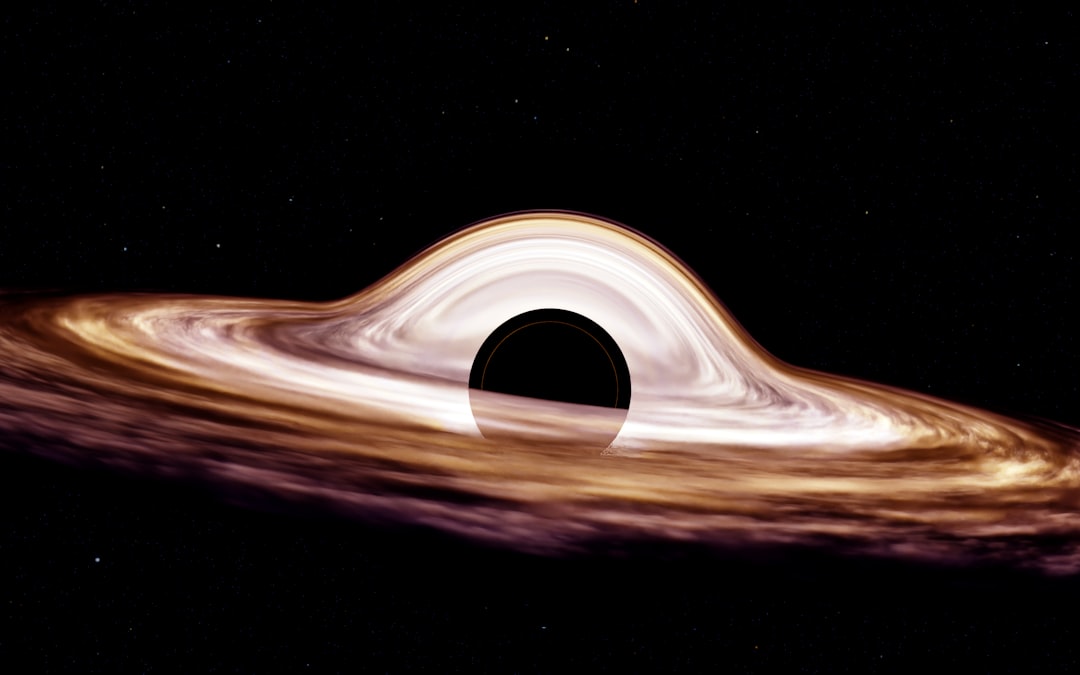
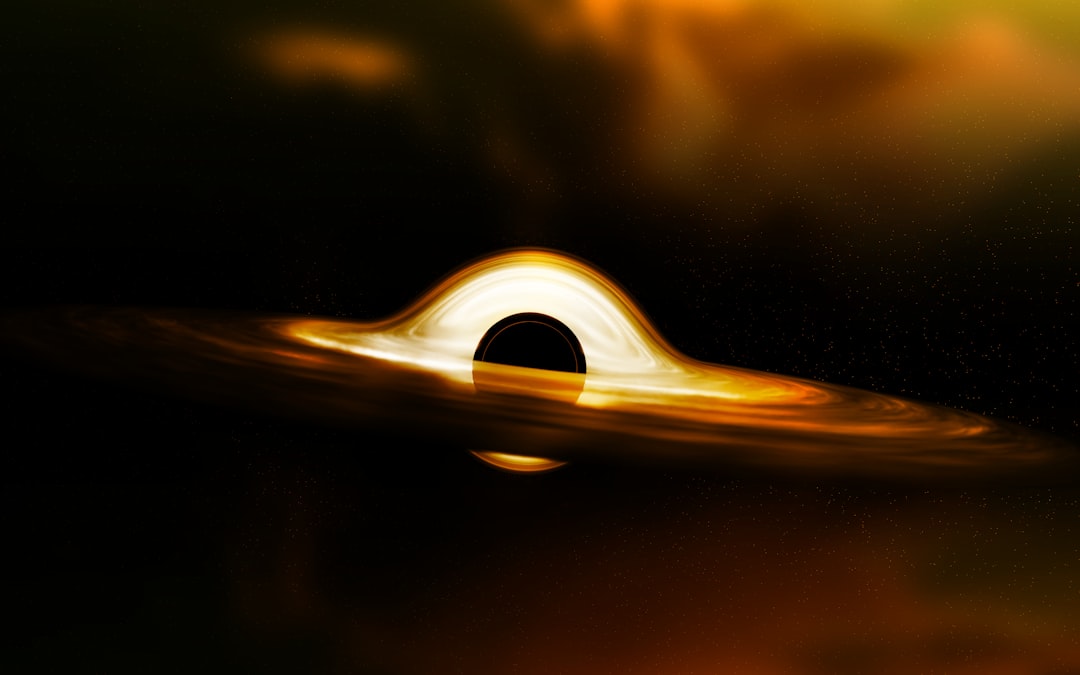
This stolen material does not fall directly into the black hole. Instead, conservation of angular momentum causes it to spiral inward, forming a flattened, rotating structure known as an accretion disk. As matter within the disk slowly migrates inward, friction and magnetic forces heat it to tens of millions of degrees, causing it to radiate intensely across the electromagnetic spectrum — from radio waves and infrared light all the way through to powerful X-rays. It is this X-ray emission that allows instruments like NASA's Neil Gehrels Swift Observatory — the telescope that first detected Swift J1727.8−1613 — to identify and monitor such systems.
Black Holes Are Not Endless Pits
One of the most transformative insights from this research is the challenge it poses to the popular conception of black holes as infinitely hungry voids. The team notes that Swift J1727.8−1613 is a stellar-mass black hole — far smaller and less active than the supermassive black holes that lurk at the centers of galaxies. And yet, even this relatively modest object appears to have physical limits on how efficiently it can consume matter. When the rate of infalling material exceeds a certain threshold — known as the Eddington luminosity limit, the point at which radiation pressure balances gravitational infall — the system can become unstable, driving powerful outflows that carry a substantial fraction of the accreted material back into space.
Perhaps even more striking was the discovery that the eruption and material expulsion continued even after the peak of the outburst had subsided. This suggests that the ejection processes are not simply a reaction to peak accretion rates, but are a sustained feature of the system's behavior — a finding with far-reaching implications for how astronomers model black hole feeding cycles.
Key Findings at a Glance
- Swift J1727.8−1613 is a stellar-mass binary black hole system approximately 10 solar masses in size, actively accreting material from a companion star.
- The ESO Very Large Telescope captured the system's 2023 outburst through time-resolved spectroscopy, revealing the full sequence from accretion to ejection.
- Both disk winds and relativistic jets were observed, confirming that a significant fraction of consumed material is expelled back into space.
- The outflows continued after the peak outburst, suggesting a sustained and complex ejection process rather than a simple one-time event.
- The findings imply that black holes may be far less efficient accretors than previously thought, with a large fraction of material never reaching the event horizon.
- These results have direct implications for models of binary star evolution and the chemical enrichment of galaxies.
Broader Implications for Galaxy Evolution
The implications of this research extend well beyond one binary system in our galaxy. Accretion-driven outflows from black holes — both stellar-mass and supermassive — are now understood to be a critical mechanism in regulating star formation and distributing chemically enriched material throughout galaxies. When black holes expel material at high velocities, they can heat and disperse the surrounding interstellar medium, suppressing the collapse of gas clouds that would otherwise form new stars. This process, broadly termed black hole feedback, is a cornerstone of modern models of galaxy formation and evolution.
By demonstrating that even a relatively small stellar-mass black hole can sustain powerful, long-duration outflows, the Warwick team's findings lend new weight to the idea that such feedback mechanisms operate across a wide range of black hole masses and environments. For researchers working with observatories like the ESA's XMM-Newton X-ray Observatory or the Hubble Space Telescope, these results provide fresh theoretical constraints for modeling how black holes drive the large-scale structure of the cosmos.
The Future of Black Hole Research
This discovery opens a rich new avenue of investigation. Future observations of Swift J1727.8−1613 and similar systems, particularly with next-generation facilities such as the ESO Extremely Large Telescope (ELT) — currently under construction in Chile and set to become the largest optical telescope on Earth — promise to reveal even finer details of the accretion and ejection process. Combined with data from space-based X-ray and radio observatories, astronomers will be able to map the geometry, energetics, and timing of these outflows with unprecedented precision.
Furthermore, as gravitational wave observatories like LIGO and Virgo continue to detect merging black hole systems, cross-referencing those detections with electromagnetic observations of binary systems like Swift J1727.8−1613 will help build a more complete picture of the full black hole lifecycle — from binary formation through active accretion and eventual merger.
What is increasingly clear is that black holes, long portrayed as passive destroyers, are in fact some of the most active and consequential engines in the universe — shaping their surroundings, redistributing matter and energy, and playing an outsized role in the cosmic story of how galaxies are born, grow, and evolve. The more we observe them, the more complex and fascinating they become.