In a groundbreaking achievement that bridges nearly two decades of astronomical observations, scientists have successfully measured the extraordinary power output of relativistic jets emanating from one of the most famous black holes in our galaxy. The Cygnus X-1 system, located approximately 7,200 light-years from Earth, has revealed that its cosmic jets carry energy equivalent to 10,000 Suns—a finding that confirms long-standing theoretical predictions about how black holes influence the evolution of galaxies across the universe.
This remarkable discovery, published in the prestigious journal Nature Astronomy, represents the culmination of 18 years of meticulous radio telescope observations. Led by astrophysicists Steve Prabu and Professor James Miller-Jones from Curtin University's International Center for Radio Astronomy Research (ICRAR), the research team employed cutting-edge Very Long Baseline Interferometry (VLBI) techniques to create the most detailed picture yet of how black hole jets behave in binary star systems. Their measurements provide the first direct observational evidence for energy transfer rates that cosmologists have been assuming in their large-scale simulations of universal structure formation.
What makes this study particularly significant is its focus on the dynamic interaction between the black hole's jets and the powerful stellar wind from its companion supergiant star. By observing how these jets bend and fluctuate as the two objects orbit each other every 5.6 days, the researchers unlocked crucial information about jet velocity, power output, and the fundamental physics governing matter's behavior near the event horizon of a black hole.
The Cosmic Laboratory of Cygnus X-1
Discovered in 1964 during a rocket flight experiment, Cygnus X-1 holds a special place in astronomical history as the first confirmed black hole ever identified. This binary system consists of a black hole with a mass approximately 21 times that of our Sun, locked in an orbital dance with a blue supergiant star designated HDE 226868. The supergiant star, with a mass roughly 40 times that of the Sun, continuously sheds material through an intense stellar wind—a stream of charged particles flowing outward at velocities reaching several thousand kilometers per second.
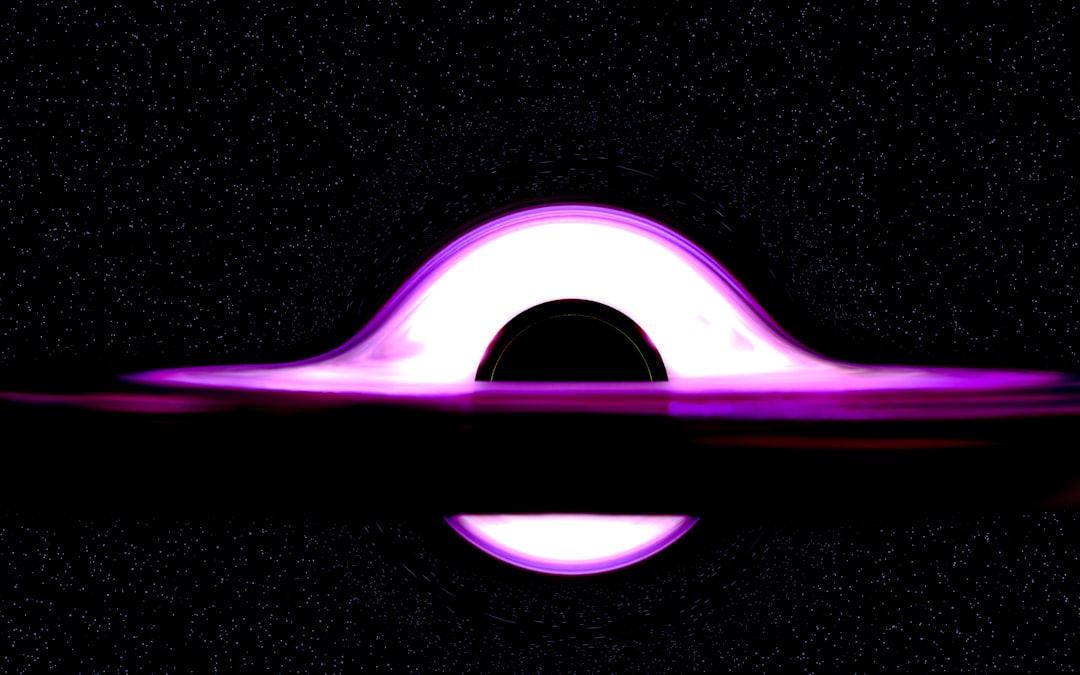
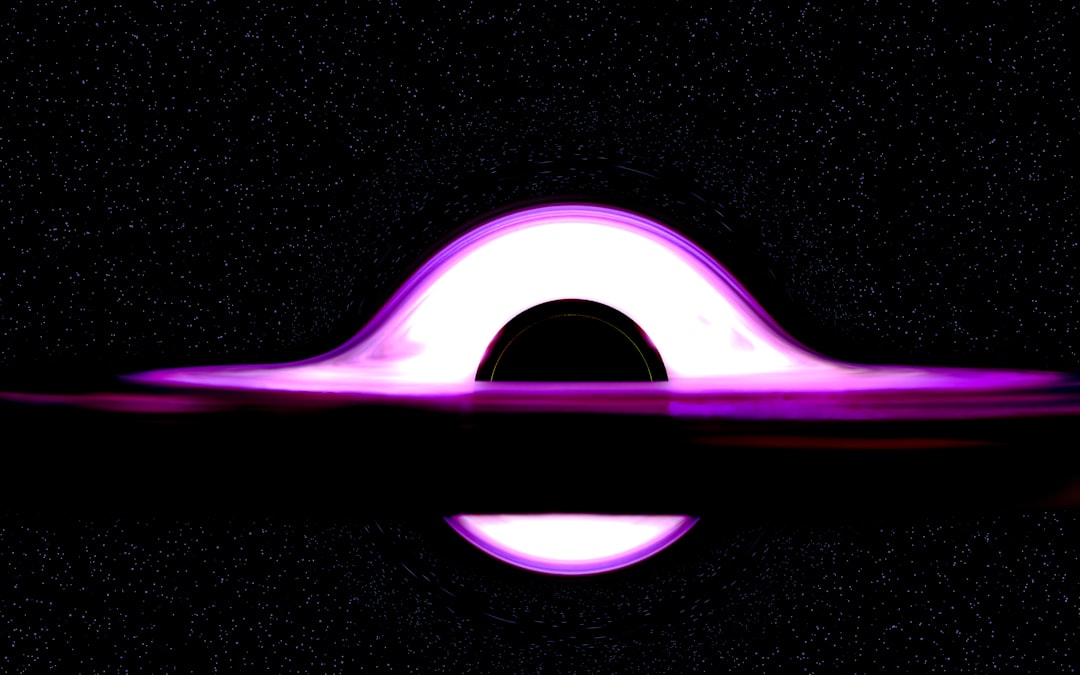
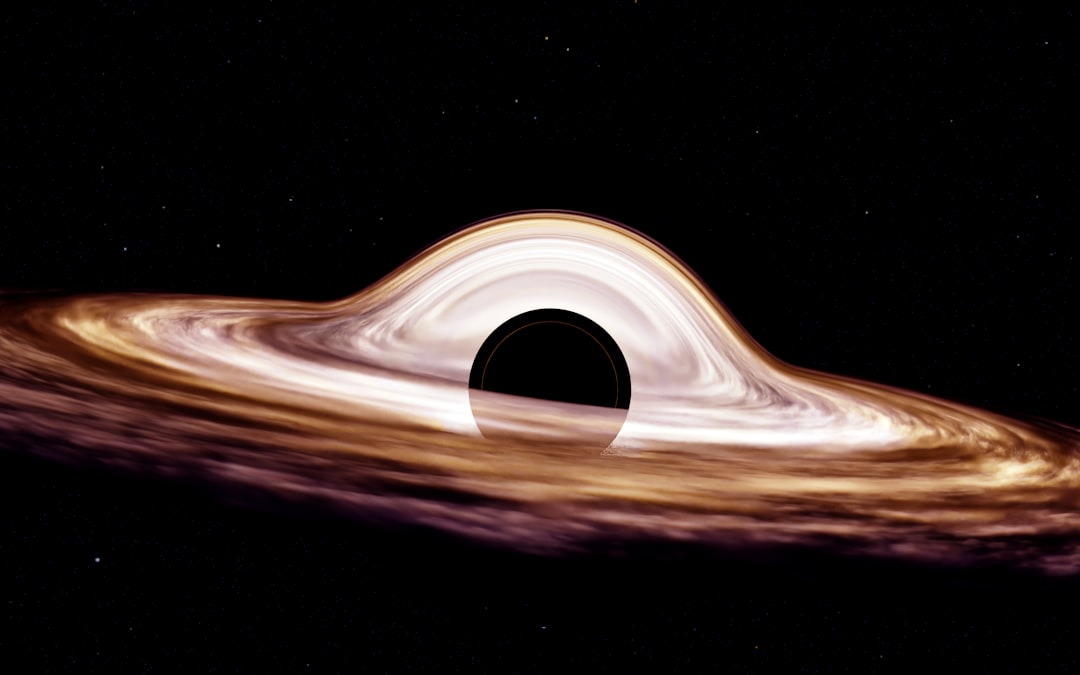
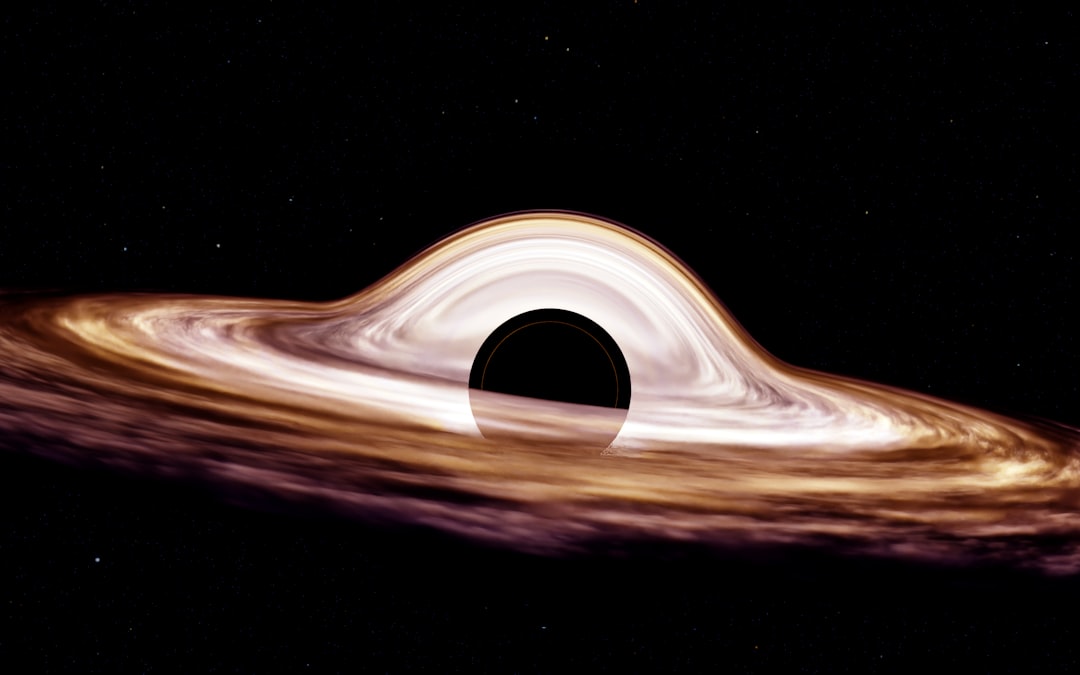
The black hole's immense gravitational pull draws matter from its companion star, forming a swirling accretion disk of superheated plasma. As this material spirals inward toward the event horizon, it releases tremendous amounts of energy in the form of X-rays, making Cygnus X-1 one of the brightest X-ray sources in the sky. However, not all of this infalling matter crosses the point of no return. Through processes involving the black hole's powerful magnetic fields, some material is redirected and accelerated along the rotational axis, creating the spectacular jets that extend far beyond the binary system itself.
These jets represent one of nature's most efficient particle accelerators, launching material at relativistic speeds—velocities approaching the speed of light. Understanding how these cosmic accelerators work has profound implications for our comprehension of high-energy astrophysics, from active galactic nuclei powered by supermassive black holes to the gamma-ray bursts that mark the deaths of massive stars.
Revolutionary Observational Techniques Unlock Hidden Secrets
The breakthrough in understanding Cygnus X-1's jets required combining observations from two of the world's most sophisticated radio telescope networks: the Very Long Baseline Array (VLBA) and the European VLBI Network (EVN). These networks consist of radio dishes scattered across continents, working in perfect synchronization to create a virtual telescope with an effective diameter spanning thousands of kilometers. This technique, known as Very Long Baseline Interferometry, achieves angular resolutions far exceeding what any single telescope could accomplish.
Over the course of 18 years, the research team accumulated high-resolution radio imaging data that captured the jets at different phases of the binary orbit. This extensive temporal coverage was crucial because it allowed scientists to observe how the jets' appearance and trajectory changed as the black hole moved around its stellar companion. The stellar wind from the supergiant star acts like a cosmic wind tunnel, pushing against the jets and causing them to bend away from the star—a phenomenon that had been theoretically predicted but never before observed with such clarity.
"A key finding from this research is that about 10 percent of the energy released as matter falls in towards the black hole is carried away by the jets. This is what scientists usually assume in large-scale simulated models of the Universe, but it has been hard to confirm by observation until now," explained Dr. Steve Prabu, highlighting the study's significance for theoretical astrophysics.
By measuring the degree of jet deflection at various orbital positions, the team could calculate the momentum transfer between the stellar wind and the jet material. This, combined with measurements of the jets' X-ray emissions and radio luminosity, enabled them to derive the first direct estimates of jet power and velocity in this system. The calculations revealed that the jets travel at approximately 150,000 kilometers per second—roughly half the speed of light—carrying away energy at a rate equivalent to the combined luminosity of 10,000 stars like our Sun.
Groundbreaking Measurements and Their Cosmic Implications
The research team's findings represent several significant firsts in black hole astrophysics. Previous methods for estimating jet power relied on observations of the large-scale structures created by jets over timescales of thousands to millions of years—essentially measuring the accumulated impact of jets on their surroundings. However, these methods couldn't provide instantaneous measurements that could be directly compared with the X-ray emissions from the accretion disk, which vary on much shorter timescales.
The new technique developed for Cygnus X-1 overcomes this limitation by measuring jet properties in near real-time (astronomically speaking), allowing for direct comparisons between the rate of matter falling into the black hole and the power carried away by the jets. The team's conclusion that approximately 10 percent of the accretion energy is channeled into jet production validates a fundamental assumption used in cosmological simulations of galaxy evolution and large-scale structure formation.
Key Discoveries from the Research
- Jet Velocity Measurement: The jets from Cygnus X-1 travel at approximately 150,000 km/s, or 0.5c (half the speed of light), representing the first direct measurement of jet speed in this historic system
- Power Output Quantification: The jets carry energy equivalent to 10,000 solar luminosities, providing observational confirmation of theoretical predictions about energy transfer efficiency in black hole accretion
- Stellar Wind Interaction: High-resolution imaging revealed how the massive star's wind deflects the jets, creating a bent structure that varies with the binary orbit's phase
- Energy Conversion Efficiency: Approximately 10% of the gravitational energy released by infalling matter is converted into jet kinetic energy, a crucial parameter for understanding black hole feedback mechanisms
- Universal Scaling Relations: The findings suggest that jet physics remains consistent across black holes of vastly different masses, from stellar-mass objects like Cygnus X-1 to the supermassive black holes at galactic centers
Black Hole Jets as Cosmic Sculptors
The significance of these measurements extends far beyond a single binary system. Black hole jets play a critical role in what astrophysicists call "feedback mechanisms"—processes by which black holes influence their surrounding environments and regulate galaxy evolution. When supermassive black holes at the centers of galaxies launch powerful jets, these outflows can heat and disperse the gas clouds that would otherwise collapse to form new stars. This AGN feedback is considered essential for explaining why massive galaxies eventually stop forming stars and why the observed distribution of galaxy masses matches theoretical predictions.
Professor James Miller-Jones emphasized the broader implications of their work, stating that previous methods could only measure average jet power over enormous timescales, preventing accurate comparisons with the rapidly varying X-ray emissions from infalling matter. He noted that because the fundamental physics governing black holes appears to be remarkably similar regardless of their mass, the measurements from Cygnus X-1 can serve as an "anchor point" for understanding jets from black holes ranging from 10 to 10 million solar masses.
This universal scaling relationship has profound implications for upcoming astronomical surveys. The Square Kilometre Array Observatory (SKAO), currently under construction in Western Australia and South Africa, will be capable of detecting jets from black holes in millions of distant galaxies. The calibration provided by the Cygnus X-1 measurements will be essential for interpreting these observations and understanding how black hole feedback has shaped cosmic structure throughout the universe's 13.8-billion-year history.
Future Prospects and Next-Generation Observations
The success of this long-term monitoring campaign demonstrates the value of sustained, multi-decade observational programs in astronomy. As radio telescope technology continues to advance, astronomers anticipate even more detailed studies of black hole jets across a wide range of systems. The Event Horizon Telescope, which famously captured the first image of a black hole's shadow in 2019, is being upgraded to enable time-domain observations that could reveal how jet launching regions evolve on timescales of hours to days.
Additionally, upcoming X-ray missions will provide complementary data on accretion disk dynamics, allowing researchers to study the connection between disk properties and jet characteristics with unprecedented precision. The combination of next-generation radio interferometry, X-ray spectroscopy, and optical observations promises to unlock even deeper insights into the fundamental physics of black hole accretion and jet formation.
For Cygnus X-1 specifically, continued monitoring will help astronomers understand whether the jet properties vary over longer timescales and how they might be affected by changes in the accretion rate or the orbital configuration of the binary system. Some theoretical models predict that the black hole's spin—which is believed to be very high in this system—plays a crucial role in determining jet power and structure, a hypothesis that future observations may be able to test directly.
As we stand on the threshold of a new era in multi-messenger astronomy, combining gravitational wave detections, electromagnetic observations across all wavelengths, and potentially even neutrino astronomy, the detailed understanding of systems like Cygnus X-1 will serve as crucial benchmarks. These nearby, well-studied black holes provide the ground truth against which we can interpret observations of more distant and exotic systems, ultimately advancing our understanding of how black holes have shaped the cosmos from the earliest epochs of galaxy formation to the present day.