In a groundbreaking astronomical discovery that challenges our fundamental understanding of galactic evolution, researchers have identified the most extensive precessing black hole jet ever observed in a nearby galaxy. This extraordinary finding, led by scientists at the University of California, Irvine, and the Caltech Infrared Processing and Analysis Center, reveals a massive supermassive black hole (SMBH) that is dramatically reshaping its host galaxy through powerful, wobbling jets extending an unprecedented 20,000 light-years from the galactic core.
The discovery, published in the prestigious journal Science and presented at the 247th Meeting of the American Astronomical Society, provides the clearest evidence to date that supermassive black holes can fundamentally alter the structure and evolution of their host galaxies far beyond their central regions. What makes this finding particularly remarkable is that these powerful jets were detected in VV340a, a relatively young galaxy still undergoing a galactic merger—a scenario where such phenomena are rarely observed and poorly understood.
This unprecedented observation combines data from three of the world's most powerful astronomical instruments: the W. M. Keck Observatory in Hawaii, the James Webb Space Telescope, and the Karl G. Jansky Very Large Array. Together, these observations paint a comprehensive picture of how active galactic nuclei can profoundly influence the fate of entire galaxies, potentially rewriting our understanding of cosmic evolution.
The Powerful Role of Supermassive Black Holes in Galactic Evolution
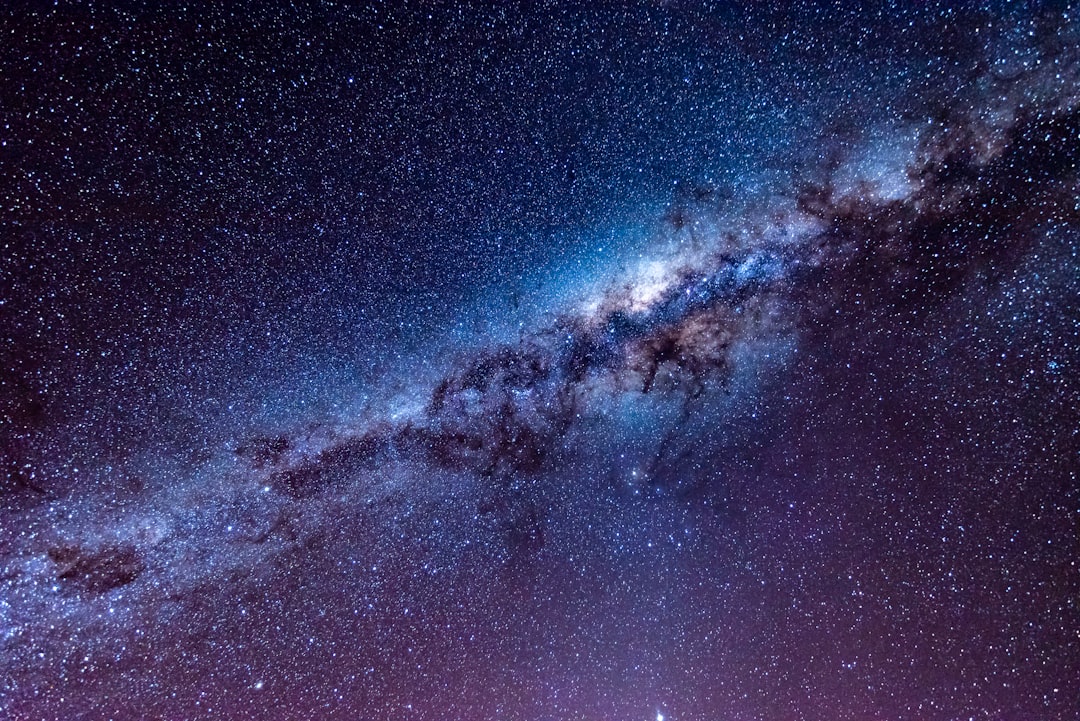
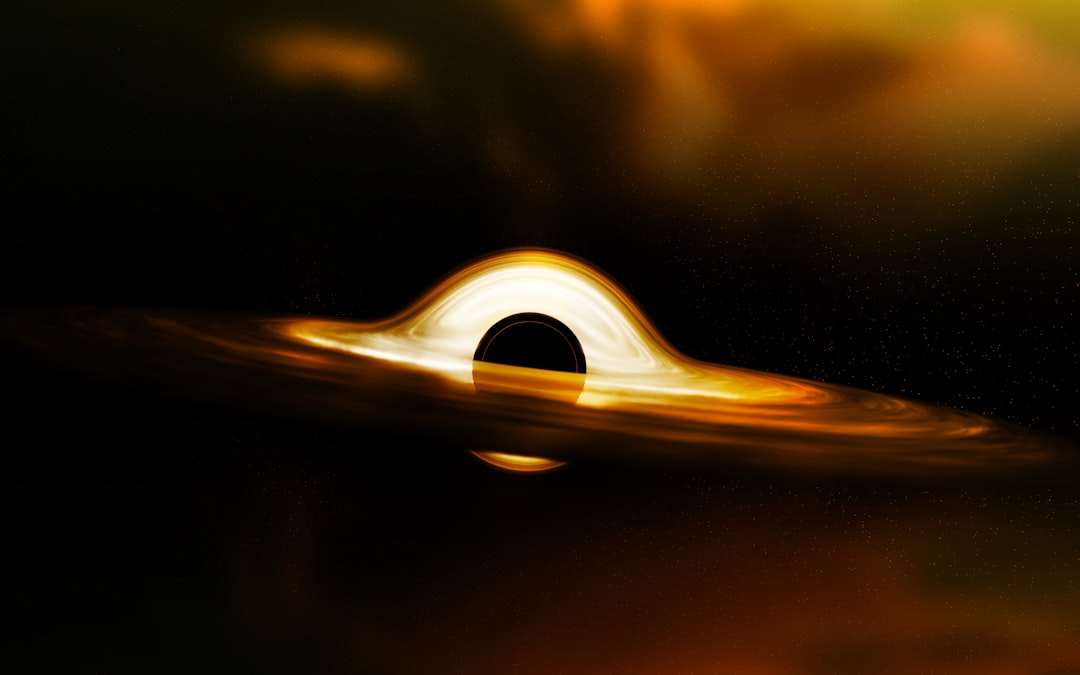
To fully appreciate the significance of this discovery, it's essential to understand the pivotal role that supermassive black holes play in shaping the cosmos. These gravitational behemoths, containing millions to billions of times the mass of our Sun, reside at the centers of most large galaxies, including our own Milky Way. When matter spirals toward these cosmic giants, it forms an accretion disk that becomes extraordinarily hot, releasing tremendous amounts of electromagnetic radiation across the spectrum.
When a supermassive black hole actively consumes material, the galaxy's core becomes what astronomers call an Active Galactic Nucleus (AGN). These AGN can become so luminous that they temporarily outshine all the billions of stars in their host galaxy combined. But the influence of these black holes extends far beyond mere brightness. Some SMBHs generate relativistic jets—highly collimated streams of plasma and particles that shoot outward from the black hole's poles at velocities approaching the speed of light.
These jets, first discovered in the 1970s, have long fascinated astronomers because they represent one of the most powerful and enigmatic phenomena in the universe. The energy required to launch material across thousands or even millions of light-years is almost incomprehensible, and understanding how these jets form and interact with their host galaxies remains one of the key challenges in modern astrophysics.
Multi-Wavelength Observations Reveal Unprecedented Jet Structure
The research team's innovative approach combined observations across multiple wavelengths of light, each revealing different aspects of this extraordinary system. The Keck Cosmic Web Imager (KCWI) on the Keck II telescope provided crucial optical data that allowed astronomers to trace ionized gas extending to the farthest reaches of the jet's influence. This optical data was particularly important for understanding the jet's impact on the galaxy's star-forming gas.
"The Keck Observatory data is what allowed us to understand the true scale of this phenomenon," explained Justin Kader, a UC Irvine postdoctoral researcher and lead author of the study. "The gas we see with Keck Observatory reaches the farthest distances from the black hole, which means it also traces the longest timescales. Without these observations, we wouldn't know how powerful—or how persistent—this outflow really is."
The James Webb Space Telescope contributed infrared observations that penetrated through dust to reveal the energetic heart of the galaxy. Webb's advanced instruments detected intensely energized coronal gas—superheated plasma erupting from either side of the black hole—measuring several thousand parsecs across. For context, most observed coronae measure only in the hundreds of parsecs, making this the most extended coronal gas structure ever documented. This discovery alone suggests that the energy output from VV340a's central black hole is exceptional even among active galaxies.
Meanwhile, radio observations from the Karl G. Jansky Very Large Array revealed perhaps the most striking feature of all: a pair of plasma jets twisted into a distinctive helical pattern. This corkscrew structure provides direct evidence of jet precession—a rare phenomenon where the jet's direction slowly wobbles over time, much like a spinning top wobbling as it slows down.
Understanding Jet Precession: A Cosmic Wobble
The precessing motion observed in VV340a's jets is particularly intriguing to astronomers because it suggests complex dynamics at play in the galaxy's core. Several mechanisms could cause such precession, including the gravitational influence of a binary supermassive black hole system, where two black holes orbit each other while one or both produce jets. Alternatively, the precession could result from the Lense-Thirring effect, a prediction of Einstein's general relativity where the spinning black hole drags spacetime around it, causing the inner accretion disk to precess.
The helical jet structure observed in VV340a traces out the history of this wobbling motion over millions of years. As the jet direction slowly changes, it sweeps through the surrounding galaxy like a cosmic lighthouse beam, affecting different regions at different times. This creates the extended, twisted structures visible in the radio data—a fossil record of the jet's changing orientation over cosmic time.
Dramatic Impact on Star Formation and Galactic Evolution
One of the most significant findings from the KCWI data was the measurement of how these jets affect the galaxy's ability to form new stars. The observations revealed that the jet is stripping the galaxy of gas at a rate of approximately 20 solar masses per year. To put this in perspective, this means the black hole's jets are removing enough material each year to form 20 stars like our Sun—or fewer, more massive stars.
This process, known as AGN feedback, represents a critical mechanism in galaxy evolution theory. By removing or heating the cold gas necessary for star formation, the jets effectively "quench" star formation in regions they affect. This feedback mechanism is thought to explain why the most massive galaxies in the universe are typically "red and dead"—devoid of the young, blue stars that indicate ongoing star formation.
However, what makes the VV340a discovery particularly puzzling is the timing. Such powerful jets are typically observed in elliptical galaxies—older, evolved systems that have long since exhausted their star-forming gas through previous episodes of activity or galactic mergers. VV340a, by contrast, is a disk galaxy still in the early stages of merging with a companion galaxy. This suggests that powerful AGN feedback can occur much earlier in a galaxy's life cycle than previously thought.
Implications for the Milky Way's Past and Future
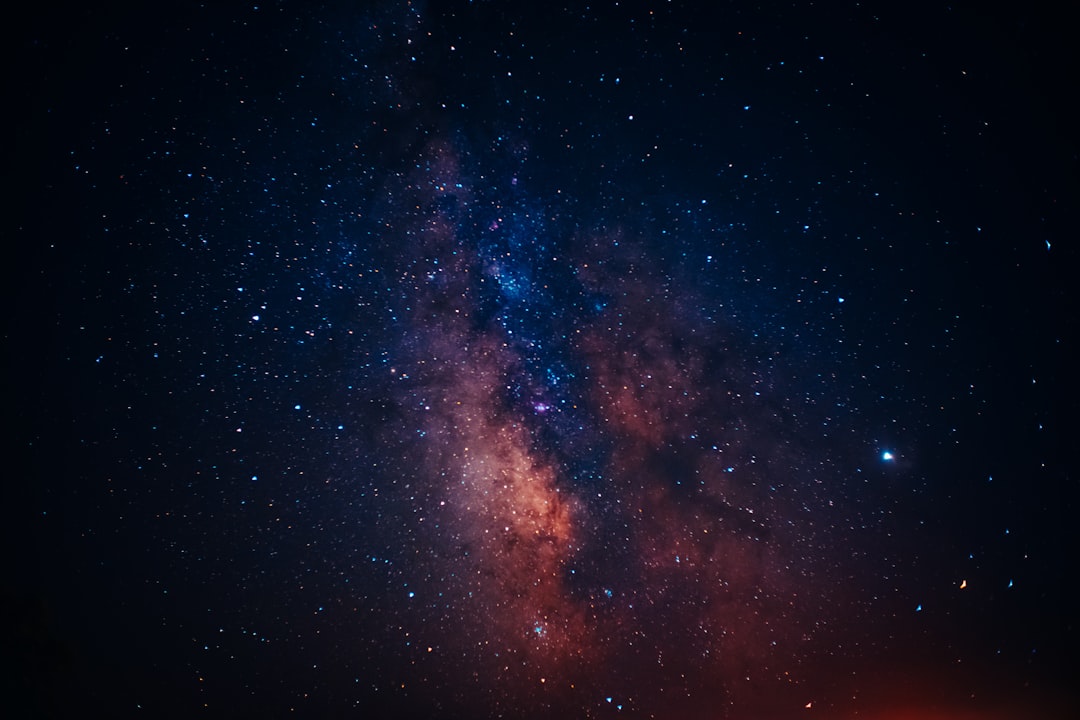
Perhaps the most thought-provoking aspect of this discovery is what it might tell us about our own galaxy's history. The Milky Way is also a disk galaxy, and while its central supermassive black hole, Sagittarius A*, is currently relatively quiet, evidence suggests it may have been much more active in the past.
"This is the first time we've seen a precessing, kiloparsec-scale radio jet driving such a massive outflow in a disk galaxy," noted Kader. "There's no clear fossil record of something like this happening in our galaxy, but this discovery suggests we can't rule it out. It changes the way we think about the galaxy we live in."
Some astronomers have speculated about mysterious structures in the Milky Way, such as the Fermi Bubbles—giant lobes of high-energy gas extending 25,000 light-years above and below the galactic plane—as possible remnants of past AGN activity. The VV340a observations provide a contemporary example of how such structures might form, offering a template for understanding our own galaxy's potentially violent past.
Key Findings and Scientific Breakthroughs
- Record-Breaking Jet Extension: The jets extend up to 20,000 light-years from the galactic center, making them the largest and most extended jets ever observed in a nearby galaxy of this type
- Unprecedented Coronal Structure: The superheated coronal gas spans several thousand parsecs, far exceeding the typical hundreds of parsecs observed in other active galaxies
- Clear Jet Precession Evidence: The helical radio structure provides the clearest evidence to date of jet precession in a disk galaxy, suggesting complex dynamics in the galactic core
- Significant Gas Removal Rate: The jets are expelling approximately 20 solar masses of gas per year, directly impacting the galaxy's ability to form new stars
- Unexpected Timing: The presence of such powerful jets in a young, merging disk galaxy challenges established theories about when and where AGN feedback occurs in galactic evolution
Future Research Directions and Unanswered Questions
The discovery of VV340a's wobbling jets opens numerous avenues for future investigation. The research team's next priority involves obtaining higher-resolution radio observations to determine whether a binary supermassive black hole system might be responsible for the jet precession. If confirmed, this would represent one of the closest and best-studied examples of such a system, providing invaluable insights into how supermassive black holes merge—a process that should produce powerful gravitational waves detectable by future space-based observatories.
Vivian U, an associate scientist at Caltech/IPAC and senior author of the study, emphasized the broader implications: "We're only beginning to understand how common this kind of activity may be. With Keck Observatory and these other powerful observatories working together, we're opening a new window into how galaxies change over time."
Additional questions that future research must address include: How long has this jet been active? Will the ongoing galactic merger trigger even more intense AGN activity? And perhaps most intriguingly, how many other galaxies are experiencing similar phenomena that have gone undetected due to observational limitations?
Technological Synergy Driving Discovery
This discovery exemplifies the power of multi-wavelength astronomy and the importance of combining data from multiple observatories. Each telescope contributed unique information: Webb revealed the energetic core, Keck traced the extended optical emission and gas kinematics, and the VLA mapped the radio jet structure. Only by synthesizing these different perspectives could astronomers construct a complete picture of this complex system.
As next-generation facilities come online, including the Extremely Large Telescope and enhanced capabilities for existing observatories, astronomers expect to find many more examples of such phenomena. Each discovery will help refine our models of galaxy evolution and the intricate dance between supermassive black holes and their host galaxies.
Broader Significance for Cosmology and Galaxy Formation
The VV340a discovery has profound implications for our understanding of cosmic evolution on the largest scales. Galaxy formation models must now account for the possibility that powerful AGN feedback can occur during major mergers, potentially explaining why some galaxies cease forming stars earlier than predicted by simpler models that don't include such feedback mechanisms.
Furthermore, this discovery suggests that the relationship between supermassive black holes and their host galaxies—often characterized by the M-sigma relation, which links black hole mass to the velocity dispersion of stars in the galactic bulge—may be established through violent episodes like the one observed in VV340a. Understanding these episodes is crucial for explaining why this relationship exists and how it has remained remarkably consistent across cosmic time.
As we continue to probe the universe with increasingly sophisticated instruments, discoveries like the wobbling jets of VV340a remind us that the cosmos still holds many surprises. Each new observation challenges our theories, refines our models, and ultimately brings us closer to understanding the magnificent complexity of the universe we inhabit. The story of how galaxies grow, evolve, and transform over billions of years is being written one discovery at a time, and VV340a has just added a fascinating new chapter to that cosmic narrative.