When the James Webb Space Telescope (JWST) began its unprecedented survey of the early cosmos, astronomers anticipated surprises—but few expected the profound mystery that emerged from its first deep-field observations. Among the ancient galaxies captured in Webb's infrared vision, a peculiar class of objects stood out: unusually bright, distinctly crimson sources that defied conventional explanations. These enigmatic objects, affectionately dubbed "Little Red Dots" (LRDs), have now been identified as direct-collapse black holes, resolving one of the most perplexing puzzles in modern cosmology.
A groundbreaking study led by Dr. Fabio Pacucci of the Harvard & Smithsonian Center for Astrophysics has demonstrated that these mysterious red sources represent a long-theorized but never-before-observed phenomenon: Direct Collapse Black Holes (DCBHs). Unlike conventional black holes that form from the remnants of massive stars, DCBHs emerge directly from collapsing clouds of primordial gas, bypassing the stellar phase entirely. This discovery, detailed in a paper currently under review for publication in Nature, not only explains the anomalous properties of LRDs but also provides crucial evidence for how supermassive black holes could have formed so rapidly in the infant Universe.
The implications of this research extend far beyond solving a single observational puzzle. For decades, astrophysicists have grappled with what's known as the "black hole mass problem"—the seemingly impossible existence of billion-solar-mass black holes appearing mere hundreds of millions of years after the Big Bang. The DCBH scenario offers an elegant solution to this cosmic conundrum, suggesting that the Universe possessed a fast-track mechanism for creating the gravitational behemoths that anchor galaxies throughout the cosmos.
The Cosmic Timeline Problem: Why Little Red Dots Shouldn't Exist
To appreciate the significance of this discovery, we must first understand the fundamental challenge these objects pose to our understanding of cosmic evolution. According to the Standard Model of Cosmology, the Universe began approximately 13.8 billion years ago with the Big Bang. The first stars—theoretical Population III stars composed almost entirely of hydrogen and helium—are believed to have ignited roughly 100-200 million years after this cosmic dawn.
These primordial stellar giants, burning with temperatures exceeding 100,000 Kelvin, lived fast and died young. With lifespans of only 2-5 million years, they would have collapsed into stellar-mass black holes, typically ranging from 10 to 100 times the mass of our Sun. Through a gradual process of accretion—consuming surrounding gas and dust—and mergers with other black holes during galactic collisions, these modest seeds were thought to grow into the supermassive black holes we observe today, some exceeding billions of solar masses.
However, this conventional growth pathway faces a critical obstacle: time. As Dr. Pacucci explains, the mathematics simply don't work for the earliest epochs of the Universe. Even under optimal conditions, with black holes accreting material at the theoretical maximum rate known as the Eddington limit, there isn't sufficient time for stellar-mass black holes to grow to the billion-solar-mass monsters that Webb has observed in galaxies existing less than a billion years after the Big Bang.
"The tension between theory and observations has been building for years, but Webb's discoveries have brought it to a critical point. We're seeing black holes that are simply too massive, too early, for conventional formation theories to explain. The direct collapse scenario provides the missing piece of this cosmic puzzle—these black holes didn't start small and grow; they were born already massive."
Unraveling the Mystery Through Advanced Simulations
The research team, which included Professor Andrea Ferrara from the Scuola Normale Superiore in Pisa, Italy, and Associate Professor Dale D. Kocevski from Colby College, employed sophisticated radiation-hydrodynamic simulations to test the DCBH hypothesis. These computational models are among the most complex in astrophysics, simultaneously tracking multiple interacting physical processes: gravitational collapse, gas dynamics, radiation transport, and thermodynamic evolution.
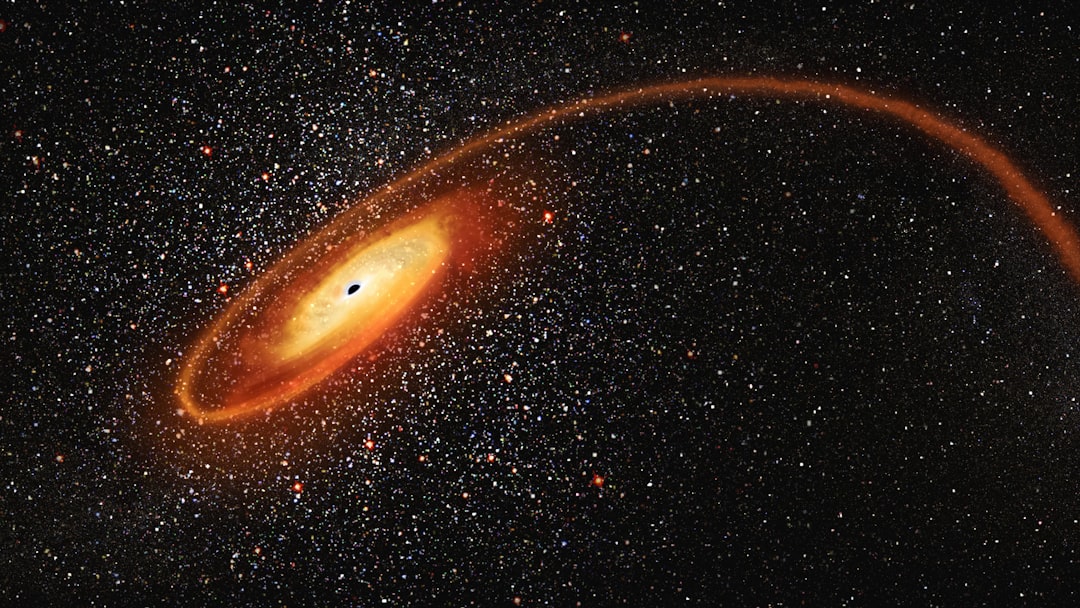
The simulations modeled how Direct Collapse Black Holes would appear if they were actively accreting material from their surroundings during the early Universe. Unlike stellar-mass black holes that form from supernovae, DCBHs are theorized to emerge when massive clouds of primordial hydrogen gas—potentially 100,000 to 1 million solar masses—collapse directly into black holes without ever forming stars. This process requires special conditions: the gas must remain relatively cool (around 8,000 Kelvin) and avoid fragmenting into smaller star-forming clumps.
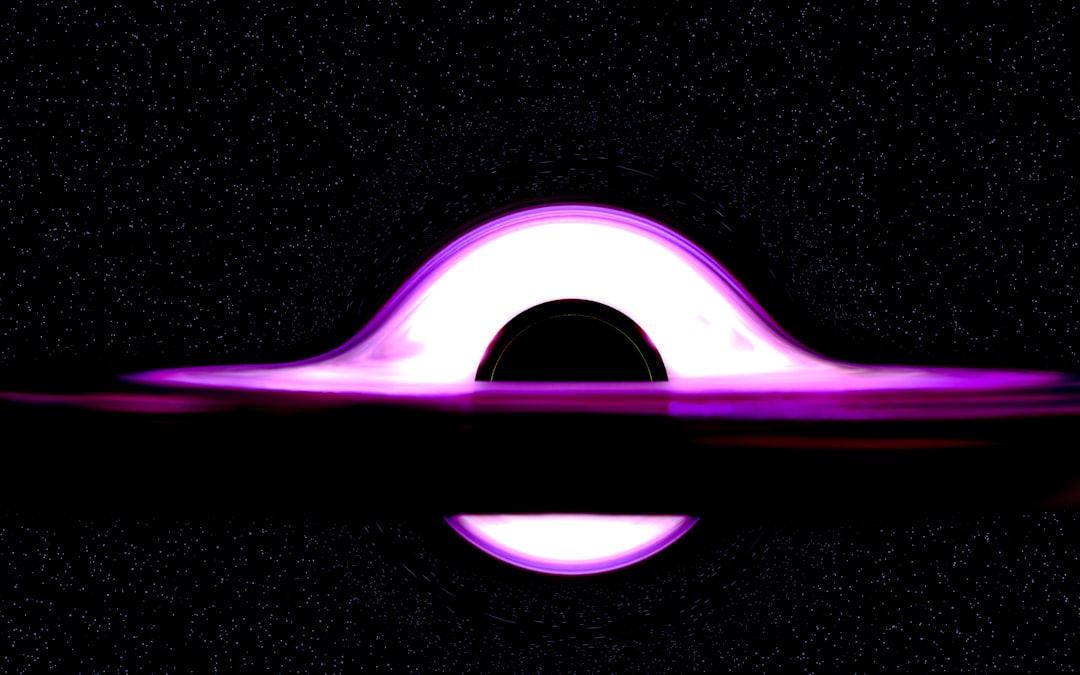
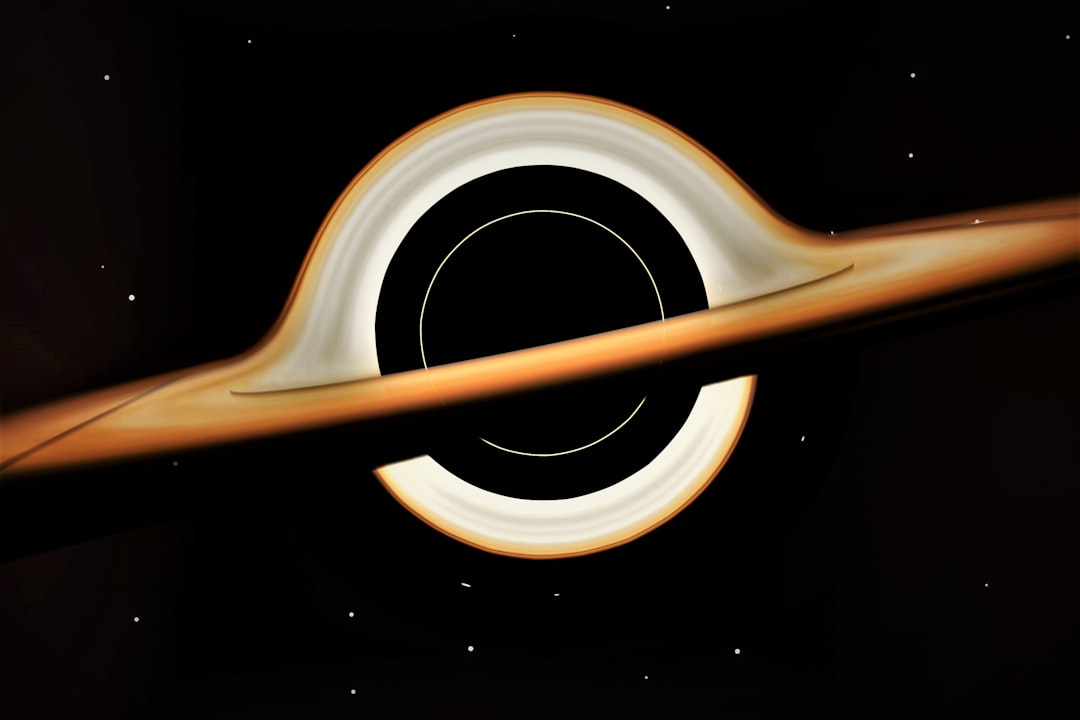
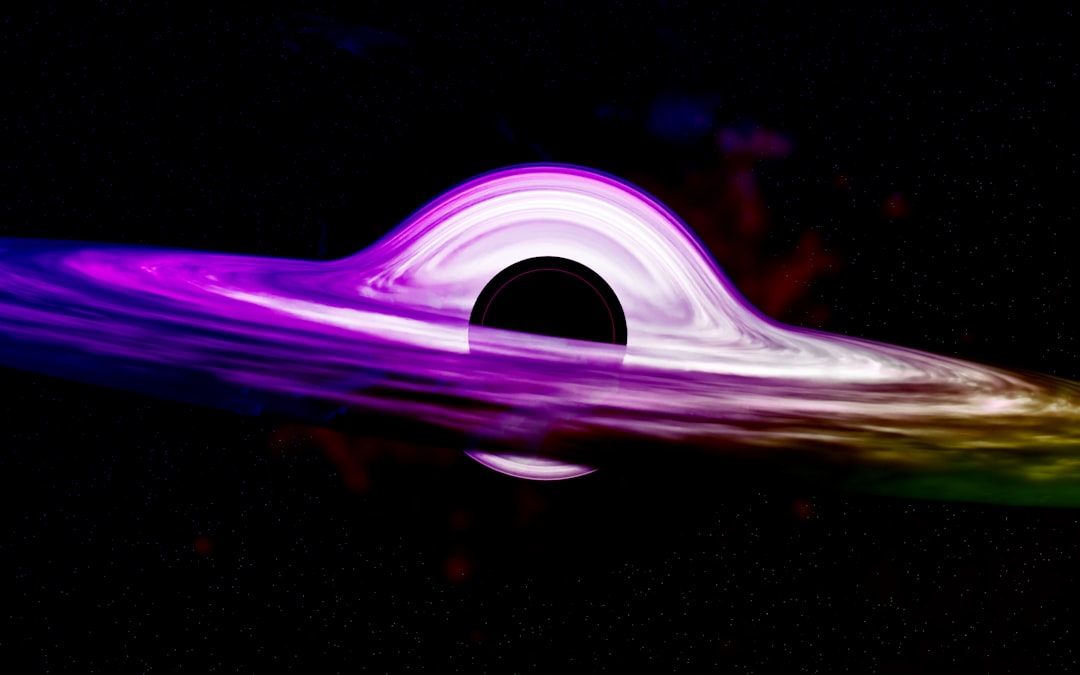
What makes the team's simulations particularly powerful is their ability to track the intricate interplay between the infalling gas and the radiation emitted by the growing black hole. As material spirals into the black hole through an accretion disk, it heats to extreme temperatures, emitting intense radiation across the electromagnetic spectrum. This radiation, in turn, affects the surrounding environment, creating a dense cocoon of gas that absorbs high-energy X-rays and ultraviolet light, then re-emits this energy at longer wavelengths in the optical and near-infrared range.
The Signature Properties of Direct Collapse Black Holes
When Pacucci and his colleagues converted their simulation results into mock observations—mimicking what Webb would actually see—the match was striking. The simulated DCBHs reproduced virtually all of the puzzling characteristics that made LRDs so mysterious:
- Weak X-ray Emission: Despite harboring actively feeding black holes, LRDs emit surprisingly little X-ray radiation. The simulations showed that dense gas clouds surrounding DCBHs effectively absorb high-energy photons, explaining this apparent contradiction.
- Metal and High-Ionization Lines: Spectroscopic observations revealed the presence of highly ionized elements in LRDs, suggesting extreme radiation environments. The DCBH models naturally produce these conditions through intense radiation from the accretion process.
- Absence of Star Formation Features: Unlike typical early galaxies, LRDs show minimal evidence of active star formation. This makes perfect sense if they're dominated by direct-collapse black holes rather than stellar populations.
- Extreme Compactness: LRDs appear remarkably small and dense for their mass. The simulations demonstrated that the gas-rich environment surrounding DCBHs accounts for this unusual compactness.
- Apparent Overmassiveness: The black holes in LRDs seem disproportionately massive compared to any stellar component, a natural consequence of the direct collapse formation mechanism.
A Window into the Universe's Formative Years
The identification of LRDs as direct-collapse black holes represents far more than solving an observational puzzle—it provides our first direct glimpse into a critical phase of cosmic evolution that has remained hidden until now. For decades, theoretical astrophysicists have predicted that DCBHs should exist, but observational confirmation has remained frustratingly elusive. The James Webb Space Telescope's unprecedented sensitivity in the infrared has finally made these objects visible.
One of the most significant implications of this discovery concerns the efficiency of early black hole formation. The abundance of LRDs observed by Webb, along with their distribution across different cosmic epochs (redshifts), suggests that the direct collapse mechanism was not a rare occurrence but a common pathway for black hole formation in the early Universe. This efficiency helps explain how supermassive black holes became so ubiquitous, with virtually every large galaxy in the modern Universe hosting one at its center.
The research also sheds light on the relationship between black holes and their host galaxies. In the local Universe, astronomers have discovered tight correlations between the masses of supermassive black holes and properties of their host galaxies, such as the velocity dispersion of stars in the galactic bulge. The DCBH scenario suggests that this relationship may have been established very early in cosmic history, with massive black hole seeds forming first and subsequently influencing the formation and evolution of their host galaxies—a process known as co-evolution.
The Role of Radiation Pressure and Variability
Another intriguing aspect revealed by the simulations concerns the variability of LRDs. Observations have shown that these objects exhibit fluctuations in brightness over time, a behavior that the DCBH models naturally reproduce. As gas flows onto the black hole, radiation pressure—the outward force exerted by the intense radiation field—can temporarily halt or redirect the inflow, creating episodic accretion patterns. These variations occur on timescales ranging from months to years, providing a distinctive signature that can be used to identify DCBHs in future observations.
The simulations also revealed that DCBHs undergo long-lived phases where radiation pressure plays a dominant role in shaping the accretion flow. This differs from more evolved black holes in the later Universe, where gravitational forces typically dominate. Understanding these radiation-pressure-driven phases is crucial for interpreting Webb's observations and for predicting how these early black holes will evolve over cosmic time.
Implications for Future Cosmic Archaeology
The confirmation that LRDs are direct-collapse black holes opens exciting new avenues for research. With Webb continuing its survey of the early Universe, astronomers can now search for additional DCBHs with greater confidence, knowing what signatures to look for. The European Space Agency's Euclid mission, launched in 2023, will complement Webb's observations by surveying a much larger volume of the Universe, potentially discovering thousands of these primordial black holes.
Future observations will also focus on testing specific predictions of the DCBH model. For instance, the simulations suggest that these objects should exhibit particular patterns in their spectral energy distributions—the way they emit light across different wavelengths. High-resolution spectroscopy with Webb's NIRSpec instrument can verify these predictions, providing even stronger confirmation of the direct collapse scenario.
Additionally, the discovery raises intriguing questions about the conditions that enabled DCBH formation. What specific circumstances in the early Universe allowed massive gas clouds to collapse directly into black holes rather than fragmenting into stars? How common were these conditions, and how did they vary across different environments? Answering these questions will require both more sophisticated simulations and deeper observational surveys.
A Paradigm Shift in Black Hole Astrophysics
The identification of Little Red Dots as direct-collapse black holes represents a paradigm shift in our understanding of how the Universe's most massive objects came to be. Rather than a slow, gradual growth from stellar remnants, we now have evidence for a rapid formation channel that can produce massive black hole seeds within the first few hundred million years of cosmic history.
This discovery exemplifies the transformative power of the James Webb Space Telescope. By pushing observational capabilities to unprecedented levels, Webb is not merely confirming existing theories but challenging and refining our understanding of fundamental cosmic processes. The telescope was designed to study the epoch of the first stars and galaxies, and in identifying DCBHs, it has achieved one of its primary scientific objectives: revealing how the first black holes formed and began shaping the cosmic landscape we observe today.
As Dr. Pacucci and his colleagues note, the simplicity and elegance of the DCBH explanation—requiring no ad-hoc assumptions or exotic physics—is particularly compelling. The model builds on decades of theoretical work and is grounded in well-understood physical processes. This suggests that we're not just solving a puzzle but uncovering a fundamental aspect of cosmic evolution that has been operating since the Universe's earliest epochs.
The journey from mysterious red dots to confirmed direct-collapse black holes illustrates the iterative nature of scientific discovery. Initial observations raised questions, theoretical models proposed explanations, and sophisticated simulations tested these hypotheses against data. The result is a deeper, more nuanced understanding of how the Universe evolved from its primordial state to the rich, complex cosmos we observe today. As Webb continues its mission and new facilities come online, we can expect even more revelations about the Universe's formative years, building on this crucial foundation.
Further Reading: The original research paper is available on arXiv, providing detailed technical information about the simulations and analysis methods used in this groundbreaking study.