In the quest to unravel one of science's most profound mysteries—the emergence of life on Earth—researchers have made a remarkable discovery about an unlikely protagonist: hydrogen cyanide (HCN), a compound better known for its deadly toxicity than its life-giving potential. A groundbreaking study published in ACS Central Science reveals how this paradoxical molecule may have played a crucial role in sparking the chemical reactions that eventually led to the first living organisms on our planet.
The research, led by Marco Cappelletti from the Department of Chemistry and Chemical Engineering at Chalmers University of Technology in Sweden, demonstrates that frozen hydrogen cyanide crystals possess extraordinary properties that could catalyze the formation of life's essential building blocks—even in the frigid conditions found throughout our solar system and beyond. This finding challenges our understanding of where and how prebiotic chemistry could occur, expanding the potential habitats where life's precursors might emerge.
While the exact moment life ignited on Earth remains shrouded in the mists of deep time, scientists are steadily piecing together the chemical narrative that preceded that pivotal transition. This latest research adds a critical chapter to that story, revealing how electric fields on the surface of HCN crystals can dramatically accelerate chemical reactions that would otherwise require much higher temperatures or energy inputs.
The Paradox of a Poisonous Precursor to Life
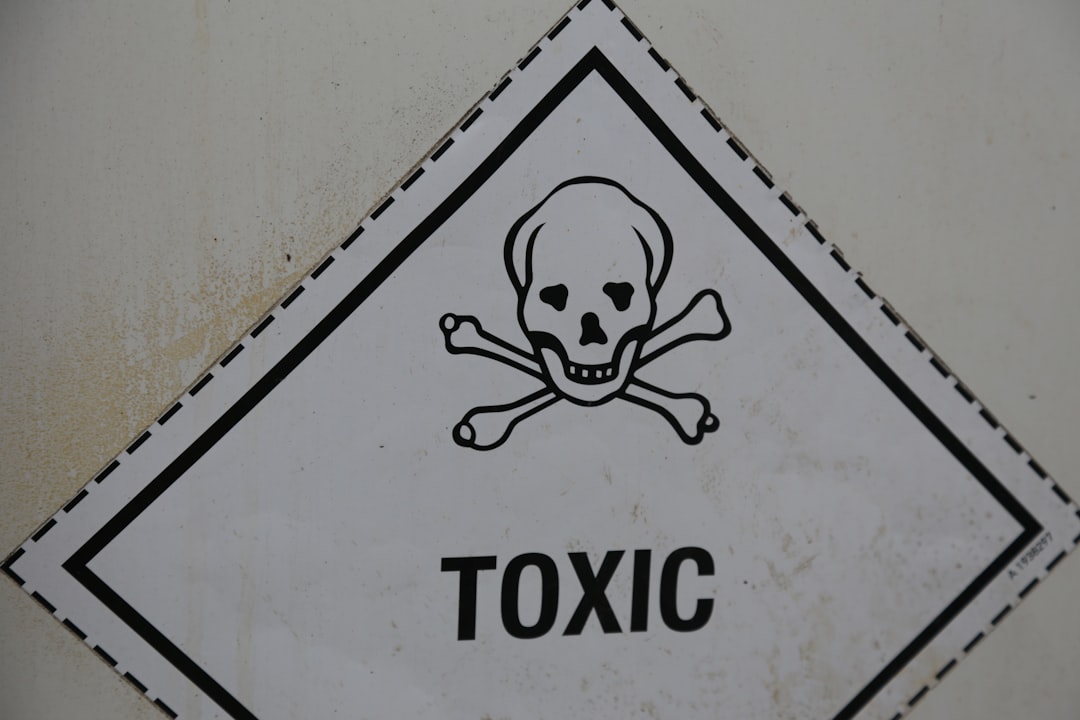
The irony is inescapable: hydrogen cyanide, a substance synonymous with death and used historically as a chemical weapon, may have been instrumental in creating the conditions for life to flourish. To modern organisms, HCN is a metabolic poison that disrupts cellular respiration by binding to critical enzymes. Yet in Earth's prebiotic environment, before any life existed to poison, this same molecule's unique chemical properties made it an ideal substrate for building complex organic compounds.
According to research from NASA's Astrobiology Program, when combined with water, HCN can polymerize to form amino acids—the building blocks of proteins—and nucleobases, the fundamental components of DNA and RNA. This remarkable versatility stems from HCN's simple yet reactive molecular structure, consisting of hydrogen, carbon, and nitrogen atoms arranged in a linear configuration.
"We may never know precisely how life began, but understanding how some of its ingredients take shape is within reach. Hydrogen cyanide is likely one source of this chemical complexity, and we show that it can react surprisingly quickly in cold places," explained co-author Martin Rahm in a press release.
The presence of HCN in Earth's early history is well-documented. Evidence suggests that during the Late Heavy Bombardment—a period approximately 4.1 to 3.8 billion years ago when asteroids and comets pummeled the inner solar system—these cosmic impactors delivered substantial quantities of HCN to our planet's surface. This extraterrestrial delivery system may have provided the raw materials necessary for prebiotic chemistry to commence.
Hydrogen Cyanide Across the Cosmos
Far from being a terrestrial curiosity, hydrogen cyanide is ubiquitous throughout the universe. Astronomers have detected HCN in interstellar molecular clouds, the stellar nurseries where new stars and planetary systems form. It's present in cometary ices, those ancient frozen repositories of pristine solar system material. Perhaps most intriguingly, Saturn's enigmatic moon Titan harbors vast quantities of HCN ice in its atmosphere, where it continuously rains down onto the moon's frigid surface.
As the researchers note in their paper, "Hydrogen cyanide (HCN) is present in many astrochemical environments, including interstellar clouds and comets. On Saturn's moon Titan, large amounts of HCN ice are present in the atmosphere and, following surface deposition, may influence both chemical and geological evolution." This widespread distribution suggests that the prebiotic chemistry enabled by HCN could be occurring throughout the cosmos, wherever conditions permit.
Despite HCN's astrochemical importance, scientists have historically struggled to understand the physicochemical properties of solid hydrogen cyanide. The molecule exhibits a suite of unusual characteristics that set it apart from more conventional ices. HCN crystals display pyroelectricity—the ability to generate electrical charges when heated or cooled—and under certain conditions, they can even glow with luminescence or physically jump and fracture with surprising violence.
Computational Insights into Crystal Architecture
To probe the mysteries of frozen HCN, Cappelletti and his colleagues employed sophisticated computational modeling techniques to simulate the behavior of HCN crystals at the molecular level. They constructed a virtual model of a stable HCN crystal shaped as a cylinder measuring 450 nanometers in length—about 200 times smaller than the width of a human hair.
The simulated crystal's architecture matched observations of real HCN crystals, which form distinctive "cobweb" structures under microscopic examination. These formations branch outward from central nucleation points, with individual needle-like crystals terminating in multi-faceted tips that resemble the cut surfaces of gemstones. Crucially, the researchers discovered that these crystalline tips generate extraordinarily strong electric fields.
The team's analysis revealed that when HCN crystals fracture—which they can do spontaneously due to internal stresses—they expose fresh surfaces with intense electric fields capable of catalyzing chemical reactions. This mechanism provides a plausible explanation for how complex chemistry could proceed in environments far too cold for conventional thermal activation of reactions.
The Critical Role of Isocyanide Formation
One of the study's most significant findings concerns the formation of isocyanide (HNC), an isomer of hydrogen cyanide where the molecular arrangement differs slightly but consequentially. In HNC, the hydrogen atom bonds to the nitrogen rather than the carbon, creating a molecule with dramatically different reactivity. The researchers demonstrated that the electric fields on HCN crystal surfaces can facilitate the near-barrierless conversion of HCN to HNC through proton transfer reactions.
This discovery addresses a long-standing puzzle in astrochemistry: observations from radio telescopes have detected HNC in cold cosmic environments at abundances that shouldn't exist according to conventional thermodynamic equilibrium. The Atacama Large Millimeter/submillimeter Array (ALMA) and other observatories have measured HNC/HCN ratios in molecular clouds and cometary atmospheres that exceed theoretical predictions.
The research team's simulations suggest that surface-catalyzed reactions on HCN crystals could explain these out-of-equilibrium abundances. The electric fields at crystal surfaces lower the energy barrier for isomerization so dramatically that the reaction can proceed rapidly even at temperatures approaching absolute zero. In their models, HNC formation occurred on timescales of hours to days under cryogenic conditions—remarkably fast for such cold environments.
Implications for Prebiotic Chemistry
The importance of HNC extends beyond mere molecular curiosity. Isocyanide represents a more reactive intermediate between simple inorganic molecules and the complex organic polymers necessary for life. Its enhanced reactivity compared to HCN makes it a superior building block for constructing prebiotic molecules including peptides, which can serve as catalysts for further chemical elaboration.
The researchers propose that the electric field-assisted chemistry occurring on HCN crystal surfaces could have created localized "hot spots" of chemical activity on early Earth, in cometary ices, or on worlds like Titan. These microscopic reaction centers could synthesize complex organic molecules despite ambient temperatures hundreds of degrees below freezing—a finding that dramatically expands the potential environments where life's chemical precursors might form.
Key implications of this research include:
- Expanded Habitable Chemistry Zones: Prebiotic reactions may occur in cold environments previously thought too frigid for significant chemical evolution, including the outer solar system and interstellar space
- Cometary Contribution to Life's Origins: Comets, rich in HCN ice, may have delivered not just raw materials but pre-processed organic compounds to early Earth
- Titan as a Natural Laboratory: Saturn's moon, with its abundant atmospheric HCN and surface temperatures around -180°C, may be actively producing complex organic molecules through these mechanisms
- Novel Catalytic Mechanisms: Electric field catalysis on crystal surfaces represents a previously underappreciated pathway for driving chemical reactions in low-energy environments
Future Research Directions and Experimental Validation
While computational simulations provide powerful insights, the research team acknowledges that experimental verification remains essential. As they note in their paper, "Validation of our predictions would benefit from laboratory studies of HCN surface chemistry under cryogenic conditions." They specifically propose experiments involving the physical crushing of HCN crystals in the presence of reagents like water to test whether the exposure of high-energy surfaces can indeed accelerate prebiotic chemical transformations.
Such experiments would need to be conducted in specialized cryogenic chambers capable of maintaining the ultra-low temperatures at which HCN remains solid while allowing researchers to observe chemical reactions in real-time using spectroscopic techniques. The Jet Propulsion Laboratory and other institutions have facilities capable of simulating the conditions found on Titan and in interstellar space, making these validation studies technically feasible.
The researchers also call for enhanced observational campaigns targeting HNC/HCN ratios across diverse cosmic environments. By comparing these ratios across different temperatures and chemical contexts—from warm stellar envelopes to frigid cometary nuclei—astronomers could test whether the proposed surface catalysis mechanisms operate under astrophysical conditions. Future missions to Titan, including potential landers equipped with sophisticated chemical analysis instruments, could directly sample HCN-rich materials and search for the predicted organic products.
Connecting Laboratory Insights to Cosmic Questions
This research exemplifies how advances in computational chemistry can illuminate processes occurring across vast cosmic scales. The same electric field-driven reactions that the team modeled in their 450-nanometer crystal simulations could be operating on countless HCN ice particles in protoplanetary disks around young stars, in the frozen surfaces of distant comets, and in the exotic atmospheric chemistry of worlds like Titan.
The study also underscores a profound theme in astrobiology: the chemical pathways to life may be more diverse and resilient than previously imagined. Rather than requiring narrowly specific conditions of temperature, pressure, and chemical composition, life's molecular precursors may form through multiple routes across a wide range of environments. This resilience increases the probability that prebiotic chemistry—and potentially life itself—could emerge elsewhere in the universe.
As our understanding of prebiotic chemistry deepens through studies like this one, we move closer to answering fundamental questions about our cosmic origins. While the exact moment when non-living chemistry transitioned to living biology may remain forever beyond our direct observation, each piece of the puzzle brings us nearer to comprehending the remarkable sequence of events that transformed simple molecules into the complex, self-replicating systems we call life. In this grand narrative, even a poison like hydrogen cyanide finds its place as an unlikely hero in the story of our existence.