The James Webb Space Telescope has unveiled groundbreaking evidence that challenges our fundamental understanding of the early cosmos. An international research team has discovered compelling chemical signatures pointing to the existence of "monster stars"—stellar giants weighing between 1,000 and 10,000 times the mass of our Sun—that may have populated the universe during its infancy. This discovery, published in Nature, provides the missing link in explaining how supermassive black holes could have formed so rapidly after the Big Bang, solving a cosmological puzzle that has perplexed astronomers for over two decades.
These primordial behemoths, if confirmed, would represent an entirely new class of stellar objects that existed during the universe's first few hundred million years. Unlike any stars we observe today, these Population III stars would have burned with extraordinary brilliance for merely a quarter of a million years before collapsing directly into massive black holes—the seeds that eventually grew into the supermassive monsters we observe at the centers of galaxies today. The discovery fundamentally reshapes our understanding of cosmic evolution during the mysterious period known as the Cosmic Dark Ages.
The research team, led by Dr. Devesh Nandal, a Swiss National Science Foundation Postdoctoral Fellow at the University of Virginia and the Institute for Theory and Computation at Harvard & Smithsonian, analyzed unprecedented data from the JWST to identify these ancient stellar fingerprints. Their findings provide the first observational evidence supporting theoretical predictions made decades ago about how the earliest generation of stars might have formed and evolved.
The Supermassive Black Hole Paradox
For more than twenty years, astronomers have grappled with a seemingly impossible timeline. Observations have revealed supermassive black holes weighing millions to billions of solar masses existing less than a billion years after the Big Bang—a cosmological eyeblink. According to our best understanding of stellar evolution and black hole formation, these gravitational titans simply shouldn't exist so early in cosmic history. Traditional models suggest that black holes form from the collapse of massive stars, then gradually grow through mergers and accretion of surrounding matter—processes that require billions of years, not mere hundreds of millions.
The James Webb Space Telescope has only deepened this mystery by discovering multiple quasars—extraordinarily luminous active galactic nuclei powered by supermassive black holes—dating back to when the universe was less than 5% of its current age. These observations have forced cosmologists to reconsider fundamental assumptions about how the first black holes formed. Two primary hypotheses have emerged: either black holes formed directly from collapsing clouds of primordial gas (direct collapse black holes or DCBHs), or the first generation of stars was far more massive than anything we've observed, capable of leaving behind substantial black hole remnants.
Decoding the Chemical Fingerprint of Ancient Giants
The breakthrough came from detailed analysis of GS 3073, a distant galaxy first identified in 2022 by Dr. Muhammad A. Latif and Dr. Daniel Whalen, along with colleagues from the Institute for Astronomy at the University of Edinburgh and the University of Exeter. What immediately caught the researchers' attention was an extraordinary chemical anomaly: an extreme nitrogen-to-oxygen ratio of 0.46, far exceeding anything that could be explained by conventional stellar processes or supernova explosions.
Chemical abundances in galaxies serve as cosmic archaeological records, preserving information about the types of stars that lived and died billions of years ago. Different stellar masses, temperatures, and evolutionary pathways produce distinctive chemical signatures. The nitrogen excess observed in GS 3073 was so extreme that it couldn't be reconciled with any known stellar population—until now.
"Chemical abundances act like a cosmic fingerprint, and the pattern in GS 3073 is unlike anything ordinary stars can produce," explained Dr. Nandal. "Its extreme nitrogen matches only one kind of source we know of—primordial stars thousands of times more massive than our Sun. This tells us the first generation of stars included truly supermassive objects that helped shape the early galaxies and may have seeded today's supermassive black holes."
The research team conducted sophisticated stellar evolution modeling to understand what type of object could produce such an unusual chemical signature. Their simulations revealed a specific mechanism unique to stars in the 1,000 to 10,000 solar mass range. These monster stars would have fused helium in their cores to produce carbon at extraordinary rates. This carbon would then leak into the surrounding hydrogen-burning shell, where it would catalyze the conversion of hydrogen into nitrogen through the CNO cycle—a nuclear fusion process that uses carbon, nitrogen, and oxygen as catalysts.
The Nuclear Forge of Monster Stars
The key to understanding these chemical signatures lies in the internal dynamics of supermassive stars. Unlike solar-mass stars, which maintain relatively stable structures, monster stars would have experienced intense convective currents that mixed material throughout their interiors. As helium fusion in the core continuously produced carbon, and this carbon facilitated nitrogen production in the hydrogen-burning shell, convection would transport this nitrogen-rich material to the stellar surface.
This process would continue for millions of years—the entire main-sequence lifetime of these giants. Through powerful stellar winds driven by intense radiation pressure, these stars would have ejected enormous quantities of nitrogen-enriched material into their surrounding environments. Over time, this would create exactly the type of nitrogen excess observed in GS 3073, providing a chemical fossil record of these ancient stellar monsters.
Crucially, the team's models showed that this distinctive nitrogen signature only appears in stars within this specific mass range. Smaller stars don't produce enough nitrogen, while even larger stars would have different chemical evolution pathways. This specificity makes the observation particularly compelling as evidence for monster stars.
From Stellar Giants to Black Hole Seeds
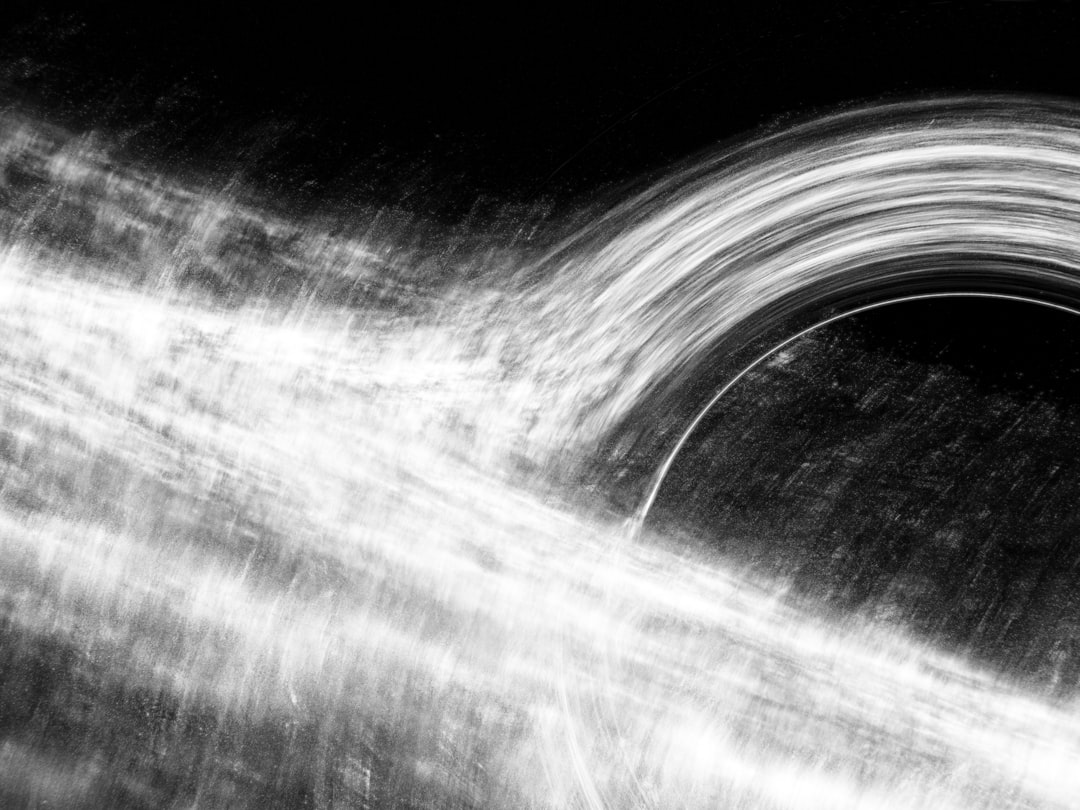
Perhaps the most significant implication of this research concerns the ultimate fate of these primordial giants. The team's models predict that monster stars would not end their lives in spectacular supernova explosions, as conventional massive stars do. Instead, their cores would become so massive and compact that they would collapse directly into intermediate-mass black holes weighing hundreds to thousands of solar masses—far more massive than the stellar-mass black holes produced by ordinary supernovae.
These intermediate-mass black holes would serve as the "seeds" that eventually grew into the supermassive black holes we observe today. With such a substantial head start in mass, these seeds could reach billions of solar masses within the first billion years of cosmic history through subsequent mergers and accretion—solving the timeline paradox that has puzzled astronomers for decades.
The presence of an actively feeding black hole at the center of GS 3073 provides additional support for this scenario. This black hole, detected through its energetic accretion activity, could be the direct descendant of one or more monster stars that formed in this galaxy during the Cosmic Dark Ages. Research conducted at European Southern Observatory has shown similar patterns in other early galaxies, suggesting this may be a common formation pathway.
Illuminating the Cosmic Dark Ages
These findings provide unprecedented insight into the Cosmic Dark Ages—the period between approximately 380,000 years and 1 billion years after the Big Bang. During this epoch, the universe had cooled enough for neutral hydrogen to form, but the first stars had not yet ignited to reionize the cosmos. Until recently, this period remained almost entirely inaccessible to observation because the light from these early objects has been stretched to infrared wavelengths by cosmic expansion and is extremely faint.
The infrared capabilities of the James Webb Space Telescope have finally opened a window into this mysterious era. By detecting and analyzing the chemical signatures of galaxies like GS 3073, astronomers can reconstruct the properties of the first stellar populations, even though these stars themselves died billions of years ago. It's analogous to paleontologists reconstructing extinct species from fossil evidence—except the "fossils" in this case are chemical abundances preserved in ancient galaxies.
Key Implications of the Discovery
- Supermassive Black Hole Formation: Monster stars provide a viable mechanism for forming the massive black hole seeds needed to explain supermassive black holes in the early universe, resolving a major cosmological puzzle.
- Chemical Evolution: The distinctive nitrogen signatures produced by these stars would have significantly influenced the chemical composition of early galaxies, affecting subsequent generations of star formation.
- Cosmic Reionization: The intense radiation from monster stars would have contributed substantially to reionizing the universe, helping to end the Cosmic Dark Ages and make the universe transparent to light.
- Galaxy Formation: The presence of massive black holes seeded by monster stars would have profoundly influenced how early galaxies formed and evolved, affecting their structure and star formation rates.
- Population III Stars: This discovery provides the first observational evidence for the theoretical Population III stars—the first generation of stars formed from primordial hydrogen and helium, with no heavier elements.
Future Observations and Confirmations
Dr. Daniel Whalen, Senior Lecturer in Cosmology at the Institute of Cosmology and Gravitation at the University of Portsmouth, emphasized the broader significance of the discovery:
"Our latest discovery helps solve a 20-year cosmic mystery. With GS 3073, we have the first observational evidence that these monster stars existed. These cosmic giants would have burned brilliantly for a brief time before collapsing into massive black holes, leaving behind the chemical signatures we can detect billions of years later. A bit like dinosaurs on Earth—they were enormous and primitive. And they had short lives, living for just a quarter of a million years—a cosmic blink of an eye."
The research team predicts that ongoing and future JWST surveys will identify additional galaxies with similar nitrogen excesses, allowing for statistical analysis of monster star populations. The Nancy Grace Roman Space Telescope, scheduled to launch in the coming years, will complement JWST observations with wider field surveys, potentially identifying hundreds of candidate galaxies for detailed follow-up study.
Spectroscopic observations with next-generation instruments, including the Extremely Large Telescope currently under construction in Chile, will enable even more detailed chemical analysis of early galaxies. These observations will help confirm whether the nitrogen excesses are truly ubiquitous in the early universe and whether they correlate with other predicted signatures of monster stars, such as specific patterns in carbon and oxygen abundances.
Transforming Our Understanding of Cosmic Dawn
This discovery represents more than just evidence for a new type of star—it fundamentally transforms our understanding of how the universe evolved from the simple, nearly uniform state that emerged from the Big Bang to the rich, complex cosmos we observe today. Monster stars would have been key players in this transformation, serving as cosmic engines that:
Forged the first heavy elements beyond hydrogen and helium, enriching the primordial gas and enabling the formation of planets and eventually life. Generated intense ultraviolet radiation that reionized the universe, making it transparent and allowing light to travel freely across cosmic distances. Created the massive black hole seeds that grew into the supermassive black holes powering quasars and active galactic nuclei. Influenced the formation and evolution of the first galaxies through their powerful feedback effects.
As Dr. Alexander Heger from Monash University's School of Physics and Astronomy notes, the discovery opens new research directions for understanding stellar evolution under extreme conditions. The nuclear physics and hydrodynamics of stars thousands of times more massive than the Sun operate in regimes that cannot be replicated in any laboratory, making observational evidence like this crucial for testing theoretical models.
The Space Telescope Science Institute, which operates JWST, has prioritized additional observations of early galaxies in upcoming observation cycles, ensuring that this line of research will continue to yield new insights into the universe's first billion years.
A New Chapter in Cosmic Archaeology
The identification of chemical signatures from monster stars in GS 3073 marks the beginning of a new era in cosmic archaeology. Just as terrestrial archaeologists piece together ancient civilizations from fragmentary evidence, astronomers can now reconstruct the properties of stellar populations that died billions of years ago by analyzing the chemical legacies they left behind. Each galaxy observed by JWST potentially contains clues about the types of stars that formed in the early universe, their masses, lifetimes, and ultimate fates.
This research demonstrates the transformative power of the James Webb Space Telescope and validates the decades of planning and development that went into creating this extraordinary instrument. By pushing observational capabilities into the infrared and achieving unprecedented sensitivity, JWST has opened a window into cosmic epochs that were previously accessible only through theoretical modeling and computer simulations.
As observations continue and more galaxies with unusual chemical signatures are identified, we can expect our understanding of the early universe to evolve rapidly. The monster stars of the Cosmic Dark Ages, burning brilliantly for their brief cosmic moment before collapsing into the black holes that would shape galaxies for billions of years to come, are finally emerging from the shadows of cosmic history into the light of scientific understanding.