The successful activation of scientific instruments aboard a new space mission represents one of the most critical milestones in any astronomical endeavor. For the Interstellar Mapping and Acceleration Probe (IMAP), this pivotal moment has arrived with remarkable success. The spacecraft's suite of ten sophisticated instruments has recently achieved "first light"—the initial operational data collection that confirms each system is functioning as designed. This achievement, announced by the Southwest Research Institute, marks a crucial step forward in humanity's quest to understand the boundary between our solar system and the vast interstellar medium beyond.
Unlike missions to nearby destinations where corrective maintenance might be possible, IMAP's trajectory toward the L1 Lagrange point—positioned approximately 1.5 million kilometers from Earth directly between our planet and the Sun—places it far beyond the reach of current human spaceflight capabilities. This makes the successful deployment and activation of its instrument suite all the more critical. The mission team, operating from Johns Hopkins University Applied Physics Laboratory, seized the opportunity to power up and test these sophisticated sensors during the spacecraft's journey to its final orbital position, providing early confirmation that IMAP is ready to fulfill its groundbreaking scientific objectives.
Understanding the Mission's Scientific Context
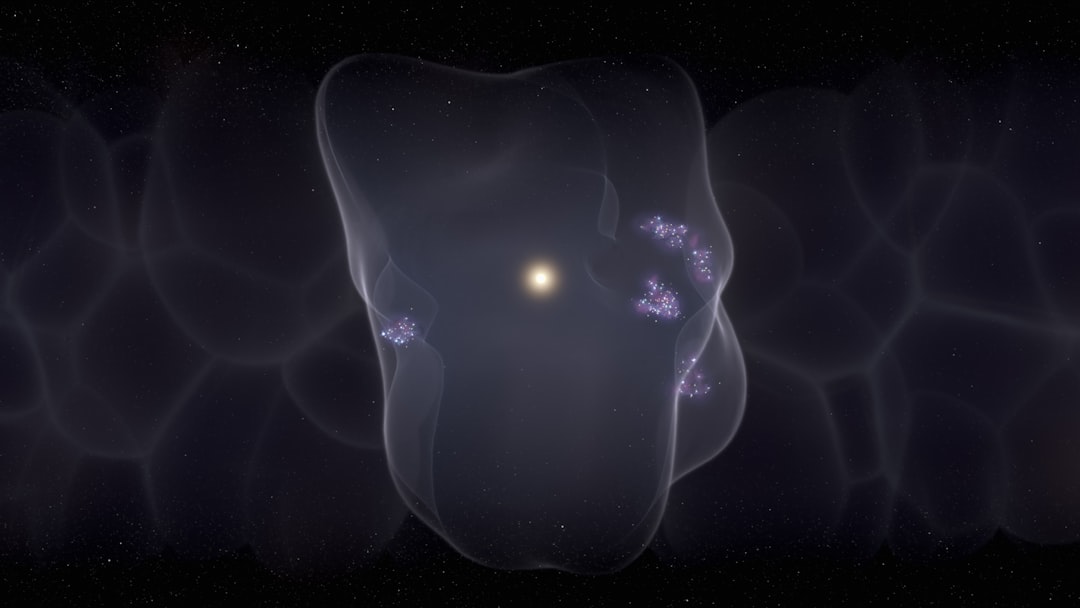
IMAP's primary scientific objective centers on investigating the heliosphere—the vast bubble of charged particles and magnetic fields created by our Sun that extends far beyond the orbits of the planets. This protective cocoon shields our solar system from the majority of galactic cosmic rays and interstellar radiation, making it fundamental to understanding both space weather and the habitability of our cosmic neighborhood. The boundary where the heliosphere meets interstellar space, known as the heliopause, represents one of the most dynamic and poorly understood regions in our solar system.
Previous missions, including NASA's Voyager spacecraft, have provided tantalizing glimpses of this boundary region, but IMAP will offer unprecedented comprehensive measurements of the particles, plasma, and magnetic fields that define this critical interface. By studying how solar wind—the continuous stream of charged particles flowing outward from the Sun—interacts with the interstellar medium, scientists hope to answer fundamental questions about the structure and evolution of our heliosphere and similar stellar environments throughout the galaxy.
The Sophisticated Instrument Portfolio
IMAP's scientific payload represents a carefully orchestrated collection of cutting-edge sensors, each designed to measure specific aspects of the space environment. The Compact Dual Ion Composition Experiment (CoDICE) stands out as a particularly innovative instrument. Weighing just 22 pounds and roughly the size of a five-gallon bucket, CoDICE exemplifies modern space instrumentation's remarkable miniaturization. This sophisticated sensor measures both the mass and charge of ions passing through the heliosphere, including relatively rare elements like oxygen and iron expelled from the Sun on the solar wind.
The instrument's striking visual design reflects its functional requirements: a brilliant gold-colored surface faces the Sun to reflect intense solar radiation and maintain thermal stability, while a matte black surface on the opposite side maximizes heat absorption from the cold cosmic background. This thermal management strategy is crucial for maintaining the precise operating temperatures required for accurate measurements in the extreme environment of interplanetary space.
Charged Particle Detection Systems
Beyond CoDICE, IMAP carries three additional charged particle detectors, each contributing unique capabilities to the mission's scientific objectives. The Solar Wind and Pickup Ion (SWAPI) instrument, developed by Princeton University, focuses on measuring both traditional solar wind ions and the fascinating "pickup ions"—neutral atoms from interstellar space that become ionized as they enter the heliosphere and are subsequently "picked up" and accelerated by the solar magnetic field.
The Solar Wind Electron (SWE) instrument provides critical contextual data by measuring the three-dimensional distribution of electrons in the solar wind. Since electrons and ions behave differently in plasma environments due to their vastly different masses, understanding both populations is essential for developing comprehensive models of heliospheric physics. Meanwhile, the High-energy Ion Telescope (HIT), developed directly by NASA, monitors energetic particles accelerated to extreme velocities by solar flares, coronal mass ejections, and other violent solar phenomena that can pose risks to spacecraft electronics and astronaut safety.
Energetic Neutral Atoms and Coordinated Measurements
Perhaps IMAP's most unique capability comes from its trio of Energetic Neutral Atom (ENA) detectors. These instruments observe particles that carry crucial information about remote regions of the heliosphere that cannot be directly sampled. When charged particles in the solar wind or interstellar medium collide with neutral atoms, charge exchange can occur, creating neutral particles that travel in straight lines, unaffected by magnetic fields. By detecting these ENAs at different energy levels, IMAP can essentially create "images" of distant heliospheric regions, much like how medical imaging techniques visualize the interior of the human body.
"The successful activation of all ten instruments represents years of careful engineering and scientific planning coming to fruition. Each sensor provides a unique piece of the puzzle, and together they will give us an unprecedented view of our place in the galaxy," noted mission scientists at the Southwest Research Institute.
The mission's coordinated measurement sensors round out the instrument suite by providing essential supporting data. A magnetometer measures the strength and direction of magnetic fields threading through the heliosphere, while an innovative interstellar dust collector will capture and analyze microscopic particles from beyond our solar system—providing direct samples of material from the broader galactic environment that our Sun travels through.
Historical Context and Mission Challenges
The successful instrument activation takes on added significance when viewed against the history of space telescope deployments. The Hubble Space Telescope, launched in 1990, famously suffered from a spherical aberration in its primary mirror that severely degraded image quality. This flaw necessitated a dramatic repair mission in 1993, during which astronauts installed corrective optics during multiple spacewalks. The subsequent images revolutionized astronomy and justified the extraordinary effort required for the repair.
However, IMAP operates under fundamentally different constraints. Its destination at the L1 Lagrange point places it in a gravitationally stable location ideal for solar observations, but also far beyond the approximately 600-kilometer altitude where the International Space Station orbits and where human servicing missions remain feasible. This reality underscores the importance of thorough ground testing and the relief that comes with successful in-flight activation of all systems.
The Road to Full Operations
While IMAP's instruments have achieved first light and are returning data, the mission still has several weeks of travel before reaching its final orbital position. Full science operations are scheduled to commence in February, following a comprehensive commissioning phase during which each instrument will be thoroughly calibrated and tested under actual space conditions. This methodical approach ensures that when systematic data collection begins, scientists can have full confidence in the quality and accuracy of the measurements.
The mission's prime operational phase is planned to last at least two years, though many space missions continue to operate productively for decades beyond their initial design lifetimes. Given the fundamental nature of the questions IMAP addresses and the uniqueness of its measurement capabilities, an extended mission seems highly likely, potentially providing continuous monitoring of heliospheric conditions through multiple solar cycles.
Broader Scientific Impact and Future Prospects
IMAP's observations will contribute to several critical areas of space science beyond pure heliospheric physics. Understanding how our Sun's activity affects the space environment has direct implications for space weather forecasting—predictions of conditions that can disrupt satellite operations, communications systems, power grids, and pose radiation hazards to astronauts and high-altitude aircraft. As humanity's presence in space expands, particularly with plans for lunar bases and eventual Mars missions, this knowledge becomes increasingly vital for operational planning and safety.
The mission also addresses fundamental astrophysical questions about how stars interact with their galactic environment. Our Sun is just one of hundreds of billions of stars in the Milky Way, each potentially creating its own astrosphere (the general term for star-generated bubbles like our heliosphere). By studying our local example in unprecedented detail, scientists can develop models applicable to stellar systems throughout the universe, including those hosting exoplanets where conditions for life might exist.
Furthermore, IMAP's measurements of galactic cosmic rays and their modulation by solar activity will help scientists understand the radiation environment that biological systems have experienced throughout Earth's history. Variations in cosmic ray flux reaching Earth's atmosphere may influence cloud formation and climate over geological timescales, representing a fascinating intersection of space physics, atmospheric science, and paleoclimatology.
Looking Forward: The Next Chapter in Heliospheric Exploration
As IMAP continues its journey toward full operational status, the space science community anticipates the wealth of data that will soon flow from this sophisticated observatory. The successful activation of all ten instruments represents not just a technical achievement, but the opening of a new window onto processes that shape our cosmic environment. Combined with data from other heliospheric missions and ground-based observations, IMAP will help construct the most comprehensive picture yet of the dynamic boundary between our solar system and interstellar space.
The coming months and years promise exciting discoveries as IMAP begins its systematic survey of the heliosphere. From mapping the three-dimensional structure of the heliospheric boundary to tracking the evolution of solar wind structures as they propagate outward to measuring the composition of interstellar material entering our solar system, each dataset will contribute to answering long-standing questions while undoubtedly raising new ones. This is the essence of scientific exploration—each answer illuminating new questions, each discovery opening new avenues for investigation, continually expanding the boundaries of human knowledge about our place in the vast cosmos.