BepiColombo Makes Up-Close Measurement of Mercury's Solar Bombardment
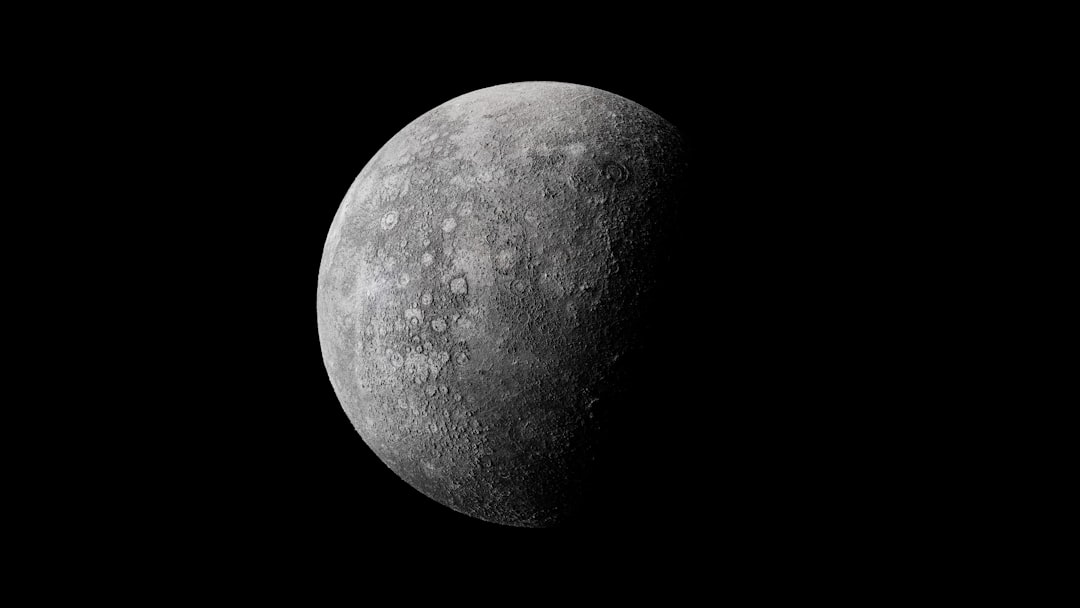
During the eight years since its launch in October 2018, the joint ESA/JAXA BepiColombo mission has executed six meticulously planned close flybys of Mercury — the Solar System's innermost and least-explored planet. With each gravitational assist pass, the mission's twin orbiters have gathered increasingly rich datasets, chipping away at the many profound mysteries surrounding this enigmatic world. These mysteries encompass a wide range, including the puzzling existence of water-ice deposits nestled in permanently shadowed polar craters, the planet's surprisingly robust intrinsic magnetic field, and its bizarre geological features known as "hollows" — shallow, irregularly shaped depressions that appear to be unique in the Solar System and whose origins remain debated.
Now, a remarkable coincidence of orbital geometry and solar activity during BepiColombo's fourth Mercury flyby has yielded what scientists are calling one of the most significant space weather observations ever made in the inner Solar System — a real-time measurement of how a powerful solar particle eruption bombards a planetary surface with minimal atmospheric shielding.
A Once-in-a-Mission Opportunity
On September 4th, 2024, BepiColombo swept to within just 165 kilometers (102.5 miles) of Mercury's surface — the closest any spacecraft in the mission will come until the orbiters enter their final science orbits. This extraordinarily close approach was timed, purely by fortunate coincidence, with a significant solar energetic particle (SEP) event: a major eruption from the Sun that unleashed torrents of high-energy charged particles into the inner heliosphere.
Seizing upon this rare alignment of circumstances, the mission's Solar Intensity X-ray and Particles Spectrometer (SIXS) — an instrument developed by engineers and scientists at the University of Helsinki — captured detailed measurements of how these energetic solar particles interacted with Mercury's surface and its relatively weak magnetospheric shielding. The results, published in the prestigious journal Nature Astronomy, are providing planetary scientists and space weather researchers with an unprecedented window into planetary magnetospheric dynamics under extreme solar forcing.
"The fourth flyby was truly unique. The spacecraft came much closer to the surface than it will be on its final orbit, and we were lucky that a major particle eruption occurred on the Sun at exactly that moment." — Prof. Emilia K. J. Kilpua, University of Helsinki
The SIXS Instrument and What It Detected
Emilia K. J. Kilpua, a professor of space physics at the University of Helsinki and the Principal Investigator for the SIXS instrument, led the research team. The SIXS instrument is specifically engineered to monitor solar X-ray emissions and energetic particle fluxes across a wide range of energies and viewing angles — making it uniquely suited to study the harsh radiation environment around Mercury.
During the September 2024 flyby, SIXS recorded dramatically elevated fluxes of high-energy charged solar particles penetrating deep through Mercury's magnetosphere and reaching the planet's surface across a remarkably wide geographic area. This process — known as solar energetic particle precipitation — has profound physical consequences. As these high-energy protons and electrons slam into atoms and molecules in Mercury's thin surface regolith, they trigger a cascade of atomic interactions that generate characteristic fluorescent X-ray emissions. By analyzing the spectrum of these X-rays, scientists can not only confirm the bombardment is occurring, but can also begin to infer details about the surface composition and the penetration depth of the particles.
- Particle type: High-energy solar protons and electrons from a major coronal mass ejection (CME) event
- Flyby altitude: 165 km (102.5 mi) — the closest pass of the entire mission
- Key detection: Solar particles penetrating Mercury's magnetosphere and generating X-ray fluorescence at the surface
- Instrument: Solar Intensity X-ray and Particles Spectrometer (SIXS), University of Helsinki
- Publication: Nature Astronomy, 2025
Mercury's Magnetic Shield — and Its Limits
Mercury's magnetic field is a source of perpetual fascination for planetary scientists. Unlike Venus and Mars, which have no global magnetic field, Mercury possesses a dipolar intrinsic magnetic field generated by convection within its large, partially liquid iron core. However, this field is roughly 100 times weaker than Earth's, and the resulting magnetosphere — the bubble of magnetically dominated space surrounding the planet — is proportionally tiny, extending only a few hundred kilometers above the surface at most.
This makes Mercury extraordinarily vulnerable to solar activity. During even moderate solar storms, the planet's magnetosphere can be compressed to the point where it barely exists, allowing energetic solar particles near-direct access to the surface. The September 2024 event illustrated this dramatically: SIXS observations confirmed that the incoming particle eruption overwhelmed Mercury's magnetic defenses, flooding the surface with radiation across a wide area — a scenario that has no real parallel on Earth under normal solar conditions, but which closely mirrors what scientists model as the effects of the most extreme solar "superflares" on our own planet.
For context, Earth's magnetosphere extends roughly 60,000 kilometers toward the Sun, providing an enormous buffer zone that deflects the vast majority of solar energetic particles. Even so, during the most powerful historical geomagnetic storms — such as the famous Carrington Event of 1859 — charged particles have penetrated deep enough to disrupt telegraph systems, and a comparable event today would pose catastrophic risks to modern technological infrastructure.
Implications for Space Weather Science on Earth
This is precisely why the BepiColombo SIXS findings carry such significant implications beyond Mercury itself. As co-author Rami Vainio, co-Principal Investigator of SIXS and a professor of space physics at the University of Turku, explained:
"Mercury's magnetic field is weaker than Earth's, and its magnetosphere is much smaller than Earth's. SIXS's observations help us assess how destructive particle radiation would penetrate Earth's near-space environment and atmosphere during the most powerful space storms."
By studying Mercury as a natural laboratory — a planet subjected to extreme solar bombardment with minimal shielding — scientists can calibrate and validate the computational models used to predict how severe space weather events affect planetary atmospheres and magnetospheres. The conditions observed during the fourth flyby closely resemble what Earth would experience if its own magnetosphere were severely compressed by a once-in-centuries solar superstorm. Understanding this process is not merely academic: major solar events are known to damage or destroy satellites in Low Earth Orbit (LEO), disrupt electrical power grids, interfere with GPS and radio communications, and pose radiation hazards to astronauts and high-altitude aircrew.
The European Space Agency's Space Weather Service Network and equivalent agencies worldwide are continuously working to improve early warning systems for solar energetic particle events. Data from BepiColombo's SIXS instrument will feed directly into these efforts, providing empirical observational benchmarks that theoretical models have lacked.
Contributing to Space Resilience Programs
The SIXS observations will also directly contribute to the Center of Excellence in Space Resilience, an ambitious research program dedicated to ensuring that commercial and scientific operations in Low Earth Orbit can remain safe and functional even under the most extreme space weather conditions. As humanity's economic and strategic dependence on orbital infrastructure deepens — encompassing everything from global internet constellations to Earth observation and climate monitoring satellites — building robustness against solar weather events has become an urgent priority.
The center brings together experts in solar physics, magnetospheric science, satellite engineering, and risk assessment to develop next-generation shielding strategies, early warning algorithms, and operational protocols. BepiColombo's real-world, in-situ measurements of a solar energetic particle event impacting a planetary body represent exactly the kind of ground-truth data these programs need to move from theoretical modeling to practical engineering solutions.
What Comes Next for BepiColombo
BepiColombo's scientific adventure is entering its most exciting phase. In a landmark mission milestone, the Mercury Planetary Orbiter (MPO) and the Mercury Magnetospheric Orbiter (Mio) have now separated from the transfer module. By November 2025, both orbiters are scheduled to enter Mercury's orbit, with final separation from each other expected by December 2025. Once in their operational science orbits, the two spacecraft will conduct a comprehensive, coordinated investigation of Mercury unlike anything previously attempted.
The MPO, contributed by ESA, will focus on the planet's surface, interior, and exosphere, while the Mio orbiter, provided by JAXA, will investigate the magnetic field and the surrounding plasma environment. Together, they will bring the full suite of eleven scientific instruments to bear on Mercury's most enduring mysteries, building upon the remarkable flyby data — including the extraordinary September 2024 solar particle observations — that have already begun to reshape our understanding of the Solar System's innermost world.
As solar activity continues to ramp toward the peak of Solar Cycle 25, and as BepiColombo settles into its orbital vantage point at the Sun's doorstep, scientists anticipate that SIXS and its companion instruments will capture many more moments of solar fury meeting planetary resistance — and in doing so, help make humanity better prepared for the space weather challenges that lie ahead.
Key Takeaways
- BepiColombo's fourth Mercury flyby on September 4, 2024 coincided with a major solar energetic particle event, producing a rare scientific opportunity.
- The SIXS instrument detected high-energy solar particles penetrating Mercury's weak magnetosphere and generating X-ray fluorescence at the surface.
- Mercury acts as a natural laboratory for studying extreme space weather, with conditions that mirror what Earth might experience during a catastrophic solar storm.
- The findings will inform space weather prediction models and contribute to programs protecting orbital infrastructure.
- BepiColombo is now entering Mercury orbit, promising years of detailed scientific investigation ahead.