In May 2024, Earth witnessed one of the most spectacular celestial light shows in decades, as auroras danced across skies far beyond their typical polar boundaries. The Northern Lights, typically confined to Arctic latitudes, stretched as far south as Mexico, painting the night sky with ethereal curtains of green, purple, and red. This extraordinary display marked the arrival of the most powerful solar storm recorded in over two decades, a cosmic event that not only captivated millions of observers on Earth but also provided scientists with a rare opportunity to study how such extreme space weather affects other worlds in our solar system.
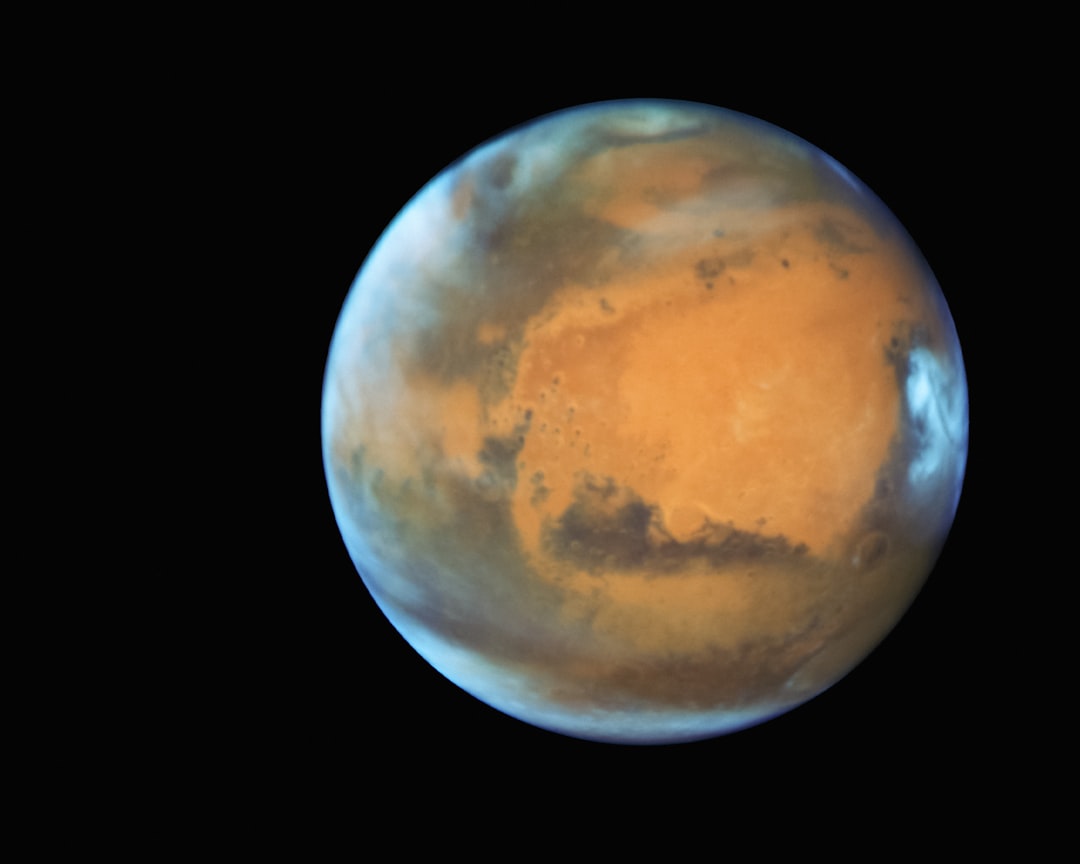
While Earth's protective magnetic shield deflected much of the storm's fury, Mars—lacking such robust protection—bore the full brunt of this solar superstorm. Two spacecraft operated by the European Space Agency (ESA), the veteran Mars Express and the ExoMars Trace Gas Orbiter (TGO), captured unprecedented data as the storm engulfed the Red Planet. Their observations, published in the prestigious journal Nature Communications, revealed that Mars received radiation equivalent to 200 days of normal exposure in just 64 hours—a staggering bombardment that offers crucial insights into the hostile environment future astronauts will face.
Understanding the May 2024 Solar Superstorm
The genesis of this remarkable event can be traced to sunspot region AR3664, an exceptionally active area on the Sun's surface that rotated back into view facing Earth and Mars. This hyperactive region unleashed a powerful X2.9-class solar flare—among the most intense categories of solar eruptions—accompanied by a massive Coronal Mass Ejection (CME). A CME represents billions of tons of magnetized solar plasma hurled into space at speeds exceeding several million kilometers per hour, carrying with it the potential to dramatically disrupt planetary environments.
Solar storms of this magnitude occur infrequently, making them challenging to study systematically. The NASA Space Weather Prediction Center classifies such events as extreme geomagnetic storms, capable of affecting satellite operations, communications systems, and even power grids on Earth. However, the storm's impact on Mars provided an even more dramatic demonstration of solar weather's power, as the Red Planet lacks the protective magnetosphere that shields Earth from the worst effects of such cosmic bombardment.
Revolutionary Radio Occultation Technique Captures the Storm
The breakthrough in observing this Martian solar storm came through an innovative application of a technique called radio occultation. While this method has been employed for decades to study planetary atmospheres by beaming signals from spacecraft to Earth, its use between two orbiters at Mars represents a relatively new frontier in planetary science. The technique works by having Mars Express transmit a radio signal to TGO as one spacecraft disappears behind Mars' horizon from the other's perspective.
As the radio waves traverse different layers of the Martian atmosphere, they undergo refraction—bending at angles determined by the density and composition of atmospheric layers. By analyzing these subtle changes in the signal, scientists can create detailed profiles of atmospheric structure, temperature, and electron density. Colin Wilson, an ESA project scientist for both Mars Express and TGO and co-author of the study, explained the significance of this approach:
"This technique has actually been used for decades to explore the Solar System, but using signals beamed from a spacecraft to Earth. It's only in the past five years or so that we've started using it at Mars between two spacecraft, such as Mars Express and TGO, which usually use those radios to beam data between orbiters and rovers. It's great to see it in action."
The timing proved extraordinarily fortunate. The research team initiated their radio occultation measurements just 10 minutes after the solar storm reached Mars, capturing the atmospheric response in unprecedented detail. To validate their findings, they cross-referenced their data with observations from NASA's MAVEN (Mars Atmosphere and Volatile Evolution) mission, which has been studying Mars' upper atmosphere and its interactions with the solar wind since 2014.
Dramatic Atmospheric Response: Record-Breaking Electron Densities
The data revealed a truly remarkable transformation of Mars' upper atmosphere. The solar storm triggered unprecedented increases in electron density at two critical atmospheric layers, located approximately 110 and 130 kilometers (68 and 80 miles) above the Martian surface. These layers, part of Mars' ionosphere, experienced electron density increases of 45% and an astounding 278%, respectively—the highest concentrations ever observed in this region of the Martian atmosphere.
Jacob Parrott, an ESA Research Fellow and lead author of the study, described the magnitude of the event:
"The impact was remarkable: Mars's upper atmosphere was flooded by electrons. It was the biggest response to a solar storm we've ever seen at Mars."
The storm's intensity posed immediate challenges for both spacecraft. The energetic particles caused computer errors in both orbiters—a common hazard of space weather that mission planners anticipate. Fortunately, both Mars Express and TGO were designed with radiation-hardened components and sophisticated error-detection and correction systems. These safeguards enabled both spacecraft to recover quickly and continue their observations, capturing data from three distinct solar events that comprised different aspects of the same storm system.
Comparing Planetary Responses: Earth vs. Mars
The contrasting responses of Earth and Mars to the same solar storm illuminate fundamental differences in planetary protection mechanisms. Earth's robust magnetosphere—generated by our planet's liquid iron core—acts as an invisible shield, deflecting or channeling most charged particles toward the polar regions. This is why auroras typically occur near the Arctic and Antarctic circles; the particles follow magnetic field lines that converge at the poles.
During the May 2024 storm, Earth's upper atmosphere experienced a relatively modest response compared to Mars. While the storm was powerful enough to push auroras to unusually low latitudes, the ESA's Swarm satellite constellation documented how Earth's magnetic field warped and flexed under the assault, ultimately protecting the planet's atmosphere from the most severe effects. The spectacular auroras visible from Mexico to the Mediterranean represented energy that was safely redirected away from critical atmospheric layers.
Mars tells a very different story. The Red Planet lost its global magnetic field billions of years ago, leaving its atmosphere largely unprotected against the relentless solar wind. This vulnerability has profound implications:
- Atmospheric Erosion: Without magnetic protection, Mars has lost most of its original atmosphere over geological time scales, transforming from a potentially habitable world with liquid water to today's cold, dry desert
- Surface Radiation: Energetic particles reach the Martian surface with minimal attenuation, creating a harsh radiation environment for any future human explorers
- Water Loss: Solar storms have likely contributed to Mars losing vast quantities of water vapor from its upper atmosphere, with hydrogen atoms stripped away into space
- Ionospheric Disruption: Solar events can dramatically alter the structure of Mars' ionosphere, affecting radio communications and radar observations
Implications for Human Mars Exploration
The findings carry significant implications for future crewed missions to Mars. The radiation dose equivalent to 200 days of normal exposure compressed into 64 hours represents a serious hazard that mission planners must address. Astronauts on Mars or in transit would require robust radiation shielding and early warning systems to seek shelter during such events. Current plans for Mars habitats include underground or heavily shielded structures specifically to protect crews from both steady-state cosmic radiation and acute solar storm events.
The research also highlights challenges for robotic exploration. Colin Wilson noted that electron-packed upper atmospheric layers could block radar signals used to study Mars' surface and subsurface. This phenomenon could affect missions like the ESA's upcoming ExoMars Rosalind Franklin rover, which relies on ground-penetrating radar to search for signs of past or present life beneath the Martian surface. Understanding these atmospheric effects becomes crucial for mission planning and data interpretation.
Advancing Space Weather Forecasting and Planetary Science
The successful capture of this solar storm's effects opens new avenues for understanding space weather across the solar system. By observing three distinct components of the same storm system—a radiation flare, a burst of high-energy particles, and a coronal mass ejection—the research team gained insights into how different types of solar emissions interact with planetary atmospheres. This comprehensive dataset provides benchmarks for modeling space weather effects and improving predictive capabilities.
The technique demonstrated by Mars Express and TGO could be applied more broadly. As Wilson explained, understanding how solar storms deposit energy and particles into Mars' atmosphere helps scientists reconstruct the planet's atmospheric evolution. The data suggests that continuous solar wind bombardment, punctuated by intense storm events, has gradually stripped away much of Mars' primordial atmosphere over billions of years—a process that may have sealed the planet's fate as an inhospitable world.
Future observations will benefit from this pioneering work. The radio occultation technique between orbiters can be employed more systematically to monitor Mars' atmospheric response to solar activity, building a comprehensive database of space weather effects. This information will prove invaluable not only for Mars exploration but also for understanding atmospheric evolution on other planets, including potentially habitable exoplanets orbiting active stars.
Looking Forward: Lessons from the Red Planet
The May 2024 solar superstorm and its observation at Mars represents a convergence of fortunate timing, innovative techniques, and international collaboration. The event underscores the dynamic nature of our solar system and the complex interactions between the Sun and planets. For Mars, lacking the protective embrace of a global magnetic field, each solar storm represents another small chapter in the ongoing story of atmospheric loss and environmental transformation.
As humanity plans for eventual crewed missions to Mars, understanding these extreme events becomes not just scientifically interesting but operationally critical. The data gathered by ESA's orbiters, validated by NASA's MAVEN mission, provides essential information for designing protective measures, planning mission timelines, and ensuring astronaut safety. The research also demonstrates the value of maintaining multiple spacecraft at Mars, each contributing unique observations that, when combined, paint a comprehensive picture of the planet's response to space weather.
The study published in Nature Communications represents more than just an observation of a single storm—it marks a significant advancement in our capability to monitor and understand space weather throughout the solar system. As solar activity continues its 11-year cycle, with the current cycle approaching its maximum, more opportunities to study such events will arise. Each observation brings us closer to unraveling the mysteries of planetary atmospheres and preparing for humanity's next giant leap into the cosmos.