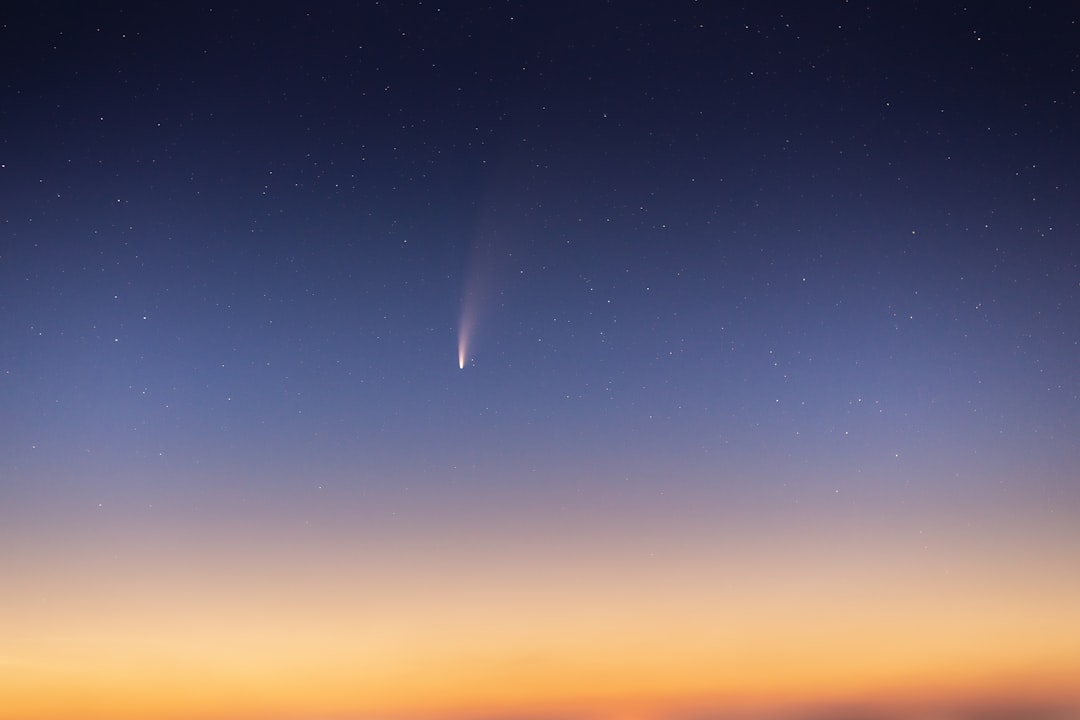
Chemistry Reveals the Origins of an Interstellar Comet
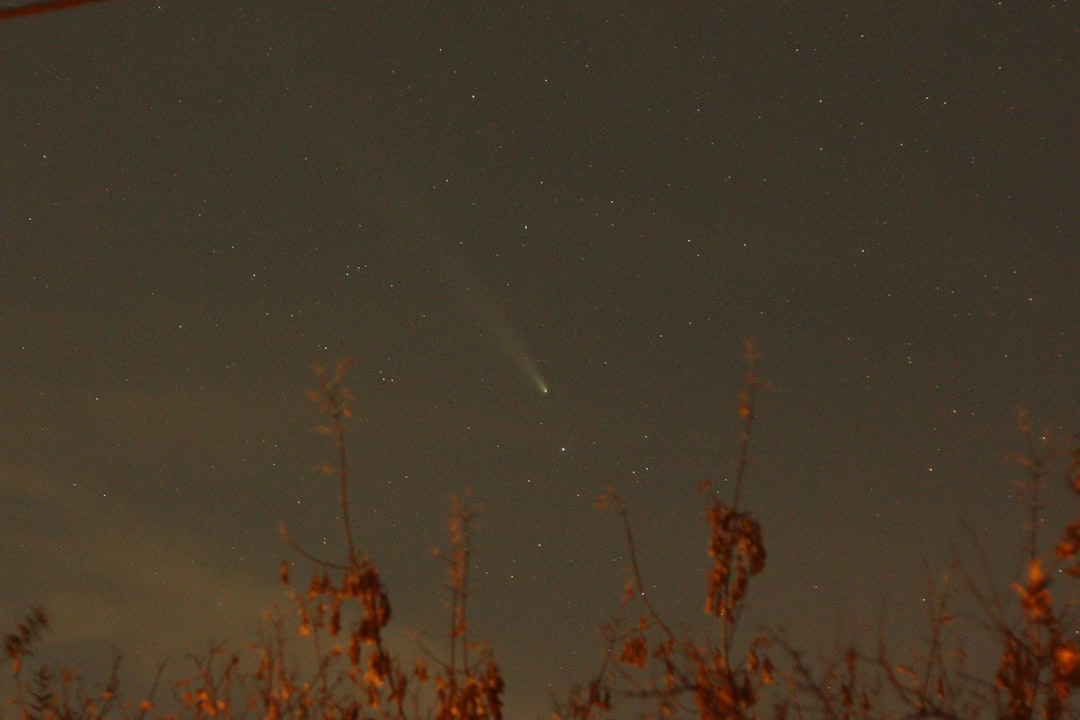
Somewhere deep in the Milky Way Galaxy, an ancient star has lost one of its comets. By some remarkable quirk of orbital mechanics, a frozen nucleus of ice and dust was gravitationally ejected from its home system billions of years ago, embarking on an extraordinary, solitary journey across the interstellar void. That cosmic wanderer eventually entered our Solar System in the distant past and made its closest approach to Earth on October 30, 2025, giving humanity a rare and fleeting window into the chemistry of another planetary system. Now, after astronomers trained some of the world's most powerful telescopes on this interstellar visitor — officially designated 3I/ATLAS (3I) — the chemical secrets locked within its glowing coma are beginning to yield astonishing revelations about its distant and extraordinarily ancient origin.
A Visitor from Across the Galaxy
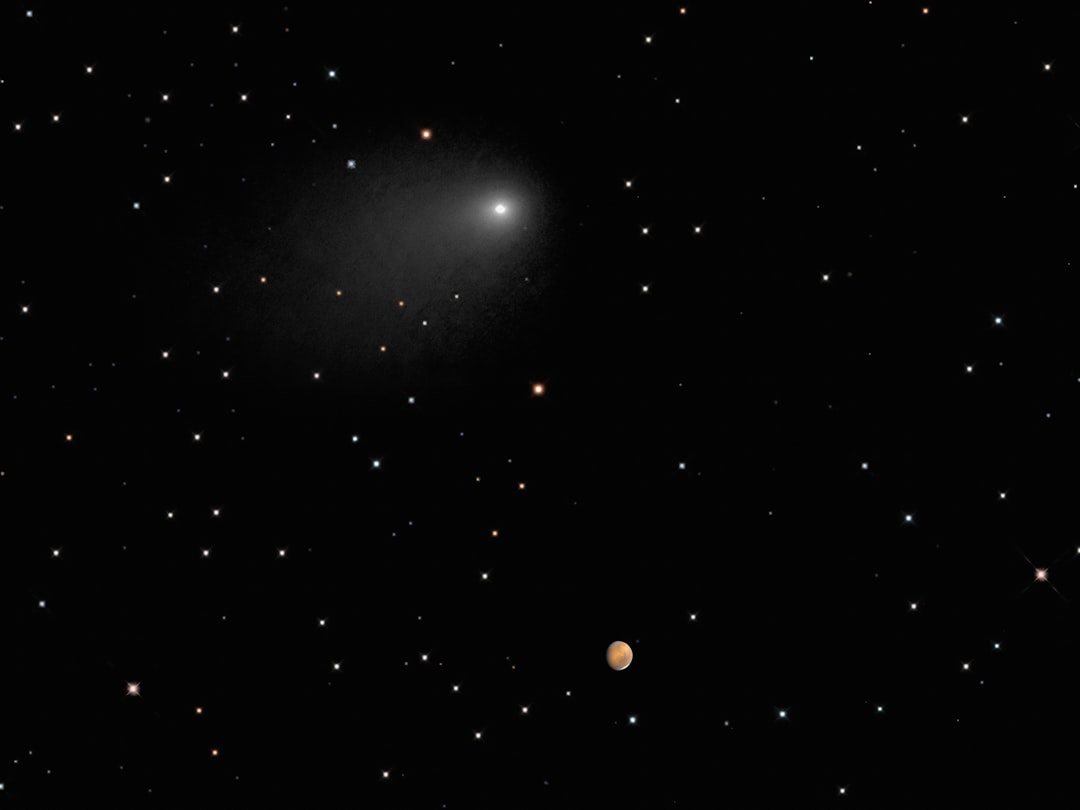
Before diving into the chemistry, it is worth appreciating just how remarkable the arrival of 3I/ATLAS truly is. Interstellar objects — comets or asteroids that originate outside our Solar System — are extraordinarily difficult to detect. They travel at hyperbolic velocities relative to the Sun, meaning they are moving too fast to be gravitationally bound to our star, and their brief transits through the inner Solar System leave astronomers scrambling to gather as much data as possible before the objects recede back into darkness. The discovery of 3I/ATLAS in 2025 by the NASA-supported ATLAS survey system triggered an immediate global observing campaign, with facilities on the ground and in space pivoting to capture spectra, images, and photometric measurements of the comet's nucleus and surrounding coma — the diffuse cloud of gas and dust that sublimes off the icy surface as the object warms in sunlight.
A team of observers, led by astronomer Cyrielle Opitom of the University of Edinburgh, Scotland, captured detailed spectra of the coma using the Ultraviolet and Visual Echelle Spectrograph (UVES) on the Very Large Telescope (VLT) operated by the European Southern Observatory (ESO) in Chile. The spectra revealed the unmistakable chemical fingerprints of another solar system — an alien chemistry preserved in ice for billions of years and now, at last, decoded by scientists on Earth.
"They are sort of fossils from a planetary formation process that happened very far away, but that we get the chance to study from much closer." — Cyrielle Opitom, University of Edinburgh
This sentiment captures precisely why cometary science is so powerful. All comets, whether native to our Solar System or visitors from afar, contain a treasury of chemical clues locked away in their nuclei — pristine records of the environment in which they formed. In the case of 3I, those records describe a planetary system radically different from our own, and far, far older.
Chemical Traces of an Interstellar Origin
The most compelling clues to 3I/ATLAS's origins lie in its isotopic ratios — specifically, the ratios of different isotopes of carbon and nitrogen detected in the comet's coma. Isotopes are variants of a chemical element that share the same number of protons but differ in their number of neutrons. The relative abundances of specific isotopes in cometary gas are exquisitely sensitive to the physical and chemical conditions that prevailed in the protoplanetary disk — the swirling disc of gas and dust around a young star — where the comet originally formed.
What the VLT spectra revealed was striking: the nitrogen isotopic ratio (¹⁴N/¹⁵N) in 3I's coma is roughly double the value found in comets native to our Solar System. Similarly, the ratio of carbon-12 (¹²C) to carbon-13 (¹³C) is significantly elevated compared to Solar System benchmarks. These are not subtle variations — they represent a profound chemical departure from anything astronomers have measured in our own cosmic neighborhood.
Researcher Aravind Krishnakumar of the Université de Liège summarized the finding clearly:
"Unlike comets from our Solar System, this interstellar visitor carries unusually high carbon and nitrogen isotopic ratios." — Aravind Krishnakumar, Université de Liège
To appreciate why these ratios matter, consider that isotopic fractionation — the process by which certain isotopes become concentrated in specific environments — is driven by temperature, radiation fields, and the overall chemical composition of the gas and dust cloud in which a planetary system forms. Low temperatures in the outer reaches of a protoplanetary disk tend to enrich certain nitrogen and carbon isotopes in icy grains. The particular pattern seen in 3I points unmistakably toward formation in the outer disk of its parent star — analogous to the region in our own Solar System occupied by the Kuiper Belt and Oort Cloud — but around a star with a very different chemical makeup than the Sun.
Evidence of an Ancient, Metal-Poor Parent Star
The unusual isotopic ratios observed in 3I/ATLAS carry a deeper implication about the star around which it formed. Astronomers conclude that 3I likely originated in the outer regions of a protoplanetary disk around an old, low-metallicity star. In astronomical parlance, metallicity refers to the abundance of all elements heavier than hydrogen and helium — the so-called "metals," which include carbon, nitrogen, oxygen, iron, and everything else on the periodic table.
This distinction is crucial because the Universe was not always as chemically rich as it is today. When the cosmos was young — in its first few billion years — the only elements that existed in significant abundance were hydrogen and helium, forged in the fires of the Big Bang. Heavier elements were synthesized inside successive generations of stars and scattered into the interstellar medium when those stars exploded as supernovae or shed their outer layers as planetary nebulae. Each new generation of stars formed from this progressively enriched material, which is why younger stars — like our 4.6-billion-year-old Sun — tend to have higher metallicities than their ancient predecessors.
- The isotopic ratios in 3I/ATLAS's coma are inconsistent with formation in a Solar System-like environment.
- The elevated ¹²C/¹³C and ¹⁴N/¹⁵N ratios point to a metal-poor parent star.
- Evidence suggests 3I/ATLAS itself is more than twice as old as the Sun — potentially over 9 billion years old.
- The parent star likely formed when the Universe itself was significantly more chemically primitive.
- Formation in the outer disk of its parent star is analogous to the Kuiper Belt/Oort Cloud region of our Solar System.
Rosemary Dorsey, a researcher at the University of Helsinki, Finland, and co-author on the study, framed the discovery in its grandest context:
"3I/ATLAS is a really exciting opportunity to probe the composition of another planetary system, one that formed long before our Sun and Solar System even existed." — Rosemary Dorsey, University of Helsinki
It is worth noting that certain stages of stellar and planetary formation can also produce chemical fractionation effects that alter isotopic ratios. However, the researchers concluded that such processes are unlikely to fully explain the pattern observed in 3I — the evidence more robustly supports a genuinely ancient, low-metallicity origin. This places 3I/ATLAS not just as a visitor from another star, but as a messenger from an earlier epoch of galactic history, offering a window into planetary formation conditions that no longer exist anywhere in the present-day Milky Way.
Other Observations Point the Way
The Very Large Telescope was far from the only world-class facility to scrutinize this extraordinary interloper. The James Webb Space Telescope (JWST), NASA's flagship infrared observatory, made independent measurements that powerfully corroborated the VLT results. JWST detected similarly elevated carbon isotopic ratios in the cloud surrounding the nucleus, and additionally identified enhanced abundances of deuterium — a heavy isotope of hydrogen consisting of one proton and one neutron — relative to ordinary hydrogen in the coma. Elevated deuterium-to-hydrogen (D/H) ratios are a well-established indicator of formation in cold, outer-disk environments, and are consistent with the overall picture of 3I as a product of the frigid outer reaches of an ancient protoplanetary disk.
The convergence of data from multiple observatories — including ground-based spectroscopy from the VLT and space-based infrared measurements from JWST — allows scientists to triangulate the most likely formation location with impressive precision. Based on the combined dataset, researchers conclude that 3I/ATLAS almost certainly formed in the outermost regions of its parent star's disk, beyond the snow line where volatile ices such as water, carbon dioxide, and nitrogen compounds could condense onto solid grains. This is exactly the kind of environment in which comets form in our own Solar System, reinforcing the idea that the fundamental physics of comet formation is universal — even if the specific chemistry varies dramatically depending on when and where the process occurs.
The image below, captured with the FORS2 instrument on ESO's VLT, provides a striking visual record of the interloper: a stack of exposures spanning 14 minutes, in which the background stars streak into trails as the rapidly moving comet holds center stage.
Putting 3I/ATLAS in Context: The Interstellar Visitors So Far
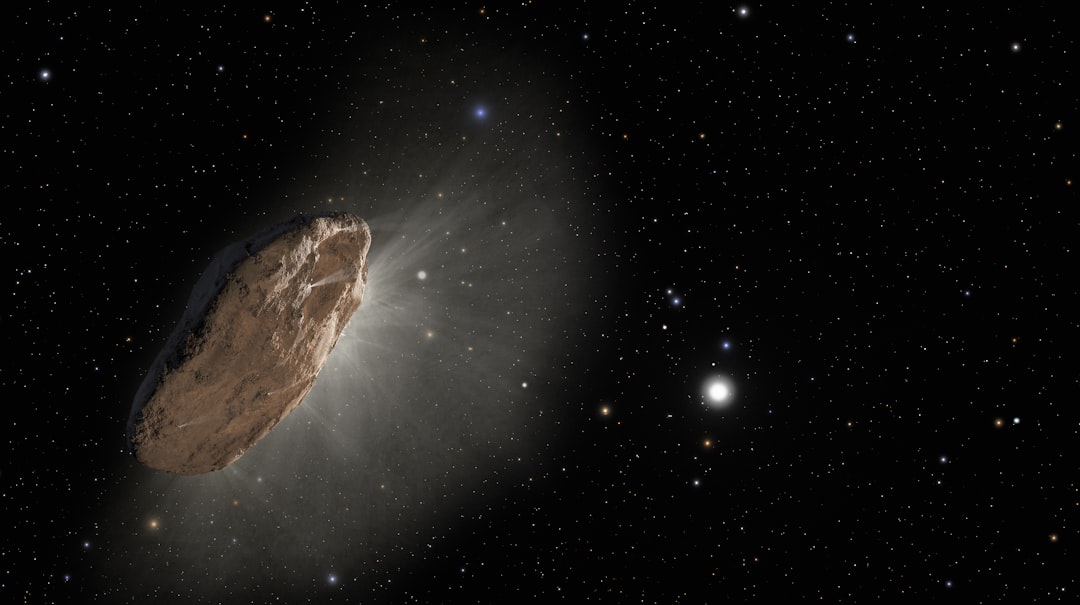
3I/ATLAS is only the third interstellar object ever confirmed to have passed through our Solar System, but it is by far the most scientifically valuable. The first, 1I/'Oumuamua, was discovered in 2017 and remains one of the most enigmatic objects in the history of astronomy. Its elongated shape, anomalous acceleration, and complete lack of detected outgassing baffled researchers and sparked intense debate about its true nature — ranging from an exotic comet to, in some more speculative quarters, an artificial object. Crucially, because no gas was detected in 'Oumuamua's vicinity, it was impossible to perform the kind of isotopic chemistry analysis that has proven so illuminating for 3I. For more on 'Oumuamua, visit the HubbleSite, which documented many of the key Hubble Space Telescope observations of the object.
The second interstellar visitor, 2I/Borisov, discovered in 2019, was a more conventional-looking comet — and indeed, astronomers were able to detect some gas around it. However, Borisov was intrinsically faint and was only observed at a relatively large distance from the Sun, which limited the quality and breadth of the spectroscopic data obtainable. Some carbon monoxide was detected, and the object's dust properties appeared broadly consistent with Solar System comets, but the data were far from sufficient to draw robust conclusions about the chemical environment in which it formed.
3I/ATLAS changes everything. It is brighter, closer to the Sun at perihelion, and more active than Borisov, producing a rich, detectable coma that has yielded high-quality spectra across multiple wavelength ranges. For the first time, astronomers have been able to perform the full suite of isotopic chemistry measurements on a comet conclusively determined to have formed around another star. The implications extend far beyond this single object:
- The techniques and analytical frameworks developed for 3I will serve as a template for studying future interstellar visitors.
- The results demonstrate that isotopic ratios in cometary gas can reliably encode the age and metallicity of the parent star.
- 3I confirms that planetary systems around old, metal-poor stars can form comets — expanding our understanding of where in the galaxy planetary systems arise.
- The data provide the first direct chemical comparison between a Solar System comet and one from a fundamentally different stellar environment.
Broader Implications for Planetary Science and Astrobiology
The discovery that comets from ancient, metal-poor stellar systems can be chemically identified as they pass through our Solar System has profound implications for several areas of astronomy and planetary science. For researchers studying the origin of life and the delivery of organic molecules to early planets, the composition of comets is a topic of intense interest. Comets are known to carry complex organic compounds, amino acid precursors, and the volatile ices that, when delivered to a young rocky planet, could potentially seed the chemistry of life. Understanding whether comets from metal-poor systems carry the same inventory of organics as those from Sun-like stars is a question that 3I/ATLAS is beginning to help answer.
Furthermore, the result highlights the Milky Way as a dynamic, interconnected system in which material can be shared — at least in principle — between stellar systems separated by tens or hundreds of light-years. The ejection of comets and planetesimals from planetary systems during dynamical instabilities is thought to be a common process, and models suggest that the interstellar medium should be teeming with such objects. Most will never be detected; their small sizes and dark surfaces make them all but invisible. But when one happens to pass through our inner Solar System, as 3I/ATLAS has, the opportunity for chemical archaeology is extraordinary. For further reading on the science of interstellar objects, the NASA Science website provides an excellent repository of related research and mission updates.
More Revelations to Come
The scientific community has only begun to mine the wealth of data gathered on 3I/ATLAS. Follow-up observations are ongoing, and additional analyses — including more detailed modeling of the isotopic chemistry, dust grain properties, and nucleus size and rotation — are expected to refine and expand the picture of this comet's ancient origins. The measurements already in hand not only illuminate the evolution and age of this particular comet, but they also equip astronomers with a powerful new toolkit for the next time an interstellar interloper comes racing through the Solar System.
Given the improving capabilities of all-sky survey systems — including ATLAS, the Vera C. Rubin Observatory's upcoming Legacy Survey of Space and Time, and increasingly sensitive space-based platforms — the rate at which interstellar objects are discovered is expected to increase substantially in the coming decade. Each new discovery will be an opportunity to sample the chemical diversity of planetary systems across the galaxy, turning our Solar System into a kind of cosmic laboratory for comparative planetology on a truly galactic scale.
3I/ATLAS, this ancient wanderer from the outskirts of a long-dead or still-burning alien star, has given us a remarkable gift: a direct chemical sample of a planetary system that predates our own by billions of years. In its drifting coma of gas and dust lies the frozen memory of a universe that looked very different from the one we inhabit today — and astronomers are only beginning to read what it has to say.