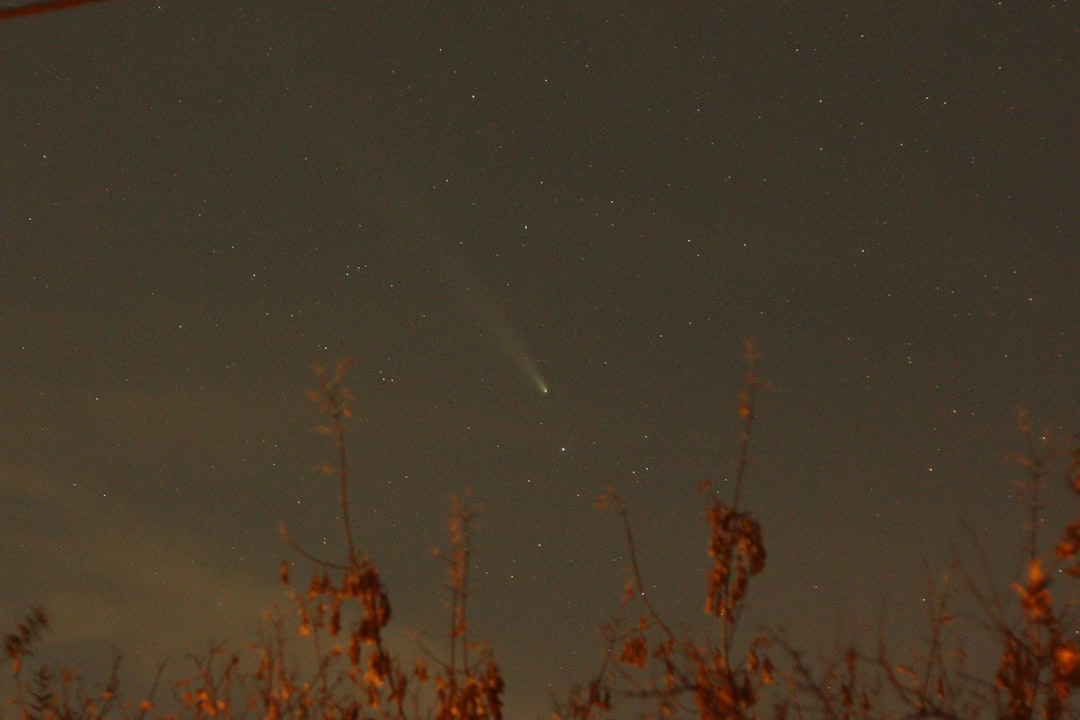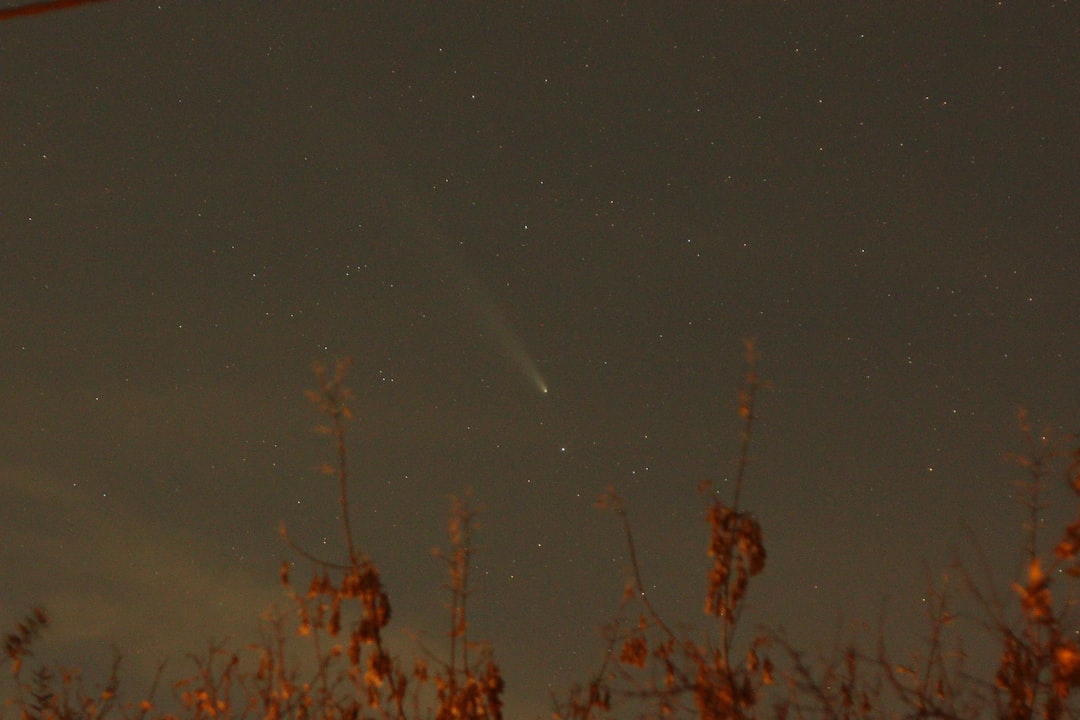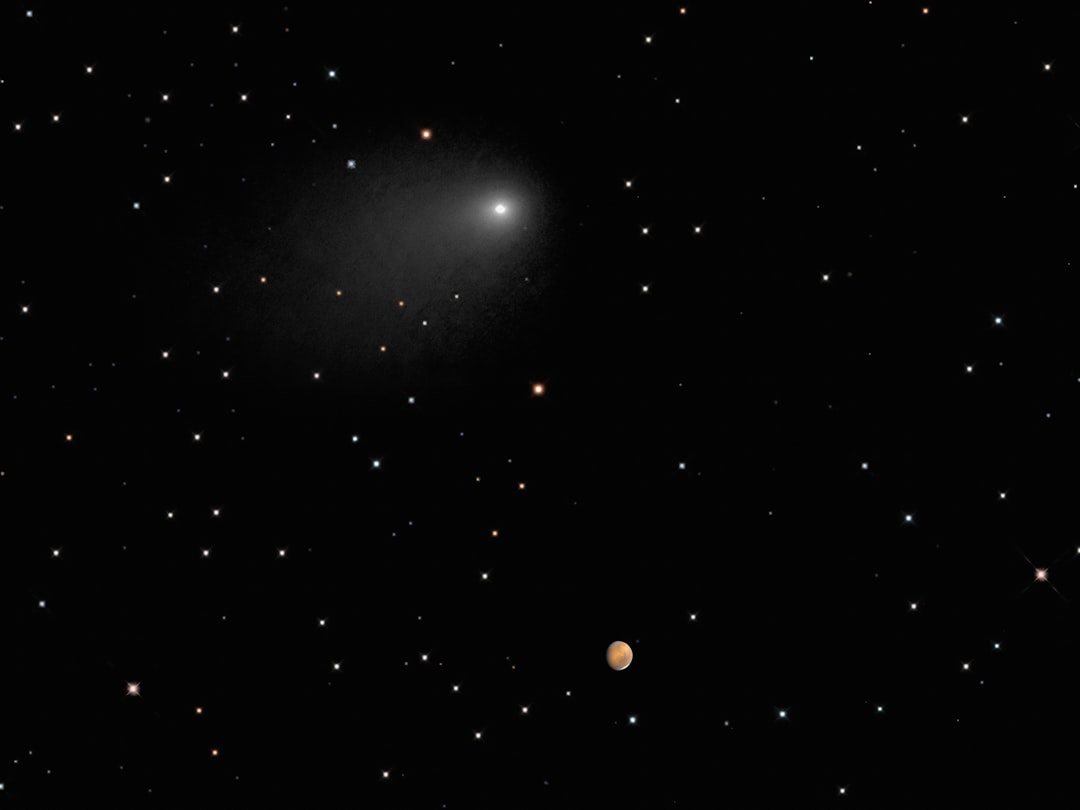
In the annals of astronomical discovery, few events capture the scientific imagination quite like the passage of an interstellar visitor through our cosmic neighborhood. When the comet designated 3I/ATLAS made its closest approach to our Sun in late October 2025, it presented astronomers with an unprecedented opportunity—a chance to scrutinize a wanderer from beyond our solar system with instruments and techniques refined over decades of planetary science. Unlike its enigmatic predecessor 'Oumuamua, which zipped through our system in 2017 leaving more questions than answers, this latest interstellar traveler arrived at precisely the right moment for comprehensive scientific investigation.
What makes this encounter particularly extraordinary is not just the rarity of such visits—3I/ATLAS represents only the third confirmed interstellar object ever detected passing through our solar system—but the wealth of data scientists have been able to extract from its journey. Among the most revealing observations came from an unexpected source: a spacecraft that has spent nearly three decades with its gaze fixed firmly on our Sun, yet possesses the capability to unveil secrets about objects millions of kilometers away.
An Unlikely Observer Reveals Hidden Secrets
The Solar and Heliospheric Observatory (SOHO), a joint mission between NASA and the European Space Agency, occupies a gravitationally stable point in space known as the L1 Lagrange point, positioned approximately 1.5 million kilometers sunward of Earth. For nearly 30 years, this venerable spacecraft has maintained its vigilant watch over our star, monitoring solar activity, tracking coronal mass ejections, and providing early warnings of space weather events that could impact our planet's technological infrastructure.
However, SOHO carries an instrument that seems almost out of place on a solar observatory. The Solar Wind Anisotropies (SWAN) instrument doesn't look at the Sun at all. Instead, this sophisticated ultraviolet camera scans the entire sky, detecting a specific wavelength of light—121.6 nanometers—emitted by hydrogen atoms scattered throughout our solar system. This capability, originally designed to map the interaction between the solar wind and the interstellar medium, has proven invaluable for studying comets, those icy relics from the dawn of planetary formation.
Nine days after 3I/ATLAS reached perihelion—its point of closest approach to the Sun on October 30, 2025—SWAN's sensitive detectors began registering something remarkable. A distinctive ultraviolet glow had blossomed around the comet, a telltale signature that would unlock crucial information about this visitor's composition and behavior. This wasn't merely reflected sunlight or random radiation; it was the characteristic emission from hydrogen atoms liberated from water molecules, a cosmic breadcrumb trail that would allow scientists to peer into the very heart of an object born around an alien star.
Decoding the Hydrogen Signature: Water Production on a Cosmic Scale
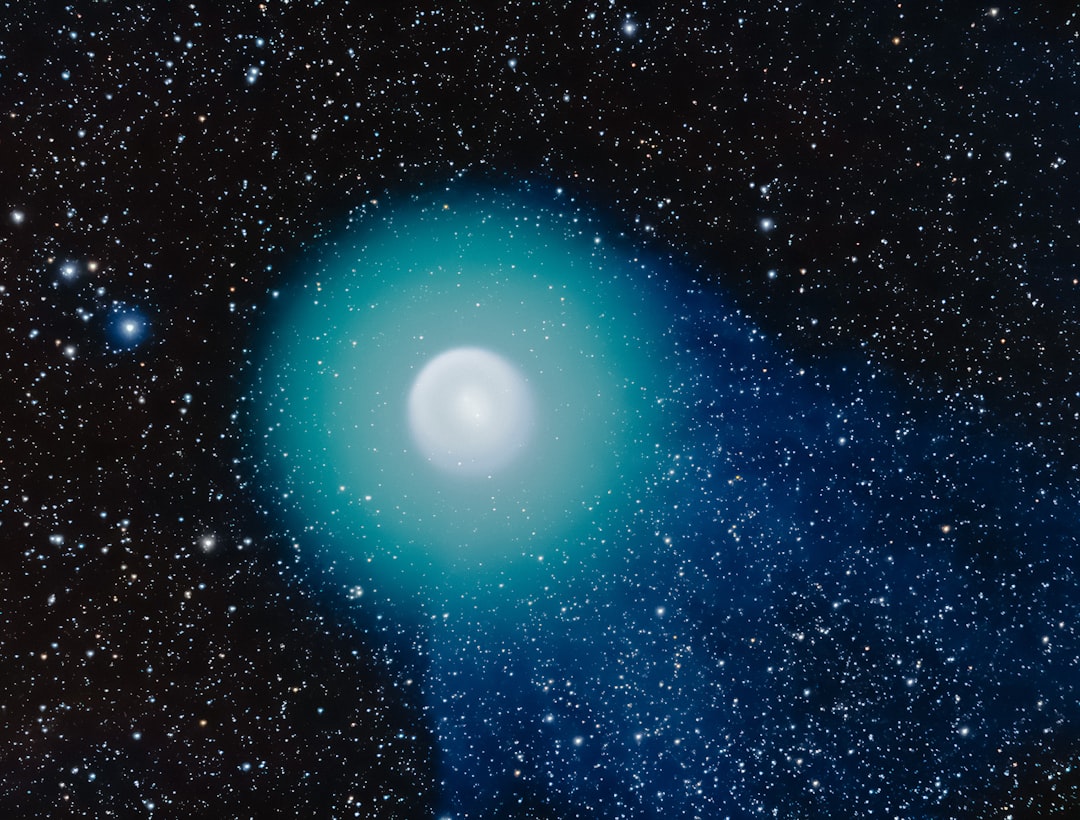
The process by which SWAN detects cometary activity is a masterpiece of heliophysics and photochemistry. As a comet approaches the Sun, solar radiation heats its frozen nucleus, causing volatile materials—primarily water ice—to sublimate directly from solid to gas. This outgassing creates the characteristic coma, or atmosphere, surrounding the nucleus, and eventually forms the spectacular tails that have captivated humanity throughout history. When intense ultraviolet radiation from the Sun strikes these water molecules streaming away from the nucleus, it breaks their molecular bonds through a process called photodissociation, releasing hydrogen and oxygen atoms.
The liberated hydrogen atoms then absorb and re-emit ultraviolet light at that characteristic 121.6-nanometer wavelength, creating a vast, glowing hydrogen cloud that can extend millions of kilometers around the comet—far larger than the visible coma observable from Earth. By precisely measuring the intensity of this Lyman-alpha emission, as astronomers call it, and accounting for various factors including solar ultraviolet output and the geometry of the observation, scientists can calculate backward to determine the rate at which water molecules are being released from the nucleus.
The measurements obtained from 3I/ATLAS revealed production rates that strain comprehension. On November 6, 2025, when the comet had traveled outward to a distance of 1.4 astronomical units from the Sun (about 210 million kilometers, or roughly the distance from the Sun to Mars), SWAN detected a water production rate of 3.17 × 10²⁹ molecules per second. To contextualize this staggering figure: that's 317 followed by 27 zeros, or approximately 9.5 metric tons of water vapor being expelled into space every single second.
"The water production rates we observed from 3I/ATLAS provide us with a unique window into the composition of planetary building blocks formed around another star. This is essentially cosmic archaeology—studying the frozen remnants of planet formation that occurred in a completely different stellar environment, possibly billions of years ago."
Tracking the Decline: Post-Perihelion Activity Evolution
What distinguishes the SWAN observations of 3I/ATLAS from many other studies is their temporal coverage. While numerous ground-based and space-based instruments observed the comet during its approach to perihelion, capturing the ramping-up of cometary activity as solar heating intensified, the SWAN measurements documented the aftermath—the gradual wind-down of activity as the comet retreated back into the cold depths of space.
Over the weeks following that November 6 measurement, the water production rate declined steadily and predictably. By early December, approximately 40 days after perihelion, the rate had dropped to between 1 and 2 × 10²⁸ molecules per second—still an impressive 10 to 20 trillion trillion molecules per second, but representing a decline of more than 90 percent from the peak values. This decrease follows a pattern intimately familiar to cometary scientists who have studied solar system comets for generations.
The physics underlying this decline is straightforward yet elegant. As a comet moves farther from the Sun, the intensity of solar radiation striking its surface decreases according to the inverse square law—double the distance, and you receive only one-quarter the heating. With reduced heating, less ice sublimates from the nucleus, fewer water molecules stream into space, and the hydrogen cloud dims accordingly. The fact that 3I/ATLAS exhibits this classical behavior, despite having spent potentially millions of years traversing the frigid void of interstellar space, suggests that its fundamental nature remains unchanged from the icy bodies that formed in our own solar system's protoplanetary disk billions of years ago.
Refined Methodology: Two Decades of Technical Evolution
The technique employed to extract water production rates from SWAN's hydrogen observations represents the culmination of more than 20 years of methodological refinement. First developed in the early 2000s and subsequently validated through observations of more than 90 different cometary apparitions, the method has evolved into a sophisticated analytical framework that accounts for numerous variables affecting the fluorescence process.
The calculation requires several key inputs working in concert:
- Hydrogen brightness measurements: SWAN's all-sky maps provide the raw data on hydrogen emission intensity around the comet, measured in Rayleighs (a unit quantifying the brightness of diffuse light sources)
- Solar ultraviolet flux: Daily measurements of the Sun's ultraviolet output at the critical Lyman-alpha wavelength, as the fluorescence rate depends directly on how much UV radiation is available to excite the hydrogen atoms
- Solar rotation corrections: The Sun's 27-day rotation period causes variations in UV output as active regions rotate into and out of view, requiring careful correction to avoid systematic errors
- Geometric factors: The relative positions of the comet, Earth, and Sun, along with the velocity of the outflowing hydrogen atoms, all influence the observed brightness and must be incorporated into the analysis
- Photodissociation rates: Laboratory measurements and theoretical calculations of how quickly UV light breaks apart water molecules, determining the relationship between hydrogen emission and water production
This multi-faceted approach has proven remarkably robust, with water production rates derived from SWAN observations showing excellent agreement with independent measurements obtained through other techniques, such as direct observation of water emission lines in the infrared or measurements of hydroxyl (OH) radicals—another photodissociation product of water—in visible and ultraviolet wavelengths.
Comparative Context: Learning from Interstellar Messengers
To fully appreciate the significance of the 3I/ATLAS observations, it's instructive to compare this object with its interstellar predecessors. 'Oumuamua, discovered in October 2017, proved maddeningly enigmatic. Its highly elongated or possibly disk-like shape, its reddish color, and its complete lack of detectable cometary activity sparked intense debate about its nature and origin. Some scientists proposed it might be an interstellar asteroid—a rocky body rather than an icy comet—while others suggested it could be a comet whose volatile ices had been depleted during its long journey through space. More exotic hypotheses, including speculation about artificial origin, captured public attention but found little support in the scientific community.
The second confirmed interstellar visitor, 2I/Borisov, discovered in August 2019, proved more accommodating to study. This object exhibited clear cometary activity, with a well-developed coma and tail, and Hubble Space Telescope observations revealed its composition included carbon monoxide in unusually high concentrations compared to typical solar system comets. These observations provided the first concrete evidence of compositional differences between comets formed in our solar system and those originating elsewhere, hinting at variations in the chemical conditions present in different protoplanetary disks.
3I/ATLAS adds another chapter to this emerging narrative. Its substantial water production, combined with observations at other wavelengths revealing the presence of various carbon-bearing molecules, suggests a composition broadly similar to solar system comets, yet detailed analysis may reveal subtle differences that encode information about the conditions in its birth stellar system.
Nuclear Properties and Surface Activity: Puzzles Remaining
The copious water production detected by SWAN raises intriguing questions about the physical characteristics of 3I/ATLAS's nucleus. Observations obtained with the Hubble Space Telescope during the comet's passage provided constraints on the nucleus size, suggesting a diameter somewhere between 440 meters and 5.6 kilometers. This substantial uncertainty reflects the difficulty of directly observing the tiny, dark nucleus hidden within the bright coma.
If we assume the water is sublimating directly from the surface of the nucleus—as opposed to being released from subsurface reservoirs or from icy grains in the coma—the observed production rates imply that a significant fraction of the surface must be actively outgassing. Preliminary calculations suggest an active surface fraction of approximately 20 percent, meaning that one-fifth of the nucleus surface is covered with fresh, sublimating ice. This value significantly exceeds the typical 3 to 5 percent active fraction observed for most solar system comets, which tend to develop insulating dust mantles that suppress activity over most of their surfaces.
Several explanations could account for this enhanced activity. The comet might be making its first passage through the inner solar system, meaning its surface hasn't yet accumulated the thick dust mantle that develops over multiple perihelion passages. Alternatively, the long journey through interstellar space, with its bombardment by cosmic rays and exposure to the interstellar radiation field, might have altered the surface properties in ways that enhance volatile loss. Or perhaps the comet's composition—reflecting the conditions in its birth system—simply differs from solar system comets in ways that promote more vigorous outgassing.
Windows into Alien Planetary Systems
Beyond the immediate scientific interest in understanding this particular comet, the observations of 3I/ATLAS serve a profound purpose in the broader context of comparative planetology. This object formed in a protoplanetary disk orbiting a star other than our Sun, possibly billions of years ago, when that distant stellar system was young and planets were coalescing from the swirling disk of gas and dust. The comet's composition—its inventory of ices, organic molecules, and rocky material—encodes information about the conditions in that disk: the temperature gradient, the availability of different chemical species, the dynamics of the forming planets, and the history of volatile delivery to the inner system.
By studying interstellar comets like 3I/ATLAS, astronomers can begin to build a statistical picture of the diversity of planetary system formation conditions throughout our galaxy. Do all protoplanetary disks produce similar comets, suggesting universal processes and conditions? Or do significant variations exist, reflecting differences in the host star's properties, the disk's initial composition, or the dynamical evolution of the planetary system? These questions connect directly to one of astronomy's most compelling pursuits: understanding the formation and evolution of planetary systems and assessing the likelihood of finding Earth-like worlds elsewhere in the cosmos.
The ejection of comets into interstellar space is itself a signature of planetary dynamics. In our own solar system, gravitational interactions with the giant planets—particularly Jupiter—have flung countless comets into interstellar space over the past 4.6 billion years. The presence of interstellar comets passing through our neighborhood suggests that similar processes operate in other planetary systems, providing indirect evidence for the existence of giant planets orbiting other stars and constraining models of planetary system architecture and evolution.
The Journey Continues: Future Prospects and Ongoing Mysteries
As 3I/ATLAS now recedes from our solar system, embarking on a journey that will carry it through the galaxy for millennia before it might encounter another stellar system, the scientific community continues to analyze the wealth of data collected during its brief visit. The SWAN observations, combined with spectroscopic measurements from ground-based telescopes, infrared observations from space-based instruments, and high-resolution imaging from Hubble, will keep researchers occupied for years to come as they extract every possible insight from this rare opportunity.
The experience gained from studying 3I/ATLAS and its predecessors is already informing plans for future observations. The astronomical community has developed rapid-response protocols for detecting and characterizing interstellar objects, recognizing that advance warning—even a few weeks or months—can make the difference between a missed opportunity and a scientific bonanza. Next-generation survey telescopes, including the Vera C. Rubin Observatory currently under construction in Chile, will dramatically increase the detection rate of interstellar visitors, potentially finding several per year once operations commence.
Each new interstellar object brings its own story, its own set of clues about conditions in distant planetary systems. Some may prove to be pristine icy comets like 3I/ATLAS, while others might be rocky asteroids, or objects with compositions unlike anything seen in our solar system. The diversity—or lack thereof—will itself be revealing, constraining models of planet formation and teaching us whether our solar system is typical or exceptional in the galactic context.
The SWAN instrument aboard SOHO, despite being designed for an entirely different purpose decades ago, has proven that sometimes the most valuable scientific insights come from unexpected directions. As this venerable spacecraft continues its solar vigil, it stands ready to capture the hydrogen signatures of future interstellar visitors, adding each new data point to our growing understanding of the galaxy's population of wandering worlds. In the meantime, the detailed measurements of 3I/ATLAS's water production represent a lasting scientific legacy