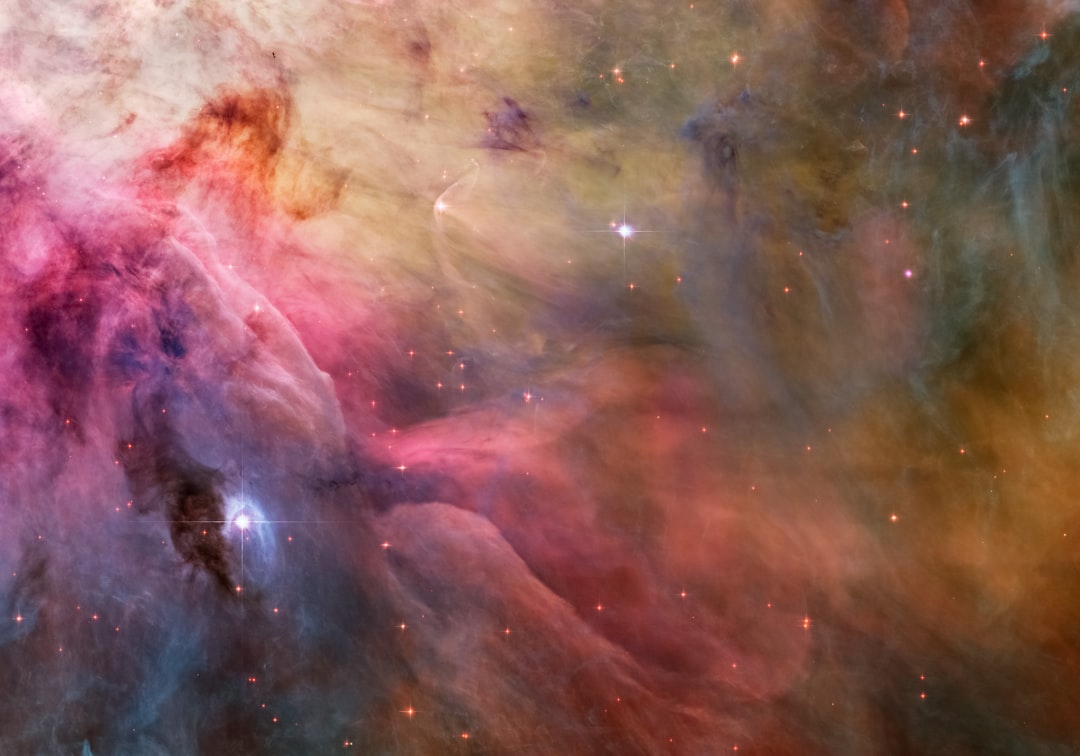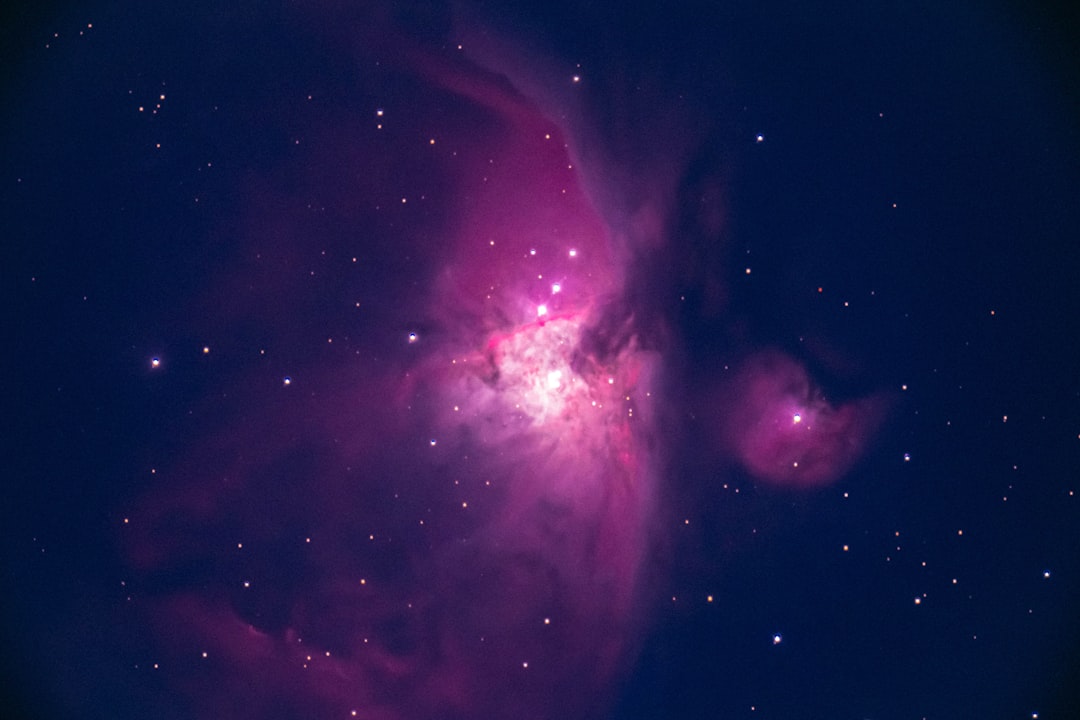
In a spectacular demonstration of international astronomical cooperation, the European Space Agency's Euclid Space Telescope has joined forces with NASA's venerable Hubble Space Telescope to produce stunning new imagery of one of the cosmos's most intricate structures. The Cat's Eye Nebula, officially designated NGC 6543, has long captivated astronomers with its extraordinarily complex architecture, and these latest observations reveal both intimate details and cosmic context that illuminate the violent yet beautiful death throes of a massive star.
Located approximately 4,300 light-years away in the constellation Draco, this celestial masterpiece represents the final chapter in the life of a Wolf-Rayet star—one of the most extreme stellar objects in our galaxy. The dying star at the nebula's heart, catalogued as HD 164963, has exhausted its hydrogen fuel and now undergoes catastrophic mass loss, creating the intricate shells and filaments that make NGC 6543 a favorite target for both professional astronomers and astrophotographers worldwide.
What makes this collaboration particularly significant is how it combines Euclid's wide-field capabilities with Hubble's unparalleled detail, offering astronomers a dual perspective that ranges from the nebula's turbulent interior to its position within a field of distant galaxies. This multi-scale approach provides crucial insights into how planetary nebulae evolve and interact with the interstellar medium over millennia.
The Violent Beauty of Stellar Death
At the heart of the Cat's Eye Nebula lies a Wolf-Rayet star—an evolved massive star that has stripped away its outer hydrogen envelope, exposing its helium-burning core. These stars are among the hottest and most luminous objects in the universe, with surface temperatures exceeding 100,000 Kelvin. The intense radiation from HD 164963 ionizes the surrounding gas, causing it to glow with characteristic colors: red from hydrogen emission, blue from neutral oxygen, and green from ionized nitrogen.
The nebula's remarkable complexity stems from episodic mass loss events that occurred over thousands of years. Each concentric shell visible in high-resolution images represents a discrete ejection episode, driven by the star's extraordinarily powerful stellar winds that can reach velocities of several thousand kilometers per second. These winds carry away substantial portions of the star's mass—sometimes losing the equivalent of Earth's mass every few thousand years.
"The Cat's Eye Nebula is essentially a cosmic archaeological site, where each layer of gas preserves a record of the star's mass-loss history. By studying these structures, we can reconstruct the star's evolution over the past several thousand years," explains Dr. Bruce Balick, a planetary nebula expert at the University of Washington.
Research published in the Astrophysical Journal suggests that the nebula's intricate structure may result from a binary star system at its core. If two stars orbit each other at the nebula's center, their gravitational interaction would create an accretion disk, generating powerful jets that precess over time. These jets would collide with previously ejected material, sculpting the complex patterns we observe today.
A Historical Perspective: From Planetary Nebula to Stellar Laboratory
The Cat's Eye Nebula holds a distinguished place in astronomical history. First discovered by William Herschel in 1786, it appeared planetary in nature through the modest telescopes of that era—hence the misleading term "planetary nebula" that persists today despite having no connection to actual planets. Nearly a century later, in 1864, English astronomer William Huggins made NGC 6543 the first nebula to undergo spectroscopic analysis, revealing its true nature as a gaseous shell surrounding a hot central star.
This groundbreaking spectroscopic observation demonstrated that the nebula consisted of glowing gas rather than reflected starlight, fundamentally changing our understanding of these objects. Today, we recognize planetary nebulae as crucial phases in stellar evolution, representing the transformation of intermediate-mass stars (roughly 0.8 to 8 solar masses) into white dwarfs.
Decades of Multi-Wavelength Observations
The Cat's Eye Nebula has been observed across virtually the entire electromagnetic spectrum, making it one of the most thoroughly studied objects in astronomy. The Chandra X-ray Observatory and ESA's XMM-Newton have revealed hot gas at temperatures exceeding one million degrees, created by shock waves from colliding stellar winds. Ground-based facilities like the Subaru Telescope and ESA's Herschel Space Observatory have studied the nebula's cooler outer regions in infrared wavelengths, detecting molecules and dust grains formed in the ejected material.
Hubble's observations, beginning with its iconic 1995 image captured by the Wide-Field Planetary Camera 2, revolutionized our understanding of planetary nebulae. Those images revealed unprecedented detail in the nebula's structure, showing concentric rings, jets, and knots of dense gas that challenged existing theoretical models. The latest Hubble observations, obtained with the Advanced Camera for Surveys (ACS) installed during the 2002 servicing mission, provide even sharper views of the nebula's turbulent interior.
Euclid's Unique Contribution: Context and Discovery
While Hubble excels at capturing fine detail, Euclid's strength lies in its wide-field imaging capabilities. Designed primarily to map the distribution of dark matter and study dark energy across cosmic time, Euclid's broad perspective places the Cat's Eye Nebula within its galactic neighborhood. The new combined imagery reveals a previously underappreciated faint outer halo of material extending far beyond the bright inner nebula.
This extensive halo, consisting of clumps and streamers of gas moving rapidly away from the central star, represents material ejected during an earlier evolutionary phase—possibly when the star was still an asymptotic giant branch (AGB) star, before it became a Wolf-Rayet star. The halo's age is estimated at 5,000 to 7,000 years, significantly older than the bright inner nebula visible in most images.
Euclid's observations also capture numerous distant background galaxies visible through and around the nebula, providing a striking reminder of the vast cosmic scales at play. These galaxies, located billions of light-years beyond NGC 6543, help astronomers calibrate their distance measurements and understand how foreground objects like planetary nebulae affect our observations of the distant universe.
Decoding the Nebula's Complex Architecture
The Cat's Eye Nebula's internal structure reveals several distinct components, each telling part of the story of its formation:
- The bright inner shell: Approximately 1,000 years old, this is the youngest and most prominent feature, created by the most recent major mass-loss episode. Its irregular, bubble-like appearance results from instabilities in the stellar wind and possible jet activity.
- Concentric rings: These evenly-spaced structures suggest periodic mass ejection events occurring roughly every 1,500 years. The mechanism driving this periodicity remains debated, with theories ranging from stellar pulsations to binary companion interactions.
- Bipolar structures: High-velocity jets appear to emerge from opposite sides of the nebula, suggesting the presence of an accretion disk that collimates material into narrow beams. These jets may be powered by material falling onto a companion star.
- Dense knots and filaments: Regions where stellar winds collide create compressed zones of gas that appear as bright knots in images. These structures evolve rapidly on astronomical timescales, changing noticeably over decades.
- The extended halo: This ancient, diffuse structure represents the star's early mass-loss phase and provides clues about conditions before the current dramatic ejection events began.
The Binary Star Hypothesis
Mounting evidence suggests that a binary companion may orbit the visible Wolf-Rayet star at NGC 6543's center. Computer simulations published in research from the Monthly Notices of the Royal Astronomical Society demonstrate that many of the nebula's peculiar features—including its jets, precessing structures, and asymmetric shell—can be explained by a binary system with an orbital period of several decades to centuries.
In this scenario, as the Wolf-Rayet star sheds mass, some material is captured by the companion star, forming an accretion disk. The disk's rotation axis would precess over time due to gravitational interactions, causing jets to sweep across the sky like cosmic searchlights. When these jets slam into previously ejected shells, they create the shock-heated regions and complex morphology we observe.
Cosmic Timeline: Past, Present, and Future
Understanding the Cat's Eye Nebula's temporal evolution provides insights into stellar death processes throughout the universe. The nebula's outer halo began forming approximately 5,000-7,000 years ago, during humanity's Neolithic period, when the star transitioned from its red giant phase. The bright inner nebula that dominates most images is much younger—only about 1,000 years old—meaning its light first reached Earth during the Islamic Golden Age, when scholars like Al-Sufi were cataloging celestial objects.
Planetary nebulae are relatively short-lived phenomena in cosmic terms, typically persisting for 10,000 to 50,000 years before dissipating into the interstellar medium. The Cat's Eye Nebula, at roughly 1,000 to 7,000 years old depending on which component we examine, is still in its youth or early middle age. Over the coming millennia, its shells will continue expanding and fading as they merge with surrounding interstellar gas.
Eventually, the central star will exhaust its remaining nuclear fuel and collapse into a white dwarf—an Earth-sized stellar remnant composed primarily of carbon and oxygen, supported against further collapse by electron degeneracy pressure. This white dwarf will gradually cool over tens of billions of years, far outlasting our Sun and Solar System. In this sense, the Cat's Eye Nebula represents both an ending and a beginning: the death of a star and the birth of a white dwarf that will persist long after humanity itself has vanished.
Implications for Stellar Evolution and Galactic Enrichment
Beyond its aesthetic appeal, the Cat's Eye Nebula serves as a crucial laboratory for understanding stellar nucleosynthesis and galactic chemical evolution. The gas ejected by the dying star contains elements forged in its interior through nuclear fusion—including carbon, nitrogen, oxygen, and trace amounts of heavier elements. These materials, dispersed into space, will eventually be incorporated into future generations of stars and planets.
Spectroscopic analysis reveals that NGC 6543's ejecta are enriched in nitrogen relative to solar abundances, a signature of CNO-cycle hydrogen burning and subsequent mixing processes that brought nuclear-processed material to the star's surface. This chemical fingerprint helps astronomers understand the interior structure and evolution of intermediate-mass stars, validating theoretical models of stellar physics.
The nebula also provides insights into dust formation in stellar outflows. Infrared observations have detected silicate and carbonaceous dust grains condensing in the cooling ejecta, demonstrating how stars contribute to the cosmic dust budget that obscures distant galaxies and provides raw material for planet formation.
The Future of Planetary Nebula Research
The collaboration between Euclid and Hubble exemplifies the power of multi-telescope, multi-wavelength astronomy. Future observations with next-generation facilities promise even deeper insights into objects like the Cat's Eye Nebula. The James Webb Space Telescope, with its unprecedented infrared sensitivity, can peer through dust to study the nebula's molecular content and detect cooler structures invisible to optical telescopes.
Upcoming extremely large telescopes—including the European Extremely Large Telescope (ELT), the Thirty Meter Telescope (TMT), and the Giant Magellan Telescope (GMT)—will achieve angular resolutions surpassing even Hubble's, potentially resolving the binary system at the nebula's heart if it exists. These observations could finally confirm whether NGC 6543's complexity truly results from binary interactions or from more exotic single-star mechanisms.
As we continue observing the Cat's Eye Nebula across electromagnetic wavelengths and over time, we build an increasingly complete picture of how stars like our Sun will end their lives. These observations remind us that even in death, stars create beauty and seed the cosmos with the elements necessary for life—a fitting legacy for objects that once shone steadily for billions of years before their final, spectacular transformation into planetary nebulae and white dwarfs.