The quest to discover extraterrestrial intelligence has captivated humanity for generations, yet after more than six decades of systematic searching, we remain alone in our cosmic silence. This profound absence of contact has prompted scientists to fundamentally rethink their approach to the Search for Extraterrestrial Intelligence (SETI), leading researchers down unexpected paths. Among the most intriguing new frameworks comes from an unlikely source: the humble honeybee. Recent groundbreaking research suggests that these tiny insects, with their remarkable mathematical abilities and complex communication systems, might provide a revolutionary template for how we search for and potentially communicate with alien civilizations.
A collaborative team from Monash University and the Royal Melbourne Institute of Technology (RMIT) University has spent nearly a decade demonstrating that Apis mellifera (honeybees) possess sophisticated mathematical capabilities. Their findings, published in the prestigious journal Leonardo by MIT Press Direct, challenge our assumptions about intelligence, mathematics, and the potential universality of numerical understanding across vastly different forms of life. This research raises a fascinating question: if creatures separated from us by over 600 million years of evolution can share our appreciation for mathematics, could this numerical common ground serve as the universal language we've been seeking to bridge the cosmic divide?
The implications extend far beyond theoretical musings. As SETI efforts increasingly incorporate citizen scientists through initiatives like SETI@home and Breakthrough Listen, understanding the fundamental nature of mathematical communication becomes not just an academic exercise, but a practical necessity for designing the next generation of interstellar messaging strategies.
Mathematics as the Cosmic Lingua Franca
The concept of mathematics as a universal language has deep roots in human scientific thought, stretching back centuries before modern SETI efforts began. In 1623, the brilliant Italian polymath Galileo Galilei articulated a vision that would echo through the ages, declaring that the Universe itself was "a grand book written in the language of mathematics." This revolutionary perspective, born during the Scientific Revolution of the 16th to 18th centuries, established a paradigm that continues to influence how we approach the challenge of interstellar communication today.
The assumption underlying this mathematical optimism is straightforward yet profound: regardless of biology, culture, or cognitive architecture, any civilization capable of developing technology sophisticated enough for interstellar communication must necessarily understand fundamental mathematical principles. The laws of physics, chemistry, and mathematics appear to operate consistently throughout the observable universe, suggesting that numerical concepts might transcend the profound barriers of language, sensory perception, and evolutionary history that would otherwise make communication impossible.
This mathematical framework has inspired numerous real-world attempts at cosmic communication. The famous Arecibo Message, transmitted in 1974 under the direction of pioneering astronomer Frank Drake, encoded information about humanity, our solar system, and DNA using prime numbers arranged in a rectangular grid of 73 lines with 24 characters each. The choice of prime numbers was deliberate—these mathematical constants, divisible only by themselves and one, represent a fundamental truth that any technological civilization would recognize.
Similarly, the Pioneer Plaques carried by the Pioneer 10 and 11 spacecraft, along with the iconic Voyager Golden Records aboard Voyager 1 and 2, relied heavily on numerical and geometric representations. Created through the collaborative genius of Carl Sagan, Eric Burgess, and Frank Drake, these messages used binary arithmetic, mathematical constants, and geometric diagrams to convey information about Earth and humanity. The Voyager records even included playback instructions etched in binary code, assuming that mathematical literacy would enable any finder to decode the treasure trove of sounds and images within.
The Remarkable Mathematical Mind of Honeybees
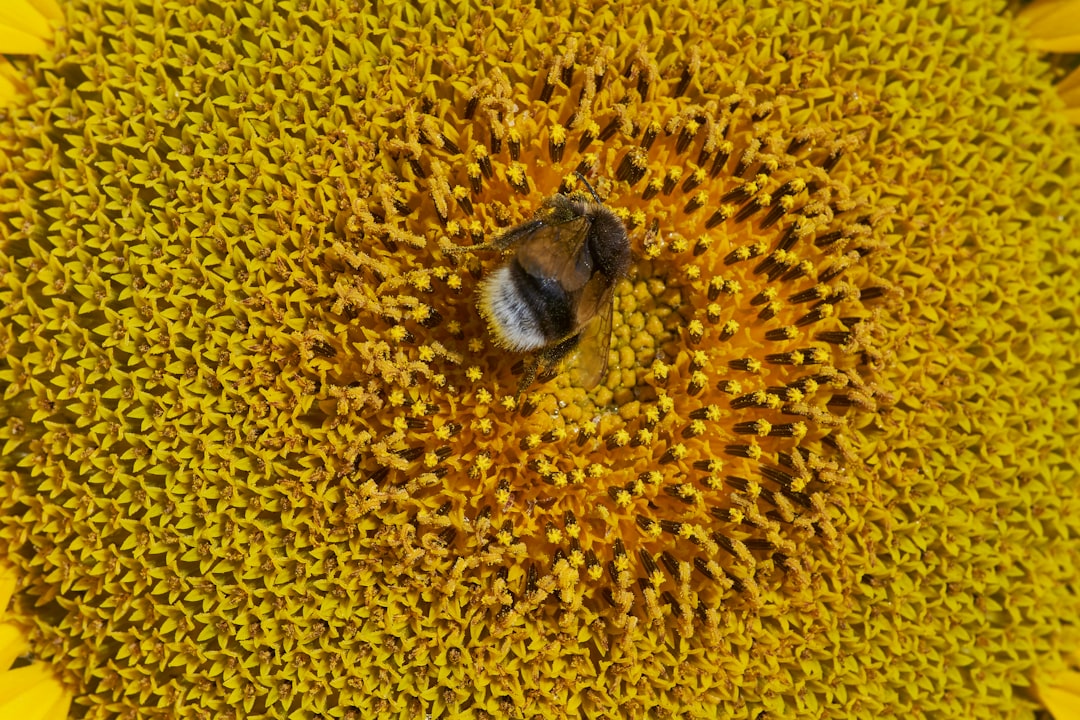
Between 2016 and 2024, the research team conducted an extensive series of experiments that would fundamentally challenge our understanding of mathematical cognition. Working with freely flying honeybees that voluntarily visited their outdoor laboratory, the scientists created an innovative reward-based learning environment where bees received sugar water for successfully completing mathematical tasks. The results were nothing short of extraordinary.
The bees demonstrated the ability to associate abstract symbols with numerical quantities, successfully learning to identify both Arabic and Roman numerals. Perhaps most remarkably, they grasped the concept of zero—an abstract mathematical idea that human civilizations took millennia to develop and formalize. This achievement is particularly significant because understanding zero requires recognizing the absence of quantity as a distinct numerical concept, a level of abstraction previously thought to require substantial cognitive resources.
"The fact that honeybees, with brains containing fewer than one million neurons compared to humans' 86 billion, can perform mathematical operations challenges our fundamental assumptions about the relationship between brain size, structure, and mathematical capability," the research team noted in their published findings.
The experiments revealed that bees could perform basic arithmetic operations, including addition and subtraction. When presented with visual stimuli representing different quantities, the bees learned to navigate toward targets that represented the correct mathematical solution. This wasn't simple pattern recognition—the bees demonstrated genuine numerical understanding, transferring their learned mathematical concepts to novel situations they hadn't encountered during training.
Divergent Evolution, Convergent Intelligence
Perhaps the most philosophically profound aspect of this research lies in what it reveals about the nature of intelligence itself. Humans and honeybees diverged evolutionarily more than 600 million years ago, developing radically different nervous systems, sensory apparatuses, and cognitive architectures. Yet both species independently evolved sophisticated mathematical capabilities and complex communication systems—a striking example of convergent evolution in cognitive function.
The communication methods employed by these two species couldn't be more different. Humans developed verbal language, a sequential auditory system capable of conveying abstract concepts through arbitrary sound combinations. Bees, conversely, evolved the famous "waggle dance"—a physical, spatial language where the angle, duration, and intensity of body movements encode precise information about resource locations, including distance, direction relative to the sun's position, and even quality assessments of food sources.
This waggle dance represents a genuine language in every meaningful sense: it's learned socially, varies in "dialect" between different bee populations, and can communicate about objects and locations not immediately present—a property linguists call "displacement," once thought unique to human language. The fact that such a radically different communication system can still convey mathematical and spatial information suggests that quantitative reasoning might indeed be a fundamental feature of complex intelligence, regardless of its physical substrate.
Implications for Brain Architecture and Intelligence
The bee brain, weighing approximately one milligram and containing roughly 960,000 neurons, operates on entirely different principles than the human brain's 1,400-gram mass of 86 billion neurons. Yet both systems can process numerical information, recognize patterns, solve problems, and communicate findings to conspecifics. This remarkable parallel suggests that mathematical cognition doesn't require any particular brain structure or size—it may emerge as a natural consequence of any sufficiently complex information-processing system facing similar evolutionary pressures.
For SETI researchers, this finding is revolutionary. It suggests that we shouldn't assume extraterrestrial intelligence will necessarily resemble human cognition in structure or scale. An alien civilization might process information through quantum states, chemical gradients, or mechanisms we can't yet imagine—yet still arrive at the same mathematical truths that govern physical reality.
Rethinking SETI Strategy Through an Insect Lens
The bee research offers several concrete implications for how we conduct SETI and design potential messages to the cosmos. First, it provides empirical evidence that mathematical communication can bridge vast evolutionary and cognitive divides. If humans and bees—separated by hundreds of millions of years and possessing fundamentally different nervous systems—can both appreciate mathematical concepts, this strengthens the case for mathematics as a genuinely universal language.
Second, the research highlights the importance of considering diverse communication modalities. Bees communicate through physical movement and spatial positioning; other species use chemical signals, bioluminescence, or electrical fields. Similarly, extraterrestrial civilizations might employ communication methods beyond electromagnetic radiation. While radio waves remain a practical choice for interstellar distances due to their propagation properties, we should remain open to unexpected signals that encode mathematical or logical information through unconventional means.
Third, the bee studies demonstrate that symbolic representation of numerical concepts can be learned and shared across species boundaries. This has direct relevance for designing interstellar messages: rather than assuming recipients will understand our specific symbolic systems, we should focus on creating messages where the underlying mathematical relationships are discoverable through pattern analysis, much as the bees learned to associate arbitrary symbols with quantities through repeated exposure and feedback.
Addressing the Fermi Paradox and Chains of Suspicion
The research also touches on one of SETI's most vexing problems: the "Chains of Suspicion" concept popularized in Liu Cixin's The Three-Body Problem series. This idea suggests that the vast distances between stars, combined with communication lags of decades or centuries, would foster paranoia between civilizations attempting contact. Without shared cultural references or the ability to rapidly clarify misunderstandings, each party might conclude that preemptive aggression is safer than risking attack.
However, demonstrating a shared appreciation for mathematics could help break these chains of suspicion. If multiple intelligent species—whether terrestrial insects or extraterrestrial civilizations—independently arrive at the same mathematical truths, this suggests a common cognitive foundation that transcends biology and culture. Such commonality could serve as the basis for trust, showing that despite our differences, we share fundamental ways of understanding reality.
Future Directions and Unanswered Questions
The research team has outlined ambitious plans to explore how different species might develop distinct approaches to mathematics, analogous to how human languages form diverse "language trees" with multiple dialects and branches. This work addresses a fundamental philosophical question that has divided mathematicians and philosophers for centuries: Is mathematics discovered or invented? Is it a universal feature of reality that any intelligent species would uncover, or is it a human cognitive construct shaped by our particular evolutionary history and neurological architecture?
By studying mathematical cognition across diverse species—from insects to cephalopods to corvids—researchers hope to identify which mathematical concepts appear truly universal and which might be artifacts of specific cognitive architectures. For instance, do all mathematical species naturally develop concepts equivalent to our integers, fractions, and geometric principles? Or might some species develop mathematical frameworks so alien to our thinking that we wouldn't initially recognize them as mathematics at all?
These questions have profound implications for SETI strategy. If mathematics is truly universal, then messages based on prime numbers, geometric relationships, and fundamental physical constants should be recognizable to any technological civilization. But if mathematical thinking varies significantly across different forms of intelligence, we may need to develop more flexible, adaptive communication strategies that can accommodate unexpected conceptual frameworks.
The Growing Role of Public Participation
As SETI efforts increasingly involve citizen scientists through platforms like Breakthrough Listen, these theoretical questions become practically important. Volunteers analyzing radio telescope data or helping design interstellar messages need frameworks for recognizing potential signals and creating meaningful communications. Understanding that mathematical cognition can emerge in radically different biological systems helps broaden our conception of what artificial or alien intelligence might look like—and how we might recognize it when we find it.
The bee research also emphasizes that searching for extraterrestrial intelligence is as much about understanding the nature of intelligence itself as it is about building bigger telescopes or more sensitive receivers. Each species we study that demonstrates unexpected cognitive capabilities expands our conception of what's possible, helping us avoid the trap of anthropocentric thinking that assumes alien intelligence will necessarily resemble our own.
Broader Implications for Astrobiology and Cognitive Science
Beyond its direct applications to SETI, this research contributes to our understanding of how complex cognition evolves and what conditions foster its development. Both humans and bees are highly social species that benefit from coordinating activities, sharing information about resource locations, and cooperating on complex tasks. This suggests that social complexity might be a key driver in the evolution of mathematical and communicative abilities—a hypothesis with implications for where we might expect to find intelligent life in the universe.
The work also demonstrates the value of comparative cognition studies for astrobiology. By understanding how different evolutionary paths on Earth have produced various forms of intelligence, we can better predict what kinds of cognitive capabilities might evolve on other worlds. A planet with strong seasonal variations might favor species with sophisticated temporal reasoning; a world with complex three-dimensional environments might produce exceptional spatial cognition; and any world where cooperation provides survival advantages might see the emergence of mathematical and communicative abilities.
As we continue exploring our solar system and detecting thousands of exoplanets around other stars, these insights help us prioritize targets for biosignature searches and eventual SETI observations. Worlds that could support complex ecosystems with social species might be particularly promising candidates for the emergence of intelligence capable of mathematical reasoning and technological development.
Conclusion: Small Brains, Universal Truths
The revelation that honeybees can grasp mathematical concepts once thought to require large, complex brains fundamentally reshapes our understanding of intelligence and its potential distribution across the cosmos. These tiny insects, working with neural networks millions of times smaller than our own, have demonstrated that mathematical cognition isn't tied to any particular brain architecture or evolutionary lineage—it may be an emergent property of any sufficiently complex information-processing system.
For SETI researchers, this provides both encouragement and caution. It strengthens the case for mathematics as a genuinely universal language that could bridge the vast cognitive and cultural divides between humanity and extraterrestrial civilizations. Yet it also reminds us that intelligence can take forms radically different from our own, operating through mechanisms we might not immediately recognize or understand.
As we continue our search for cosmic companions, the lessons learned from Earth's smallest mathematicians may prove invaluable. By studying how different forms of intelligence on our own planet understand and communicate numerical concepts, we better prepare ourselves for the ultimate challenge: recognizing and conversing with minds that evolved under alien suns, shaped by evolutionary pressures we can barely imagine, yet potentially sharing with us the universal language of mathematics that describes the cosmos we all inhabit.
The question is no longer whether mathematics can serve as a bridge between intelligences—the bees have shown us it can. The question now is whether we're asking the right mathematical questions, in the right ways, to finally break the cosmic silence and discover we're not alone.