For more than half a century, astronomers have been wrestling with a fundamental paradox in the search for extraterrestrial life. Our most sophisticated detection strategies have been meticulously crafted around identifying biosignature gases like oxygen, methane, and ozone in distant planetary atmospheres—chemical fingerprints that on Earth point unmistakably toward biological activity. Yet this entire framework rests on a potentially flawed assumption: that life elsewhere in the cosmos must resemble life as we've experienced it on our own world. Now, a revolutionary theoretical approach promises to transform how we search for alien life by asking not what molecules exist, but rather how difficult those molecules were to construct in the first place.
The challenge facing astrobiologists has become increasingly apparent as our understanding of planetary chemistry has deepened. Each year brings new discoveries of abiotic processes—non-biological chemical reactions—that can generate the very same gases we've long considered reliable indicators of life. From photochemical reactions in carbon dioxide-rich atmospheres to volcanic outgassing and atmospheric interactions with stellar radiation, the universe has proven remarkably creative at producing false positives. This growing catalog of misleading signals has created what some researchers call a "biosignature crisis," where distinguishing genuine biological activity from clever chemistry requires ever more detailed planetary data that may be impossible to obtain with current or near-future technology.
Dr. Sara Walker, a Professor of Astrobiology at Arizona State University, and her interdisciplinary team have developed a fundamentally different approach to this problem. Their solution, grounded in Assembly Theory, represents a paradigm shift in how we conceptualize the search for life beyond Earth—one that could finally break free from our terrestrial biases and detect biology in forms we might never have imagined.
Beyond Earth-Centric Assumptions: The Limitations of Traditional Biosignatures
The traditional approach to detecting extraterrestrial life has been shaped by six decades of studying Earth's biosphere. Scientists have meticulously cataloged the chemical signatures of terrestrial life: the oxygen produced by photosynthetic organisms, the methane generated by methanogenic bacteria, and the ozone layer that shields our planet's surface from harmful ultraviolet radiation. These atmospheric biosignatures have become the foundation of virtually every proposed life-detection mission, from early concepts to the sophisticated instruments aboard the James Webb Space Telescope.
However, this Earth-centric methodology carries inherent risks. As planetary scientists have expanded their understanding of exoplanetary environments, they've discovered numerous scenarios where purely chemical processes can mimic biological signatures. For instance, photolysis—the breaking apart of molecules by stellar radiation—can generate oxygen in water-rich atmospheres without any biological involvement. Similarly, geological processes on rocky planets can release substantial quantities of methane through serpentinization, a reaction between water and certain minerals that requires no living organisms whatsoever.
The problem extends beyond simple false positives. Each newly discovered abiotic pathway for producing biosignature gases demands additional observational constraints to rule out non-biological explanations. Researchers must determine the planet's geological activity, stellar radiation environment, atmospheric composition, surface temperature, pressure profiles, and countless other parameters. The information requirements for confidently declaring the presence of life have grown so extensive that some scientists question whether they can ever be satisfied for planets dozens or hundreds of light-years away.
Assembly Theory: A Revolutionary Framework for Detecting Complexity
Assembly Theory offers an elegant solution to this conundrum by shifting the fundamental question we ask about distant worlds. Rather than searching for specific molecules that might indicate life, the theory examines the molecular complexity of an entire planetary atmosphere and asks: How difficult would it be for random chemical processes to produce this level of sophistication?
At the heart of Assembly Theory lies a deceptively simple concept called the Assembly Index. Every molecule, from simple water to complex organic compounds, can be assigned a numerical value representing the minimum number of construction steps required to build it from basic chemical building blocks. A water molecule (H₂O) has a very low Assembly Index—it forms readily through straightforward chemical bonding. In contrast, a complex organic molecule with multiple functional groups, chiral centers, and specific structural arrangements requires many sequential construction steps, giving it a high Assembly Index.
"The beauty of Assembly Theory is that it makes no assumptions about what life should look like. We're not searching for DNA, or proteins, or any specific biochemistry. We're simply looking for signs that something has been systematically exploring and exploiting chemical possibility space in ways that random processes cannot achieve."
The theory's power lies in recognizing that while simple molecules can arise through chance chemical reactions, truly complex molecules requiring numerous precise sequential steps are vanishingly unlikely to form without some form of selection and propagation—in other words, without life. When a planetary atmosphere contains an abundance of high-Assembly-Index molecules, and when those molecules show signs of deep chemical interconnection (sharing molecular fragments, reusing chemical motifs, systematically exploring available bonding possibilities), something beyond ordinary physics and chemistry must be at work.
Comparing Planetary Atmospheres: Earth's Exceptional Complexity
To validate their framework, Walker's team conducted comprehensive comparative analyses of planetary atmospheres within our solar system and projected their methodology onto various exoplanet archetypes. The results were striking and illuminating.
When comparing Earth's atmosphere to those of Venus and Mars—our closest planetary neighbors with broadly similar chemical inventories—Earth stands apart dramatically. While Venus and Earth have access to similar types of chemical bonds and elemental building blocks, Earth's atmosphere exhibits far greater molecular diversity above any given abundance threshold. This isn't simply a matter of having more molecules; it's about having more complex molecules that require numerous construction steps to produce.
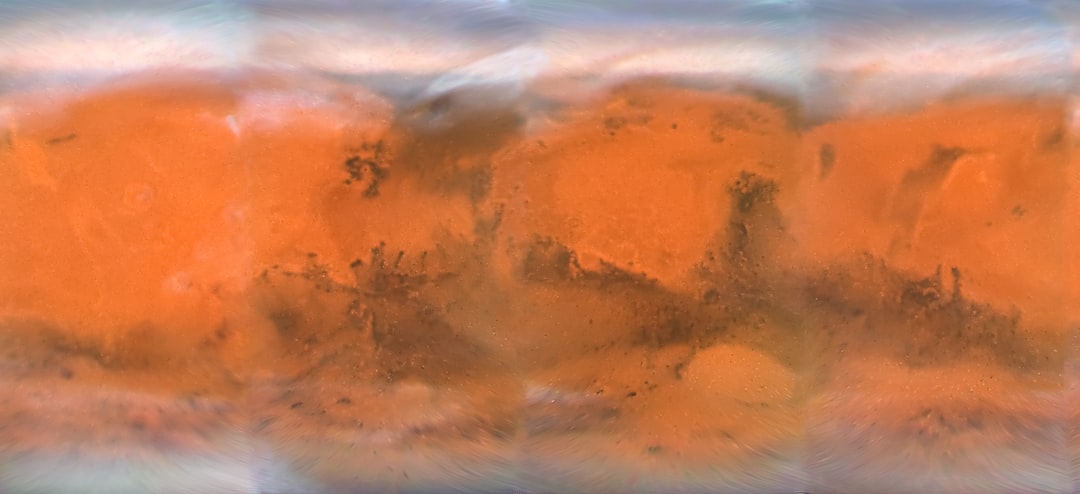
Mars, with its thin atmosphere dominated by carbon dioxide, shows relatively low molecular complexity—precisely what we'd expect from a world where only abiotic chemistry operates. Venus, despite its dense atmosphere and complex cloud chemistry, similarly lacks the deep molecular complexity that characterizes Earth. The difference becomes even more pronounced when examining not just which molecules are present, but how those molecules relate to one another through shared chemical fragments and systematic structural variations.
Earth's biosphere, the analysis reveals, is conducting an extraordinarily thorough exploration of chemical possibility space. Living organisms don't just produce a few specific molecules; they systematically generate vast families of related compounds, exploring variations on chemical themes in ways that purely abiotic chemistry cannot match. This pattern of exhaustive chemical exploration, rather than any single molecular signature, becomes the hallmark of biological activity.
The Mathematics of Molecular Construction
The quantitative rigor of Assembly Theory distinguishes it from earlier, more qualitative approaches to biosignature detection. By assigning numerical Assembly Index values to atmospheric constituents, researchers can calculate an overall complexity score for an entire planetary atmosphere. This score reflects not just the presence of complex molecules, but their abundance, diversity, and interconnectedness.
Importantly, this approach is agnostic to the specific form life might take. It doesn't require oxygen-breathing organisms, carbon-based biochemistry, or water as a solvent. Whether life uses silicon instead of carbon, ammonia instead of water, or operates through chemical principles we've never encountered, Assembly Theory should still detect its presence through the telltale signature of systematic chemical complexity that exceeds what random processes can generate.
Practical Applications: Designing the Next Generation of Life Detection
The true test of any theoretical framework lies in its practical applicability, and Assembly Theory has been specifically designed with real-world observations in mind. The approach is being developed in close coordination with planning for NASA's Habitable Worlds Observatory (HWO), the agency's next flagship space telescope explicitly designed to directly image Earth-like planets and analyze their atmospheres for signs of life.
One of Assembly Theory's most significant advantages is its direct measurability using existing observational techniques. The Assembly Index values for atmospheric molecules can be calculated from infrared spectroscopy—the same method that space telescopes like James Webb and the future HWO use to characterize distant planetary atmospheres. This means the theory doesn't require new, untested technologies or observational capabilities beyond what's already planned for upcoming missions.
Rather than providing a simple binary verdict—alive or dead—Assembly Theory would place planets on a continuous complexity spectrum. This nuanced approach acknowledges that the boundary between life and non-life may not be sharp, and that planets might exist in various stages of biological development. A young planet with primitive life might show moderate complexity scores, while a world with a mature, diverse biosphere would exhibit extremely high values. This spectrum approach could even help us understand the origins of life by potentially identifying worlds in transitional states between purely abiotic chemistry and established biology.
Implications for Astrobiology and the Search for Extraterrestrial Intelligence
The implications of Assembly Theory extend far beyond technical improvements in biosignature detection. The framework represents a philosophical shift in how we conceptualize life itself and our place in the cosmos. For decades, astrobiology has been constrained by what some critics call "terracentrism"—the assumption that Earth's biological solutions are universal or at least common. Assembly Theory explicitly rejects this assumption, opening the door to discovering truly alien life that operates on principles we've never encountered.
This approach also addresses a profound question that has haunted astrobiology since its inception: How do we recognize life when we see it if it's fundamentally different from terrestrial biology? Traditional definitions based on metabolism, reproduction, or evolution all carry implicit assumptions about how these processes must work. Assembly Theory sidesteps these definitional quagmires by focusing on a more fundamental signature: the systematic generation of complexity that exceeds what random processes can achieve.
The universe has had nearly 14 billion years to experiment with chemistry across countless planetary environments with wildly varying conditions. During that vast span of cosmic time, nature has had opportunities to discover solutions to the problem of self-organization and complexity generation that may bear no resemblance to Earth's carbon-based, water-dependent biochemistry. Assuming that terrestrial biology represents the only solution to life's challenges seems, in retrospect, like an extraordinarily anthropocentric bet—one that Assembly Theory helps us avoid.
Future Research Directions and Challenges
While Assembly Theory offers exciting possibilities, significant work remains to fully develop and validate the approach. Researchers need to refine the mathematical frameworks for calculating Assembly Index values from spectroscopic data, particularly for complex mixtures of molecules in planetary atmospheres. The theory must also be tested against a wider range of planetary scenarios, including exotic environments like subsurface oceans, hydrocarbon lakes, and high-pressure atmospheres where chemistry behaves in unexpected ways.
Collaboration with missions like the ESA's ARIEL telescope, which will characterize the atmospheres of hundreds of exoplanets, will provide crucial data for refining and validating Assembly Theory predictions. As our catalog of exoplanetary atmospheres grows, researchers will be able to test whether Earth truly stands out as exceptionally complex or whether other worlds show similar signatures that our current theories cannot explain.
A New Era in the Search for Life
Assembly Theory represents more than just a new technique for analyzing exoplanet atmospheres; it embodies a fundamental reconceptualization of what we're searching for when we look for life beyond Earth. By focusing on complexity and systematic chemical exploration rather than specific molecular signatures, the framework offers a path forward that avoids the pitfalls of Earth-centric thinking while remaining grounded in measurable, testable predictions.
As we stand on the threshold of a new era in exoplanet characterization, with powerful telescopes like James Webb already returning unprecedented data and future missions like the Habitable Worlds Observatory on the horizon, Assembly Theory provides the conceptual tools we need to recognize life in all its possible forms. Whether the first confirmed detection of extraterrestrial life comes from a world with oxygen-rich skies like our own or from an exotic environment we can barely imagine, Assembly Theory offers a framework for making that discovery and understanding what it means.
The search for life beyond Earth has always been as much about understanding ourselves and our place in the cosmos as it is about finding alien organisms. By developing methods to detect life as we don't know it, we take a crucial step toward answering one of humanity's most profound questions: Are we alone in the universe? Assembly Theory suggests that the answer may be far more nuanced, complex, and wonderful than we ever imagined.