In a groundbreaking achievement for planetary science, astronomers have successfully confirmed the presence of two infant planets actively forming around WISPIT 2, a remarkably young stellar system that serves as an extraordinary window into our own Solar System's ancient past. This discovery, representing only the second confirmed instance of multiple planets caught in the act of formation, provides researchers with an unprecedented laboratory for studying how planetary architectures emerge from protoplanetary disks. The findings, recently published in The Astrophysical Journal Letters, mark a significant milestone in our quest to understand the complex processes that shape solar systems across the galaxy.
Located approximately 437 light-years from Earth, WISPIT 2 stands out as an exceptional target for planetary formation studies. At merely 5 million years old, this Sun-like star hasn't even begun its main sequence life of hydrogen fusion—making it extraordinarily young in cosmic terms. With a mass of 1.08 solar masses, it represents a near-perfect analog for what our own Sun looked like during its infancy, when Jupiter, Saturn, and the other planets in our Solar System were still coalescing from the primordial disk of gas and dust.
Unveiling a Planetary Nursery Through Advanced Observation
The initial discovery of the first planet, WISPIT 2b, came through observations with the European Southern Observatory's Very Large Telescope (VLT) and its sophisticated SPHERE (Spectro-Polarimetric High-contrast Exoplanet REsearch) instrument. This massive world, weighing in at approximately 4.9 Jupiter masses, orbits its host star at a distance of 57 astronomical units—roughly equivalent to the distance between our Sun and Pluto. The direct imaging of WISPIT 2b earned recognition as an ESO Picture of the Week, showcasing the planet as a bright point embedded within the star's multi-ringed protoplanetary disk.
The more recent confirmation of the second planet, WISPIT 2c, required even more sophisticated techniques. Lead researcher Chloe Lawlor, a PhD student at the University of Galway's Centre for Astronomy and the Ryan Institute, led the team that employed both VLT/SPHERE and the upgraded VLTI/GRAVITY+ instrument to achieve direct spectroscopic confirmation of this closer-in companion. This method goes far beyond simple detection, allowing scientists to analyze the planet's atmospheric composition and verify its planetary nature beyond any doubt.
"WISPIT 2 is the best look into our own past that we have to date. This system gives us a critical laboratory not just to observe the formation of a single planet but an entire planetary system," explained Chloe Lawlor, emphasizing the unprecedented opportunity this discovery presents for understanding solar system evolution.
Characterizing Two Worlds in Formation
The newly confirmed planet, WISPIT 2c, represents an even more massive world than its outer sibling. With an estimated mass range of 8-12 Jupiter masses, it orbits significantly closer to its host star at just 14 astronomical units—roughly the distance between our Sun and Saturn. This closer proximity made detection particularly challenging, as the glare from the young star threatened to overwhelm the faint signal from the forming planet. The success of this observation demonstrates the remarkable capabilities of the GRAVITY+ upgrade, which enables imaging of fainter astronomical objects at greater separations than previously possible.
The spectroscopic analysis revealed the presence of carbon dioxide in WISPIT 2c's atmosphere, a common component in gas giant atmospheres that serves as additional confirmation of the object's planetary nature. This detection is particularly significant because it helps distinguish genuine planets from background stars or other astronomical phenomena that might masquerade as exoplanets in observational data. The CO₂ signature also provides valuable insights into the chemical composition and formation processes occurring within the protoplanetary disk.
The Architecture of a Forming Solar System
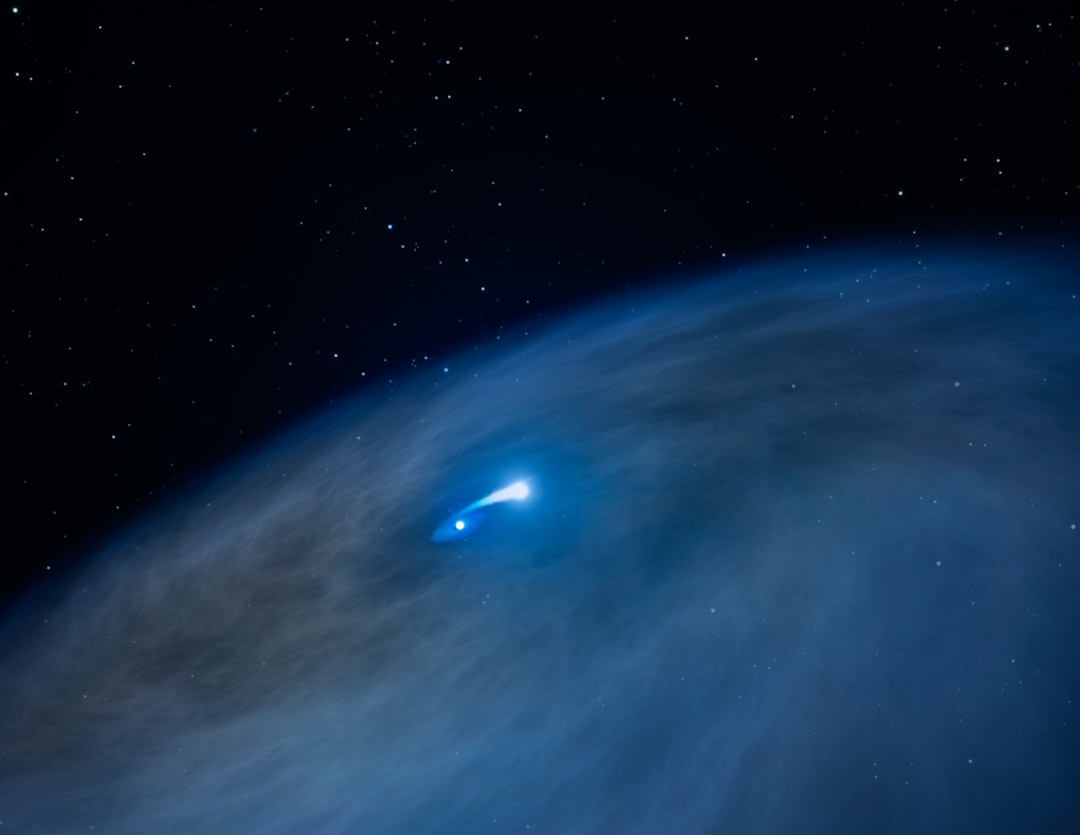
What makes the WISPIT 2 system particularly fascinating is its multi-ringed disk structure, which features distinct gaps carved out by the forming planets as they gravitationally sweep up material from their orbital paths. This structure is more extended and better resolved than that of PDS 70, the only other confirmed multi-planet forming system, which lies approximately 370 light-years away around a young T-Tauri star. The comparison between these two systems is already yielding insights into the diversity of planetary system formation processes.
The research team has identified evidence suggesting the potential presence of a third planet in the WISPIT 2 system. A more distant gap in the protoplanetary disk, characterized by its narrower and shallower profile, hints at a possible Saturn-mass planet carving out this feature at an even greater orbital distance. If confirmed, this would make WISPIT 2 the first system where three planets have been directly observed during their formation phase.
Revolutionary Observational Techniques and Technology
The successful characterization of these infant planets required pushing current astronomical instrumentation to its limits. The direct spectroscopic confirmation technique employed by the research team is technically demanding but provides crucial information that simple detection methods cannot offer. By analyzing the spectrum of light from the planet itself, astronomers can constrain physical models, determine atmospheric composition, and gather data about temperature, mass, and other fundamental properties.
Christian Ginski, a researcher at the University of Galway and study co-author, highlighted the importance of the recent technological advances: "This detection of a new world in formation really showed the amazing potential of our current instrumentation. Critically, our study made use of the recent upgrade to GRAVITY+ without which we would not have been able to get such a clear detection of the planet so close to its star."
The GRAVITY+ upgrade represents a significant leap forward in high-contrast imaging capabilities. By combining the light from multiple telescopes in the Very Large Telescope Interferometer array, it achieves angular resolution far exceeding what any single telescope could accomplish. This technique, known as optical interferometry, effectively creates a telescope with a diameter equivalent to the separation between the individual telescopes, enabling the detection and characterization of faint objects extremely close to bright stars.
Implications for Understanding Planetary System Formation
The discovery of multiple planets forming simultaneously around WISPIT 2 provides astronomers with invaluable data for testing and refining theories of planetary system architecture. With over 6,000 confirmed exoplanets discovered to date by NASA's exoplanet catalog, scientists have observed an astonishing diversity in solar system configurations—from hot Jupiters orbiting closer to their stars than Mercury does to our Sun, to systems with multiple super-Earths packed into tight orbits.
The orbital separations observed in both WISPIT 2 and PDS 70 suggest intriguing patterns in how and where giant planets form. The research team speculates about the possibility of a "Goldilocks Zone" for giant planet formation—a range of distances from the star where conditions are optimal for massive planets to coalesce from the protoplanetary disk. However, with only two confirmed multi-planet forming systems currently known, this hypothesis remains tentative and requires additional observations to confirm.
Key Scientific Insights from the WISPIT 2 System
- Planetary Mass Distribution: The system shows a clear mass gradient, with the more massive planet (8-12 Jupiter masses) orbiting closer to the star than the lighter one (4.9 Jupiter masses), providing clues about migration and formation processes
- Disk-Planet Interactions: The clearly visible gaps in the protoplanetary disk demonstrate how forming planets gravitationally interact with their natal material, sweeping up gas and dust to create observable structures
- Chemical Composition: The detection of carbon dioxide in WISPIT 2c's atmosphere offers insights into the chemical processes occurring during planet formation and the composition of the protoplanetary disk
- Formation Timescales: At 5 million years old, the WISPIT 2 system provides a snapshot of planetary formation at a critical stage, helping astronomers understand how quickly giant planets can form
- System Architecture Evolution: The presence of multiple planets at different orbital distances allows researchers to study how planetary systems develop their final configurations over time
The Future of Planetary Formation Studies
The confirmation of WISPIT 2c represents just the beginning of what promises to be an exciting era in planetary formation research. The upcoming Extremely Large Telescope (ELT), featuring a gargantuan 39-meter primary mirror and scheduled for first light in March 2029, will revolutionize our ability to study forming planetary systems. With its unprecedented light-gathering power and angular resolution, the ELT should be capable of directly imaging even smaller planets, potentially including the suspected Saturn-mass third planet in the WISPIT 2 system.
Guillaume Bourdarot, a researcher at the Max Planck Institute for Extraterrestrial Physics and study co-author, expressed optimism about future discoveries: "With ESO's upcoming Extremely Large Telescope, we may be able to directly image such a planet and potentially discover even more worlds forming in this remarkable system."
The technological advances represented by instruments like GRAVITY+ and the forthcoming capabilities of the ELT mark a transformative moment in astronomy. For the first time in human history, we possess the tools to watch planetary systems emerge from clouds of gas and dust, witnessing in real-time the same processes that gave birth to Earth and the other planets in our Solar System 4.6 billion years ago.
Connecting Formation to Final Architecture
One of the most profound questions in planetary science concerns how the initial conditions during formation influence the final architecture of mature planetary systems. The diversity of exoplanetary systems discovered over the past three decades—from systems with multiple hot Jupiters to those resembling our own Solar System—suggests that subtle differences in formation conditions can lead to dramatically different outcomes.
By studying systems like WISPIT 2 and PDS 70 at such early stages, astronomers hope to identify the key factors that determine whether a system will develop into a configuration like our own Solar System, with small rocky planets close to the star and gas giants farther out, or whether it will evolve into one of the many alternative architectures observed throughout the galaxy. As the research team notes in their conclusion: "While the available data remain limited, these results bring us one step closer to making direct connections between the initial conditions of planet formation and the final architectures of planetary systems."
The WISPIT 2 system, with its Sun-like star and multiple forming giant planets, offers an unparalleled opportunity to address these fundamental questions. As observations continue and new instruments come online, this remarkable planetary nursery will undoubtedly yield many more insights into the cosmic processes that shape worlds and the systems they inhabit. Each new discovery brings us closer to understanding not just how planets form, but also how common systems like our own might be throughout the vast expanse of the universe—a question with profound implications for the prevalence of habitable environments and potentially life itself beyond Earth.