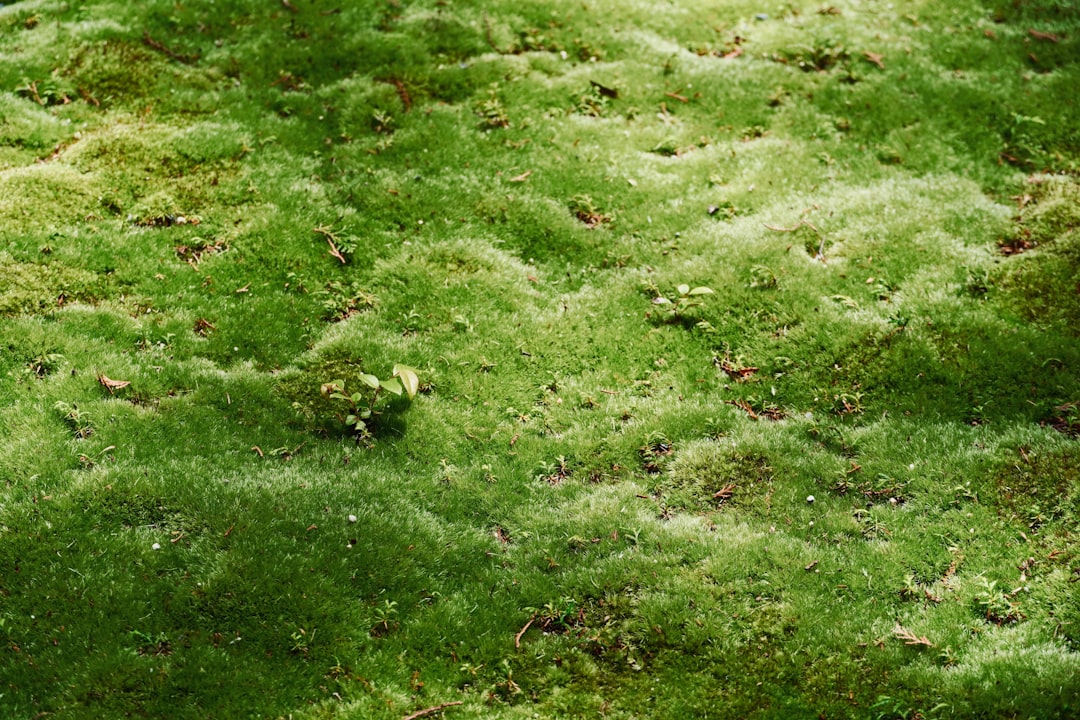
In the unforgiving expanse beyond Earth's protective atmosphere, where temperatures plunge to near absolute zero and radiation levels would kill most organisms in seconds, an unlikely survivor has emerged: moss. These ancient, diminutive plants—among the first to colonize terrestrial environments half a billion years ago—have now proven their resilience extends far beyond our planet's harshest environments. In a groundbreaking experiment conducted by researcher Tomomichi Fujita from Hokkaido University, moss spores spent nine months fully exposed to the vacuum of space aboard the International Space Station, and the results have profound implications for our understanding of life's tenacity and potential for interplanetary survival.
The Ancient Resilience of Bryophytes
Mosses belong to the bryophytes, a group of non-vascular plants that represent one of evolution's most successful experiments in terrestrial adaptation. These organisms conquered some of Earth's most inhospitable environments approximately 500 million years ago, during the Ordovician period, making them among the pioneering colonizers of land. Today, mosses thrive in environments that would challenge even the hardiest organisms: they cling to Himalayan peaks at altitudes exceeding 6,000 meters, spread across the frozen expanses of Antarctic ice where temperatures regularly drop below -40°C, and rapidly colonize fresh volcanic lava fields devoid of soil or nutrients.
This remarkable adaptability stems from several evolutionary innovations. Unlike their vascular plant cousins, mosses can survive extreme desiccation, entering a state of cryptobiosis—a suspended animation where metabolic activity becomes virtually undetectable. They've weathered multiple mass extinction events, including the Permian-Triassic extinction that wiped out 96% of marine species and 70% of terrestrial vertebrates. Their survival through such cataclysmic events raised an intriguing question for Fujita: could this ancient resilience extend beyond Earth's atmosphere entirely?
The Hostile Reality of Space Exposure
Space represents perhaps the most extreme environment imaginable for biological organisms. The conditions are spectacularly hostile on multiple fronts, creating a gauntlet of lethal challenges that would kill most life forms within seconds. In the vacuum of space, the absence of atmospheric pressure would cause human blood to boil at body temperature, a phenomenon known as ebullism. Without the protective blanket of Earth's magnetosphere and atmosphere, cosmic radiation—high-energy particles from supernovae, solar flares, and galactic sources—tears through unprotected cells, shattering DNA strands and disrupting cellular machinery with devastating efficiency.
Temperature fluctuations present another formidable challenge. Objects in low Earth orbit experience wild swings between extremes: surfaces facing the Sun can heat to over 120°C (248°F), while those in shadow plummet to approximately -157°C (-250°F). Perhaps most insidious is the unfiltered solar ultraviolet radiation, particularly the UV-C wavelength range (100-280 nanometers) that Earth's ozone layer normally absorbs. This high-energy radiation breaks down organic molecules—proteins, lipids, and nucleic acids—with ruthless efficiency, destroying the fundamental building blocks of life.
According to NASA's Human Research Program, unprotected human exposure to space would result in unconsciousness within 15 seconds and death within one to two minutes. Most organisms, from bacteria to complex multicellular life, face similar fates. This makes the moss experiment all the more remarkable.
The Space Station Experiment: Design and Execution
The experimental design was elegantly simple yet scientifically rigorous. In March 2022, hundreds of moss sporophytes—tiny capsules containing reproductive spores from the species Ceratodon purpureus, commonly known as spreading earthmoss—launched to the International Space Station aboard a Cygnus cargo spacecraft. Unlike previous biological experiments that provided some degree of protection or shielding, this study pushed the boundaries of survivability testing. Astronauts attached the moss samples to the station's exterior, where they remained fully exposed to the space environment for 283 days—more than nine months—before returning to Earth in January 2023.
The samples experienced the full spectrum of space hazards: vacuum conditions, temperature cycling, cosmic radiation bombardment, and continuous exposure to solar UV radiation. No protective housing, no shielding, no environmental controls—just moss versus the universe. The experiment essentially asked: can life, in its most resilient forms, survive direct exposure to conditions beyond Earth's protective envelope?
"We wanted to understand the absolute limits of biological resilience. By removing all protective measures, we could determine whether these ancient organisms possess adaptations that might allow survival not just on Earth, but in the space environment itself," explained the research team in their findings.
Extraordinary Survival: The Results
The results exceeded even optimistic expectations. The moss didn't merely survive—it thrived. Over 80 percent of the spores returned to Earth viable, and remarkably, all but 11 percent of these survivors successfully germinated in laboratory conditions, developing into healthy new moss plants. This represents a survival rate that challenges our understanding of biological limits in extreme environments.
Detailed biochemical analysis revealed the extent of the spores' resilience. Chlorophyll levels—critical indicators of photosynthetic capability and cellular health—remained largely normal, with only a modest 20 percent reduction in one light-sensitive compound. Crucially, this reduction didn't affect overall spore viability or the plants' ability to grow and reproduce after returning to Earth. The moss emerged from its nine-month ordeal in space fundamentally unchanged in its capacity to function as a living organism.
Ground Testing and Comparative Analysis
The space experiment's success built upon extensive ground-based testing that revealed why sporophytes proved so remarkably resilient. Before launching moss into orbit, Fujita's team conducted comprehensive studies using Ceratodon purpureus, a species well-characterized for its genetics and developmental biology. They subjected three different moss components to simulated space conditions: juvenile moss plants, specialized stress response stem cells called brachycytes, and the sporophytes themselves.
The results were striking in their contrast. Juvenile moss plants died quickly under simulated space conditions, unable to withstand the combined assault of vacuum, radiation, and temperature extremes. The stress response stem cells fared better but still suffered high mortality rates. The sporophytes, however, demonstrated extraordinary tolerance, showing approximately 1,000 times more resistance to ultraviolet radiation than other moss components. This dramatic difference pointed to specific structural and biochemical adaptations within the spore-containing capsules.
The Science Behind Spore Survival
The sporophytes' protective advantage stems from their sophisticated architecture—a multi-layered defense system honed by hundreds of millions of years of evolution. The spore's encasing structure functions as both a physical barrier and a chemical shield, featuring thick cell walls rich in sporopollenin, an extraordinarily resistant biopolymer that also protects pollen grains. This outer layer absorbs harmful radiation before it can penetrate to the vulnerable genetic material inside.
Additionally, the spores contain high concentrations of protective compounds including mycosporine-like amino acids (MAAs), which function as natural sunscreens, absorbing UV radiation in the 310-360 nanometer range. The spores also accumulate late embryogenesis abundant (LEA) proteins, which stabilize cellular structures during extreme desiccation. These adaptations likely enabled bryophytes to colonize land during the Ordovician period, when Earth's ozone layer was still developing and surface UV radiation levels were significantly higher than today.
This combination of physical shielding and biochemical protection creates a microenvironment within each spore that maintains the integrity of DNA and essential cellular machinery even under extreme stress. The research suggests these same adaptations that allowed moss to weather Earth's prehistoric high-radiation environment and multiple mass extinction events now enable survival in the even harsher conditions of space.
Long-Term Survival Predictions and Future Research
Using data from the nine-month exposure experiment, Fujita's team developed a mathematical model to predict long-term survival probabilities for moss spores in space. Their calculations suggest these remarkable organisms could potentially survive approximately 5,600 days in space—roughly 15 years of continuous exposure. The researchers emphasize this remains a preliminary estimate requiring additional data points from longer-duration experiments, but it nonetheless suggests extraordinary resilience.
This prediction has profound implications for several areas of research:
- Panspermia Theory: The ability of moss spores to survive extended space exposure lends credibility to theories of lithopanspermia—the hypothesis that life could transfer between planets via meteorite impacts. If simple organisms can survive years in space, the possibility of interplanetary biological transfer becomes more plausible.
- Mars Colonization: Understanding how terrestrial organisms survive space exposure informs strategies for establishing self-sustaining ecosystems on Mars or other planetary bodies. Moss could potentially serve as pioneer organisms for terraforming efforts.
- Astrobiology: The research expands our understanding of life's potential habitability range, suggesting that extremophile organisms might survive in environments previously considered completely uninhabitable.
- Spacecraft Contamination: The findings raise important questions about planetary protection protocols. If hardy organisms like moss spores can survive extended space travel, preventing forward contamination of pristine planetary environments becomes even more critical.
Implications for Life Beyond Earth
The moss experiment fundamentally challenges our assumptions about biological limits and the potential for life to exist in extreme environments throughout the solar system and beyond. If organisms evolved in Earth's relatively benign conditions can survive direct space exposure for months or years, what might organisms adapted to harsh extraterrestrial environments be capable of?
The research also provides a benchmark for understanding potential biosignatures on other worlds. Environments on Mars, Europa, Enceladus, or Titan that we might consider too extreme for life may actually fall within the tolerance range of certain terrestrial organisms. This doesn't mean Earth moss could colonize these worlds, but it suggests that life adapted to those conditions might be more resilient than our Earth-based intuitions suggest.
Future research directions include testing other extremophile organisms under similar conditions, conducting longer-duration exposure experiments, and investigating whether exposed spores could successfully colonize simulated Martian or lunar regolith. Scientists are also interested in understanding the genetic and molecular changes that occur during space exposure, which could reveal fundamental principles of radiation resistance and cellular repair mechanisms applicable to human space exploration.
Conclusion: Ancient Resilience Meets the Final Frontier
The humble moss, often overlooked in Earth's ecosystems, has demonstrated that life's tenacity extends far beyond our planet's protective boundaries. These ancient plants, which witnessed the dawn of terrestrial life and survived catastrophes that eliminated countless other species, have now proven they can endure the ultimate extreme environment: the vacuum of space itself. Their success opens new chapters in astrobiology, planetary science, and our understanding of life's fundamental resilience.
As humanity ventures deeper into space and contemplates establishing permanent settlements on other worlds, the moss that survived nine months in the cosmic void reminds us that life, given half a billion years to adapt and evolve, can be far more resilient than we imagine. The same adaptations that allowed these organisms to colonize barren volcanic rock and frozen Antarctic wastes may one day help establish the first extraterrestrial ecosystems, bridging the gap between Earth's biosphere and the vast, hostile frontier beyond.