ESA's JUICE Probe Targets Dark Jovian Moon Kallichore in Historic 2031 Flyby
Jupiter, the solar system's undisputed giant, hosts a sprawling family of more than 100 confirmed moons — a miniature planetary system unto itself. The lion's share of scientific attention has historically been devoted to the four Galilean moons — Io, Europa, Ganymede, and Callisto — first observed by the astronomer Galileo Galilei in 1610. Their enduring scientific appeal is well-earned: Io reigns as the most volcanically active body in the entire solar system, while Europa conceals a vast, potentially life-harboring liquid water ocean beneath a shell of fractured ice. Yet lurking in Jupiter's distant gravitational embrace are dozens of smaller, far less glamorous worlds — irregular moons that have drifted largely unnoticed through centuries of astronomical observation, and which may hold some of the solar system's most profound secrets.
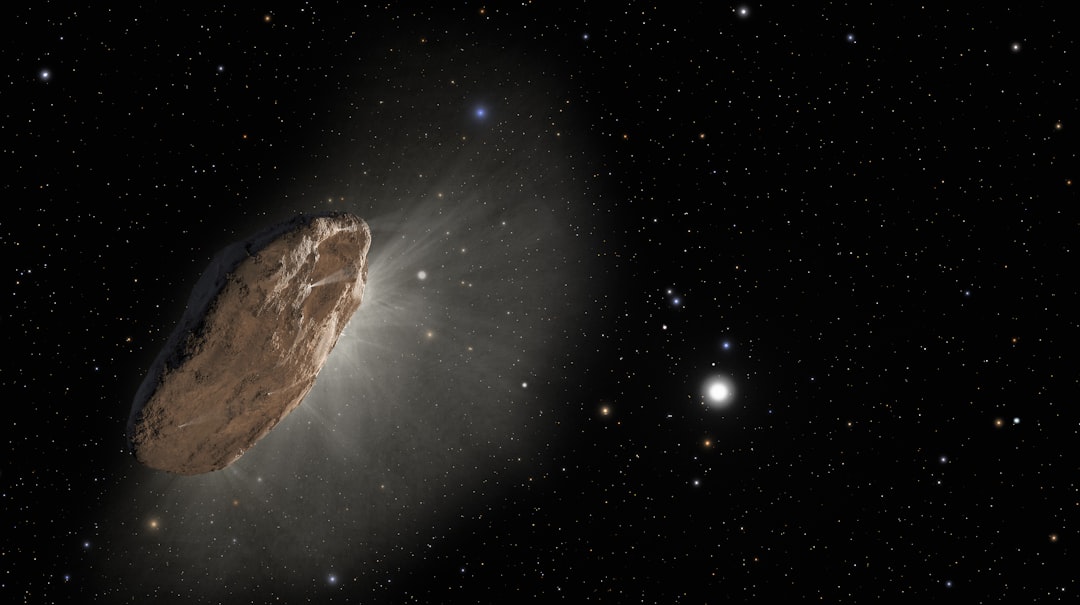
Now, an international team of researchers has turned its collective gaze toward one of the most obscure members of Jupiter's retinue: Kallichore, a tiny, pitch-dark irregular moon whose average diameter measures just 3.8 kilometers (approximately 2.4 miles). For comparison, the smallest of the Galilean moons, Europa, spans roughly 3,122 kilometers (1,940 miles) in diameter — making Kallichore more than 800 times smaller. Their study, recently published in the prestigious journal Nature, combined observations from multiple space- and ground-based observatories to characterize Kallichore's physical properties and orbital dynamics in unprecedented detail, laying critical groundwork for a planned flyby by the European Space Agency's Jupiter Icy Moons Explorer (JUICE) spacecraft in October 2031.
What Makes Kallichore So Unusual?
Kallichore was first discovered in 2000 during a survey conducted at the Mauna Kea Observatory in Hawaii and formally designated as a Jovian moon in 2002. It belongs to the Ananke group, a cluster of small irregular moons that share similar orbital characteristics and are believed to be fragments of a once-larger body disrupted by a catastrophic collision billions of years ago. Its name derives from Greek mythology — Kallichore was one of the daughters of the god Zeus (Jupiter's Greek equivalent), a fitting nomenclature given its parentage by the solar system's largest planet.
What classifies Kallichore as an irregular moon is its highly non-circular, or eccentric, orbit. Unlike the nearly circular, prograde orbits of the Galilean moons, Kallichore travels along a dramatically elongated, retrograde path — meaning it orbits Jupiter in the opposite direction to the planet's rotation. It circles Jupiter at an average distance of approximately 23 million kilometers (14.3 million miles), but its distance fluctuates dramatically, ranging between 17.7 million kilometers (11 million miles) and 30.4 million kilometers (18.9 million miles) from Jupiter. This extreme orbital variability is a hallmark of irregular moons throughout the solar system and is precisely what makes them so difficult — and so rewarding — to study.
Multi-Observatory Observations Reveal a Remarkably Dark World
To characterize Kallichore's physical nature, the research team leveraged a powerful combination of instruments. Primary data was drawn from NASA's Hubble Space Telescope, whose position above Earth's distorting atmosphere enables it to resolve extraordinarily fine details, and from the Gran Telescopio de Canarias (GTC), the world's largest single-aperture optical telescope, located atop the Roque de los Muchachos Observatory on the island of La Palma in the Canary Islands. The multinational, multi-institutional GTC, operated under a partnership between Spain, Mexico, and the University of Florida, boasts a primary mirror spanning 10.4 meters — making it uniquely suited for probing faint, distant objects.
The combined dataset allowed the researchers to derive two foundational measurements. First, they calculated Kallichore's area-equivalent diameter — the diameter the moon would have if its irregular shape were perfectly smoothed into a sphere — arriving at a value of approximately 3.8 kilometers (2.4 miles). This places Kallichore firmly among the solar system's tiniest known moons. Second, and perhaps most strikingly, they measured Kallichore's geometric albedo at just 0.037, or 3.7 percent. Albedo is a dimensionless measure of a surface's reflectivity, scaled from 0 (perfectly black, absorbing all light) to 1 (perfectly white, reflecting all light). To put Kallichore's albedo in context:
- Fresh snow on Earth has an albedo of approximately 0.80–0.90
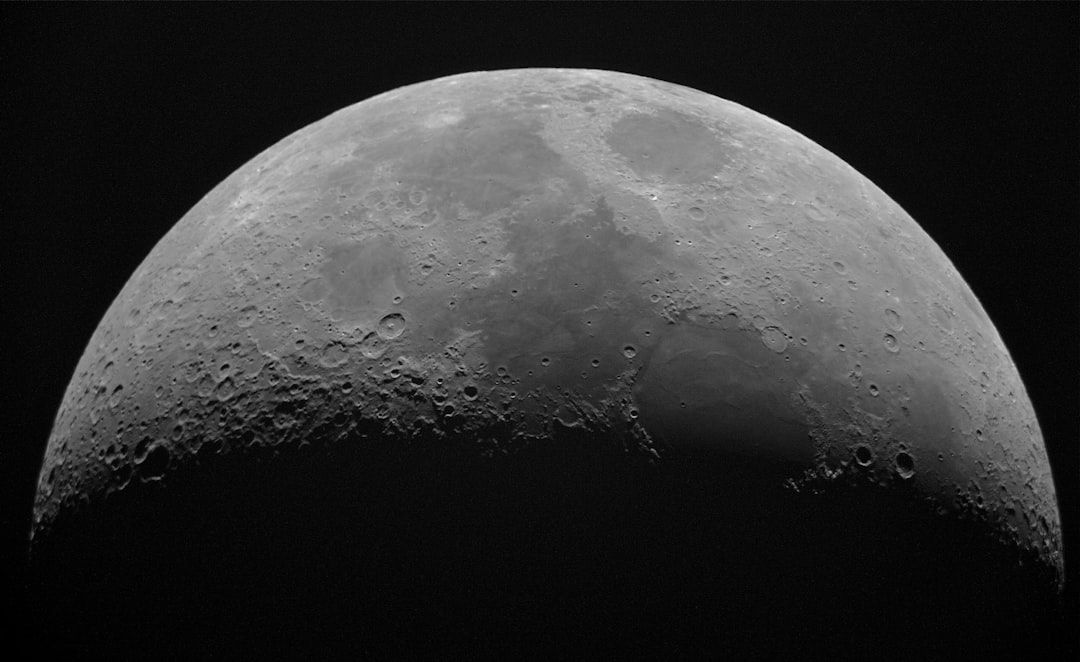
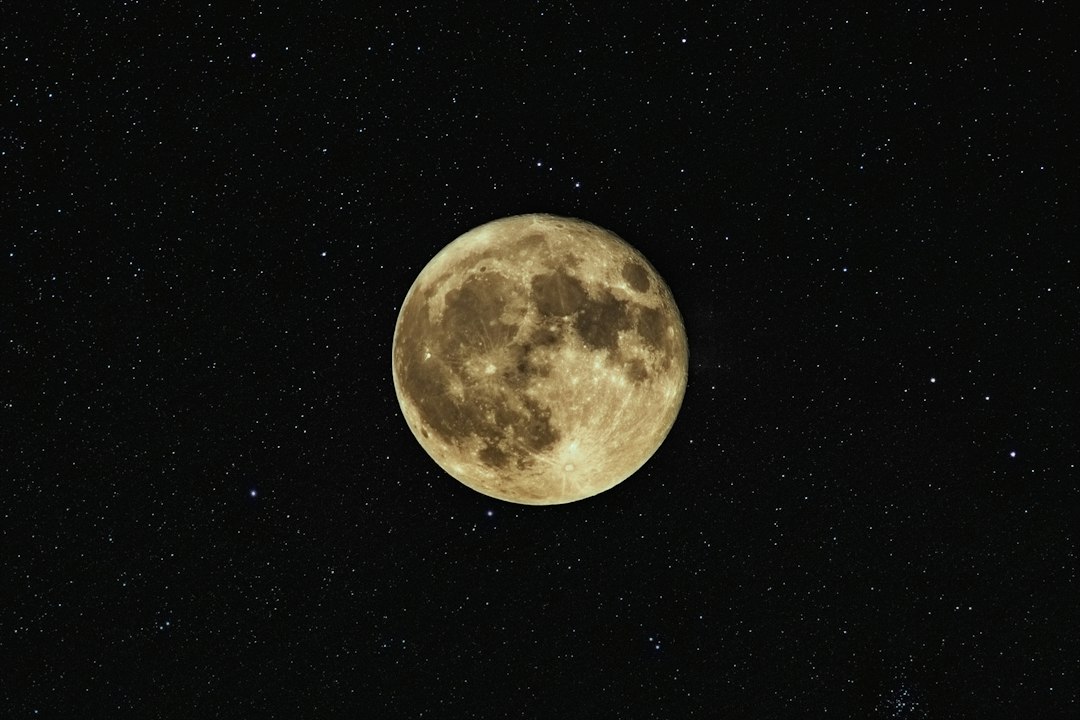
- Earth's Moon averages an albedo of about 0.12
- Charcoal has an albedo of roughly 0.04
- Kallichore, at 0.037, is darker than charcoal, reflecting barely more light than a lump of coal
This extreme darkness is consistent with other known members of the Ananke group and likely reflects a surface composition rich in carbonaceous and silicate materials — primitive, carbon-bearing compounds that date to the earliest epoch of solar system formation. Such compositions make irregular moons scientifically analogous to C-type asteroids and certain trans-Neptunian objects, further cementing their value as pristine relics of the primordial solar nebula.
"Irregular moons like Kallichore represent some of the most ancient, unaltered material in the solar system — effectively time capsules that preserve the chemical and physical conditions of our solar system's birth."
Orbital Refinement: A Critical Step for Mission Planning
Beyond characterizing Kallichore's physical properties, the study's most immediately practical contribution was a dramatic improvement in the precision of the moon's orbital ephemeris — the mathematical description of its position and trajectory over time. Before this study, uncertainty in predicting Kallichore's location at the time of JUICE's planned arrival carried a margin of error of approximately 272 kilometers (169 miles). Given that the moon itself is only 3.8 kilometers across, such uncertainty made a targeted flyby effectively impossible to plan with confidence.
The new measurements achieved through this multi-observatory campaign reduced that uncertainty by approximately 80 percent, narrowing the positional error margin to roughly 54 kilometers (33 miles). Mission planners estimate that JUICE requires a margin of error of no more than 30 kilometers (19 miles) to substantially increase the probability of a successful Kallichore flyby in October 2031. While further refinement will be needed in the years ahead, this study represents a monumental leap toward that goal, demonstrating the power of coordinated, multi-platform observational campaigns in enabling precision deep-space exploration.
Why Irregular Moons Matter: Windows Into the Ancient Solar System
The scientific value of irregular moons extends far beyond their individual characteristics. Of the currently known 456 confirmed moons in our solar system, an estimated 396 — approximately 87 percent — are classified as irregular moons. This extraordinary prevalence makes them one of the most statistically dominant populations of planetary satellites, yet they remain among the least studied. Understanding them in aggregate could fundamentally reshape our models of solar system formation and evolution.
Most planetary scientists believe that irregular moons are captured objects — asteroids, comets, or primordial planetesimals that strayed too close to a giant planet and were gravitationally ensnared, possibly during the chaotic dynamical reshuffling described by the Nice Model of solar system evolution. This model, developed in the early 2000s, proposes that the giant planets underwent significant orbital migration in the solar system's early history, triggering a period of intense bombardment and scattering of small bodies. Irregular moons, in this framework, are the survivors and remnants of that turbulent epoch — frozen witnesses to a violence that shaped the solar system we inhabit today.
Unlike the Galilean moons, which have been profoundly transformed by tidal heating, volcanism, tectonic activity, and interactions with Jupiter's intense magnetic field, irregular moons have remained geologically inert for billions of years. Their surfaces preserve original chemical signatures that have been erased elsewhere, offering scientists what amounts to a direct chemical sample of the materials that built the planets. This makes them invaluable for addressing fundamental questions about the distribution of volatiles in the early solar system, the origins of water on Earth, and the delivery of organic molecules to the inner planets.
JUICE: Europe's Ambitious Journey to the Jovian System
The Jupiter Icy Moons Explorer (JUICE) launched aboard an Ariane 5 rocket on April 14, 2023, from the Guiana Space Centre in Kourou, French Guiana. It is the first large-class mission in ESA's Cosmic Vision 2015–2025 science program and represents a landmark achievement in European planetary science. Following a complex, gravity-assist trajectory that includes flybys of Earth, Venus, and Earth again, JUICE is scheduled to arrive in the Jovian system in July 2031 — beginning what promises to be one of the most scientifically rich planetary exploration campaigns in history.
JUICE carries a sophisticated suite of ten scientific instruments, including cameras, spectrometers, a radar sounder capable of penetrating icy surfaces, a magnetometer, and particle detectors. Its primary scientific objectives are centered on the three ocean-bearing Galilean moons — Europa, Ganymede, and Callisto — with a particular focus on characterizing their subsurface oceans and assessing the habitability conditions within them. The mission will conduct numerous close flybys of Europa and Callisto before entering orbit around Ganymede in December 2034, making it the first spacecraft in history to orbit a moon other than Earth's own Moon. You can track JUICE's ongoing journey via the ESA JUICE mission portal.
The planned Kallichore flyby in October 2031 represents an exciting secondary objective for the mission — a rare opportunity to conduct a close-up reconnaissance of one of Jupiter's most enigmatic irregular moons. Even a single high-speed flyby, lasting perhaps only minutes at closest approach, could yield transformative data about Kallichore's surface composition, morphology, and thermal properties, far surpassing anything achievable from Earth-based observatories.
A Broader Scientific Legacy
The Kallichore study is emblematic of a broader renaissance in the study of small solar system bodies, driven by increasingly powerful observational tools and the growing ambitions of interplanetary missions. Missions like NASA's Dawn spacecraft, which visited the asteroid belt objects Vesta and Ceres, and the OSIRIS-REx mission, which returned pristine samples from the near-Earth asteroid Bennu, have demonstrated the extraordinary scientific returns possible from visiting primitive, ancient small bodies. JUICE's potential flyby of Kallichore continues in this tradition, extending humanity's reach to ever more remote and primordial corners of our solar system.
As JUICE continues its years-long voyage through interplanetary space, the scientific community will continue to refine our understanding of Kallichore and the hundreds of other irregular moons that populate the outer solar system. Each new observation, each refined orbital calculation, and each planned spacecraft encounter brings us incrementally closer to answering one of planetary science's most profound questions: How did our solar system come to be, and what does its ancient history tell us about the conditions that gave rise to life on Earth?
Key Facts at a Glance
- Moon: Kallichore — member of Jupiter's Ananke orbital group
- Diameter: ~3.8 km (2.4 miles) area-equivalent diameter
- Geometric Albedo: 0.037 (3.7%) — darker than charcoal
- Orbital Distance from Jupiter: 17.7–30.4 million km (11–18.9 million miles)
- Orbital Type: Retrograde, highly eccentric irregular orbit
- Positional Uncertainty (pre-study): ~272 km (169 miles)
- Positional Uncertainty (post-study): ~54 km (33 miles) — an ~80% improvement
- JUICE Launch Date: April 14, 2023
- JUICE Arrival at Jupiter: July 2031
- Planned Kallichore Flyby: October 2031
- JUICE Ganymede Orbit Insertion: December 2034
For further reading on the JUICE mission's science goals and instrument payload, visit the official ESA JUICE Science Overview. As this mission unfolds over the coming decade, it promises not only to deepen our understanding of Jupiter's complex moon system, but to rewrite chapters of the solar system's origin story that have remained sealed for over four billion years.