In the vast cosmic theater, some of the universe's most spectacular performances occur when two incredibly dense stellar remnants collide in a cataclysmic embrace. These neutron star mergers don't just create brilliant flashes of energy—they forge the very elements that make up our world, including the precious metals we treasure. Recent observations of GRB 230906A, a gamma-ray burst detected in 2023, have revealed a fascinating story of cosmic violence, elemental creation, and the intricate dance of galaxies locked in gravitational combat.
The discovery, detailed in research published in The Astrophysical Journal Letters, represents a convergence of cutting-edge astronomical observation. When NASA's Fermi Gamma-ray Space Telescope detected this powerful burst of high-energy radiation, it triggered a cascade of follow-up observations involving some of humanity's most sophisticated astronomical instruments. What they found was far more complex than a simple stellar explosion—it was a cosmic drama playing out within a group of interacting galaxies, where destruction and creation walk hand in hand.
The Extraordinary Power of Gamma-Ray Bursts
Gamma-ray bursts represent the most luminous electromagnetic events known to occur in the universe, releasing more energy in a few seconds than our Sun will emit over its entire 10-billion-year lifetime. These cosmic beacons can be detected across billions of light-years of space, making them visible from the earliest epochs of cosmic history. Scientists classify these bursts into two primary categories: long-duration GRBs, which typically last more than two seconds and originate from the collapse of massive stars, and short-duration GRBs, which flash for less than two seconds and result from the merger of compact objects like neutron stars.
The burst designated GRB 230906A falls into this second category, with a duration of approximately 0.9 seconds. This brief but intense flash of gamma radiation traveled across 8.5 billion light-years of expanding space before reaching Earth's vicinity, where an array of orbiting observatories stood ready to capture and analyze every photon. Lead researcher Simone Dichiara from Penn State University and his team employed a multi-wavelength observational strategy, combining data from space-based and ground-based telescopes to piece together the complete picture of this extraordinary event.
Pinpointing the Source: A Multi-Telescope Investigation
Localizing the precise origin of a gamma-ray burst presents significant challenges. While Fermi can detect these energetic flashes, its instruments lack the angular resolution needed to pinpoint their exact location on the sky. This is where the Chandra X-ray Observatory becomes indispensable. With its exceptional spatial resolution, Chandra can identify the fading X-ray afterglow of a GRB with arc-second precision, narrowing down the search area dramatically.
Following Chandra's X-ray localization, the Hubble Space Telescope turned its powerful optical instruments toward the region, revealing a faint galaxy at the position of the X-ray source. This galaxy appeared unusual—its compact size, faint luminosity, and distinctive color initially suggested it might be an extremely distant object, potentially at a redshift greater than 3, placing it in the early universe when galaxies were still young and actively forming stars.
However, the investigation took a fascinating turn when researchers employed the Very Large Telescope's Multi-Unit Spectroscopic Explorer (MUSE) instrument in Chile. This sophisticated spectrograph revealed that the faint galaxy wasn't an isolated object at all, but rather a member of an entire group of galaxies engaged in a complex gravitational ballet. Even more intriguingly, the galaxy hosting the GRB resided within an extended tidal stream stretching nearly 600,000 light-years—a cosmic river of gas, dust, and stars torn from the group's central member by gravitational interactions.
"This could be an indication that tidal interaction between galaxies can trigger star formation and two neutron stars that evolve from the new stars can end up merging into each other, making these big explosions and energetic emissions that we observe," explained lead author Simone Dichiara.
The Dynamics of Galactic Interactions
When galaxies approach each other, their mutual gravitational attraction doesn't simply pull them together—it creates complex tidal forces that stretch and distort both systems. These interactions strip material from the galaxies, creating spectacular tidal tails and streams that can extend for hundreds of thousands of light-years. Within these streams, gas clouds collide and compress, triggering bursts of intense star formation. This process creates ideal conditions for the birth of massive stars, which live fast and die young, potentially leaving behind the neutron stars that would eventually merge to produce events like GRB 230906A.
The researchers propose a compelling timeline: approximately 700 million years ago, within the compressed gas of this tidal stream, a binary star system formed. These stars were massive enough to become supergiant stars, burning through their nuclear fuel at prodigious rates. When each star exhausted its fuel, it exploded as a supernova, leaving behind an ultra-dense neutron star—a stellar corpse containing more mass than our Sun compressed into a sphere just 20 kilometers across.
The Forge of Heavy Elements: Understanding the R-Process
The merger of two neutron stars creates conditions so extreme that they cannot be replicated anywhere else in the universe except during the first moments of the Big Bang. The resulting kilonova explosion releases tremendous energy and creates a unique environment where atomic nuclei can rapidly capture neutrons before they have time to decay. This process, known as the r-process (rapid neutron capture), is responsible for creating approximately half of all elements heavier than iron in the periodic table.
Elements like gold, platinum, uranium, and many others that we find on Earth were forged in these cosmic crucibles. When neutron stars merge, they eject material at velocities approaching the speed of light, seeding the surrounding space with these newly created heavy elements. Over billions of years, this enriched material becomes incorporated into new generations of stars, planets, and eventually, living organisms.
As co-author Jane Charlton eloquently noted, the connection between these distant cosmic events and our everyday existence is profound and humbling:
"The gold that we have on Earth was produced in an explosive event of this nature. The heavy elements in our body, like iron for example, come from about 10,000 stars that were in our galaxy and died. It took billions of years, but that iron persisted on Earth and, as our bodies formed and evolved, they used that material."
Implications for Galactic Chemical Evolution
This discovery provides crucial insights into how galaxies become enriched with heavy elements over cosmic time. The finding that a neutron star merger occurred within a tidal stream created by galactic interactions suggests a direct link between galaxy mergers and the production of heavy elements. This connection could explain observational evidence showing enhanced abundances of heavy elements in the halos of interacting galaxies.
The research has important implications for our understanding of galactic chemical evolution. If tidal interactions between galaxies trigger bursts of star formation that lead to the formation of massive binary stars, and if these systems preferentially produce neutron star mergers, then galaxy interactions may play a more significant role in heavy element production than previously thought. This could help explain the distribution of elements like gold and platinum throughout the universe and inform models of how galaxies evolve chemically over billions of years.
The Future of Our Own Galaxy
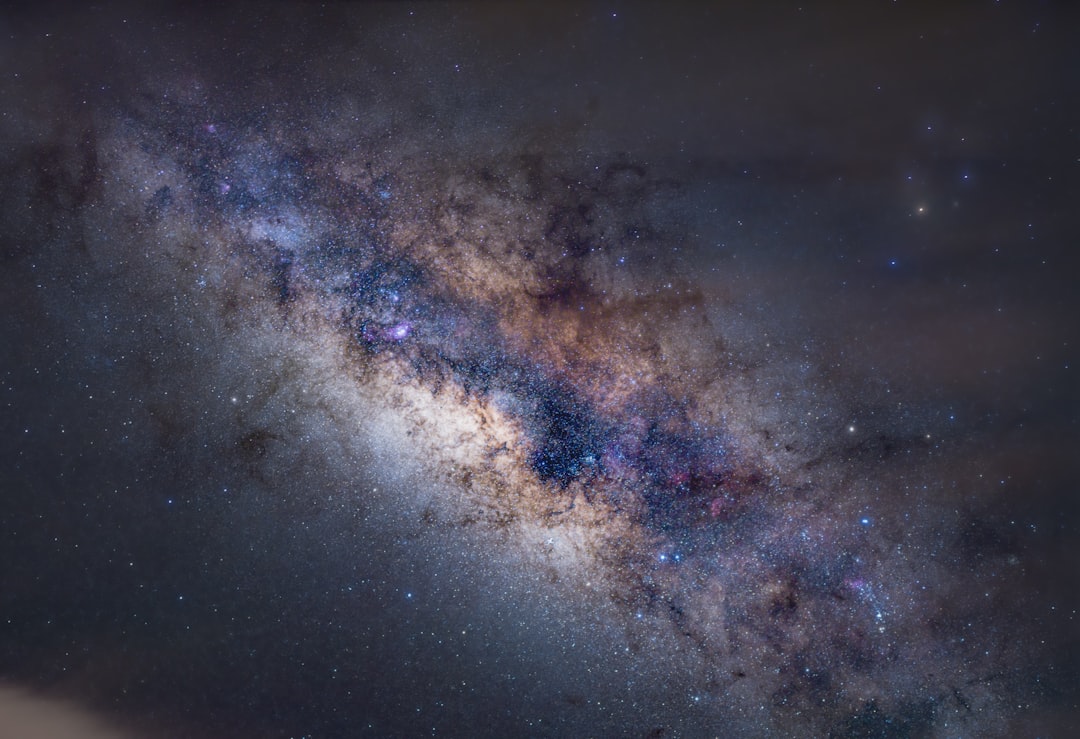
This research takes on additional significance when we consider the future of our own Milky Way galaxy. Astronomical observations have confirmed that our galaxy is on a collision course with the nearby Andromeda galaxy, with the merger expected to begin in approximately 4 to 5 billion years. When this cosmic collision occurs, similar tidal streams will form, potentially triggering new waves of star formation and, eventually, neutron star mergers that will enrich our local cosmic neighborhood with fresh supplies of heavy elements.
As Charlton observed, "Our own Milky Way galaxy has a neighbor, the Andromeda galaxy, and four or five billion years from now, it will merge with the Milky Way galaxy. This very thing could be happening, and tidal tails will form, kicking up heavy elements and enriching the universe."
Advanced Observational Techniques and Future Prospects
The successful identification and characterization of GRB 230906A demonstrates the power of multi-messenger astronomy—the practice of observing cosmic events across multiple wavelengths and using different detection methods. This approach combines data from gamma-ray detectors, X-ray telescopes, optical observatories, and spectroscopic instruments to build a comprehensive picture of complex astrophysical phenomena.
The research team's methodology included several key steps:
- Initial Detection: Fermi's Gamma-ray Burst Monitor detected the high-energy gamma-ray emission and provided a preliminary localization
- X-ray Refinement: Chandra's superior angular resolution pinpointed the exact location of the burst's X-ray afterglow
- Optical Identification: Hubble's deep imaging revealed the faint host galaxy and surrounding environment
- Spectroscopic Analysis: VLT/MUSE observations determined the redshift and revealed the complex galaxy group structure
- Environmental Characterization: Detailed analysis of the spectroscopic data revealed the tidal stream and galaxy interactions
Future observations with next-generation facilities, particularly infrared space telescopes like the James Webb Space Telescope, could provide even more detailed information about similar events. Webb's exceptional sensitivity in the infrared could detect the faint kilonova emission associated with neutron star mergers, providing crucial information about the elements being produced and the physical conditions during these extreme events.
Searching for Patterns: GRBs in Merging Galaxies
The discovery of GRB 230906A in this peculiar environment raises an intriguing question: should astronomers specifically target merging galaxies when searching for short gamma-ray bursts? While galaxy mergers aren't common events in the nearby universe, they become increasingly frequent at earlier cosmic epochs. The enhanced star formation triggered by these mergers could indeed produce more massive binary stars that eventually become neutron star systems.
However, the researchers note that identifying galaxy groups in GRB fields "is not a common occurrence," suggesting that while this connection exists, it may not be the dominant channel for producing neutron star mergers. The probability of chance alignment between the GRB and the galaxy group was calculated to be small, lending confidence to the conclusion that these phenomena are physically associated.
This research opens new avenues for understanding the relationship between galactic dynamics and the production of the universe's heaviest elements. As observational capabilities continue to improve, astronomers will be able to study more of these events in detail, building a more complete picture of how cosmic violence drives chemical enrichment across the universe.
The Cosmic Connection: From Stellar Death to Earthly Treasures
Perhaps the most profound aspect of this research is the direct connection it reveals between the most violent events in the universe and the material world around us. Every gold ring, every iron atom in our blood, every heavy element in Earth's crust—all were forged in stellar furnaces and scattered across space by cosmic explosions. The neutron star merger that produced GRB 230906A, occurring 8.5 billion light-years away, is creating the same elements that will eventually be incorporated into future generations of stars, planets, and potentially, life itself.
This research, supported by observations from the European Southern Observatory and other international facilities, represents a triumph of modern astronomy. It demonstrates how the coordinated efforts of ground-based and space-based observatories can unravel the complex stories written in fleeting flashes of cosmic light, revealing the intricate connections between galactic evolution, stellar death, and the chemical enrichment of the universe.
As we continue to detect and study these extraordinary events, each observation adds another piece to the grand puzzle of cosmic evolution, helping us understand not just the universe's past and present, but also our own origins in the violent, creative crucible of stellar death and rebirth.