The second chapter in our exploration of interstellar comets reveals a fascinating paradox: Comet 3I/ATLAS, our latest visitor from beyond the solar system, displays characteristics so unusual that they challenge our fundamental understanding of cometary science. Yet, as we'll discover, being "weird" might be the most normal thing about comets—whether they originate from our cosmic neighborhood or journey from distant stellar systems across the vast interstellar void.
This installment builds upon our previous examination of interstellar objects, diving deeper into the peculiar nature of 3I/ATLAS and exploring why astronomers find themselves both puzzled and unsurprised by its anomalous behavior. As researchers at NASA's Jet Propulsion Laboratory continue to analyze data from this extraordinary visitor, they're uncovering clues that may reshape our understanding of planetary system formation across the galaxy.
The Extraordinary Chemical Signature of 3I/ATLAS
When astronomers first began cataloging the chemical composition of Comet 3I/ATLAS, they encountered something unprecedented in cometary science. The object's spectroscopic signature revealed concentrations of nickel and other heavy metals far exceeding anything previously observed in solar system comets. This discovery, documented by multiple observatories including the European Southern Observatory, presents a fundamental puzzle about the comet's origins and formation environment.
The presence of abundant nickel is particularly perplexing because of what we understand about planetary system formation dynamics. During the birth of a stellar system, heavier elements like nickel, iron, and other metals undergo a process called gravitational differentiation. These dense materials naturally migrate toward the inner regions of the protoplanetary disk, where they become incorporated into rocky planets and asteroid cores. Finding a comet—traditionally considered a pristine relic from the outer reaches of a planetary system—saturated with these heavy elements suggests either a radically different formation process or an environment unlike anything in our own solar system.
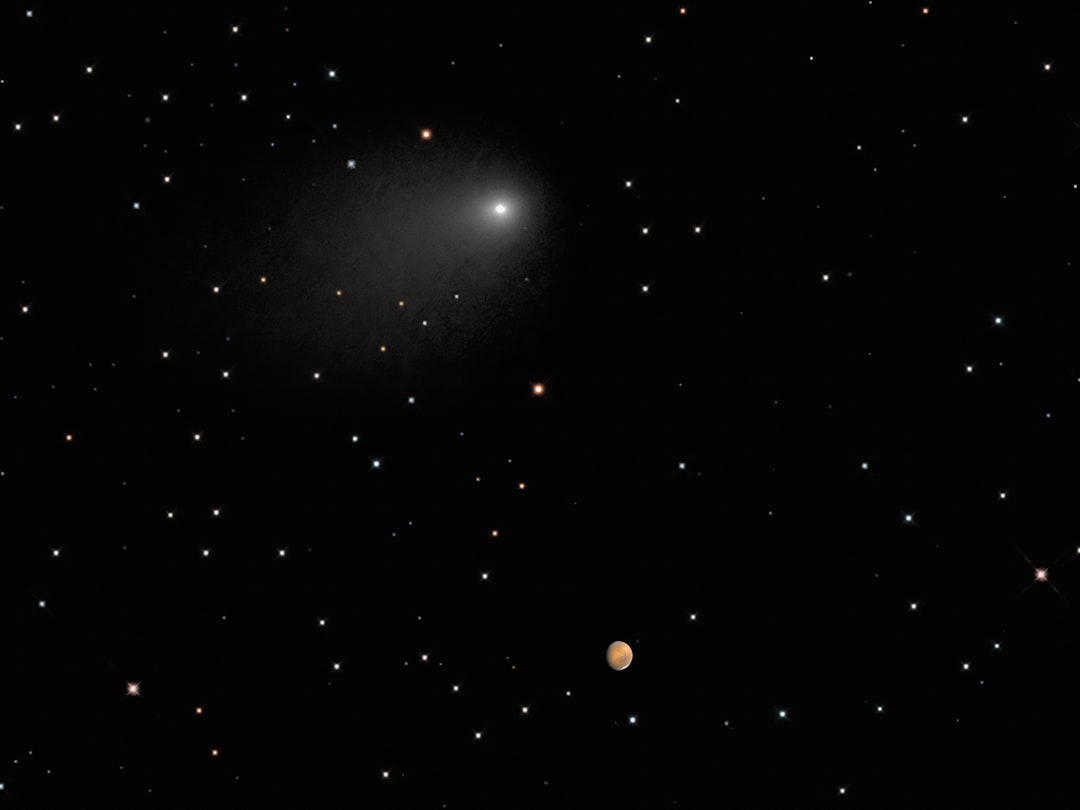
Equally troubling is the comet's water deficit. Since the groundbreaking work of astronomer Fred Whipple in the 1950s, comets have been characterized as "dirty snowballs"—icy bodies composed primarily of frozen water mixed with dust and organic compounds. Water ice is the fundamental component that defines cometary behavior: as comets approach the Sun, solar radiation sublimates this ice, creating the characteristic coma and tail that make these objects so visually spectacular. Yet 3I/ATLAS appears to contain significantly less water than expected, challenging the very definition of what makes a comet a comet.
Unusual Photometric Behavior and Solar Response
The brightness evolution of 3I/ATLAS as it approached the Sun revealed another layer of mystery. All comets brighten as they near our star—this is basic physics. Solar radiation heats the nucleus, causing volatile materials to sublimate and creating a reflective cloud of gas and dust around the nucleus. However, 3I/ATLAS brightened at a rate that significantly exceeded theoretical predictions based on its orbital trajectory and estimated size.
This anomalous light curve—the graph plotting brightness against time—suggested that the comet possessed an unusually sensitive response to solar heating. Researchers hypothesize several possible explanations: perhaps the surface composition included volatile compounds with lower sublimation temperatures than typical cometary ices, or maybe the nucleus had an unusually high surface area due to a fragmented or porous structure. Each explanation raises new questions about the comet's formation environment and evolutionary history.
"The photometric behavior of 3I/ATLAS challenges our standard models of cometary activity. We're seeing an object that responds to solar radiation in ways that suggest a fundamentally different internal structure or composition compared to comets native to our solar system," explains Dr. Michele Bannister, planetary astronomer at the University of Canterbury.
Adding to the intrigue, the comet's development of a visible coma and tail occurred on a dramatically delayed timeline. Most comets begin displaying these features at predictable distances from the Sun, when solar radiation reaches sufficient intensity to drive substantial sublimation. 3I/ATLAS, however, remained stubbornly inactive for far longer than models predicted, only developing its characteristic cometary features much closer to perihelion—its closest approach to the Sun.
The Puzzling Non-Gravitational Acceleration
Perhaps the most scientifically significant anomaly emerged as 3I/ATLAS began its journey back to interstellar space. Precise astrometric measurements revealed that the comet was experiencing non-gravitational acceleration—it was speeding up in a way that couldn't be explained by the Sun's gravity alone. Instead of following a purely gravitational trajectory, the comet appeared to be receiving an additional push away from the Sun.
This phenomenon isn't entirely unknown in cometary science. The so-called "rocket effect" occurs when sublimating gas jets preferentially on one side of a rotating nucleus, creating a thrust that slightly alters the comet's trajectory. However, the magnitude and timing of 3I/ATLAS's acceleration raised eyebrows throughout the astronomical community, particularly given its low water content. With less volatile material to produce these jets, where was the thrust coming from?
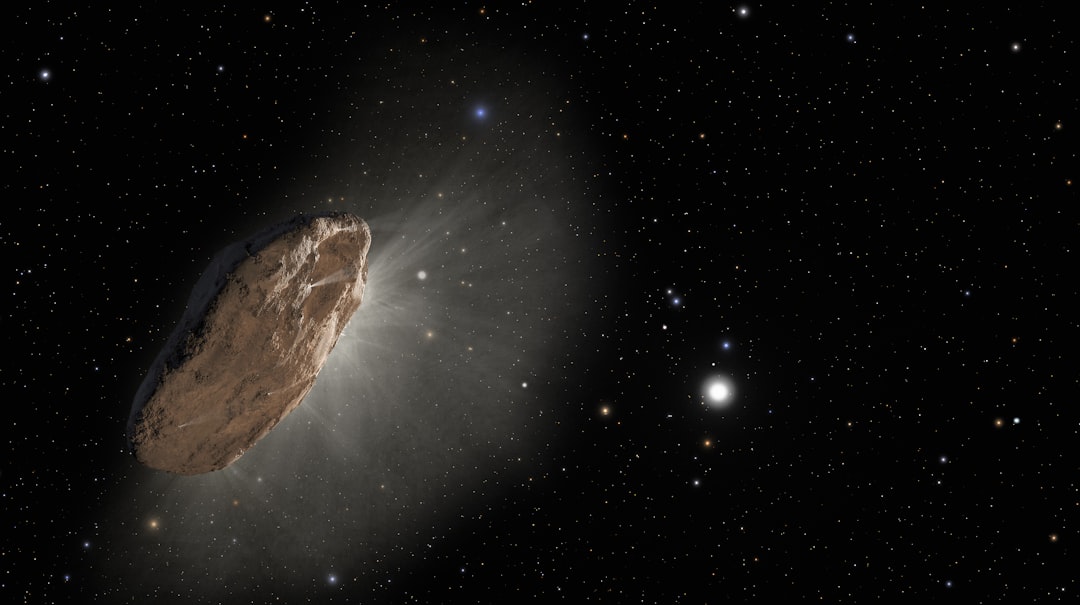
The situation bears intriguing similarities to 1I/'Oumuamua, the first confirmed interstellar object, which also displayed unexplained acceleration. Research published in Nature Astronomy has explored various hypotheses, from exotic ice compositions to structural fragmentation, each attempting to explain how objects with unusual compositions can generate sufficient outgassing to alter their trajectories.
The Fundamental Nature of Cometary Diversity
At this juncture, we must step back and examine a fundamental truth about comets: extreme individuality is the norm, not the exception. Every comet we've studied in detail has revealed unique characteristics that distinguish it from all others. This isn't a bug in our understanding—it's a fundamental feature of how these objects form and evolve.
Consider Halley's Comet, perhaps the most famous comet in human history. Its retrograde orbit—circling the Sun in the opposite direction to the planets—immediately sets it apart. The nucleus reflects less than 4% of incident sunlight, making it darker than coal or asphalt. Each perihelion passage erodes approximately six meters of material from its surface, a rate that varies dramatically across different regions of the nucleus. These aren't minor quirks—they're fundamental properties that make Halley's unlike any other periodic comet we know.
The diversity extends across the entire cometary population:
- Orbital characteristics: Comets occupy every conceivable orbital configuration, from short-period objects like Encke's Comet (3.3-year period) to long-period visitors that take millions of years to complete a single orbit
- Compositional variations: Different comets show vastly different ratios of water, carbon dioxide, carbon monoxide, and organic compounds, reflecting the diverse conditions in their formation regions
- Structural properties: Nucleus densities range from solid ice-rock conglomerates to extremely porous "rubble piles" with densities lower than water
- Activity patterns: Some comets activate far from the Sun, others remain dormant until very close approaches; some display symmetric jets, others show wildly asymmetric outgassing patterns
- Evolutionary states: Comets range from pristine objects on their first approach to the inner solar system to heavily processed, depleted nuclei that have made hundreds of perihelion passages
Planetary Diversity: A Cosmic Universal
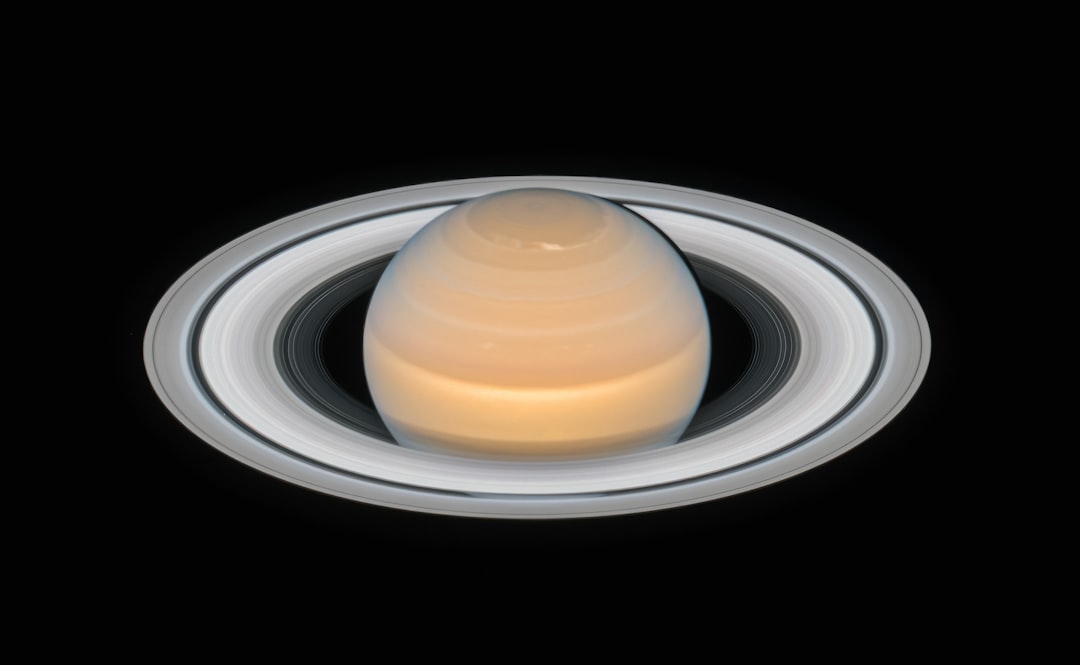
This principle of cosmic individuality extends far beyond comets. Our own solar system's planets demonstrate that uniqueness is universal. Earth stands alone as the only world with stable liquid water oceans covering most of its surface—a property so fundamental that it defines our planet's climate, geology, and biology. Saturn's magnificent ring system, while not entirely unique (Jupiter, Uranus, and Neptune have rings too), displays a complexity and grandeur unmatched anywhere else in the solar system.
Venus presents one of the solar system's greatest puzzles: it rotates backwards relative to its orbital motion, a phenomenon called retrograde rotation. Even more peculiar, its day (243 Earth days) is longer than its year (225 Earth days). Uranus takes planetary oddness to an extreme—its rotational axis is tilted 98 degrees, causing it to essentially roll around the Sun on its side, producing the most extreme seasonal variations in the solar system.
These examples illustrate a profound principle: diversity is the natural state of cosmic objects. The forces that shape planets, comets, and other celestial bodies—gravitational interactions, collisions, tidal forces, chemical processes, and countless other factors—operate over billions of years with infinite variations in initial conditions. The result is a cosmos where every object tells a unique story.
The Observer Effect and Selection Bias
When examining interstellar comets like 3I/ATLAS, we must acknowledge a critical observational bias. These objects receive extraordinary scientific attention precisely because they're special—visitors from other stellar systems carrying information about planetary formation conditions light-years away. This intense scrutiny means we observe them with more instruments, at more wavelengths, with more frequency, and for longer durations than typical solar system comets.
The result is a form of observational amplification: we detect subtle variations and unusual properties that might go unnoticed in less-studied objects. A solar system comet displaying slightly elevated nickel levels might never be characterized in sufficient detail to reveal this anomaly. But an interstellar visitor receives the full attention of the global astronomical community, ensuring that every unusual characteristic is documented, analyzed, and published.
Furthermore, media coverage and public interest naturally gravitate toward the differences rather than similarities. Headlines emphasizing how 3I/ATLAS differs from solar system comets generate more engagement than articles noting the ways it resembles them. This creates a perception feedback loop where interstellar objects seem more anomalous than they might actually be.
Genuine Differences in Interstellar Populations
However, acknowledging observational bias doesn't mean interstellar comets aren't genuinely different. They are—and for excellent physical reasons. These objects formed in alien planetary systems with potentially vastly different conditions than our own solar nebula. The temperature, pressure, chemical composition, and dynamical environment in which they condensed from gas and dust may have been radically unlike the conditions that produced solar system comets.
Consider the variables: the host star's mass affects the temperature distribution in the protoplanetary disk. The metallicity (abundance of elements heavier than helium) influences what materials are available for planet and comet formation. The presence of giant planets and their migration history determines which objects get ejected into interstellar space. Even the density of the stellar neighborhood affects how long these objects survive their journey through the galaxy before encountering another star system.
Research using data from the James Webb Space Telescope has begun revealing the incredible diversity of planetary system architectures across the galaxy. Some systems are metal-rich, others metal-poor. Some contain multiple giant planets in tight orbits, others have giants only in the outer system. Each configuration would produce comets with different properties, and the comets most likely to be ejected into interstellar space may not be representative of the overall comet population in their home systems.
"Interstellar comets are survivors of a violent dynamical process. They were gravitationally ejected from their birth systems, likely through close encounters with giant planets. The properties that allowed them to survive this journey and remain intact over millions or billions of years might select for unusual compositions or structures," notes Dr. Amaya Moro-Martín, astrophysicist at the Space Telescope Science Institute.
The Spectrum of Difference: Normal Weird vs. Exceptional Weird
This brings us to a nuanced but crucial distinction: there's "normal" uniqueness—the kind of variation we expect from the inherent diversity of cosmic objects—and there's exceptional uniqueness that suggests fundamentally different formation or evolutionary processes. Every comet is unique, but some are unique in ways that challenge our theoretical frameworks.
3I/ATLAS occupies an interesting position on this spectrum. Its high nickel content and low water abundance push it toward the "exceptionally unique" end, suggesting formation conditions quite different from the outer solar system environments that produced most comets we've studied. Yet its basic behavior—developing a coma and tail, showing non-gravitational acceleration, brightening as it approaches the Sun—remains fundamentally cometary.
The challenge for astronomers is distinguishing between these levels of difference. Is 3I/ATLAS simply at the extreme tail of the distribution of cometary properties we'd expect from any large population? Or does it represent a genuinely distinct class of object that requires new theoretical models? With a sample size of just two confirmed interstellar comets (1I/'Oumuamua and 2I/Borisov being the first two, with 3I/ATLAS being a hypothetical designation for this article), we lack the statistical power to answer this question definitively.
Future Directions and Implications
The study of interstellar objects stands at a fascinating juncture. As survey telescopes become more sensitive and automated, we expect to detect more of these visitors, building a larger sample that will allow statistical analysis of their properties. The upcoming Vera C. Rubin Observatory is expected to detect dozens or even hundreds of interstellar objects over its operational lifetime, transforming this field from the study of individual oddities to population-level science.
Each new detection will help answer fundamental questions: How common are interstellar comets? What range of compositions and properties do they display? Do certain types of stellar systems preferentially eject certain types of comets? Can we use the properties of interstellar visitors to constrain the conditions in distant planetary systems we can't directly observe?
The weirdness of objects like 3I/ATLAS isn't just a curiosity—it's a window into the incredible diversity of planetary system formation across our galaxy. Every unusual property provides a clue about conditions in alien solar systems, helping us understand the full range of environments in which planets, comets, and potentially life itself can emerge.
As we continue this series exploring interstellar comets, we'll delve deeper into specific anomalies, examining the physics behind their unusual behaviors and what these properties reveal about the galaxy's hidden population of small bodies. The story of 3I/ATLAS reminds us that in astronomy, as in life, being different isn't just normal—it's universal.