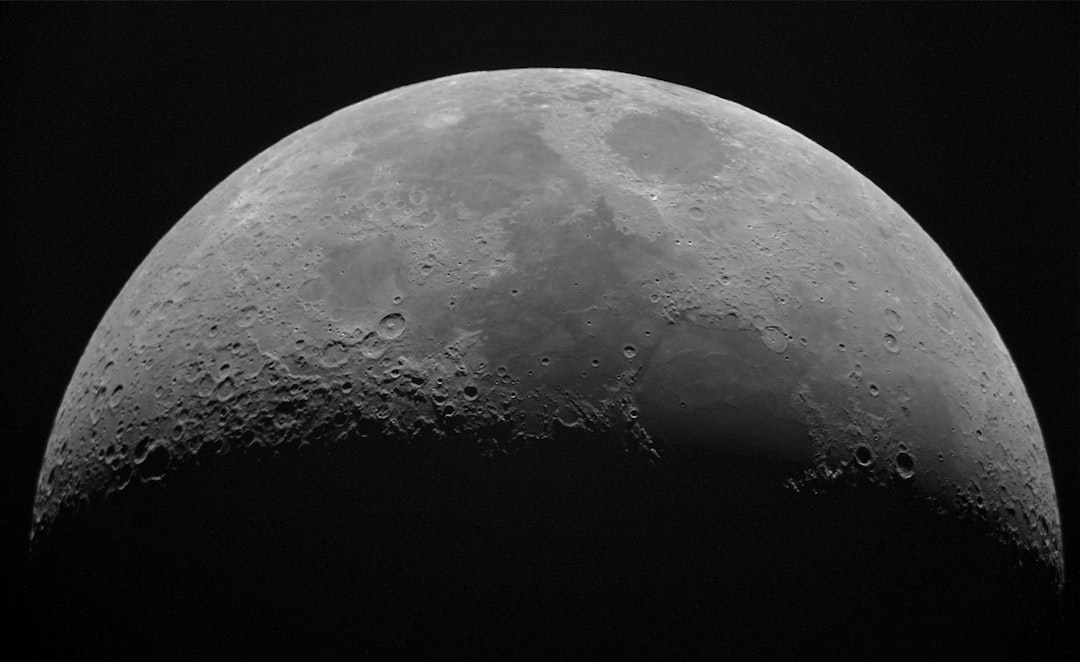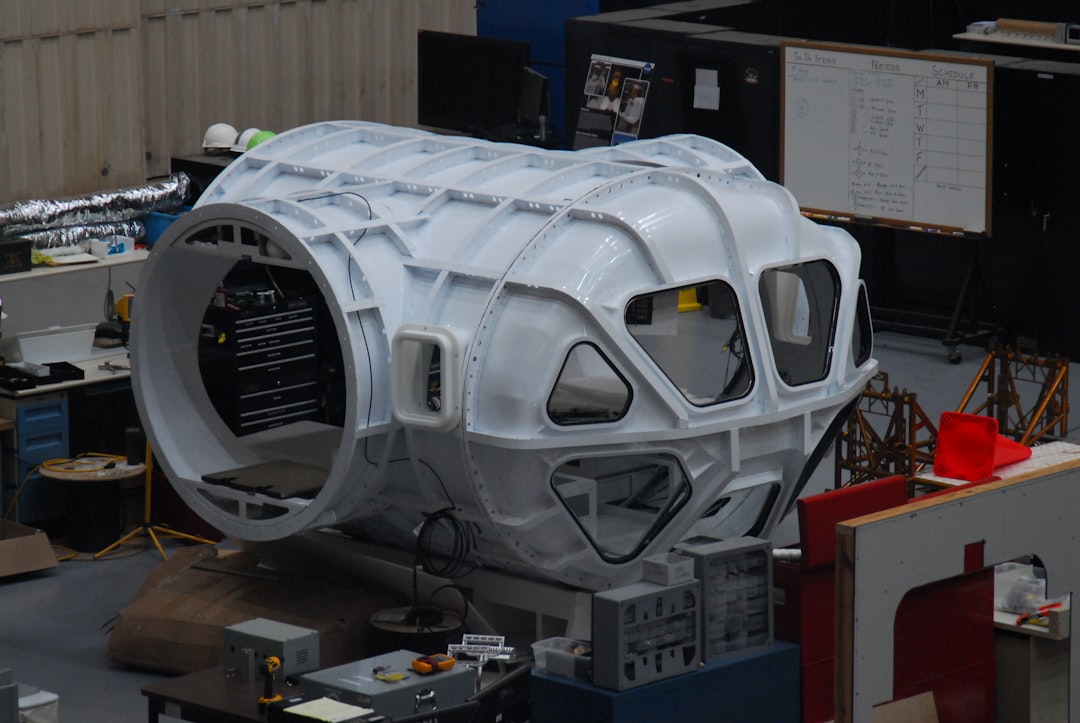
In the not-so-distant future of lunar exploration, astronauts stationed at humanity's first permanent lunar outpost will face unprecedented challenges from the harsh space environment. Among the most critical threats are solar storms and cosmic radiation—invisible yet deadly forces that can disable electronics, damage equipment, and endanger human life. Now, groundbreaking research from the Korea Institute of Science and Technology (KIST) has unveiled a revolutionary solution: an ultra-thin, flexible composite material that can be 3D-printed on demand and provides exceptional protection against both electromagnetic interference and neutron radiation.
Published in the prestigious journal Advanced Materials, this innovative nanotube-based shielding technology represents a paradigm shift in how we protect sensitive equipment and human explorers in extreme environments. Unlike traditional rigid shielding materials that add significant weight and bulk to spacecraft, this new composite is as thin as adhesive tape yet demonstrates remarkable protective capabilities—blocking an astounding 99.999% of electromagnetic waves while absorbing approximately 72% of neutron radiation. The implications extend far beyond space exploration, promising applications in defense systems, medical equipment, and terrestrial electronics protection.
The Critical Challenge of Space Radiation Protection
Space presents one of the most hostile environments imaginable for both humans and technology. Beyond Earth's protective magnetosphere and atmosphere, spacecraft and astronauts face a relentless bombardment of high-energy particles and electromagnetic radiation. Solar particle events—sudden eruptions of charged particles from the Sun—can deliver radiation doses equivalent to multiple chest X-rays in just hours. Meanwhile, galactic cosmic rays, originating from supernova explosions across the universe, provide a constant background of penetrating radiation that can damage DNA, degrade electronics, and compromise mission success.
Traditional shielding approaches have relied on heavy materials like aluminum, lead, or polyethylene—adding substantial mass to spacecraft and limiting mission capabilities. According to NASA's Human Research Program, radiation protection remains one of the top five risks for deep space exploration. The challenge becomes even more acute for long-duration missions to Mars or permanent lunar bases, where cumulative radiation exposure could exceed safe limits without adequate protection.
The KIST research team recognized that future space exploration demands a fundamentally different approach—one that combines lightweight design, flexibility, and multi-spectrum protection in a single material that can be manufactured in space using additive manufacturing techniques.
Revolutionary Dual-Protection Nanotube Architecture
The breakthrough achieved by Dr. Joo Young-ho and his colleagues at KIST's Extreme Environment Shielding Materials Research Center lies in their innovative combination of two distinct types of nanomaterials, each optimized for different protective functions. The composite integrates carbon nanotubes for electromagnetic wave reflection with boron nitride nanotubes for neutron radiation absorption—creating a synergistic protective barrier that addresses multiple threat vectors simultaneously.
Carbon nanotubes, cylindrical molecules of pure carbon just nanometers in diameter, possess extraordinary electrical conductivity and mechanical strength. When arranged in specific orientations, these nanotubes create a highly effective electromagnetic shield by reflecting incoming radio frequency and microwave radiation. The research team developed a proprietary alignment technique that maximizes this reflective capability while maintaining the material's flexibility.
Boron nitride nanotubes, structural cousins of carbon nanotubes, excel at neutron absorption due to boron-10's high neutron capture cross-section. Neutrons, being electrically neutral, pass through most materials easily, making them particularly challenging to shield against. The KIST team's integration of boron nitride nanotubes addresses this critical gap, providing protection against both the electromagnetic and particle radiation components of the space environment.
"This material represents a completely new concept in shielding technology—it is as thin as tape and as flexible as rubber yet simultaneously blocks both electromagnetic waves and radiation," explained Dr. Joo Young-ho, principal researcher at KIST. "This technology is significant for securing the advanced materials and establishing the domestic production infrastructure necessary for realizing the space age."
Advanced Manufacturing Through 3D Printing Technology
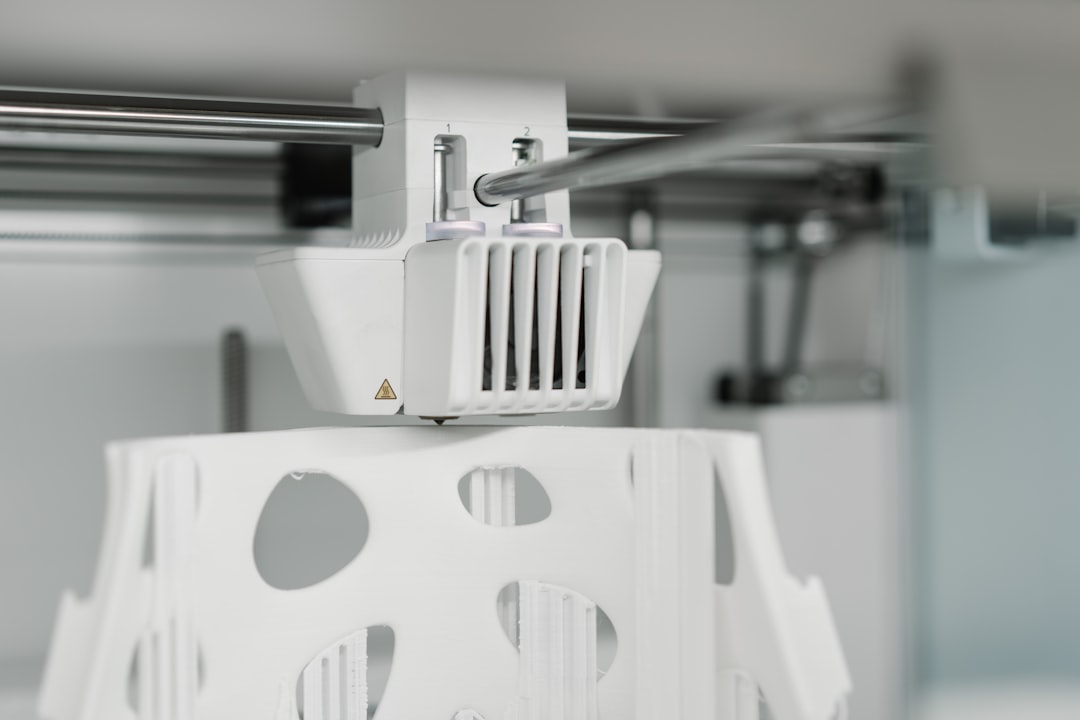
One of the most remarkable aspects of this innovation is its compatibility with additive manufacturing techniques. The composite material can be formulated as a printable ink or filament, enabling on-demand production of custom-shaped shielding components using standard 3D printing equipment. This capability has profound implications for space missions, where the ability to manufacture replacement parts or create new protective structures in situ could mean the difference between mission success and failure.
The material demonstrates exceptional elasticity, capable of stretching and flexing without compromising its protective properties—a crucial advantage for applications on robotic rovers, flexible spacecraft components, and wearable radiation protection for astronauts. Testing revealed that the composite maintains its shielding effectiveness across an extraordinary temperature range, from -196°C to 250°C (-321°F to 482°F), encompassing the extreme thermal variations experienced on lunar and Martian surfaces.
According to research published by ESA's Advanced Manufacturing division, the ability to 3D print functional materials in space represents a critical enabling technology for sustainable exploration beyond Earth orbit. The KIST shielding material aligns perfectly with this vision, potentially allowing future lunar or Martian bases to produce their own radiation protection using locally available raw materials.
Performance Metrics and Testing Protocols
The research team subjected their composite material to rigorous testing protocols that simulated the harsh conditions of space environments. Key performance indicators included:
- Electromagnetic Shielding Effectiveness: Laboratory measurements using vector network analyzers demonstrated 99.999% reflection of electromagnetic waves across frequencies from 1 GHz to 18 GHz, covering critical communication and navigation bands
- Neutron Radiation Attenuation: Testing with neutron sources revealed approximately 72% absorption efficiency, significantly exceeding conventional lightweight shielding materials
- Mechanical Durability: The material withstood over 10,000 flex cycles without degradation, confirming its suitability for dynamic applications like rover wheels or deployable structures
- Thermal Stability: No significant performance degradation observed across temperature extremes matching lunar day-night cycles
- Mass Efficiency: At hair-thin dimensions, the material provides protection equivalent to much thicker conventional shields while reducing mass by up to 90%
Implications for NASA's Artemis Program and Beyond
The timing of this technological breakthrough aligns remarkably with humanity's return to lunar exploration through NASA's Artemis program. Following the successful completion of Artemis II—the first crewed mission beyond low Earth orbit since 1972—attention now turns to establishing sustainable human presence on the Moon. The upcoming Artemis III mission in 2027 will conduct orbital operations and docking procedures, while Artemis IV aims to land astronauts at the lunar south pole, a region of intense scientific interest due to its permanently shadowed craters potentially harboring water ice.
Building a permanent lunar base, as envisioned by NASA Administrator Jared Isaacman, requires solving numerous technical challenges—and radiation protection ranks among the most critical. The lunar surface lacks Earth's protective atmosphere and magnetic field, exposing astronauts and equipment to radiation levels approximately 200 times higher than on Earth. The KIST shielding technology could be integrated into habitat structures, spacesuits, and rover systems, providing comprehensive protection for long-duration missions.
The research team specifically highlighted NASA's Psyche mission as an example of how advanced shielding enables ambitious space resource utilization goals. Psyche, a spacecraft journeying to a metal-rich asteroid, will help scientists understand planetary formation while demonstrating technologies for future resource extraction missions. As commercial space companies increasingly focus on in situ resource utilization (ISRU)—using materials found in space rather than launching everything from Earth—durable, lightweight shielding becomes essential for the autonomous systems that will conduct mining and processing operations.
Terrestrial Applications in Defense and Medicine
While space exploration provides the most dramatic context for this technology, Dr. Joo and his team emphasize its potential for Earth-based applications. In defense systems, the ultra-thin composite could protect sensitive electronics in military vehicles, aircraft, and communication equipment from electromagnetic pulse (EMP) attacks and radio frequency interference. The material's flexibility allows it to conform to complex shapes, enabling protection for equipment where traditional rigid shielding proves impractical.
Medical applications present equally compelling opportunities. Modern hospitals rely on sensitive electronic equipment that can malfunction due to electromagnetic interference from other devices, wireless networks, or external sources. The KIST shielding material could be incorporated into medical device housings, room linings, or even wearable protection for patients undergoing radiation therapy. Its neutron absorption properties also make it valuable for shielding around neutron-generating medical equipment and research facilities.
The Future of Advanced Materials in Space Exploration
This breakthrough exemplifies the broader trend toward multifunctional materials that combine multiple capabilities in single, lightweight structures. As humanity ventures deeper into the solar system, every kilogram of payload becomes precious—making materials that serve dual or triple purposes increasingly valuable. The KIST team's success in creating a material that simultaneously addresses electromagnetic and particle radiation protection while remaining flexible and 3D-printable sets a new standard for space materials engineering.
Dr. Joo indicated that further research will focus on structural design optimization and scaling up production for industrial applications. Future iterations might incorporate additional functionalities such as self-healing properties, thermal regulation, or embedded sensors that monitor radiation exposure in real-time. The team is actively collaborating with aerospace companies and government agencies to transition the technology from laboratory demonstrations to operational systems.
As commercial space ventures accelerate and international partnerships expand lunar and Martian exploration programs, innovations like the KIST nanotube shielding become critical enablers of humanity's spacefaring future. The ability to protect both human explorers and robotic systems from the harsh realities of space radiation—using materials that can be manufactured on demand in extreme environments—brings us one step closer to becoming a truly multiplanetary species.
The question is no longer whether we can venture beyond Earth's protective embrace, but how quickly we can develop and deploy the technologies that make sustained exploration safe, practical, and economically viable. The KIST shielding breakthrough demonstrates that through innovative materials science and engineering, we continue finding answers to the most challenging questions of space exploration. Only time will reveal the full impact of this technology, but one thing remains certain: the future of space exploration will be built on foundations of advanced materials like these revolutionary nanotube composites.