Honda and Redwire Want to Put a Robotic Lab Assistant on Future Commercial Space Stations
When most people think of Honda, they picture reliable family vehicles — minivans, sedans, and motorcycles that have defined the company's public image for decades. Yet Honda has quietly cultivated one of the most sophisticated robotics programs in the private sector, a legacy that stretches back more than thirty years. Now, the Japanese automotive and technology giant is partnering with space infrastructure firm Redwire Space to develop an automated laboratory support system designed specifically for use aboard future commercial space stations — a development that could fundamentally reshape how science is conducted in low Earth orbit.
The Most Precious Resource in Space: Astronaut Time
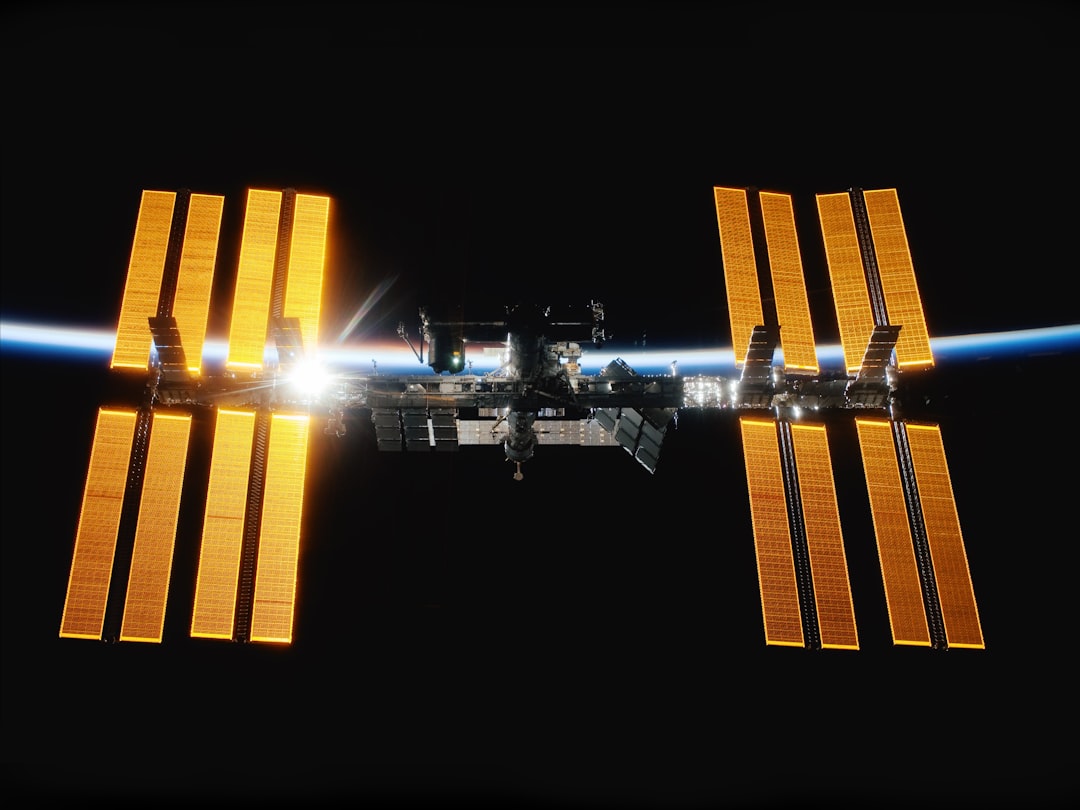
Ask anyone who has ever lived and worked aboard the International Space Station (ISS) and they will tell you the same thing: the most critically limited resource is not fuel, or water, or even breathable air — it is astronaut time. Every minute of every day aboard the ISS is meticulously scheduled, accounted for, and optimized. Crew members, who represent some of the most rigorously trained and highly educated individuals on Earth, regularly find portions of their day consumed by deceptively mundane tasks: scanning barcodes for inventory management, swapping out biological sample trays, tending to centrifuge hardware, or monitoring routine experimental parameters.
This is not a failure of planning — it is an unavoidable consequence of operating a complex laboratory in one of the most hostile environments known to humanity, with no support staff beyond the crew itself. Microgravity research demands constant, hands-on attention, and in the absence of any auxiliary workforce, astronauts must wear many hats simultaneously. The result is that genuinely irreplaceable human cognitive capacity is routinely diverted toward tasks that, on Earth, would be handled by laboratory technicians or automated systems.
"Astronauts are among the most highly educated professionals in the world. Every hour spent on routine lab maintenance is an hour not spent on high-value science, exploration, or discovery."
According to data from NASA's ISS program, crew members typically dedicate between 35 and 40 hours per week to scientific research and station maintenance combined — leaving precious little margin for unexpected challenges or expanded research programs. Any technology that can reclaim even a fraction of that time has enormous scientific and economic value.
The End of an Era: The ISS and the Rise of Commercial Stations
The urgency behind automation solutions is amplified by a looming transition in the architecture of human spaceflight. NASA plans to deorbit the ISS around 2030, deliberately guiding the roughly 420,000-kilogram structure — approximately the size of an American football field — into the atmosphere, where it will break apart and splash down in the remote waters of the South Pacific Ocean's "spacecraft cemetery," the most isolated point on Earth's surface from any landmass.
In its place, a new generation of privately operated platforms is emerging. Companies including Axiom Space, Vast, and the Blue Origin–led Orbital Reef consortium are developing commercial successors, in which NASA will function as one customer among many rather than as the sole operator and financier. This paradigm shift, accelerated by NASA's Commercial Low Earth Orbit Destinations (CLD) program, promises to dramatically lower the cost of access to microgravity research while opening the station environment to pharmaceutical companies, materials scientists, biotechnology firms, and a host of other non-governmental stakeholders.
However, these next-generation outposts come with a significant caveat: they will be considerably smaller than the ISS, at least in their initial configurations. Many are designed to host crews of just two to four astronauts, and several commercial designs incorporate extended uncrewed operational periods — phases during which the station must continue functioning, maintaining experiments, and preserving scientific samples without any human presence aboard whatsoever.
- Axiom Station — Axiom Space's modular commercial station, with initial modules planned to attach to the ISS before independent operation
- Haven-1 — Vast's inaugural commercial space station, targeting a launch as early as 2025
- Orbital Reef — A mixed-use business park in space, co-developed by Blue Origin and Sierra Space
- Starlab — A single-launch commercial station under development by Voyager Space and Airbus
In this environment, robotic automation is not merely a convenience — it is an operational necessity. Experiments in cell biology, protein crystallization, fluid dynamics, and combustion science cannot simply be paused and left unattended for weeks at a time. Maintaining the continuity and scientific integrity of long-duration microgravity experiments requires persistent, reliable, dexterous intervention.
Introducing STAARK: Redwire's Autonomous Motion Platform
This is precisely the challenge that the Honda–Redwire collaboration aims to address. The partnership combines two complementary areas of engineering expertise to produce an integrated robotic laboratory assistant capable of functioning autonomously in the demanding microgravity environment.
Redwire Space brings deep operational experience to the table. The company currently manages eight active science facilities aboard the ISS, making it one of the most experienced commercial operators in orbital research infrastructure. Its contribution to the joint system is the Space Technology Autonomous Agile Robotic Kit, or STAARK — a reaching and motion platform engineered to autonomously navigate, position, and interact with dynamic objects in a microgravity setting.
Designing robotic systems for space is fundamentally different from designing them for terrestrial applications. In microgravity, objects do not stay where they are placed — a sample vial set down on a surface may drift away within seconds. Grasping a moving target while the robot's own base may also be reacting to applied forces requires sophisticated real-time sensing and control algorithms. STAARK is designed to address these challenges, providing the spatial reach and autonomous mobility that forms the physical foundation of the system. Redwire's broader portfolio of space infrastructure technologies provides a strong engineering backbone for this development.
Honda's Robotic Hand: Decades of Dexterity Research
While Redwire provides the reach, Honda provides the touch. The company's involvement in advanced robotics dates back to 1986, when its engineers began secretly developing a walking robot that would eventually become the world-famous ASIMO (Advanced Step in Innovative Mobility). Unveiled publicly in 2000, ASIMO became one of the most recognizable symbols of humanoid robotics, capable of walking, running, climbing stairs, and performing simple manipulation tasks — all feats that were genuinely revolutionary at the time.
Since retiring ASIMO from public demonstrations, Honda has channeled its robotics expertise into more specialized, application-focused research. The centerpiece of their contribution to the space station project is their advanced robotic hand technology, which represents the current state of the art in artificial dexterity. The system features independently articulated fingers, with each digit equipped with both tactile sensors and force feedback sensors.
This dual sensory architecture gives the robotic hand a genuine sense of "touch" that is critical for delicate laboratory work. Consider the challenges involved: a robotic system must be able to grip a fragile glass sample vial firmly enough to move it with precision, yet gently enough to avoid shattering it. It must detect when a sample container has been properly seated in a centrifuge slot, or recognize the subtle resistance that indicates a specimen bag has been incorrectly sealed. In microgravity, the consequences of a failed grip — a vial spinning off into a ventilation intake, or a biological sample floating freely through the cabin — can be catastrophic for experimental integrity and potentially hazardous to crew safety.
Honda's tactile and force-sensing finger technology directly addresses these failure modes, enabling the robotic hand to modulate its grip in real time based on sensory feedback. This capability, combined with Redwire's autonomous positioning system, creates a robotic assembly that can theoretically perform the full range of routine laboratory maintenance tasks with minimal or no human supervision.
Scientific and Commercial Implications
The broader implications of a capable, autonomous laboratory robot extend well beyond simple task offloading. If robotic systems can reliably manage routine experimental upkeep, the scientific return from commercial space stations could increase dramatically. Researchers on the ground could design longer, more complex experiments confident that their samples will be properly maintained throughout. Pharmaceutical companies investigating protein crystallization in microgravity — a process that can produce pharmaceutical-grade crystals impossible to grow on Earth — could run continuous, multi-month studies without requiring a crew member dedicated to sample management.
Similarly, materials science experiments, cell culture studies, and combustion research all benefit from consistent, uninterrupted monitoring and intervention. The European Space Agency's research division has long highlighted the untapped potential of extended-duration microgravity studies, potential that is currently constrained by crew time limitations. Autonomous robotic systems represent a direct path to unlocking that potential.
From a commercial standpoint, the ability to operate a space station in a productive "uncrewed mode" — with robots maintaining experiments between crew rotations — could significantly alter the economics of commercial spaceflight. Station operators could offer research customers continuous access to their microgravity facilities rather than the current model, which is heavily dependent on crew availability and scheduling.
The Road Ahead
Despite the technical promise of the Honda–Redwire system, practical deployment remains on the horizon rather than the immediate future. While early commercial stations such as Vast's Haven-1 and Axiom Station are targeting launches as early as 2025, no formal agreements have yet been announced to equip these platforms with the STAARK-Honda robotic system. The collaboration was formally introduced via a press release timed to coincide with the International Astronautical Congress (IAC) in Antalya, Turkey — the premier annual gathering of the global space industry, and a natural venue for unveiling concepts aimed at the emerging commercial space ecosystem. More information on the IAC and space industry developments can be found through the International Astronautical Federation.
The competitive landscape for space automation is also beginning to take shape. Honda and Redwire are not alone in recognizing the opportunity. Other robotics developers, ranging from university research spinouts to established aerospace contractors, are pursuing their own visions for autonomous orbital laboratory management. NASA itself has invested heavily in robotic systems for the ISS, including Robonaut 2 and the more recent Astrobee free-flying robots, developed in partnership with NASA Ames Research Center and detailed further at the NASA Astrobee project page. Each of these systems reflects a different philosophy about how robots and astronauts should share the workload in space.
What is clear is that automation will play an indispensable role in making commercial space stations scientifically and economically viable. The question is not whether robots will tend the laboratories of the next generation of orbital outposts — it is which robots will earn that role, and how seamlessly they will collaborate with the human crews who remain the heart of human spaceflight.
"As space becomes more commercial, competition to supply the enabling technologies for the next era of microgravity research will only intensify — and the winners will be those who best understand the unique demands of working in orbit."
Honda and Redwire have staked an early, credible claim in that competition. With Honda's proven dexterity technology and Redwire's operational track record on the ISS, the collaboration brings genuine engineering substance to what might otherwise be speculative ambition. Whether the broader industry converges around their approach or develops alternative solutions, the partnership underscores a fundamental truth about the future of human spaceflight: the scientists and astronauts of tomorrow will not work alone.