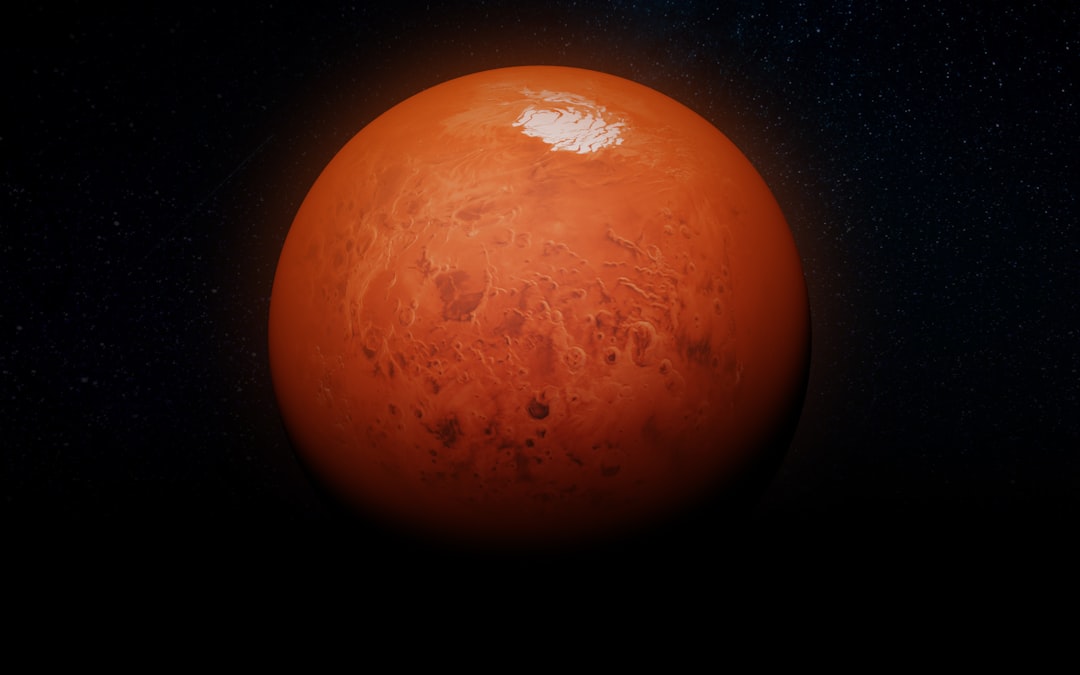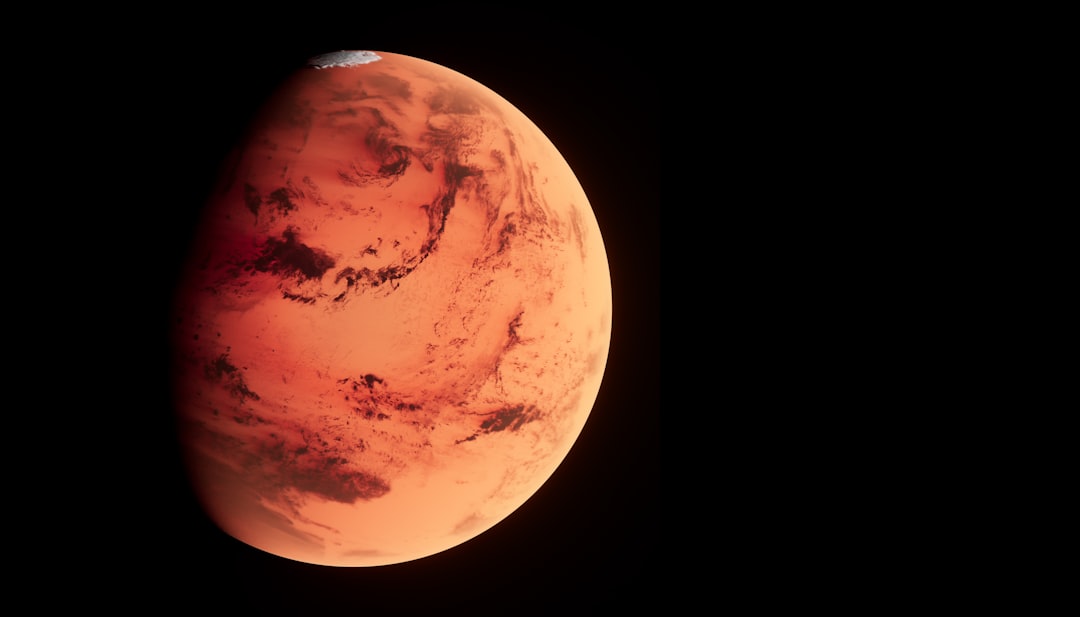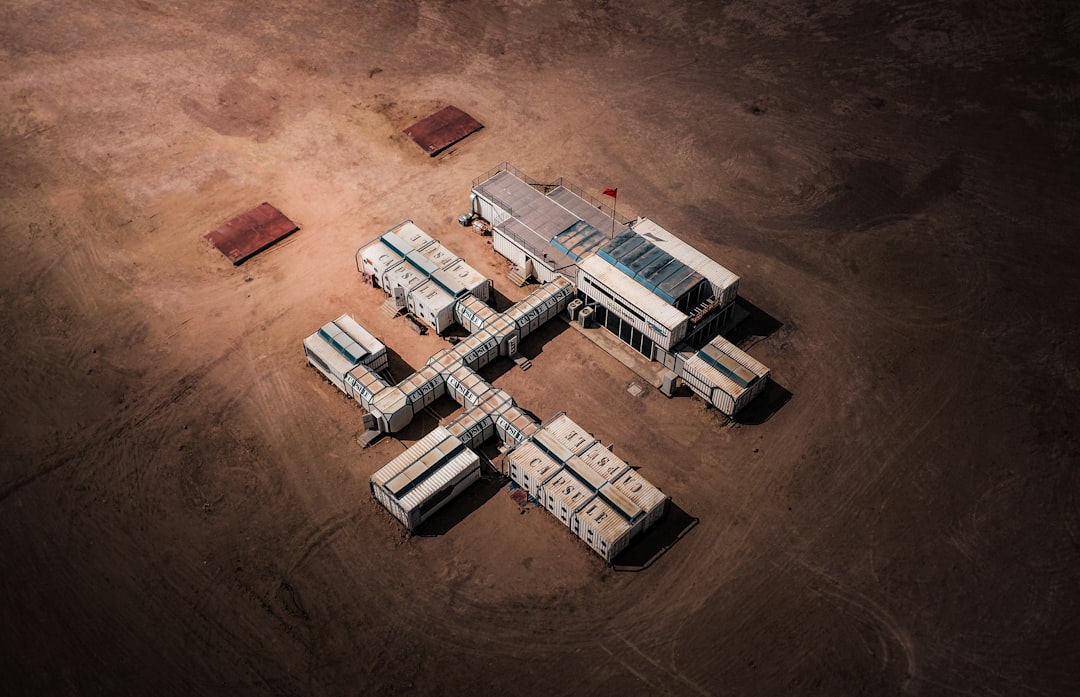
Imagine a future where astronauts living on Mars can power their entire habitat—from life support systems to scientific laboratories—using nothing more than the planet's thin atmosphere. This isn't science fiction; it's the focus of groundbreaking research that could revolutionize how humanity establishes a permanent presence on the Red Planet. A team of Chinese scientists has unveiled an innovative approach to in situ resource utilization (ISRU) that could eliminate the need to transport massive power systems from Earth, potentially saving billions of dollars and making Mars colonization far more feasible.
Published in the prestigious journal National Science Review, this research presents a comprehensive framework for the Mars Atmospheric Resource & Multimodal Energy System (MARS-MES), a sophisticated concept that transforms Mars's carbon dioxide-rich atmosphere into reliable electrical power. The implications extend far beyond simple power generation—this system could provide integrated solutions for electricity, heat production, fuel synthesis, and life support, creating a self-sustaining energy infrastructure for future Martian settlements.
The study arrives at a critical juncture in space exploration history. With NASA's Artemis program paving the way for sustained lunar presence and multiple nations planning crewed Mars missions within the next two decades, the question of how to power these ambitious endeavors has become increasingly urgent. Traditional approaches—shipping nuclear reactors or massive solar arrays from Earth—carry enormous costs and logistical challenges. The MARS-MES concept offers an elegant alternative by leveraging resources already present on Mars.
The Martian Energy Challenge: Understanding the Problem
Mars presents unique challenges for power generation that don't exist on Earth or even the Moon. The planet's atmosphere, while present, is extraordinarily thin—possessing merely 1% of Earth's atmospheric pressure. Composed of more than 95% carbon dioxide, with trace amounts of nitrogen and argon, this tenuous envelope seems an unlikely candidate for energy production. Surface temperatures fluctuate wildly, reaching a maximum of only 20 degrees Celsius (68°F) at the equator during summer days, compared to Earth's average of 57°C (135°F).
Yet these apparent limitations contain hidden opportunities. The Martian atmosphere's carbon dioxide can be captured, compressed, and transformed through various chemical processes. The challenge lies in developing systems that can operate reliably in Mars's harsh environment while using minimal energy input—ideally, systems that generate more energy than they consume.
Current power solutions for Mars missions rely heavily on technology proven during shorter expeditions. The Perseverance rover, for instance, uses a Multi-Mission Radioisotope Thermoelectric Generator (MRTG) that converts heat from plutonium-238 decay into electricity. While reliable, such systems provide limited power output and aren't scalable to support human habitats requiring tens or hundreds of kilowatts continuously.
Three-Pronged Approach: Capturing, Converting, and Utilizing Martian Resources
Atmospheric Capture Technologies
The foundation of the MARS-MES concept begins with atmospheric air capture—the process of collecting and concentrating Mars's thin atmosphere. The research team proposes three distinct methodologies, each with unique advantages and developmental challenges:
- Mechanical Compression: This straightforward approach uses pumps and compressors to physically concentrate atmospheric gases. While conceptually simple, mechanical systems face durability concerns in Mars's dust-laden environment and haven't yet demonstrated the long-term reliability required for multi-year missions. The technology must operate continuously in temperatures that can plunge to -140°C (-220°F) at night.
- Cryogenic Trapping: By cooling gases to extremely low temperatures, this method causes atmospheric components to condense and separate. Currently in experimental phases, cryogenic systems offer high efficiency but require significant energy input and complex thermal management. The NASA ISRU program has been exploring similar technologies for lunar applications.
- Temperature Swing Adsorption: This technique uses materials that selectively absorb CO2 at certain temperatures and release it when heated. While promising for its lower energy requirements, current implementations suffer from limited processing rates and insufficient heat generation for practical applications.
Power Generation and Storage Systems
Once atmospheric gases are captured and concentrated, the MARS-MES concept envisions using a micro-nuclear reactor as the primary power source. This isn't a conventional nuclear reactor—it's a compact, highly efficient design specifically engineered for space applications. The captured Martian atmosphere serves multiple roles: as a coolant for the reactor, as a working fluid for power generation cycles, and as feedstock for chemical processes.
The innovation extends to energy storage through lithium-Martian gas batteries, a novel concept that uses compressed CO2 and other atmospheric components as battery electrolytes. This approach offers several advantages over traditional battery systems: the electrolyte materials are locally sourced, reducing launch mass, and the batteries can potentially achieve higher energy densities than conventional lithium-ion technology.
"The Martian atmosphere, as a central medium for power generation, can integrate independent chemical conversions to realize a power-to-X function," the researchers explain in their study. "This perspective synthesizes the common characteristic of independent Mars CO2 ISRU, and outlines a vision for the future pathway."
Life Support Integration: The Sabatier Reactor Connection
Perhaps the most elegant aspect of MARS-MES is its integration with life support systems through an enhanced Sabatier reactor. Space enthusiasts may recognize this technology from the International Space Station's Environmental Control and Life Support System (ECLSS), where it recycles carbon dioxide from crew breathing into water and methane.
The proposed Martian version operates at a much larger scale, processing the pressurized atmospheric CO2 captured by the system. By combining this CO2 with hydrogen (potentially extracted from subsurface water ice), the reactor produces methane fuel and water through the chemical reaction: CO2 + 4H2 → CH4 + 2H2O. The methane can fuel surface vehicles or serve as rocket propellant for the return journey to Earth, while water supports crew needs and can be electrolyzed to produce oxygen.
The system's waste heat—an inevitable byproduct of nuclear reactors and chemical processes—doesn't go to waste. Instead, it's channeled for habitat heating, maintaining comfortable temperatures despite Mars's frigid environment, and for driving additional chemical reactions that might otherwise require dedicated energy input.
Technical Hurdles and Development Pathways
Despite the conceptual elegance of MARS-MES, the researchers acknowledge that substantial development work remains. The study notes that "related ISRU technologies are still in the conceptual experimentation and analysis phase," with the first crewed Mars mission expected within the coming decades. Several critical challenges must be addressed:
Materials durability represents a significant concern. Martian dust, composed of fine particles with sharp, angular edges, is highly abrasive and can infiltrate mechanical systems. Additionally, the pervasive presence of perchlorates in Martian soil—toxic compounds that can corrode metals—poses risks to any equipment exposed to the environment. Systems must be designed to operate reliably for years with minimal maintenance.
Energy efficiency optimization requires careful balancing. While the nuclear reactor provides baseline power, the energy costs of atmospheric capture, compression, and chemical processing must be minimized. Each component of the system needs refinement to ensure the net energy output justifies the complexity and mass of the equipment transported from Earth.
System integration and testing present perhaps the greatest challenge. The MARS-MES concept involves multiple interconnected subsystems—atmospheric capture, nuclear power generation, chemical processing, energy storage, and life support. These must function harmoniously under Martian conditions, which cannot be perfectly replicated on Earth. Analog testing facilities, like those being developed by various space agencies, will play crucial roles in validating designs before deployment.
Broader Context: Why ISRU Matters for Space Exploration
The significance of ISRU extends far beyond Mars. Every kilogram transported from Earth to Mars costs approximately $10,000 to $100,000, depending on the launch system and mission architecture. For a human Mars mission requiring hundreds of tons of equipment, supplies, and propellant, these costs quickly become prohibitive. In situ resource utilization fundamentally changes this economic equation by producing necessary resources locally.
Consider water as an example. A crew of four astronauts requires roughly 30 kilograms of water daily for drinking, food preparation, and hygiene. Over a 500-day Mars surface mission, that's 15,000 kilograms—15 metric tons—of water. If this could be extracted from Martian ice deposits or produced through chemical processes, the mass savings would be enormous. The same logic applies to oxygen (produced by splitting water or processing atmospheric CO2), rocket propellant (methane and oxygen), and even construction materials (using Martian regolith).
The European Space Agency's ExoMars program and other international efforts are investigating complementary ISRU technologies, from water extraction to regolith processing for 3D-printed habitats. MARS-MES would integrate with these systems, creating a comprehensive resource utilization framework.
Looking Forward: The Path to Martian Energy Independence
The researchers outline an ambitious but achievable development timeline. Near-term priorities include laboratory demonstrations of key technologies under simulated Martian conditions, followed by robotic precursor missions to test systems on Mars itself. These pathfinder missions would validate atmospheric capture techniques, assess long-term equipment reliability, and optimize operational parameters before human crews arrive.
Intermediate steps might involve hybrid systems that combine ISRU-generated power with traditional solar arrays or nuclear reactors, gradually increasing reliance on locally-produced resources as confidence in the technology grows. This incremental approach reduces risk while building the knowledge base necessary for fully autonomous systems.
The ultimate vision encompasses fully self-sustaining Martian settlements where energy, water, oxygen, and fuel are all produced locally using atmospheric and subsurface resources. Such capability would transform Mars from a destination requiring constant resupply from Earth into a genuinely independent outpost of human civilization—a critical milestone for becoming a multi-planetary species.
As the study concludes, the first crewed Mars mission may materialize within decades, but the enabling technologies require sustained development effort starting now. MARS-MES represents not just an engineering solution but a philosophical shift in how we approach space exploration: working with the resources available rather than transporting everything we need across interplanetary distances.
The question of how future astronauts will power their Martian habitats, laboratories, and vehicles remains open, but research like this illuminates promising pathways forward. By transforming Mars's seemingly hostile environment into an asset rather than an obstacle, we move closer to the day when humans can truly call the Red Planet home. As the researchers emphasize, continued innovation in ISRU technologies will determine not whether we reach Mars, but whether we can stay there—and that makes all the difference for humanity's cosmic future.