Hot Jupiter Endures Star-Powered Barbecue: How Webb Is Unlocking the Secrets of a Tortured World
Imagine standing over a blazing grill on a sweltering Fourth of July afternoon, sweat dripping down your face, desperately pressing a cold drink to your forehead for any hint of relief. Now imagine that discomfort multiplied by an almost incomprehensible factor. That, in essence, is the perpetual reality for HD 80606 b — an alien world located approximately 217 light-years from Earth that endures one of the most extreme thermal environments ever documented in exoplanetary science. A recent study presented at the 248th meeting of the American Astronomical Society (AAS) has shed remarkable new light on this tortured planet, revealing just how dramatic — and scientifically valuable — its cosmic ordeal truly is.
A Planet Unlike Any Other in Our Cosmic Neighborhood
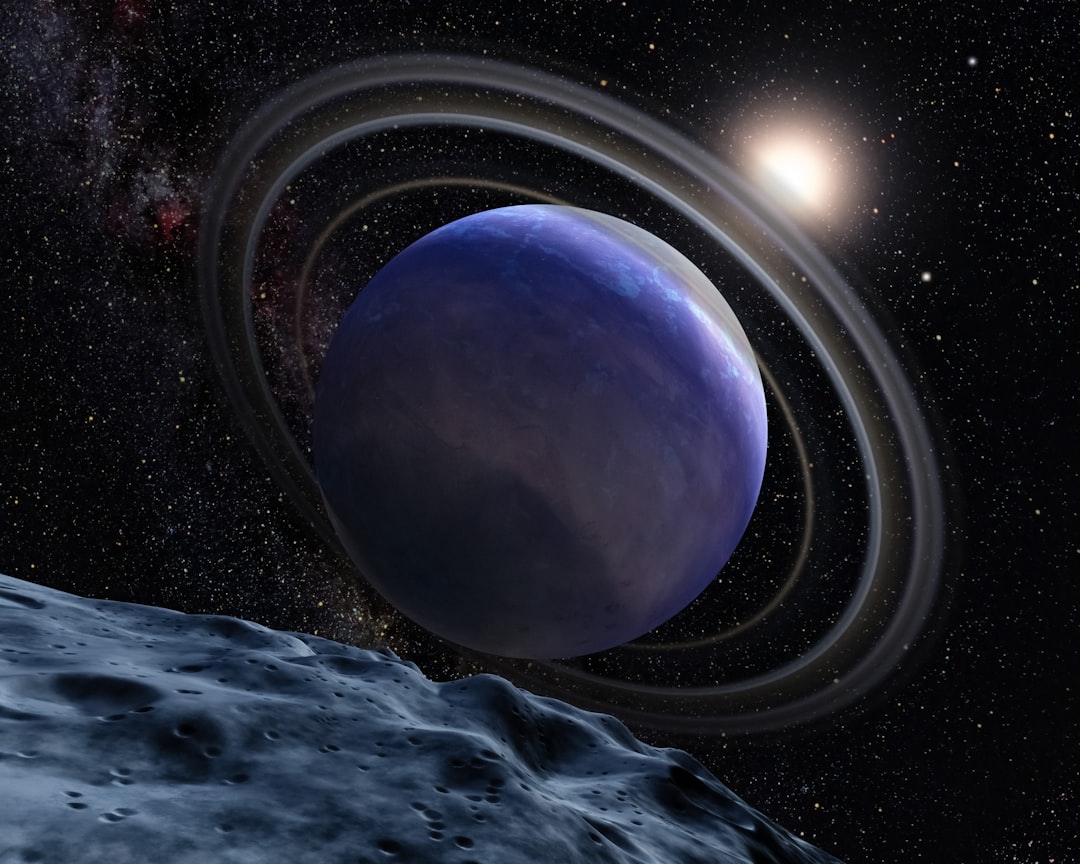
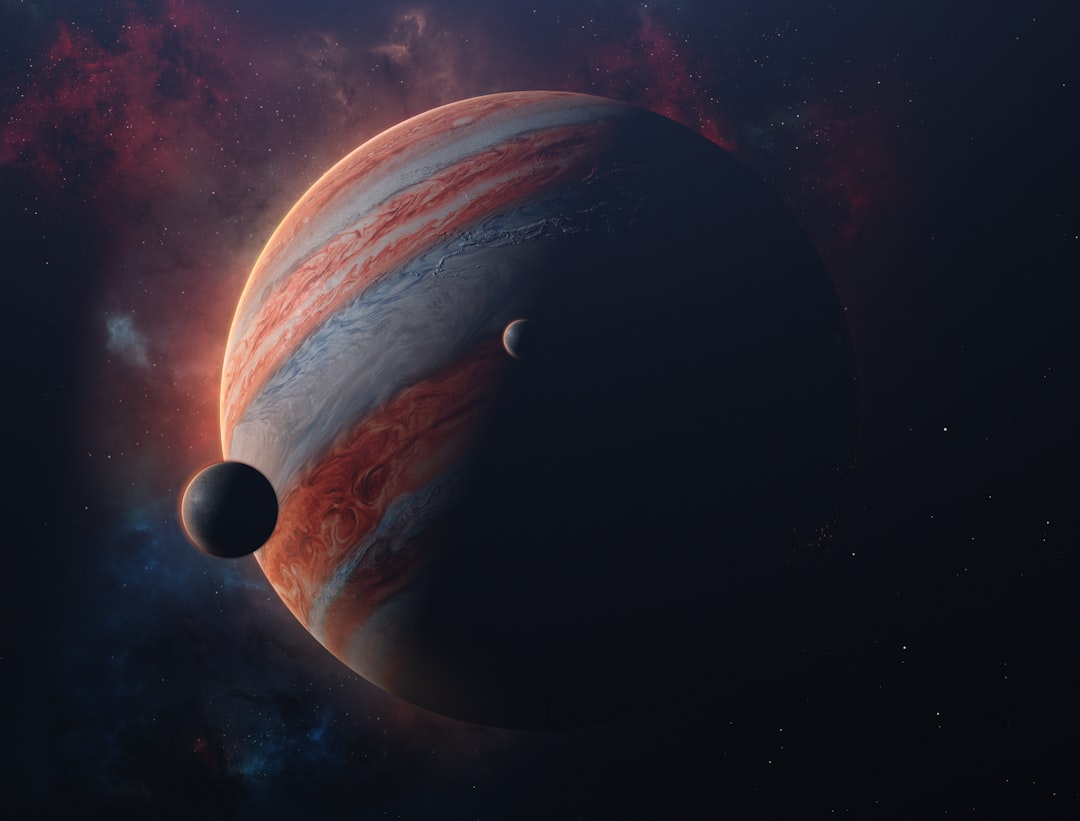
HD 80606 b belongs to a class of exoplanets known as "hot Jupiters" — gas giants with radii and masses comparable to Jupiter, our solar system's largest planet, that orbit extraordinarily close to their host stars. HD 80606 b has a radius roughly equivalent to Jupiter's and a mass approximately four times greater. Hot Jupiters are among the most commonly detected categories of exoplanets, largely because their sheer size and close orbital proximity make them easier to identify using both the transit method — in which a planet's passage in front of its star causes a measurable dip in stellar brightness — and radial velocity measurements, which detect the subtle gravitational tug a planet exerts on its host star.
However, what elevates HD 80606 b from merely interesting to genuinely extraordinary is not its size or proximity to its star — it is the extraordinary shape of its orbit. While the planets of our own solar system travel in paths that are nearly perfect circles, HD 80606 b follows a highly elliptical, or eccentric, orbit that sends it on a wild gravitational journey ranging from the outskirts of its star system to terrifyingly close approaches. This single characteristic transforms the planet into a natural laboratory unlike almost anything else astronomers have found.
Understanding Orbital Eccentricity: The Science of Stretched Circles
In orbital mechanics, eccentricity is a dimensionless parameter that quantifies how much an orbit deviates from a perfect circle. It is measured on a scale from 0 to 1, where 0 represents a flawless circle and values approaching 1 represent increasingly elongated, comet-like ellipses. To appreciate just how unusual HD 80606 b is, consider the following comparison of eccentricities within our own solar system:
- Venus: 0.0068 — the most circular planetary orbit in our solar system
- Earth: 0.0167 — nearly circular, producing minimal seasonal variation due to orbital distance
- Mars: 0.0934 — slightly more elliptical, contributing to its pronounced seasonal differences
- Mercury: 0.2056 — the most eccentric planetary orbit in our solar system
- HD 80606 b: 0.93 — an almost parabolic orbit more reminiscent of a long-period comet than a planet
With an eccentricity of 0.93, HD 80606 b's orbit is staggeringly elongated. During a single orbital period of approximately 111 Earth days, the planet swings from a maximum distance of roughly 0.85 astronomical units (AU) from its host star — comparable to Venus's distance from our Sun — to a jaw-dropping minimum distance of just 0.03 AU, approximately one-tenth the distance between Mercury and the Sun. This dramatic range in orbital distance produces conditions that are essentially without parallel among well-studied exoplanets, making HD 80606 b an ideal subject for investigating how planets respond to rapid, extreme environmental changes.
Periastron: When a Planet Meets Its Fiery Fate
The moment of closest approach in an elliptical orbit is known as periastron (analogous to "perihelion" in our solar system), and for HD 80606 b, this is when the true inferno begins. Using NASA's James Webb Space Telescope (JWST), researchers focused their observations precisely on this critical orbital phase, capturing data as the planet hurtled to within 0.03 AU of its star at tremendous speed.
The results were striking. At periastron, HD 80606 b experiences surface temperatures of approximately 600 degrees Celsius (roughly 1,100 degrees Fahrenheit) — hot enough to melt lead and vaporize zinc. Furthermore, the amount of stellar irradiation the planet absorbs at this closest approach is approximately 800 times greater than the radiation it receives at the far end of its orbit. This enormous flux differential occurs over just a matter of hours, triggering rapid and measurable changes in the planet's atmospheric temperature, chemistry, and circulation patterns. The planet's atmosphere, in essence, is forced to "reboot" with each orbit — a process scientists refer to as atmospheric re-inflation and chemical disequilibrium.
"Observing a planet like HD 80606 b is actually very efficient because its unusual orbit, with the corresponding swings in temperature and chemical composition, allow us to gather data under varying conditions in just hours and apply those findings to other hot Jupiters or more conventional exoplanets." — Dr. Laura C. Mayorga, Exoplanet Astronomer, Johns Hopkins Applied Physics Laboratory
Dr. Laura C. Mayorga, a co-author on the study and exoplanet astronomer at the Johns Hopkins Applied Physics Laboratory, highlights a key advantage of studying such an extreme world: the very violence of its environment compresses what would otherwise require years of observation on a more stable planet into a single, action-packed orbital pass. In just hours around periastron, scientists can witness temperature swings, chemical transformations, and atmospheric dynamics that would take far longer to observe on planets with calmer, more circular orbits.
A Rich Scientific History — Now Illuminated by Webb
HD 80606 b is no stranger to scientific scrutiny. First discovered in 2001, this peculiar planet has been the subject of increasingly sophisticated investigations as telescope technology has advanced. A 2023 study published in the Monthly Notices of the Royal Astronomical Society made early progress in characterizing the planet's atmospheric chemistry, focusing specifically on the ratio of carbon monoxide (CO) to methane (CH₄) — two molecules whose relative abundances serve as powerful tracers of a planet's thermal history and carbon chemistry. Building on this foundation, a 2026 study published in The Astronomical Journal provided stronger evidence for the presence of both methane and carbon monoxide in HD 80606 b's atmosphere, offering a richer picture of its chemical complexity.
These molecular detections are scientifically significant for several reasons. The carbon-to-oxygen (C/O) ratio in a gas giant's atmosphere is thought to be a direct fingerprint of where the planet formed within its protoplanetary disk and how it subsequently migrated to its current orbit. By characterizing these molecules in detail, scientists can begin to reconstruct the formation history of HD 80606 b — and, by extension, gain insights into the broader population of hot Jupiters whose origins remain poorly understood. The James Webb Space Telescope, with its unprecedented infrared sensitivity, is proving to be the ideal instrument for this type of atmospheric fingerprinting, as detailed in ongoing ESA/Webb exoplanet research programs.
Eccentric Planets as Windows Into Planetary Evolution
HD 80606 b is not an isolated curiosity — it is part of a growing and scientifically compelling cohort of highly eccentric exoplanets that are reshaping our understanding of planetary formation and evolution. The classical model of planetary formation suggests that planets should coalesce from protoplanetary disk material and settle into stable, nearly circular orbits over time. Yet the discovery of planets like HD 80606 b — with orbits that look more like those of comets than of planets — challenges this model profoundly.
Several competing theories attempt to explain how such extreme eccentricities arise. These include gravitational scattering events involving close encounters with other massive planets, Kozai-Lidov oscillations driven by the gravitational influence of a distant binary stellar companion, and secular chaos within multi-planet systems. HD 80606 b is particularly interesting in this context because it exists in a wide binary star system with the neighboring star HD 80607, lending credence to the Kozai-Lidov mechanism as a possible explanation for its unusual orbit.
Beyond pure orbital dynamics, eccentric planets like HD 80606 b offer a powerful tool for studying atmospheric physics under extreme forcing conditions. Because the planet's irradiation changes so dramatically over a single orbit, it effectively functions as a stress-test for atmospheric models — revealing how quickly gas giant atmospheres can respond to thermal shocks, how chemical equilibrium is disrupted and re-established, and how planetary-scale storm systems behave under rapidly changing energy inputs.
Could Eccentric Worlds Harbor Life?
While HD 80606 b itself is emphatically not a candidate for habitability — its scorching temperatures, massive size, and gaseous composition rule out life as we know it — the broader class of highly eccentric exoplanets has sparked a fascinating scientific debate. Some researchers have proposed that rocky, Earth-sized planets on eccentric orbits could potentially support life if their orbits carry them in and out of their star's habitable zone — the range of distances where liquid water could theoretically exist on a planetary surface.
One intriguing candidate in this discussion is WASP-47 c, a planet whose eccentric orbit reportedly takes it periodically through its host star's habitable zone. Whether such transient habitable conditions could sustain biology remains an open and actively debated question. The study of extreme planets like HD 80606 b contributes indirectly to this discussion by advancing our understanding of how atmospheres, temperatures, and chemical compositions respond to the kind of wildly variable stellar energy inputs that eccentric orbits produce. For the latest developments in exoplanet habitability research, the NASA Exoplanet Exploration Program maintains a comprehensive and up-to-date resource.
Looking Ahead: The Future of Eccentric Exoplanet Research
The observations of HD 80606 b presented at the 248th AAS meeting represent only the opening chapter of what promises to be a richly detailed scientific story. As JWST continues its mission, researchers expect to obtain even more precise thermal emission spectra, atmospheric abundance measurements, and wind-speed maps of this extraordinary world. Future observations will likely target additional periastron passages, allowing scientists to look for orbit-to-orbit variability — subtle changes in atmospheric behavior from one orbital cycle to the next — that could reveal deeper truths about the planet's internal dynamics and long-term evolutionary trajectory.
More broadly, the study of highly eccentric exoplanets is poised to become one of the most productive frontiers in comparative planetology. By understanding how planets behave under the most extreme orbital conditions imaginable, scientists can place our own solar system's relatively tranquil planetary arrangement into its proper cosmic context, and gain a deeper appreciation for the astonishing diversity of planetary architectures that the universe has produced. For readers wishing to explore the full scope of exoplanet discovery and characterization, the NASA Jet Propulsion Laboratory's Exoplanet Exploration page offers an excellent starting point.
The universe, it turns out, runs a far more extreme barbecue than anything you'll find in a backyard on a summer afternoon. And thanks to the remarkable capabilities of modern space telescopes and the ingenuity of the scientists who wield them, we are only just beginning to fully appreciate the heat.