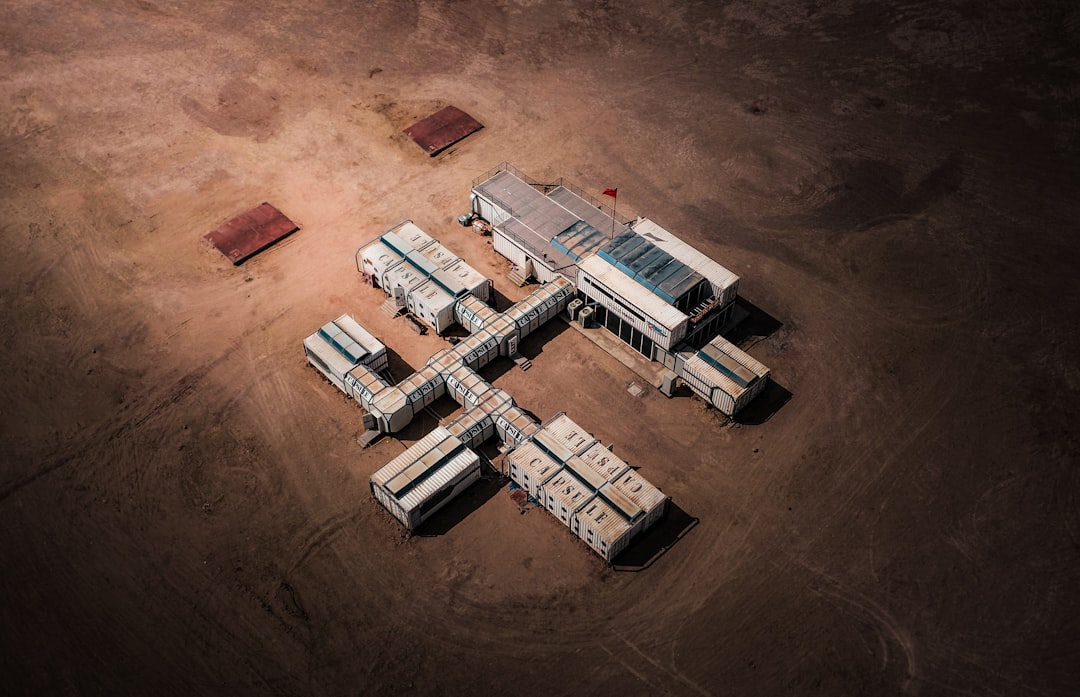
The quest to discover life on Mars has captivated scientists and space enthusiasts for decades, but this ambitious pursuit comes with a critical challenge: ensuring we don't inadvertently contaminate the Red Planet with hitchhiking microorganisms from Earth. A groundbreaking new study from York University in Canada has introduced an innovative computational model that could revolutionize our understanding of how long terrestrial microbes might survive in the harsh Martian environment, providing crucial insights for future planetary protection protocols.
Published in The Planetary Science Journal, this research presents the Mars Microbial Survival (MMS) model, a sophisticated tool designed to estimate the viability of Earth-based microorganisms that might escape pre-launch sterilization procedures and survive the journey to Mars. The implications of this work extend far beyond academic curiosity—they directly impact how we interpret potential biosignatures on Mars and shape the stringent protocols governing every spacecraft we send to our planetary neighbor.
The Critical Challenge of Forward Contamination
Every mission to Mars carries with it the potential for forward contamination—the inadvertent transfer of Earth-based life to another celestial body. This concern isn't merely theoretical; it represents one of the most significant challenges facing modern astrobiology. If terrestrial microbes were to survive the journey and establish themselves on Mars, they could fundamentally compromise our ability to distinguish between indigenous Martian life and contamination from our own planet.
The stakes are extraordinarily high. Imagine discovering what appears to be microbial life on Mars, only to later determine it originated from Earth. Such a scenario would not only invalidate years of research but could also lead to the permanent contamination of pristine Martian environments. NASA's Planetary Protection Office works tirelessly to prevent this outcome, but understanding the survival capabilities of Earth microbes in Martian conditions is essential for developing more effective safeguards.
Decoding the Mars Microbial Survival Model
The research team's innovative approach involved analyzing two critical phases of spacecraft exposure: the cruise phase during the journey through space, and the surface phase after landing on Mars. Each phase presents unique sterilization factors that work synergistically to eliminate potential biological contaminants.
The Gauntlet of Space: Cruise Phase Sterilization
During the months-long journey from Earth to Mars, spacecraft are subjected to an unrelenting barrage of solar radiation, particularly harmful Ultraviolet-C (UVC) radiation. The research team meticulously modeled how spacecraft components would respond to this radiation while simultaneously experiencing the extreme vacuum of space and dramatic temperature fluctuations ranging from scorching heat when facing the Sun to frigid cold in shadow.
The MMS model revealed that external spacecraft surfaces experience near-complete sterilization from solar wind exposure alone. However, the story becomes more complex for internal components. Rovers and landers encased within protective aeroshells are shielded from direct radiation, but they still face the sterilizing effects of vacuum conditions and temperature extremes. These factors work together to create an increasingly hostile environment for any surviving microorganisms.
Surviving the Red Planet: Surface Phase Analysis
Upon arrival at Mars, spacecraft encounter an entirely new set of challenges. The Martian environment is extraordinarily hostile to life as we know it, with surface temperatures that can plummet to -125°C (-195°F) at the poles and atmospheric pressure less than 1% of Earth's. Unlike our home planet, Mars lacks both a protective ozone layer and a global magnetic field, leaving the surface exposed to intense solar and cosmic radiation.
The researchers examined 14 different landing and crash sites from historic missions, including the Viking landers, Pathfinder, Spirit, Opportunity, Curiosity, and Perseverance. This comprehensive analysis provided valuable data on the range of environmental conditions spacecraft might encounter across different Martian locations and seasons.
"The MMS model predicts very low survival rates for bioburdens on both cruise-phase aeroshells and landed spacecraft at each of the 14 landing sites examined. While maintaining high planetary protection standards is crucial for successful Mars science missions, we estimate that small numbers of microorganisms on cold internal surfaces of spacecraft might persist for several decades on Mars."
Key Findings: A Timeline of Sterilization
The MMS model generated several striking predictions about microbial survival timelines on Mars:
- Rapid Surface Sterilization: Upward-facing external surfaces exposed to direct sunlight achieve complete sterilization in approximately one Mars sol (24 hours and 39 minutes), primarily due to intense UV radiation bombardment without atmospheric protection.
- Complete External Sterilization: All external spacecraft surfaces reach full sterilization within roughly one Mars year (equivalent to 687 Earth days), accounting for surfaces in shadow and variations in solar exposure throughout the Martian seasonal cycle.
- Interior Component Timeline: Heated internal components, which experience temperature increases from electronic operation, achieve sterilization in approximately 100 Mars sols through the combined effects of heat, low pressure, and desiccation.
- Persistent Survivors: Perhaps most significantly, the model suggests that microorganisms on cold, unheated internal surfaces might survive for up to 25 Mars years when considering low pressure effects alone, highlighting the importance of comprehensive pre-launch sterilization procedures.
- Synergistic Sterilization Factors: The toxic nature of Martian regolith (containing perchlorates and other oxidizing compounds), combined with extreme surface pressure variations and the complete absence of liquid water, creates multiple simultaneous stressors that accelerate microbial death.
The Science Behind Planetary Protection
The NASA Jet Propulsion Laboratory's Biotechnology and Planetary Protection Group (BPPG) represents humanity's frontline defense against interplanetary contamination. This specialized team employs a multi-layered approach to ensure spacecraft cleanliness, beginning with stringent assembly procedures in cleanroom environments and culminating in various sterilization techniques before launch.
Current planetary protection protocols include biological assays to quantify microbial loads, heat sterilization of critical components, and careful documentation of every spacecraft assembly step. However, the challenge remains formidable: completely sterilizing complex spacecraft without damaging sensitive scientific instruments or electronic components requires a delicate balance of competing priorities.
Implications for Future Mars Missions
The MMS model provides mission planners with a powerful new tool for assessing contamination risks. By understanding the specific timelines for microbial sterilization under various Martian conditions, scientists can better evaluate the contamination potential of both active missions and defunct spacecraft on the Martian surface.
This research becomes particularly crucial as we plan for Mars sample return missions, where pristine Martian material will be brought back to Earth for detailed analysis. The Mars 2020 Perseverance rover is already collecting samples in sealed tubes for eventual return, making the distinction between Earth and Mars microbes absolutely critical.
The Broader Context of Astrobiology
This research intersects with fundamental questions in astrobiology: What constitutes life? How resilient are terrestrial organisms? And what does this tell us about the potential for life elsewhere in the universe? Studies of extremophiles—Earth organisms that thrive in seemingly impossible conditions—have repeatedly surprised scientists with their tenacity. Some bacteria can survive years in space, while others endure extreme radiation doses that would be instantly lethal to humans.
The MMS model's predictions align with laboratory studies of microbial survival under simulated Martian conditions, but they also highlight the importance of considering multiple stressors acting simultaneously. While some microbes might survive individual challenges like cold or radiation, the combination of factors on Mars creates a uniquely hostile environment.
Looking Ahead: The Future of Planetary Protection
As humanity prepares for increasingly ambitious Mars exploration, including potential crewed missions, the importance of planetary protection will only grow. The MMS model represents a significant step forward, but it also raises new questions. How might human presence on Mars complicate contamination scenarios? What additional safeguards will be necessary for crewed missions where complete sterilization is impossible?
The European Space Agency's ExoMars program and future NASA missions will undoubtedly benefit from this research, incorporating MMS predictions into their planetary protection strategies. The model can be refined and updated as we gather more data from Mars, creating an increasingly accurate picture of contamination risks.
Furthermore, this work has implications beyond Mars. As we contemplate missions to potentially habitable moons like Europa and Enceladus, understanding microbial survival in extreme environments becomes even more critical. These ocean worlds, with their subsurface liquid water, might be even more susceptible to contamination than Mars.
Conclusion: Science in Service of Discovery
The Mars Microbial Survival model exemplifies how computational science can address practical challenges in space exploration. By providing quantitative predictions about contamination timelines, this research empowers mission planners to make informed decisions about planetary protection protocols while maintaining the scientific integrity of Mars exploration.
The study's conclusion that small numbers of microorganisms might persist for decades on cold internal surfaces underscores the ongoing importance of rigorous pre-launch sterilization. However, the rapid sterilization of external surfaces and the relatively quick elimination of bioburdens on heated components provide reassurance that current protocols are largely effective.
As we continue our search for life on Mars, tools like the MMS model ensure that when we finally discover evidence of biology on the Red Planet—if it exists—we can be confident we're observing genuine Martian life, not contamination from our own world. This careful, methodical approach to planetary protection represents science at its best: asking difficult questions, developing innovative solutions, and maintaining the highest standards of scientific integrity in our exploration of the cosmos.
The quest to understand our place in the universe demands nothing less than absolute rigor in distinguishing between what we bring with us and what we discover. The Mars Microbial Survival model brings us one step closer to that goal, ensuring that future discoveries on Mars will be authentic revelations about life beyond Earth rather than reflections of our own planetary biology.