Earth's invisible protective barrier—the magnetosphere—stands as our planet's first line of defense against the relentless bombardment of charged particles streaming from the Sun. This dynamic shield, generated by our planet's molten iron core, creates a complex interaction zone where solar and terrestrial magnetic fields collide, disconnect, and reconnect in a cosmic dance that scientists are only beginning to fully understand. Now, through an innovative citizen science initiative called Space Umbrella, NASA is inviting the public to help map these crucial interactions, contributing to research that could safeguard both our technological infrastructure and future space explorers venturing beyond Earth's protective embrace.
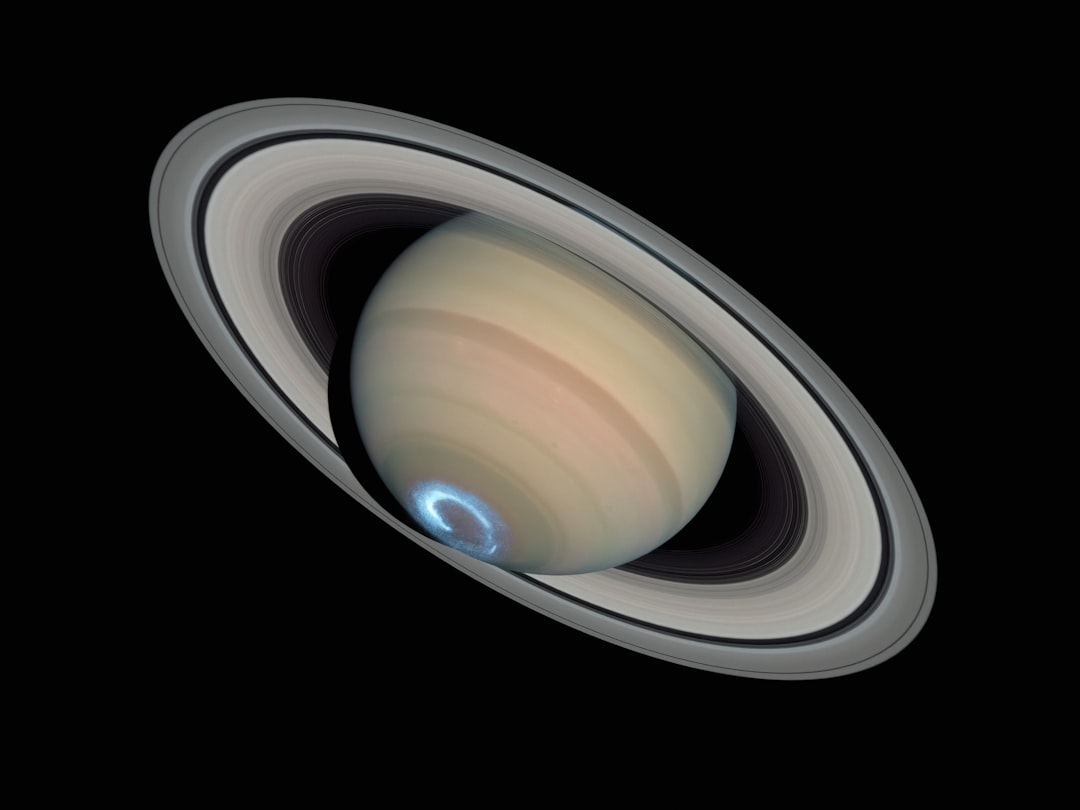
The relationship between our planet and its parent star is far more dynamic than most people realize. Every second of every day, the Sun's outer atmosphere—the corona—releases a continuous stream of solar wind carrying billions of tons of charged particles into space at speeds exceeding one million miles per hour. When this invisible river of plasma encounters Earth's magnetic field, the results range from the spectacular light shows of the aurora borealis and aurora australis to potentially devastating disruptions of our satellite networks, power grids, and communication systems. Understanding and predicting these interactions has never been more critical as humanity prepares for an era of sustained lunar presence and deep space exploration.
Understanding Magnetic Reconnection: The Key to Space Weather
At the heart of space weather phenomena lies a process called magnetic reconnection—a fundamental physical mechanism where magnetic field lines from different sources break apart and rejoin in new configurations, explosively releasing vast amounts of stored magnetic energy. Since its launch in 2015, NASA's Magnetospheric Multiscale (MMS) mission has been studying this phenomenon with unprecedented precision, using four identical spacecraft flying in a tight formation to capture three-dimensional snapshots of magnetic reconnection events as they occur.
The MMS constellation orbits through the magnetopause—the boundary region where Earth's magnetic field meets the solar wind—collecting data at a rate 100 times faster than any previous mission. This extraordinary temporal resolution allows scientists to observe magnetic reconnection on the timescales at which it actually occurs: mere milliseconds. The spacecraft measure magnetic fields, electric fields, and particle distributions with such accuracy that they can detect changes occurring over distances smaller than the length of a football field in the vast expanse of space.
"Magnetic reconnection is one of the most important processes in space physics, responsible for explosive energy release in solar flares, coronal mass ejections, and geomagnetic storms. Understanding it is essential for predicting space weather and protecting our technological infrastructure," explains the MMS science team in their mission overview.
The Space Umbrella Initiative: Citizen Scientists Join the Hunt
The newly launched Space Umbrella project represents an innovative approach to analyzing the massive volumes of data collected by the MMS mission. Despite the sophistication of automated analysis algorithms, human pattern recognition remains unmatched in identifying subtle features and unusual events in complex datasets. By recruiting citizen scientists from around the world, NASA aims to accelerate the discovery of the most significant magnetic reconnection events—those moments when Earth's magnetosphere and the solar wind engage in their most intense interactions.
Participants in the project examine visualizations of data from the MMS spacecraft, learning to distinguish between periods when the satellites are safely within Earth's protective magnetosphere and when they cross into the turbulent boundary region where reconnection occurs. The comprehensive tutorial system guides users through the identification process, teaching them to recognize telltale signatures in the data: sudden changes in magnetic field direction, spikes in particle density, and characteristic patterns in plasma flow velocities.
No Experience Required: Science for Everyone
One of the most remarkable aspects of the Space Umbrella project is its accessibility. Unlike many scientific endeavors that require years of specialized training, this citizen science initiative welcomes participants from all backgrounds and experience levels. The interactive tutorial breaks down complex concepts into understandable components, explaining how solar wind particles behave, what magnetic field lines represent, and why certain patterns in the data indicate significant reconnection events.
The project leverages the collective power of human observation—a concept that has proven remarkably successful in other NASA citizen science programs like Planet Hunters and Galaxy Zoo. When thousands of volunteers examine the same data, their combined classifications can achieve accuracy levels comparable to or exceeding those of individual expert analysts, while processing data volumes that would take professional scientists decades to review.
The Growing Threat of Space Weather to Modern Technology
The urgency of understanding space weather has intensified dramatically in recent years as our civilization has become increasingly dependent on space-based technologies vulnerable to solar storms. Geomagnetic storms—disturbances in Earth's magnetosphere caused by enhanced solar wind interactions—can induce powerful electrical currents in long-distance power transmission lines, potentially triggering cascading failures across entire electrical grids. The infamous Carrington Event of 1859, the most powerful geomagnetic storm on record, occurred before the age of electrical infrastructure, but a similar event today could cause trillions of dollars in damage and leave millions without power for extended periods.
Modern GPS navigation systems are particularly vulnerable to space weather effects. Solar storms can distort the ionosphere—the layer of Earth's atmosphere through which GPS signals travel—introducing errors that can throw off positioning calculations by tens of meters or more. For applications requiring precision navigation, from aircraft landing systems to autonomous vehicles, such disruptions could have serious safety implications. Similarly, satellite communications can be degraded or completely interrupted during severe space weather events, affecting everything from television broadcasting to military communications and financial transaction networks.
Protecting Future Space Explorers
As NASA's Artemis program prepares to establish a sustained human presence on the lunar surface, space weather forecasting takes on even greater significance. Unlike astronauts aboard the International Space Station, who orbit within Earth's protective magnetosphere, lunar explorers will be exposed to the full force of solar radiation and energetic particles. The Moon has no global magnetic field and only the thinnest wisp of an atmosphere, offering virtually no natural protection against solar particle events that can deliver dangerous radiation doses within hours.
Similarly, China and Russia's ambitious plans for an International Lunar Research Station (ILRS) and eventual crewed missions to Mars will require sophisticated space weather monitoring and forecasting capabilities. Astronauts traveling beyond Earth's magnetic shield need advance warning of solar storms to seek shelter in specially shielded areas of their spacecraft or habitats. The data being collected by MMS and analyzed through projects like Space Umbrella will help scientists develop better predictive models of when and where dangerous space weather conditions are likely to occur.
The Science Behind Earth's Magnetic Shield
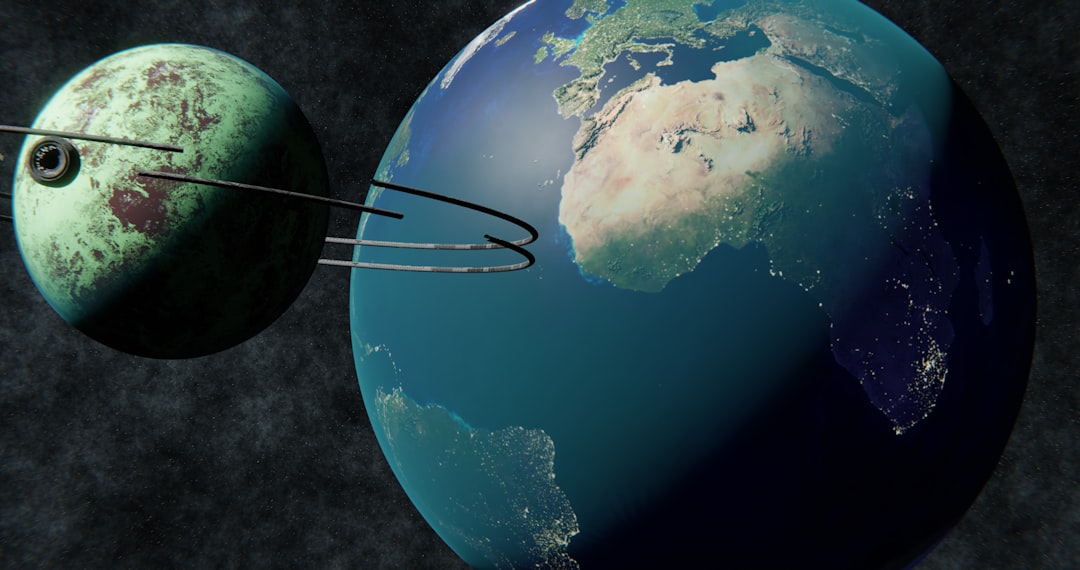
Earth's magnetosphere is a remarkable natural phenomenon generated by the geodynamo—the churning motion of molten iron and nickel in our planet's outer core. This liquid metal ocean, heated by radioactive decay and residual heat from Earth's formation, flows in complex patterns driven by the planet's rotation and convection currents. As this electrically conductive fluid moves, it generates electrical currents, which in turn produce magnetic fields—a process that has operated continuously for at least 3.5 billion years.
The resulting magnetic field extends tens of thousands of kilometers into space, creating a protective bubble that deflects most of the solar wind around our planet. However, this shield is far from static. The magnetosphere constantly responds to changes in solar wind pressure and direction, compressing on the sunward side to about 10 Earth radii and stretching into a long tail on the night side that extends beyond the Moon's orbit. During periods of intense solar activity, the magnetosphere can shrink dramatically, allowing energetic particles to penetrate deeper into near-Earth space.
Key Objectives and Expected Outcomes
The Space Umbrella project aims to achieve several important scientific goals through its citizen science approach:
- Event Identification: Cataloging the most intense magnetic reconnection events observed by MMS, creating a comprehensive database that scientists can use to study the full range of reconnection behaviors under different solar wind conditions
- Pattern Recognition: Identifying previously unrecognized patterns in magnetospheric dynamics that might indicate new physical processes or reveal subtle variations in how reconnection operates under different circumstances
- Statistical Analysis: Building robust statistics on the frequency and characteristics of different types of reconnection events, essential for developing accurate space weather forecasting models
- Model Validation: Providing observational data that can be used to test and refine theoretical models of magnetic reconnection and magnetospheric physics
- Public Engagement: Fostering public understanding of space weather science and its importance to modern society while demonstrating how citizen scientists can make meaningful contributions to cutting-edge research
Implications for Future Space Weather Forecasting
The insights gained from the Space Umbrella project will directly contribute to improving space weather forecasting capabilities—an increasingly critical need as our technological infrastructure becomes more sophisticated and vulnerable. Current space weather prediction models can provide general warnings of solar storm activity, but lack the precision needed to forecast specific impacts on particular technologies or geographic regions. By better understanding the detailed physics of magnetic reconnection and how it varies under different conditions, scientists can develop more accurate models that provide actionable forecasts with longer lead times.
Organizations like the NOAA Space Weather Prediction Center rely on continuous monitoring and sophisticated modeling to issue warnings and alerts to affected industries. The enhanced understanding of magnetospheric dynamics emerging from MMS observations and citizen science analysis will enable these forecasters to better anticipate when minor solar events might trigger major geomagnetic storms, and conversely, when apparently significant solar activity might have minimal terrestrial impact due to favorable magnetic field orientations.
"Understanding these solar storms can contribute to keeping our astronauts and technology safe," emphasizes NASA in their project announcement, highlighting the dual importance of this research for both robotic and human space exploration.
How to Participate and Make Your Contribution
Getting involved with the Space Umbrella project requires nothing more than a computer with internet access and a willingness to learn. Prospective citizen scientists simply visit the Space Umbrella project website and work through the interactive tutorial, which typically takes 15-20 minutes to complete. The tutorial uses actual MMS data to teach participants how to recognize key features: the relatively calm conditions inside the magnetosphere, the turbulent boundary layer where reconnection occurs, and the chaotic environment of the solar wind beyond Earth's magnetic protection.
Once trained, participants can begin classifying real observations from the MMS mission. Each classification takes only a minute or two, making it easy to contribute during short breaks or spare moments throughout the day. The project uses a consensus approach, with multiple volunteers examining the same data to ensure reliability. When several independent observers agree on a classification, scientists can be confident that the identification is accurate, even though it was made by non-experts.
This democratization of space science research represents a growing trend in modern astronomy and space physics. As missions generate ever-larger datasets—MMS alone produces terabytes of observations annually—the traditional model of analysis by small teams of professional scientists becomes increasingly untenable. Citizen science projects like Space Umbrella harness the collective intelligence of thousands of volunteers, dramatically accelerating the pace of discovery while engaging the public in the excitement of active scientific research. For anyone who has ever looked up at the aurora and wondered about the invisible forces shaping our cosmic neighborhood, this project offers a unique opportunity to contribute directly to unraveling those mysteries.