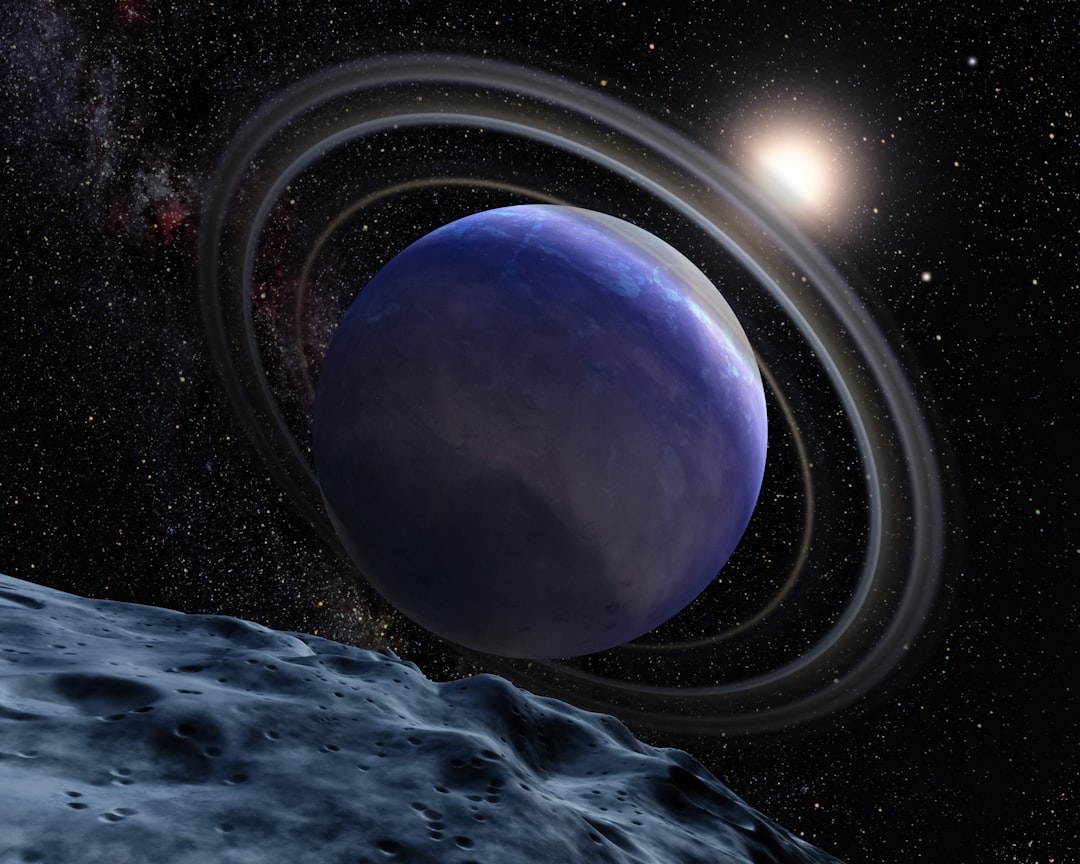
How NASA Plans to Build the Habitable Worlds Observatory: A Roadmap to Finding Earth's Twin
Among the most audacious scientific endeavors humanity has ever conceived, the Habitable Worlds Observatory (HWO) stands as a beacon of what our next generation of space exploration could achieve. For years, the concept existed largely as an aspirational proposal — a dream shared by thousands of astronomers and planetary scientists worldwide. Today, that dream is rapidly crystallizing into an engineering reality, complete with detailed technical milestones, dedicated project offices, and a clear-eyed understanding of the extraordinary technological challenges that must be overcome. The stakes could not be higher: the HWO is designed to answer one of the most profound questions in all of science — are we alone in the universe?
We have been following the remarkable journey of the Habitable Worlds Observatory for some time. Over the past several years, it has evolved from a bold proposal into a relatively detailed plan for what the next NASA Great Observatory should accomplish — namely, to directly image and characterize potentially habitable exoplanets orbiting nearby stars. In August 2024, NASA formally established the HWO Technology Maturation Project Office (TMPO) to coordinate the vast technological and scientific development required to make this mission a reality. The TMPO recently released a comprehensive technology development plan in pre-print form on arXiv, authored by M. Bolcar et al., laying out with striking clarity what must be accomplished before the Mission Concept Review (MCR), anticipated at the close of this decade.
"The Habitable Worlds Observatory represents our best near-term opportunity to search for biosignatures — chemical signs of life — in the atmospheres of Earth-like planets around Sun-like stars. It is, in every meaningful sense, a life-finder."
The Foundation: NASA's Technology Readiness Levels
NASA's Technology Readiness Level (TRL) framework is the agency's gold standard for measuring how mature a given technology is, running on a scale from TRL 1 (basic principles observed) all the way to TRL 9 (fully proven in operational environments). The TMPO has structured its development plan around bringing three critical technological "tracks" from their current nascent states up to a TRL 5 by the time of the Mission Concept Review. TRL 5 signifies that a technology has been validated in a relevant environment — not necessarily the vacuum of space itself, but in laboratory conditions that faithfully replicate the key stresses and demands the technology will encounter in space. This is a crucial intermediate milestone: ambitious enough to prove genuine viability, yet achievable within the decade-long timeline before the MCR.
The three tracks — the coronagraph instrument, telescope stability and pointing control, and advanced sensor and detector technologies — are deeply interdependent. The failure of any single one would fatally compromise the entire mission. Together, they represent the frontier of what human engineering can currently achieve.
Track One: The Coronagraph — Blocking Out the Blinding Light
Perhaps the most visually intuitive of the three challenges is also arguably the most technically demanding. The HWO Coronagraph Instrument (CI) must perform a feat analogous to standing in Times Square and trying to spot a single firefly hovering next to a lighthouse — from a distance of miles. Stars are so overwhelmingly bright compared to the planets that orbit them that directly imaging an Earth-like exoplanet requires suppressing the host star's light by a factor of 10-10 — ten billion to one — in the immediate vicinity of the star itself.
This extraordinary suppression ratio must be achieved even at extremely small angular separations from the host star, the so-called inner working angle of the coronagraph, which for HWO's primary science targets will need to be a fraction of an arcsecond. No coronagraph ever flown in space has come remotely close to the performance levels demanded of HWO's CI, which is why the technology is currently at only a modest TRL and represents the mission's most significant engineering frontier.
Deformable Mirrors and Wavefront Control
To achieve this level of starlight suppression, the HWO design incorporates a sophisticated wavefront sensing and control (WFSC) system built around a deformable mirror (DM) — a mirror whose surface shape can be actively adjusted with extraordinary precision. The planned deformable mirror will be controlled by an array of 96×96 linear actuators, totaling over 9,000 individual control points, each capable of adjusting the mirror surface to picometer-level precision — that is, to within a trillionth of a meter, roughly one-hundredth the diameter of a hydrogen atom.
These actuators must meet an almost impossibly demanding combination of requirements simultaneously:
- Ultra-high positional resolution: Sub-picometer repeatability to correct optical wavefront errors introduced by the telescope and instrument optics.
- Extreme reliability: The actuators must function flawlessly for years in the space environment without degradation or failure.
- Radiation hardness: The driver electronics that command each actuator must survive the harsh radiation environment of space without suffering bit-flips, latch-ups, or gradual performance degradation.
- Thermal stability: The actuators themselves must not introduce additional wavefront error as temperatures subtly fluctuate.
Next-Generation Photon Detectors
The light that successfully passes through this intricate coronagraphic system will be extraordinarily faint — we are, after all, trying to detect a planet that is ten billion times dimmer than its host star. Capturing this signal requires detectors of unprecedented sensitivity. The TMPO plan envisions deploying Electron-Multiplying Charge-Coupled Devices (EMCCDs), which use an internal gain register to amplify the signal from individual photons before readout, effectively reducing read noise to negligible levels. Even more intriguing is the possibility of deploying superconducting quantum sensors, such as Microwave Kinetic Inductance Detectors (MKIDs) or Transition Edge Sensors (TESs), which operate at cryogenic temperatures near absolute zero and offer single-photon sensitivity with essentially zero dark current noise. Both technology families offer the high quantum efficiency and near-zero background noise that HWO's demanding science requires.
Track Two: Telescope Stability — Holding Steady for Days at a Time
A coronagraph capable of achieving 10-10 contrast is only as useful as the telescope it is mounted on. If the telescope itself cannot maintain the extraordinary pointing and structural stability required, any contrast performance achieved in the laboratory will immediately be lost when the system is assembled and pointed at a real star. The HWO telescope must maintain its alignment and pointing stability not just for seconds or minutes, but for hours or even days, as the faint light from Earth-like exoplanets must be accumulated over extended observation periods to build up a detectable signal.
This requirement is almost incomprehensibly demanding. The telescope must hold its pointing to within tens of picometers of precision — equivalent to holding an intercontinental ballistic missile on target to within the width of a few atoms, continuously, for days at a time, all while orbiting the Sun at the L2 Lagrange point and being subjected to subtle but relentless perturbations.
Taming Thermal Expansion
One of the most insidious enemies of telescope stability is thermal expansion. As components of the telescope warm and cool — even by tiny fractions of a degree — they expand and contract, causing the entire optical system to "breathe." These changes can occur suddenly as the telescope's orientation changes relative to the Sun, manifesting as "creeps" and "lurches" in the structural components. Each such disturbance can inject wavefront error into the optical system, degrading coronagraph performance.
To combat this, HWO's engineers plan a multi-layered defense:
- Ultra-low expansion materials: The telescope structure and mirror substrates will be fabricated from materials with exceptionally low coefficients of thermal expansion (CTE), such as Corning ULE (Ultra-Low Expansion glass) or Schott Zerodur, both of which expand by only a few parts per billion per degree Celsius.
- Active thermal control: A sophisticated, active thermal management system will monitor temperatures across the telescope structure and apply precise heating or cooling to keep thermal gradients within acceptable bounds.
- Vibration isolation and micro-thrusters: The observatory will incorporate active vibration isolation systems to damp mechanical disturbances, while micro-thrusters will provide fine attitude control without imparting unwanted vibrations.
- Fast steering mirrors: Dedicated, small-format fast-steering mirrors within the optical train will provide real-time correction for residual pointing errors, acting as a final line of defense before light reaches the coronagraph.
Track Three: Advanced Sensors and Detectors — Seeing Across the Spectrum
The HWO is conceived not solely as an exoplanet-hunting machine, but as a true next-generation astrophysics observatory in the proud tradition of the Hubble Space Telescope and the James Webb Space Telescope. To fulfill the broad scientific mandate laid out in the landmark Astro2020 decadal survey — the influential report produced by the U.S. astronomical community that formally recommended the HWO as the top priority for the next large space mission — the observatory must be sensitive across an extraordinarily broad range of wavelengths, from the far-ultraviolet (FUV) at approximately 100 nanometers all the way to the near-infrared (NIR) at around 2 microns.
This spectral breadth is scientifically essential. Biosignature gases such as oxygen (O₂), ozone (O₃), water vapor (H₂O), methane (CH₄), and carbon dioxide (CO₂) each have characteristic absorption features distributed across this wavelength range. Detecting and confirming the presence of life on a distant world will likely require observing multiple biosignature features simultaneously, making broad spectral coverage a scientific necessity rather than a bonus capability.
New Mirror Coatings and Detector Technologies
Achieving sensitivity from the far-UV to the near-IR imposes severe requirements on the telescope's optical coatings. Conventional aluminum or gold mirror coatings that work well in the visible or infrared are essentially opaque at UV wavelengths. New broadband mirror coatings must be developed that maintain high reflectivity across this entire spectral range and can be applied uniformly over the full aperture of HWO's primary mirror — currently envisioned at roughly 6 meters in diameter — without any gaps, cracks, or thickness variations that would degrade UV performance.
Beyond mirror coatings, the science instrument suite will require a suite of cutting-edge detector and optical switching technologies:
- Large-format UV detectors: Current UV detector arrays are far too small and insufficiently sensitive for HWO's requirements. New, larger-format UV-optimized detector arrays with improved quantum efficiency must be developed.
- Next Generation Microshutter Arrays (NGMAs): Building on heritage from the JWST's Near Infrared Spectrograph (NIRSpec), NGMAs consist of tiny, individually addressable shutters that can select specific targets within a crowded field for spectroscopy while blocking light from all other sources. Next-generation versions must offer higher density, faster response times, and improved reliability.
- Digital Micromirror Devices (DMDs): Arrays of microscopic, individually tilting mirrors that can route light from selected targets into a spectrograph. DMDs offer an alternative or complementary approach to microshutter arrays for multi-object spectroscopy.
The "Crawl-Walk-Run" Development Strategy
Recognizing the enormous scope of the technical challenge, the TMPO has wisely adopted what it describes as a "crawl-walk-run" methodology for technology development. Rather than attempting to demonstrate full mission-level performance immediately, technologies will be progressively validated in increasingly demanding environments, building confidence and understanding at each step before committing to the next.
This approach draws explicitly on the rich — and sometimes painful — heritage accumulated during the development of predecessor missions. The James Webb Space Telescope, which experienced years of delays and significant cost overruns partly due to the need to solve novel engineering challenges, taught the community invaluable lessons about the importance of early, rigorous testing and the insidious ways in which subsystem-level performance can degrade when integrated into a complete observatory. The soon-to-fly Nancy Grace Roman Space Telescope, which will carry its own coronagraph technology demonstration instrument, will provide direct on-orbit heritage for space-based coronagraphy for the first time, representing a crucial intermediate step toward HWO's far more demanding requirements.
Ground-Based Test Beds: Simulating Space on Earth
A central element of the crawl-walk-run strategy is the development and operation of sophisticated ground-based test beds capable of replicating the key aspects of the space environment without actually going to space. The most important of these are:
- EPIC-5 (Exoplanet Imaging Coronagraph): A dedicated coronagraph test bed designed to demonstrate starlight suppression performance at or approaching the 10-10 contrast levels required for HWO, operating in a vacuum chamber to eliminate the atmospheric turbulence that would otherwise overwhelm the coronagraph's performance.
- HOST (Habitable Worlds Observatory Systems Testbed): A unique, purpose-built facility designed not just to test individual components, but to validate the integrated behavior of multiple interconnected subsystems working together. HOST will be the closest thing to a complete HWO optical system that can be assembled on the ground, and it will be essential for understanding how wavefront control, telescope stability, and instrument performance interact with and affect one another.
International Collaboration and the Path to the Mission Concept Review
Space science at the scale of the Habitable Worlds Observatory has long since transcended national boundaries. The TMPO report makes clear that international collaboration will be a cornerstone of HWO's development from the earliest stages. A dedicated international conference focused specifically on HWO technologies is planned for later this year, bringing together engineers and scientists from partner agencies including ESA (the European Space Agency) and potentially others from Asia and Canada. The TMPO report is expected to serve as a foundational reference document for these discussions, establishing a shared technical baseline and ensuring that international contributions are well-integrated into the overall development plan.
The engineering and science teams have several years remaining before the critical Mission Concept