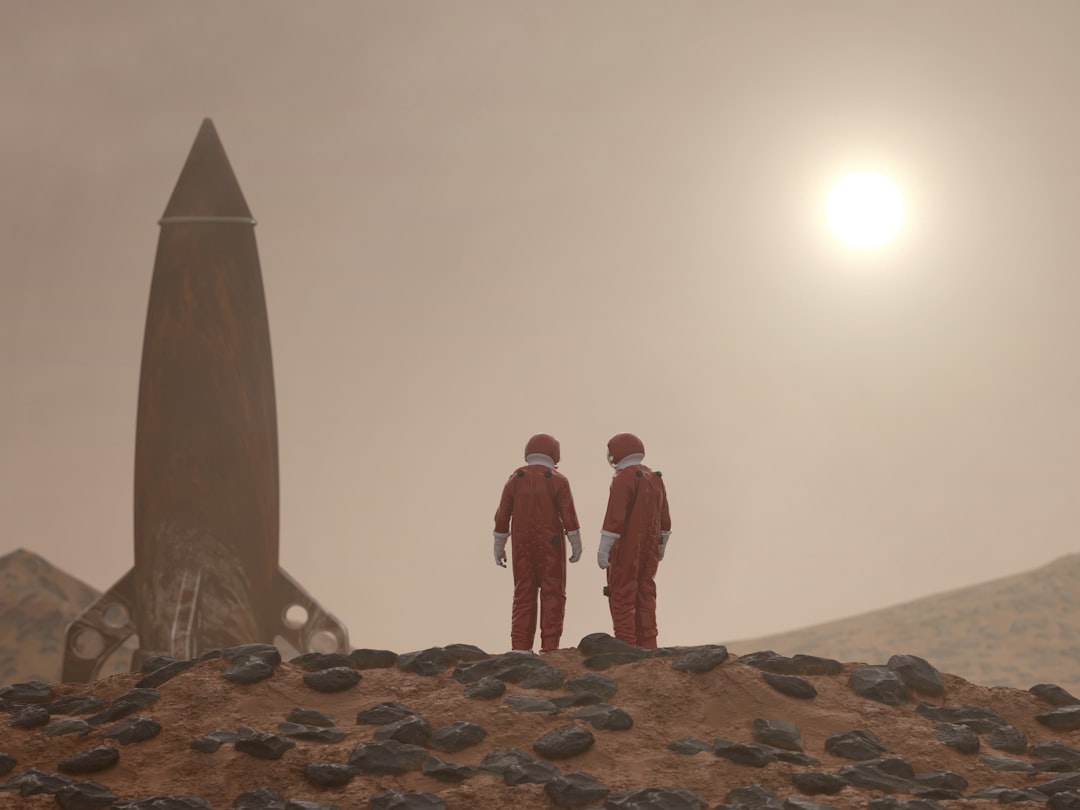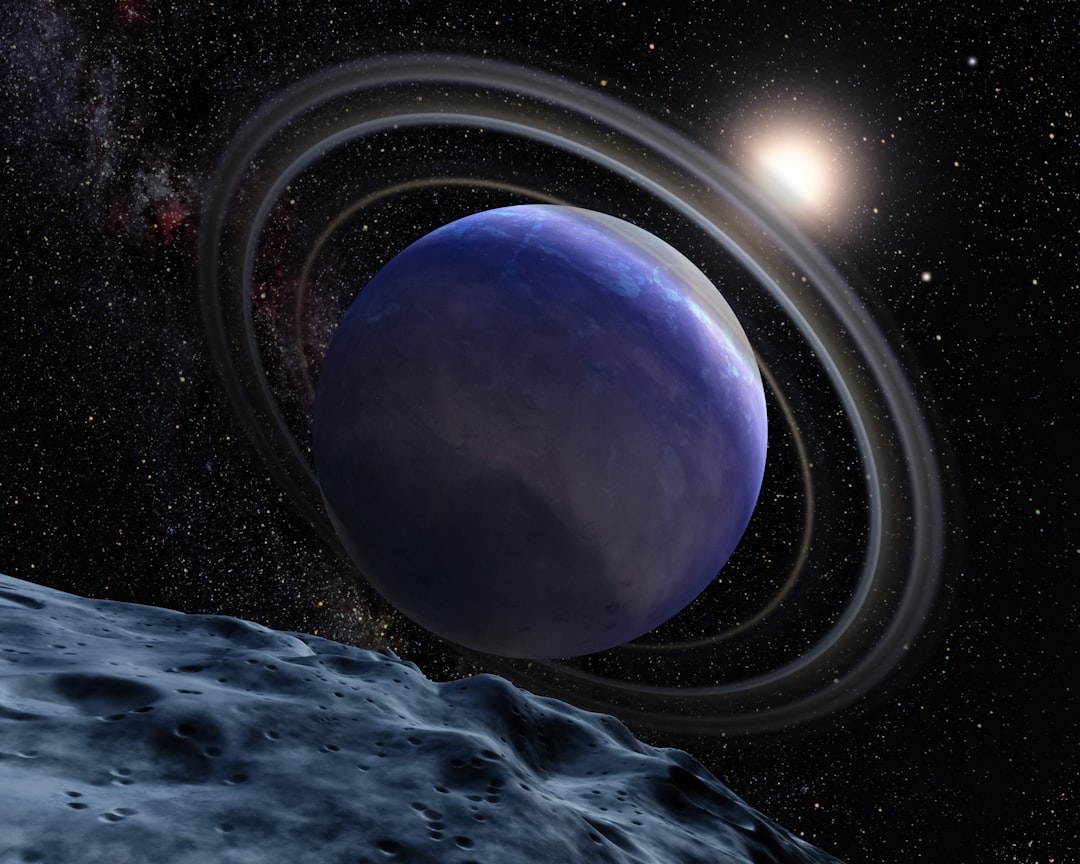
The quest to find life beyond Earth has traditionally focused on a relatively simple concept: the circumstellar habitable zone, often called the "Goldilocks Zone." This orbital region around a star maintains temperatures suitable for liquid water on planetary surfaces—a fundamental requirement for life as we know it. However, groundbreaking research from NASA's Ames Research Center challenges this one-dimensional thinking by introducing a revolutionary framework that accounts for something we've never seriously considered: what happens when civilizations don't stay confined to a single world?
Dr. Caleb Scharf, one of NASA's leading astrobiologists, has developed the concept of an Interplanetary Habitable Zone (IHZ)—a sophisticated model that recognizes technological civilizations, like our own, will inevitably expand beyond their home planets. This paradigm shift transforms our understanding of habitability from a simple binary question into a complex, multi-dimensional analysis that could reshape how we search for intelligent life across the cosmos.
Published in a comprehensive research paper, this new framework doesn't just ask "where can life exist?" but rather "where can civilizations thrive and expand?" The implications extend far beyond theoretical astrobiology, potentially guiding humanity's own expansion into the solar system while helping us identify which exoplanetary systems could harbor advanced civilizations capable of interplanetary travel.
Beyond the Traditional Goldilocks Zone: A Multi-Dimensional Approach
While the conventional habitable zone operates as a straightforward yes-or-no determination based primarily on temperature and liquid water potential, the Interplanetary Habitable Zone introduces remarkable complexity. Dr. Scharf's model incorporates four critical dimensions that interact in often counterintuitive ways, creating a dynamic framework that more accurately reflects the challenges and opportunities facing spacefaring civilizations.
The four fundamental dimensions include power availability, radiation environment, transportation difficulty, and material resource accessibility. According to the mathematical framework developed by Dr. Scharf, these factors don't simply add together—they interact in complex ways where two dimensions (power and resources) enhance habitability while two others (transport difficulty and radiation) constrain it. Understanding these interactions is crucial for predicting where technological civilizations might expand and how they might evolve across their stellar systems.
The Energy Equation: Power Availability Across the Solar System
At first glance, stellar energy availability appears straightforward: closer to the star means more available sunlight for solar panels and energy collection. However, the reality involves subtle trade-offs that significantly impact the viability of different orbital positions. Solar panel efficiency actually decreases as temperatures rise, creating a counterintuitive situation where proximity to abundant energy doesn't necessarily translate to optimal power generation.
This phenomenon occurs because photovoltaic materials experience reduced electron mobility at higher temperatures, degrading their conversion efficiency. According to research from NASA's Solar System Exploration program, silicon-based solar panels lose approximately 0.5% efficiency for every degree Celsius increase in temperature. Near Mercury's orbit, where solar irradiance is seven times greater than at Earth, panels might collect more photons but operate at significantly reduced efficiency due to extreme heat.
Conversely, in the outer solar system, panels operate at peak efficiency in the cold environment but receive dramatically less sunlight. At Jupiter's distance, solar irradiance drops to just 4% of Earth's levels, while at Saturn it plummets to 1%. This creates an optimal zone for solar energy collection that balances both factors—likely somewhere in the inner to mid-solar system, though the exact location depends on panel technology and cooling systems.
The Radiation Dilemma: Caught Between Two Cosmic Threats
One of the most fascinating aspects of the IHZ framework involves radiation exposure, which presents a double-edged sword for expanding civilizations. The radiation environment doesn't simply improve or worsen with distance from the star—instead, civilizations face two distinct radiation threats that trade off against each other across the solar system.
Close to their parent star, technological societies confront intense stellar radiation—high-energy particles produced by nuclear fusion in the star's core, along with dangerous solar flares and coronal mass ejections. These energetic particles can damage DNA, degrade materials, and pose severe health risks to biological organisms. The NASA Heliophysics Division has extensively documented how solar radiation varies with stellar activity cycles and proximity.
"The radiation environment in any planetary system creates an unavoidable trade-off. Move closer to the star to escape galactic cosmic rays, and you face increasingly intense stellar radiation. Move farther out, and cosmic rays become the dominant threat. There's no perfect solution—only optimization based on a civilization's technological capabilities," explains Dr. Scharf in his research.
However, venturing into the outer reaches of a planetary system exposes civilizations to galactic cosmic rays (GCRs)—high-energy particles originating from supernova explosions and other violent cosmic events throughout the Milky Way. These particles possess tremendous energy, capable of penetrating deep into spacecraft and habitats. The farther from the star's protective heliosphere, the more intense this cosmic ray bombardment becomes.
This creates what radiation scientists call a "radiation valley"—an optimal distance from the star where the combined radiation dose from both sources reaches a minimum. For our solar system, Earth occupies a relatively favorable position in this valley, though Mars sits near the outer edge where cosmic ray exposure begins to dominate.
Transportation Challenges: The Tyranny of the Rocket Equation
The difficulty of interplanetary transport represents perhaps the most familiar constraint in the IHZ framework for anyone versed in orbital mechanics. Moving between different positions in a planetary system requires changes in velocity—expressed as delta-v (Δv) in the mathematical notation beloved by aerospace engineers. This seemingly simple concept encompasses profound implications for civilizational expansion.
Multiple factors influence the delta-v budget required for interplanetary journeys. Distance between bodies plays an obvious role, but the gravitational wells of both the departure and destination worlds often dominate the energy equation. According to principles outlined by the European Space Agency's Space Science division, escaping from massive planets requires enormous energy expenditure, potentially creating what Dr. Scharf describes as "gravitational traps" that could imprison technological civilizations on super-Earths or gas giant moons.
Consider the contrast between launching from Earth (requiring approximately 11.2 km/s escape velocity) versus launching from the Moon (requiring only 2.4 km/s). This five-fold difference in energy requirements fundamentally shapes the economics and feasibility of space expansion. For civilizations that evolved on super-Earths with two or three times Earth's mass, the energy barriers to space access could prove insurmountable with chemical propulsion, potentially explaining why we haven't detected their radio signals—they might be trapped in deep gravitational wells.
Material Resources: The Foundation of Interplanetary Economies
The fourth dimension in the IHZ framework addresses material resource accessibility—the availability of raw materials necessary for building infrastructure, creating fuel, and sustaining expanding populations. While these resources come with their own gravitational challenges, they provide the essential building blocks for any space-based economy.
Asteroids emerge as the critical factor in this dimension. These small bodies offer an ideal combination of accessible resources and minimal gravitational constraints. The asteroid belt between Mars and Jupiter contains vast quantities of metals, water ice, and other valuable materials, while requiring minimal energy to access and exploit compared to planetary surfaces. A single metallic asteroid might contain more platinum-group metals than have ever been mined on Earth, along with iron, nickel, and other construction materials.
Dr. Scharf's model recognizes that resource-rich regions like asteroid belts could become focal points for expanding civilizations, serving as industrial centers and waypoints for further exploration. The relatively low delta-v requirements for moving between asteroids, combined with their material wealth, creates what economists might call a "resource sweet spot" in the IHZ framework.
Computational Modeling: Predicting Civilizational Expansion
To test the IHZ framework's practical applications, Dr. Scharf developed sophisticated computer simulations that model how technological civilizations might expand through their planetary systems. These simulations employed one thousand digital "agents"—representing individual spacecraft, colonies, or population units—programmed with decision-making algorithms that balanced multiple objectives.
Every six months (in simulation time), each agent faced choices: remain in place, harvest local resources, reproduce (creating new agents), or migrate to a different location in the system. The simulation incorporated all four IHZ dimensions, forcing agents to navigate the complex trade-offs between energy availability, radiation exposure, transportation costs, and resource access. The results proved both illuminating and surprising.
When calibrated to match our own solar system's parameters, the simulation produced a fascinating expansion sequence. Humanity's simulated counterparts first targeted Mars, then moved to the asteroid belt, and only afterward established significant presence on the Moon. This computational prediction offers intriguing insights into current debates about space exploration priorities, suggesting that the asteroid belt's combination of resources and accessibility might ultimately prove more valuable than lunar proximity—despite the Moon's obvious advantages for initial expansion.
The TRAPPIST-1 Tragedy: When Habitability Doesn't Guarantee Survival
Perhaps the most sobering finding from Dr. Scharf's research involves the TRAPPIST-1 system—a planetary system located approximately 40 light-years from Earth that initially generated tremendous excitement in the astrobiology community. This system hosts seven Earth-sized rocky planets orbiting an ultra-cool red dwarf star, with three planets positioned in the traditional habitable zone where liquid water could exist on their surfaces.
However, applying the IHZ framework to TRAPPIST-1 reveals a grim scenario. According to Dr. Scharf's calculations, any advanced civilization arising in this system faces extinction within approximately 45 years of beginning interplanetary expansion. The primary culprit? Lethal radiation exposure from the red dwarf star's intense flare activity combined with the system's compact architecture.
Red dwarf stars, while long-lived and common throughout the galaxy, exhibit violent stellar activity including frequent, powerful flares that bathe their planetary systems in harmful radiation. The TRAPPIST-1 planets orbit extremely close to their dim star—the outermost planet completes its orbit in just 20 days—placing them directly in the line of fire for these radiation bursts. Research from the James Webb Space Telescope has confirmed the challenging radiation environment around red dwarf systems.
The simulation revealed that only by artificially reducing radiation levels to half their actual values could a TRAPPIST-1 civilization survive and expand. This finding dramatically reduces the likelihood that advanced, spacefaring civilizations could evolve in red dwarf systems—unfortunate news given that red dwarfs comprise approximately 75% of all stars in the Milky Way galaxy.
Implications for Humanity's Future and the Search for Intelligent Life
The Interplanetary Habitable Zone framework offers profound implications both for humanity's expansion into space and our search for extraterrestrial intelligence. By recognizing that habitability extends beyond single planets to encompass entire planetary systems, we gain new tools for evaluating which stellar systems might harbor advanced civilizations and which represent dead ends for technological development.
For our own species, the IHZ model suggests that our current trajectory—focusing on Mars exploration while developing asteroid mining capabilities—aligns well with the optimal expansion strategy for a civilization in a G-type star system like our Sun. The framework validates current planning while highlighting potential pitfalls, such as the radiation challenges of long-duration missions and the importance of developing efficient transportation systems to reduce delta-v requirements.
In the broader context of astrobiology and SETI (the Search for Extraterrestrial Intelligence), the IHZ framework helps explain potential solutions to the Fermi Paradox—the puzzling absence of detected alien civilizations despite the vast number of potentially habitable planets. Systems like TRAPPIST-1, once considered promising candidates for life, may actually represent evolutionary dead ends where civilizations cannot expand beyond their home worlds without facing extinction-level radiation exposure.
As astronomical surveys continue discovering thousands of exoplanetary systems through missions like NASA's TESS (Transiting Exoplanet Survey Satellite), the IHZ framework provides crucial context for prioritizing which systems deserve detailed study. Rather than simply cataloging planets in traditional habitable zones, we can now evaluate entire systems for their potential to support expanding technological civilizations.
Future Research Directions and Refinements
Dr. Scharf's pioneering work on the Interplanetary Habitable Zone opens numerous avenues for future research and model refinement. The current framework, while sophisticated, makes certain simplifying assumptions that future studies could address with additional complexity and observational data.
Key areas for future development include:
- Technological advancement modeling: Incorporating how rapidly evolving technologies (advanced propulsion, radiation shielding, artificial intelligence) might shift the boundaries of the IHZ over time
- Stellar evolution effects: Accounting for how stars change over billions of years, potentially shifting optimal zones as civilizations age alongside their suns
- Multi-star systems: Extending the framework to binary and trinary star systems, where gravitational dynamics and radiation environments become significantly more complex
- Biological vs. post-biological civilizations: Considering how artificial intelligence or uploaded consciousness might fundamentally alter habitability requirements, potentially expanding viable zones
- Economic and social factors: Integrating game theory and economic modeling to better predict civilizational decision-making regarding expansion and resource allocation
As our understanding of exoplanetary systems deepens and our own civilization takes its first steps toward becoming truly interplanetary, the IHZ framework will undoubtedly evolve and improve. What remains constant is the fundamental insight: habitability isn't just about where life can exist, but where civilizations can thrive, expand, and ultimately survive across cosmic timescales.
The Interplanetary Habitable Zone represents more than just a theoretical framework—it's a roadmap for humanity's future among the stars and a new lens through which we can search for our cosmic companions. As we continue exploring our own solar system and studying distant planetary systems, this multi-dimensional approach to habitability will prove increasingly essential for understanding our place in the universe and identifying where we might find others who, like us, have ventured beyond their home worlds to explore the cosmic ocean.