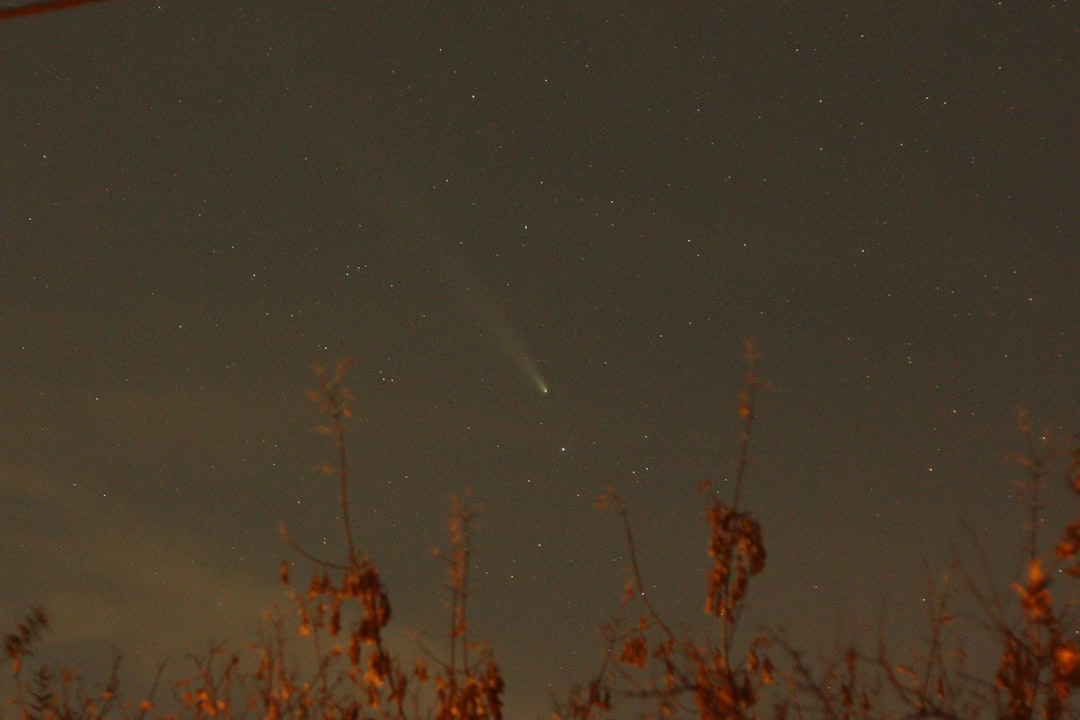
In a stunning display of cosmic awakening, 3I/ATLAS—humanity's third confirmed interstellar visitor—has dramatically transformed from a dormant, inert object into an actively outgassing comet spewing water, organic compounds, and even deadly cyanide. After spending potentially billions of years drifting through the frozen darkness of interstellar space, this ancient wanderer has finally succumbed to the Sun's intense radiation, cracking open its protective crust to reveal the pristine materials locked within since the formation of its parent star system.
New observations from NASA's SPHEREx observatory, detailed in a groundbreaking pre-print paper led by Dr. Carey Lisse of Johns Hopkins University Applied Physics Laboratory, reveal the dramatic metamorphosis this interstellar comet underwent following its closest approach to our Sun. The findings, published on arXiv, provide unprecedented insights into the composition and behavior of objects that have journeyed across the vast gulfs between stars—offering a rare window into the chemical makeup of planetary systems far beyond our own.
The transformation is nothing short of spectacular: water production increased by nearly 40-fold, while carbon dioxide emissions skyrocketed to 80 times their previous levels. This dramatic awakening represents one of the most significant observational opportunities in modern astronomy, allowing scientists to witness the "death throes" of an ancient comet that may not have encountered stellar radiation this intense in billions of years.
The Sleeping Giant: 3I/ATLAS Before Perihelion
When SPHEREx (Spectro-Photometer for the History of the Universe, Epoch of Reionization, and Ices Explorer) first observed 3I/ATLAS during its preliminary observational campaign in August 2024, the interstellar visitor appeared remarkably quiet. The spacecraft, which launched in March 2024 with a primary mission to map the entire sky in near-infrared wavelengths every six months, identified 3I/ATLAS as a prime "target of opportunity" for its secondary mission objectives.
During these early observations, the comet exhibited minimal activity—barely any outgassing and virtually no detectable water vapor. This dormant state wasn't entirely surprising to planetary scientists familiar with the harsh conditions of interstellar space. According to the research team's analysis, the comet had been subjected to billions of years of bombardment by galactic cosmic rays—high-energy particles that permeate the space between stars.
This relentless cosmic ray bombardment had fundamentally altered the comet's surface composition, creating what researchers describe as a radiation-processed mantle—essentially a protective shell of chemically modified material depleted of volatile ices that would normally sublimate (transition directly from solid to gas) when exposed to heat. This irradiated crust effectively sealed the pristine, primordial ices beneath, preserving them in a time capsule spanning potentially billions of years and light-years of interstellar travel.
"What we're witnessing is essentially an archaeological excavation conducted by the Sun itself—peeling back layers of radiation-damaged material to reveal the pristine composition of matter from another star system," explains Dr. Lisse in the research paper.
The Sun's Thermal Assault: Breaking Through the Cosmic Shell
As 3I/ATLAS approached its perihelion—the point of closest approach to the Sun—in late 2024, it passed behind our star from Earth's perspective, temporarily disappearing from view. When it reemerged in December 2024, astronomers and comet researchers worldwide trained their instruments on the returning visitor, anticipating significant changes.
They were not disappointed. SPHEREx's December observations revealed that the Sun's intense thermal radiation had finally breached the comet's protective crust, triggering a cascade of sublimation events as buried volatile compounds were suddenly exposed to temperatures they hadn't experienced in eons. The thermal wave from our star penetrated deep into the comet's interior, causing dramatic outgassing that transformed 3I/ATLAS from an inert rock into an active, evolving comet.
The scale of this transformation provides crucial insights into the thickness and composition of the radiation-processed mantle. The fact that it took such close proximity to the Sun—and such intense heating—to crack this protective layer suggests that interstellar comets may retain their volatile-rich interiors far better than previously thought, even after billions of years of cosmic ray exposure.
Compositional Analysis: A Treasure Trove of Organic Chemistry
The spectroscopic data from SPHEREx's December observations revealed a complex chemical inventory that reads like a recipe for the building blocks of life. The most dramatic changes included:
- Water (H₂O): Production rates increased by approximately 40 times compared to August measurements, indicating massive sublimation of water ice from the comet's interior
- Carbon Dioxide (CO₂): Emissions jumped to 80 times the original readings, suggesting vast reserves of CO₂ ice were locked beneath the surface
- Carbon Monoxide (CO): The CO/CO₂ ratio shifted to approximately 2.5, bringing 3I/ATLAS in line with carbon-monoxide-dominant comets observed in our own solar system
- Organic Compounds: A rich mixture of complex molecules including methanol (CH₃OH), formaldehyde (CH₂O), methane (CH₄), and ethane (C₂H₆)—though these remain difficult to distinguish individually in SPHEREx's spectroscopic signatures
- Hydrogen Cyanide (HCN): A completely new spectral feature at 0.925 micrometers appeared in the December data, indicating the presence of this toxic but scientifically fascinating compound
The detection of hydrogen cyanide is particularly significant for astrobiologists, as HCN plays a crucial role in prebiotic chemistry—the formation of complex organic molecules that may lead to the origins of life. Its presence in an interstellar comet suggests that the chemical ingredients for life may be distributed throughout the galaxy via these wandering ice balls.
Unusual Morphology: The Pear-Shaped Mystery
Beyond the chemical composition, the physical structure of 3I/ATLAS's coma (the cloud of gas and dust surrounding the nucleus) presents its own puzzles. Rather than exhibiting the typical comet appearance with a distinct anti-sunward tail pushed by solar radiation pressure, 3I/ATLAS displays what researchers describe as a "pear-shaped" morphology—and they mean this literally rather than figuratively.
The "stem" of this pear points toward the Sun, representing the region of most intense outgassing where solar heating is strongest. However, the expected tail extending away from the Sun is conspicuously absent. The research team's analysis suggests this unusual appearance results from the unusually large particle sizes in the comet's coma.
Typically, comet tails form when microscopic dust particles (typically micrometers in size) are pushed away from the nucleus by solar radiation pressure—the physical force exerted by photons of light. However, the particles surrounding 3I/ATLAS appear to be much larger—on the order of centimeters to decimeters (roughly 1-10 centimeters in diameter). These larger chunks are too massive to be significantly affected by radiation pressure, instead forming a more symmetric halo around the nucleus.
This observation suggests that 3I/ATLAS's radiation-processed crust isn't simply vaporizing—it's fragmenting into relatively large pieces as the volatiles beneath sublimate and create pressure. This fragmentation process may be fundamentally different from what occurs with solar system comets that have been regularly "refreshed" by multiple passages near the Sun.
Witnessing Cosmic Death: The Fate of 3I/ATLAS
In the most poetic sense, astronomers are witnessing the slow death of an object that has survived for billions of years in the frozen darkness between stars. The intense outgassing and mass loss documented by SPHEREx indicate that 3I/ATLAS is literally evaporating as it experiences what may be the closest stellar encounter in its entire existence.
However, the prognosis isn't entirely grim. The comet is now traveling away from the Sun on its hyperbolic trajectory—a path that will eventually carry it back into interstellar space. As the distance from our star increases, the intensity of solar radiation diminishes rapidly, following an inverse-square law. This means the thermal assault on 3I/ATLAS will progressively weaken, allowing the remaining volatile-depleted material to cool and stabilize.
Current models suggest that 3I/ATLAS will survive its solar system passage intact, albeit significantly altered. It will carry on its interstellar journey, but now with a fresh surface layer exposed to cosmic rays—beginning the billions-year process of radiation processing all over again. By the time it encounters another star (if it ever does), it will once again sport a protective crust of radiation-damaged material.
The Final Observation: SPHEREx's April Encore
The scientific story of 3I/ATLAS isn't over yet. SPHEREx is scheduled for one final observational campaign in April 2025, providing a third data point to track the comet's evolution as it retreats from the inner solar system. This observation will be crucial for understanding how quickly the outgassing subsides and whether any surprises remain hidden in the comet's interior.
These April observations will help researchers answer several outstanding questions: Has the outgassing peaked, or will deeper volatile reservoirs continue to be exposed? Will the particle size distribution in the coma change as different layers of the nucleus are revealed? Are there compositional variations that might indicate the comet formed in distinct layers or underwent partial differentiation in its parent system?
Broader Implications for Interstellar Object Science
The detailed observations of 3I/ATLAS provide invaluable data for understanding interstellar objects more broadly—a field of study that barely existed before the discovery of 1I/'Oumuamua in 2017. Each interstellar visitor offers a unique opportunity to sample material from other star systems without the need for impossibly distant space missions.
The findings from 3I/ATLAS challenge and refine our understanding in several key areas:
- Radiation Processing: The thickness and effectiveness of radiation-damaged mantles on interstellar objects appears greater than some models predicted, suggesting these visitors may preserve their primordial compositions better than expected
- Compositional Diversity: The similarity between 3I/ATLAS's composition (once activated) and solar system comets suggests that comet formation processes may be relatively universal across different stellar environments
- Outgassing Dynamics: The unusual particle sizes and morphology of 3I/ATLAS's coma indicate that the physical processes governing interstellar comet behavior may differ significantly from their solar system counterparts
- Organic Chemistry Distribution: The detection of complex organic molecules and cyanide compounds supports the hypothesis that the chemical building blocks of life are widespread throughout the galaxy
Future missions and observatories, including the ESA's Comet Interceptor—specifically designed to rendezvous with pristine comets or interstellar objects—will build upon the foundation established by observations of 3I/ATLAS. Each interstellar visitor detected and characterized brings us closer to understanding the full diversity of planetary systems and the processes that govern matter throughout our galaxy.
As 3I/ATLAS continues its journey back into the cosmic darkness, it leaves behind not only a trail of sublimated gases but also a wealth of scientific knowledge that will inform decades of future research into the nature of our galactic neighborhood and the materials that connect all stellar systems in a vast, interconnected web of wandering worlds.