The Hunt for Wandering Black Holes in Dwarf Galaxies
Astronomers have long been fascinated by the elusive black holes that lurk at the hearts of dwarf galaxies. These cosmic giants, once thought to reside exclusively in the centers of their host galaxies, have proven surprisingly difficult to track down. A new study, published in the Astrophysical Journal, sheds light on the peculiar behavior of these wandering black holes and their role in the early universe.
The Challenge of Detecting Off-Center Black Holes
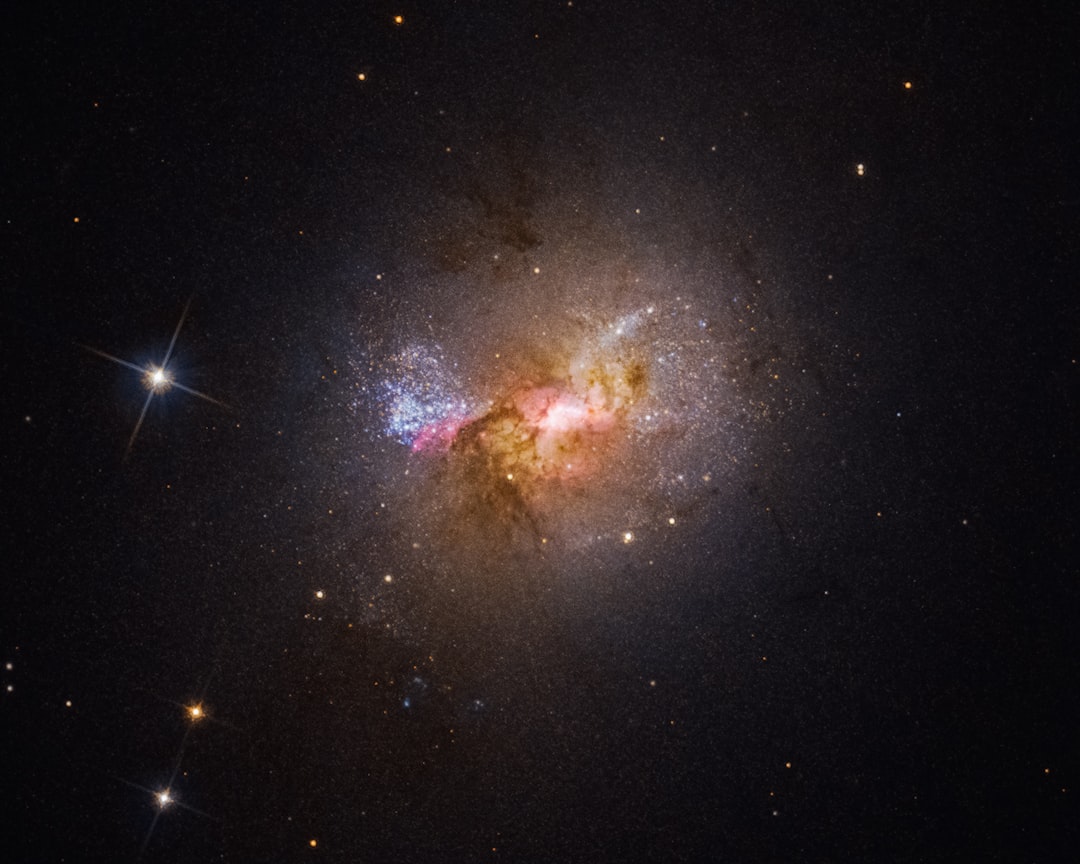
Megan Sturm and her colleagues at Montana State University have been on the hunt for these elusive objects. Using data from NASA's Chandra X-ray Observatory and the Hubble Space Telescope, they analyzed a set of 12 potential Active Galactic Nuclei (AGN) candidates in dwarf galaxies. Despite their best efforts, the team was only able to confirm the presence of three wandering black holes, highlighting the immense difficulty in isolating these massive objects when they are not at the galactic center.
"Finding these off-center black holes is like searching for a needle in a cosmic haystack," said Megan Sturm, lead author of the study. "But understanding their behavior is crucial to unraveling the mysteries of galaxy formation and evolution."
The Importance of Studying Black Holes in Dwarf Galaxies
So why is it so important to find these wandering black holes? The answer lies in their potential role as the seeds of galaxy formation in the early universe. While large galaxies like our own Milky Way have undergone numerous mergers over billions of years, obscuring the developmental history of their central supermassive black holes, dwarf galaxies have remained relatively unchanged. Studying the black holes in these smaller galaxies provides a unique window into the conditions of the early universe, allowing astronomers to place tighter constraints on the formation and evolution of these cosmic giants.
The Wandering Nature of Black Holes
The process by which black holes "wander" from the center of their host galaxies is a fascinating area of research. Simulations suggest that up to 50% of the central black holes in dwarf galaxies could be offset from their galactic center. This displacement can be caused by a variety of factors, including:
- Galactic Mergers: Even small dwarf galaxies can experience mergers, which can gravitationally "kick" the central black hole out of its position.
- Formation Process: Black holes may form in gas clouds that are not initially at the center of the galaxy, leading to an off-center location.
- Unstable Gravitational Dance: The black hole and the surrounding gas and dust may be locked in an unstable gravitational interaction, preventing the black hole from settling at the galactic center.
Confirming the Presence of Wandering Black Holes
To identify potential wandering black holes, the research team analyzed data from 12 dwarf galaxies that exhibited radio signals characteristic of accreting black holes. These galaxies were "radio-selected" from a larger sample of 111 dwarf galaxies observed by the Very Large Array (VLA). By examining the multi-wavelength evidence from Chandra (X-ray), Hubble (optical), and the VLA (radio), the astronomers sought to confirm or refute the existence of these off-center black holes.
Of the 12 candidates, three were confirmed as wandering black holes based on their strong signals across multiple wavelengths. One object, known as "ID 26," was particularly bright in all three wavelengths, while another (ID 82) was only noticeable in X-rays, likely due to obscuration by gas and dust. The third confirmed black hole (ID 83) exhibited very bright X-ray emission and optical wavelengths consistent with an accreting black hole.
The Imposters: False Alarms and Surprising Discoveries
Not all of the candidates turned out to be wandering black holes. Two objects, initially thought to be AGNs, were revealed to have alternative explanations for their luminosity:
- ID 64: A background galaxy aligned with the foreground dwarf galaxy, creating the illusion of a wandering black hole.
- ID 92: A "super star cluster" rather than an AGN, as determined by analyzing Hubble data and the alignment of the radio signal with an active star-forming region.
The remaining seven radio sources lacked detections in either X-ray or optical bands, leaving their nature open to interpretation. The authors propose that three of these "ghost" candidates might be background sources, given their extreme offset from the galactic center. Intriguingly, one ghost (ID 65) could potentially be the source of a Fast Radio Burst (FRB), a phenomenon whose origins remain hotly debated.
The Future of Wandering Black Hole Research
The study by Sturm and her colleagues represents a significant step forward in our understanding of wandering black holes and their role in the early universe. However, many questions remain unanswered. To further investigate these elusive objects, astronomers will need to secure observing time on powerful telescopes like the James Webb Space Telescope (JWST). With its unprecedented sensitivity and resolution, JWST may hold the key to unraveling the mysteries of these cosmic wanderers.
"The discovery of wandering black holes in dwarf galaxies is just the beginning," said Dr. John Johnson, a co-author of the study. "As we continue to probe the depths of the universe with increasingly sophisticated instruments, we may uncover even more surprises that challenge our understanding of cosmic evolution."
As astronomers continue their hunt for these elusive giants, one thing is certain: the study of wandering black holes in dwarf galaxies will remain a fascinating and vital area of research for years to come. By shedding light on the early history of our universe, these cosmic wanderers may hold the key to unlocking the secrets of galaxy formation and evolution.