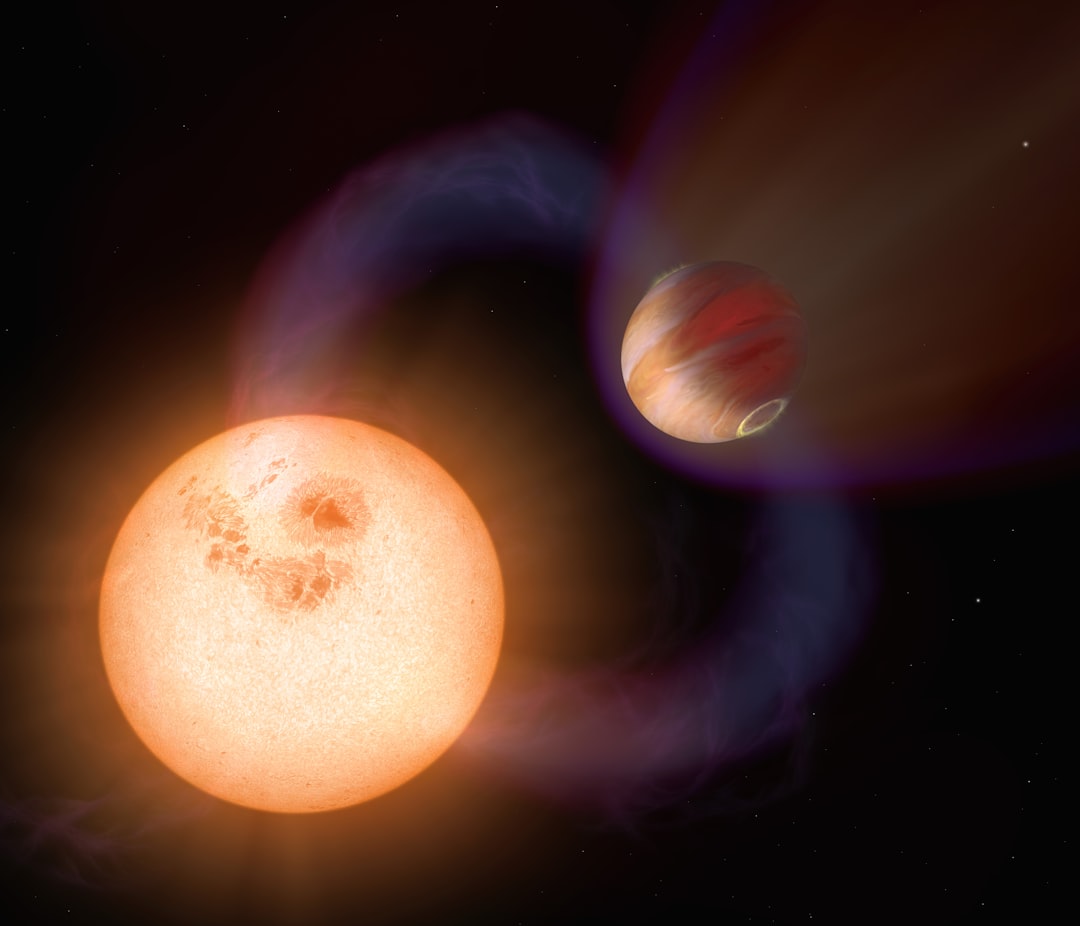
In the year 774 CE, our Sun unleashed a cataclysmic eruption of such extraordinary magnitude that its signature remains etched in the cellular structure of trees across the entire planet. This extreme solar particle event bombarded Earth's atmosphere with high-energy cosmic rays, initiating a cascade of nuclear reactions that generated unprecedented levels of radioactive carbon-14. As trees worldwide photosynthesized and grew, they unknowingly became living archives, incorporating this radioactive isotope into their annual growth rings and preserving evidence of a solar storm far more powerful than anything witnessed in modern times.
These catastrophic solar eruptions, now known as Miyake events after the Japanese scientist who first identified them, represent the most violent manifestations of space weather in Earth's historical record. To put their magnitude in perspective, these ancient storms dwarf even the infamous 1859 Carrington Event, which generated auroras visible near the equator and caused telegraph systems to spark and catch fire across North America and Europe. Understanding these prehistoric solar outbursts has become increasingly urgent as our modern civilization grows ever more dependent on vulnerable technological infrastructure including satellites, GPS systems, power grids, and communication networks that could be catastrophically disrupted by a similar event today.
However, a fascinating complication has emerged in scientists' efforts to decode these ancient solar records. A comprehensive new study led by researchers at Northern Arizona University and West Virginia University has revealed that tree ring chronologies are far more complex biological instruments than previously understood, with significant implications for how we interpret Earth's history of extreme space weather.
The Biological Archive: How Trees Capture Cosmic Events
The fundamental mechanism behind tree-ring dating of solar storms involves a sophisticated chain of atmospheric and biological processes. When high-energy solar particles penetrate Earth's magnetic shield during extreme events, they collide with nitrogen and oxygen molecules in the upper atmosphere, triggering nuclear reactions that produce radioactive carbon-14 isotopes. This cosmogenic carbon-14 then mixes with atmospheric carbon dioxide and gradually disperses throughout the troposphere.
Trees, through the process of photosynthesis, absorb this carbon dioxide and incorporate it into glucose molecules that fuel growth and wood formation. During normal years, atmospheric carbon-14 levels remain relatively stable, producing a baseline signature in tree rings. But during a Miyake event, radioactive carbon production spikes dramatically sometimes increasing by 10-15% above background levels creating distinctive markers that persist in wood for millennia. Scientists at institutions like Columbia University's Tree Ring Laboratory can measure these ancient carbon-14 concentrations with remarkable precision, effectively reading a molecular record of solar activity stretching back thousands of years.
This dendrochronological approach has already identified at least five confirmed Miyake events in the past 10,000 years, occurring around 12,350 BCE, 7176 BCE, 5259 BCE, 774 CE, and 993 CE. Each represents a solar storm of staggering intensity, releasing energy equivalent to thousands of modern solar flares compressed into days or weeks.
The Carbon Storage Paradox: When Biology Complicates History
Despite the elegance of using tree rings as natural dosimeters for cosmic radiation, researchers have encountered a perplexing problem that threatens the accuracy of their reconstructions. When comparing tree ring records from different species and geographical locations for the same Miyake event, frustrating inconsistencies emerge. Some trees display sharp, well-defined carbon-14 spikes concentrated in a single growth ring, while others show gradual increases spread across multiple years. The timing and magnitude of these signals vary significantly between species and even between individual trees, making it extraordinarily difficult to pinpoint exactly when storms occurred or determine their true intensity.
"Although tree rings are one of our best tools for reading Earth's history, they're not perfect instruments. Trees are living organisms with complex metabolisms, not simple recording devices," explains West Virginia University scientist Amy Hessl, lead author of the groundbreaking study.
The research team, which included co-authors Mariah Carbone and Andrew Richardson from Northern Arizona University, discovered that the root of this inconsistency lies in how trees actually use carbon at the cellular level. Contrary to the simplified assumption that trees immediately convert atmospheric carbon dioxide into wood, the reality involves a far more complex process of carbon storage and allocation that can span months or even years.
Species-Specific Carbon Strategies
Different tree species have evolved distinctly different strategies for carbon acquisition, storage, and utilization strategies that directly impact how faithfully they record atmospheric signals. Fast-growing deciduous species like oak and maple typically exhibit rapid carbon turnover, growing vigorously in spring using recently photosynthesized carbon from that same growing season. These species tend to produce sharper, more temporally precise records of atmospheric carbon-14 variations.
Conversely, many coniferous species, particularly pines and spruces, rely heavily on non-structural carbohydrate reserves accumulated during previous growing seasons. A pine tree forming new wood in May might actually be utilizing carbon that was photosynthesized the previous July or even earlier, effectively smearing the atmospheric signal across multiple annual rings. This biological time-lag can introduce significant uncertainties when attempting to date events to specific years or seasons.
Research conducted at USDA Forest Service laboratories has shown that some species can store up to 30% of their annual carbon budget as starch and sugars in roots and stems, drawing on these reserves during periods of stress or rapid growth. This storage capacity varies dramatically not only between species but also in response to environmental conditions.
Environmental Factors and Signal Preservation
The study revealed that climate and growing conditions play crucial roles in determining how clearly trees record atmospheric carbon-14 spikes. Trees growing in harsh, marginal environments such as high elevations, arid regions, or extreme latitudes tend to maintain larger carbohydrate reserves as an insurance policy against droughts, late frosts, or shortened growing seasons. This enhanced carbon storage can significantly dilute the spike from a Miyake event, spreading it across three or four annual rings instead of concentrating it in one.
Growing season timing introduces another layer of complexity. Trees that complete most of their annual growth during a brief spring period record a different atmospheric carbon snapshot than species that grow steadily throughout a longer summer season. If a Miyake event occurred in autumn, spring-growing trees might not capture the signal until the following year, while summer-growing species could record it immediately, creating apparent discrepancies in the timing of the same event.
"Understanding how trees acquire carbon from the atmosphere, store it for future use, and then mobilize it to grow new wood is absolutely critical," emphasizes co-author Mariah Carbone. "The underlying biology determines how faithfully the atmospheric signal is preserved in the tree ring record."
Implications for Solar Storm Research and Planetary Protection
The practical implications of this research extend far beyond academic dendrochronology. By accounting for species-specific carbon allocation patterns and environmental influences, scientists can now develop more sophisticated models that correct for biological factors when interpreting tree ring data. This improved understanding allows for more accurate determination of when Miyake events occurred, how long they lasted, and crucially how intense they were.
The stakes for getting these reconstructions right could not be higher. Modern technological civilization is extraordinarily vulnerable to extreme solar particle events. A Miyake-scale storm striking Earth today could potentially:
- Satellite Infrastructure: Disable or destroy hundreds of satellites through radiation damage and atmospheric drag from upper atmosphere heating, disrupting GPS navigation, weather forecasting, and telecommunications
- Power Grid Cascades: Induce massive geomagnetically induced currents in long-distance power transmission lines, potentially causing transformer failures and widespread blackouts lasting months
- Aviation Hazards: Expose flight crews and passengers on polar routes to dangerous radiation doses, forcing extensive flight cancellations and route diversions
- Astronaut Safety: Pose lethal radiation risks to astronauts aboard the International Space Station or future lunar missions unless adequate shielding and warning systems are in place
- Economic Disruption: Generate economic losses potentially exceeding several trillion dollars according to NOAA Space Weather Prediction Center estimates
Frequency and Future Risk Assessment
Analysis of the geological and tree ring record suggests that Miyake events occur roughly once every 500 to 1,000 years significantly more frequently than previously assumed. The most recent confirmed event happened around 993 CE, meaning we are potentially within the statistical window for another occurrence. Some researchers have proposed that smaller, undetected events may occur even more frequently, perhaps every few centuries.
By refining our understanding of how tree biology shapes these records, scientists can better characterize the full spectrum of historical solar storms, from moderate events that occur every few decades to the catastrophic Miyake-class eruptions. This improved statistical framework is essential for space weather risk assessment and for designing resilient infrastructure that can withstand future solar onslaughts.
Future Directions and Technological Preparedness
The research team's findings are already influencing how scientists approach tree ring analysis for solar storm reconstruction. Future studies will need to incorporate detailed information about species-specific carbon allocation, local climate conditions, and growing season phenology when interpreting carbon-14 anomalies. Multi-species comparisons from the same geographical location, combined with ice core data and other paleoclimate proxies, will provide cross-validation and reduce uncertainties.
Organizations like NASA's Heliophysics Division are working to integrate these improved historical reconstructions into models of solar behavior and space weather forecasting. Understanding the full range of the Sun's potential fury based on millennia of data rather than just decades of direct observation is crucial for developing adequate protective measures.
As our technological dependence deepens and we extend human presence into space through lunar bases and Mars missions, the imperative to understand and prepare for extreme solar events becomes ever more pressing. The humble tree ring, properly interpreted through the lens of plant biology, offers one of our best windows into the Sun's violent past and, by extension, our potentially hazardous future. When the Sun next unleashes a Miyake-scale eruption and statistical models suggest it is a matter of when, not if our ability to protect critical infrastructure may depend in part on lessons learned from ancient trees that witnessed similar storms centuries or millennia ago.