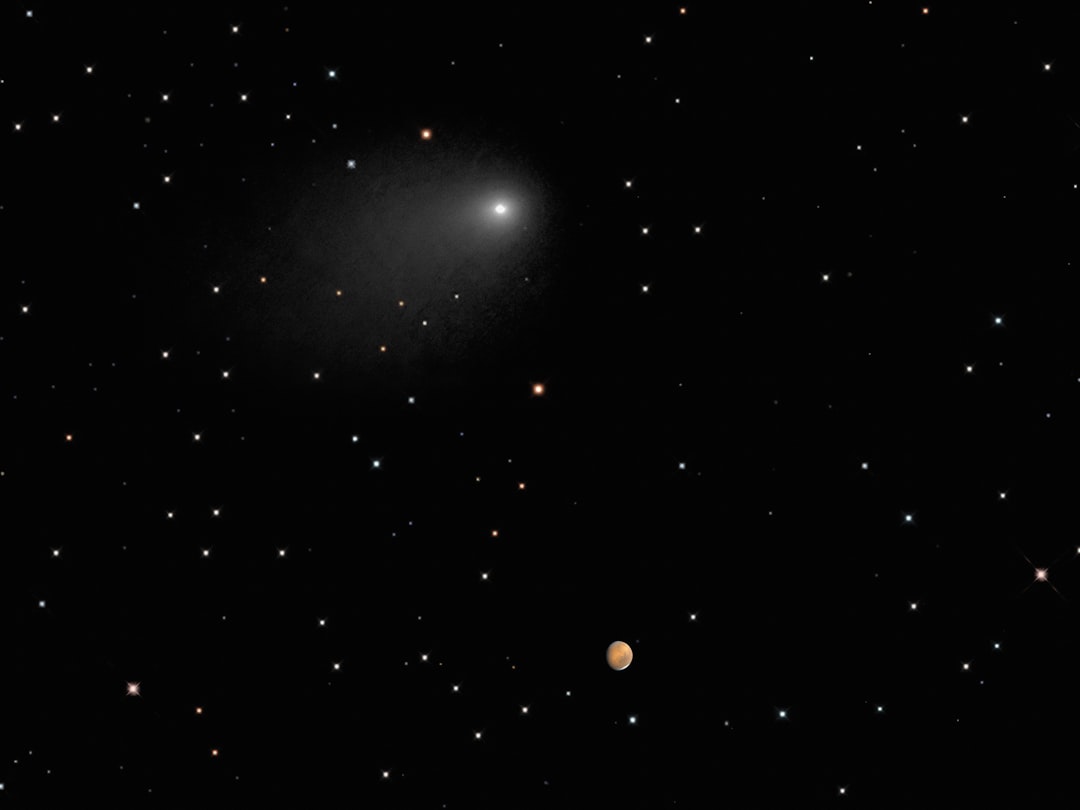
A celestial drama is unfolding in the inner solar system as astronomers track a newly discovered sungrazing comet that could deliver a spectacular show this April—if it can survive one of the most perilous journeys any comet can undertake. Comet C/2026 A1 MAPS, spotted in mid-January from observatories in Chile's Atacama Desert, is hurtling toward an extraordinarily close encounter with our Sun, passing through the scorching solar corona at distances that have destroyed countless comets before it.
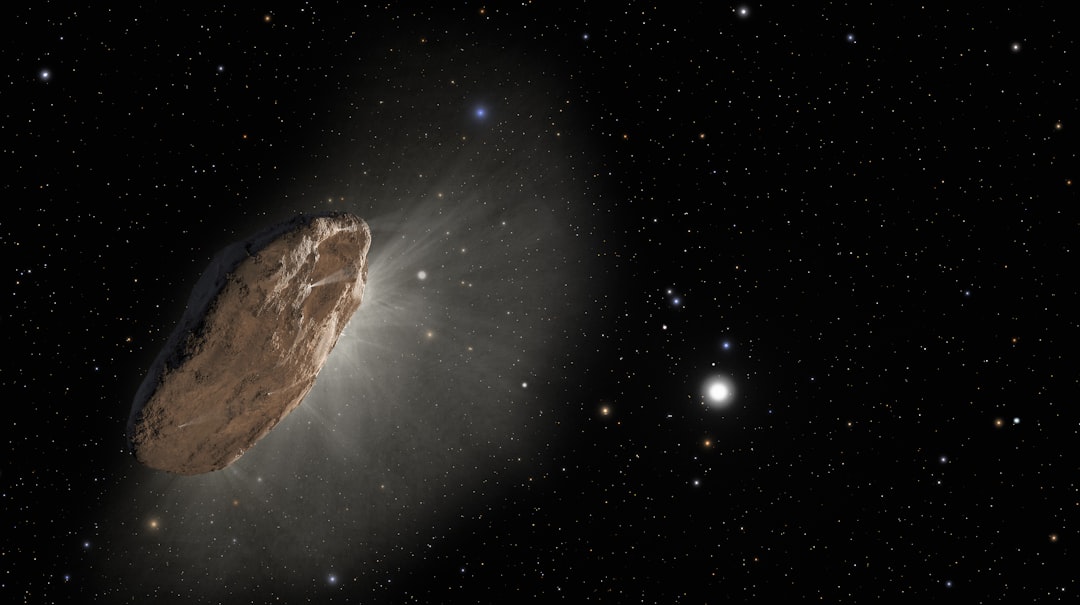
What makes this discovery particularly remarkable is the unprecedented distance at which the comet was first detected. At 2.056 Astronomical Units (approximately 307.6 million kilometers) from the Sun, C/2026 A1 MAPS set a new record for the most distant discovery of a sungrazing comet, suggesting a surprisingly substantial nucleus that could measure up to 2.4 kilometers across. This early detection has given the astronomical community a rare opportunity to track a sungrazer's complete journey toward its fiery rendezvous with our star.
The comet's discovery represents a triumph for the MAPS team, a collaborative effort named after its four discoverers: Alain Maury, Georges Attard, Daniel Parrott, and Florian Signoret. Operating an array of remote telescopes in one of Earth's premier astronomical locations, this marks their seventh cometary discovery and underscores Europe's growing capabilities in near-Earth object detection.
The Perilous Path Through the Solar Corona
Based on 154 precise observations compiled since its discovery, orbital calculations place C/2026 A1 MAPS on a collision course with the Sun's outer atmosphere. On April 4th, the comet will plunge to just 1.18 solar radii—a mere 160,000 kilometers (99,000 miles) above the Sun's visible surface. To put this in perspective, that's less than half the distance between Earth and our Moon, and the comet will be completely immersed in the solar corona, where temperatures soar to millions of degrees.
This extreme proximity presents an existential challenge for the icy wanderer. The Sun's corona is a hellish environment where intense radiation, extreme temperatures, and powerful magnetic fields conspire to tear apart any object foolish enough to venture too close. Historical precedent suggests that most comets making such close approaches simply don't survive—they're either vaporized entirely or fragmented into unrecognizable debris.
"The discovery of C/2026 A1 MAPS at such a great distance is unprecedented for a sungrazing comet. This early detection gives us a unique opportunity to study how these objects evolve as they approach the Sun, potentially providing insights into their composition and structural integrity before the ultimate test of perihelion," noted researchers from the Minor Planet Center.
However, there is hope. In December 2011, Comet C/2011 W3 Lovejoy defied the odds by surviving a similarly close passage at just 140,000 kilometers above the solar surface. That comet emerged battered but intact, subsequently treating Southern Hemisphere observers to a magnificent celestial display. The question now is whether C/2026 A1 MAPS possesses the structural fortitude to replicate that survival story.
Ancient Lineage: The Kreutz Sungrazer Family
C/2026 A1 MAPS belongs to an ancient and storied family of comets known as the Kreutz Group, named after 19th-century German astronomer Heinrich Kreutz who first identified their common orbital characteristics. These sungrazers are thought to be fragments of a massive progenitor comet that shattered during a close solar passage in 362 BC, creating a stream of debris that continues to visit the inner solar system millennia later.
The Kreutz family tree includes some of history's most spectacular comets. Subsequent fragmentations occurred in 1106 and 1138 AD, spawning the legendary Great Comets of 1843 and 1882—both of which became visible in broad daylight and were described by contemporary observers as having tails stretching across significant portions of the sky. More recently, Comet C/1965 Ikeya-Seki delivered a stunning performance during its October 1965 perihelion passage, becoming one of the brightest comets of the 20th century.
Astronomers suspect that additional large fragments from this ancient breakup remain in the outer solar system, gradually making their way sunward. Some researchers predict that we may witness another spectacular Kreutz sungrazer by 2050, continuing this dynasty's tradition of producing memorable celestial events.
The Hidden Population of Sungrazers
While bright sungrazers like C/2026 A1 MAPS capture public attention, they represent merely the tip of an enormous iceberg. The Solar and Heliospheric Observatory (SOHO), a joint NASA-ESA mission launched in 1995, has revolutionized our understanding of these objects by discovering an astounding 5,204 sungrazing comets and counting. This remarkable census reveals that sungrazers are far more common than previously imagined—most are simply too small and faint to survive their solar encounters long enough to become visible from Earth.
Before SOHO's continuous monitoring, these smaller sungrazers passed through the inner solar system completely undetected. The spacecraft's coronagraphs, designed to block the Sun's overwhelming light, have unveiled a constant stream of cometary visitors, most of which vaporize without fanfare within hours of their discovery. This hidden population provides crucial data about the composition and frequency of cometary material in the solar system.
Observing Opportunities and Visibility Predictions
Currently positioned in the southern constellation Fornax the Furnace at a distance of 0.746 AU from Earth, C/2026 A1 MAPS is gradually brightening as it accelerates sunward. The comet's trajectory will carry it through Eridanus in late February, then into Cetus during March, before reaching Pisces for its April 4th solar encounter.
For observers in the Northern Hemisphere, viewing conditions present significant challenges. The comet's approach from the southern celestial hemisphere places it low on the horizon at dusk, making observation difficult for those at mid-northern latitudes. However, as the comet brightens to an estimated magnitude +10 in late March, dedicated amateur astronomers with proper equipment should be able to track it.
Pre-Perihelion Viewing Window
The planet Venus will serve as an excellent guide star for locating C/2026 A1 MAPS during the critical days leading up to perihelion. On the evening of April 1st, observers looking westward after sunset should search for the comet in the vicinity of brilliant Venus, though binoculars or small telescopes will likely be necessary until the comet brightens further.
Magnitude predictions for the comet vary widely among different models, with some optimistic forecasts suggesting it could reach magnitude -7—bright enough for daytime visibility. However, such predictions must be treated with extreme caution, as cometary brightness is notoriously difficult to forecast and depends critically on the comet's ability to survive its solar passage intact.
SOHO's Critical Role
For most observers, the best views of C/2026 A1 MAPS during its most dramatic moments will come courtesy of SOHO's coronagraph instruments. The comet will enter SOHO's LASCO C3 wide-field camera on April 2nd at approximately 20:50 UT, providing the first detailed views of the comet as it plunges toward the Sun. Two days later, on April 4th at 1:51 UT, it will appear in the narrower LASCO C2 field, offering unprecedented close-up observations of a sungrazer during its most perilous moments.
Remarkably, from Earth's perspective, the comet will actually disappear behind the Sun on April 4th at 11:50 UT, reemerging about 90 minutes later around 13:20 UT. Between 13:55 and 15:20 UT, the comet will transit directly across the Sun's face as seen from Earth—a rare and potentially spectacular event if the comet survives long enough to be visible during this passage.
The MAPS Discovery Program's Track Record
The discovery of C/2026 A1 MAPS highlights the remarkable success of the MAPS team's systematic survey program. Operating from Chile's Atacama Desert—one of the world's premier astronomical sites due to its high altitude, dry climate, and exceptionally clear skies—the team has established itself as a powerhouse in near-Earth object detection.
With 318 Near-Earth asteroids discovered to date, MAPS has become the most productive European-based program in this field, trailing only NASA's comprehensive all-sky surveys. The program's achievements include the 2023 detection of asteroid 2023 DW, which briefly achieved a Torino Scale rating of 1 due to a slight possibility of Earth impact in 2046—a reminder of the practical importance of such survey programs beyond their scientific value.
Post-Perihelion Possibilities and Long-Term Trajectory
If C/2026 A1 MAPS defies expectations and survives its April 4th solar encounter, it will emerge on a reversed apparent path across the sky, sweeping back outward past Venus into Cetus the Whale during the evening twilight. Surviving sungrazers often develop spectacular tails swept forward by solar radiation pressure, potentially creating a dramatic "headless wonder" appearance as the tail extends ahead of the nucleus.
The comet will make its closest approach to Earth on April 5th at a safe distance of 0.129 AU (approximately 19.3 million kilometers). This relatively close passage could provide excellent viewing opportunities if the comet remains intact and retains sufficient brightness.
Looking further ahead, C/2026 A1 MAPS faces an extraordinarily long journey back to the outer solar system. Its highly elliptical orbit will carry it to a distant aphelion of 220 AU—far beyond Neptune's orbit and deep into the Kuiper Belt region—sometime in the 32nd century. This thousand-year round trip exemplifies the vast scales of cometary orbits and the patient timescales of celestial mechanics.
A Crowded Cometary Spring
C/2026 A1 MAPS isn't the only comet vying for observers' attention this spring. Comet C/2024 E1 Wierzchoś currently shines at a respectable magnitude +7 in the constellation Sculptor, making it an accessible binocular target for amateur astronomers. Meanwhile, Comet C/2025 R3 PanSTARRS is approaching its own April 19th perihelion and could potentially brighten to magnitude +2, becoming easily visible to the naked eye.
This convergence of multiple observable comets represents a fortunate circumstance for both professional researchers and amateur enthusiasts. Each comet provides unique opportunities to study cometary composition, behavior, and evolution under different conditions.
Scientific Value and Research Opportunities
Beyond the spectacle, C/2026 A1 MAPS offers significant scientific value. The comet's early detection and well-documented approach provides researchers with an unprecedented dataset for studying how cometary nuclei evolve as they enter the inner solar system. Observations of outgassing patterns, coma development, and tail formation can reveal details about the comet's composition and internal structure.
The extreme conditions during perihelion passage also create a natural laboratory for studying matter under intense radiation and temperature extremes. If the comet survives, comparing pre- and post-perihelion observations could illuminate how solar heating affects cometary surfaces and what structural properties enable some comets to withstand such punishment while others disintegrate.
Data from ESA's Solar Orbiter and other solar observation platforms may capture unique perspectives on the comet's passage through the corona, potentially revealing interactions between cometary material and the solar magnetic field that have never been observed in such detail.
Historical Context and Lessons from Past Sungrazers
The history of sungrazer observations is filled with both triumphs and disappointments. Comet C/2012 S1 ISON, widely hyped as the potential "comet of the century," disintegrated during its perihelion passage on Thanksgiving Day 2013, just 1.165 million kilometers from the solar surface. The comet's spectacular failure served as a humbling reminder that cometary predictions remain among astronomy's most uncertain forecasts.
Yet Comet Lovejoy's 2011 survival demonstrated that even the most pessimistic predictions can be wrong. Historical accounts from the 19th century describe sungrazers emerging from perihelion as "broom stars" or "headless wonders"—comets so mangled by their solar passage that they appeared as diffuse streaks of light with tails but no distinct nucleus. These descriptions suggest that partial survival, with significant mass loss and structural damage, may be more common than complete preservation or total destruction.
The Verdict: Survival Prospects and Expectations
Given C/2026 A1 MAPS' predicted perihelion distance of just 1.18 solar radii, placing it deep within the million-degree solar corona, conventional wisdom suggests poor survival prospects. The intense thermal stress, radiation pressure, and tidal forces at such proximity typically prove fatal for all but the most robust cometary nuclei.
However, several factors could work in the comet's favor. Its relatively large estimated nucleus size of 2.4 kilometers provides more thermal mass to absorb heat without complete vaporization. Additionally, if the nucleus has a higher-than-average rock and dust content relative to volatile ices, it might possess greater structural integrity to withstand the extreme conditions.
The astronomical community approaches April with cautious optimism, hoping for the best while preparing for disappointment. Whether C/2026 A1 MAPS becomes another forgotten casualty of solar proximity or joins the elite ranks of spectacular surviving sungrazers, its journey will provide valuable scientific data and remind us of the dynamic, sometimes violent nature of our solar system.
As April approaches, telescopes worldwide will track this cosmic daredevil's progress, and SOHO's unblinking electronic eyes will capture every moment of its fiery passage. The outcome remains uncertain, but the anticipation itself reflects humanity's enduring fascination with these ancient wanderers from the outer darkness who dare to challenge the Sun's fury.