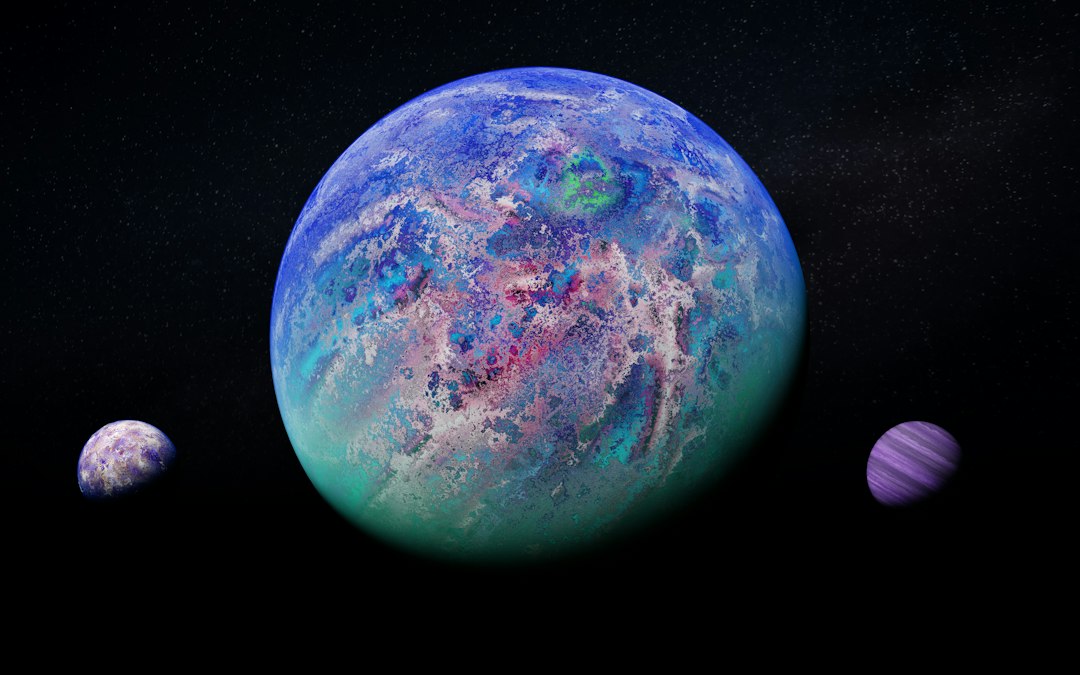
Hubble Spots a Suspected Second-Generation Planet: A New Chapter in Stellar Evolution
In the grand narrative of the cosmos, stars are born, live out their nuclear-burning lives, and eventually die — but their story may not end there. When stars reach the end of their life cycles, they undergo gravitational collapse and shed their outer layers in spectacular fashion. More massive stars leave behind a black hole, while smaller stars leave a stellar remnant known as a neutron star or a white dwarf. The expelled gas and dust form a luminous cloud called a nebula, illuminated by the intense ultraviolet radiation of the white dwarf at its center. For decades, astronomers have speculated about what happens next — and now, new evidence suggests the story may be far more extraordinary than previously imagined.
A growing body of theoretical work has proposed that new generations of planets may form as the ejected gas and dust from a dying star gradually settle into a fresh circumstellar accretion disk. These hypothetical worlds, born from the ashes of stellar death rather than the cradle of stellar birth, are known as second-generation planets. While their existence has been theorized for some time, direct observational evidence has remained elusive — until now.
A Remarkable Discovery in Archival Data
After an exhaustive search through the Hubble Space Telescope's vast data archive, a team led by researchers from the University of Warwick uncovered a white dwarf star system that may host a planet formed entirely from matter shed during a stellar death event. The system, known as HS 0209+0832, features a white dwarf approximately 1% the radius of our Sun but roughly 60% as massive — a dense, compact stellar remnant about the size of Earth but with a gravitational field hundreds of thousands of times stronger. If the candidate planet is confirmed, it would represent the first authenticated second-generation planet ever discovered, marking a watershed moment in our understanding of planetary science.
The international research team that made this discovery brought together expertise from some of the world's leading astronomical institutions, including the University of Warwick's Centre for Exoplanets and Habitability, the Instituto de Astrofísica de Canarias (IAC), the Racah Institute of Physics, the Institut für Theoretische Physik und Astrophysik, the University of Wisconsin, the Massachusetts Institute of Technology (MIT), the Laboratory for Atmospheric and Space Physics (LASP), the Harvard & Smithsonian Center for Astrophysics (CfA), and the Space Telescope Science Institute (STScI). Their paper was published on October 5th in the prestigious journal Nature Astronomy.
The Science of Planetary Formation — First and Second Generation
To appreciate the significance of this discovery, it helps to understand how planets normally form. Planetary systems typically coalesce shortly after a new star ignites, arising from leftover gas and dust that gravitationally settles into a protoplanetary disk — also known as a circumsolar accretion disk — surrounding the young star. Through a process called accretion, solid particles collide and stick together, gradually building up larger bodies called planetesimals, which in turn aggregate into full-sized planets. This is precisely how the Earth and its sibling first-generation planets of our Solar System formed approximately 4.5 billion years ago.
Second-generation planet formation, by contrast, would require an entirely different and far more exotic set of conditions. Rather than forming in the warm environs of a young star, these worlds would coalesce from the heavy-element-enriched debris expelled during the violent death throes of a star. The existence of such planets challenges our fundamental assumptions about where and when planetary formation can occur, and opens an entirely new frontier in the field of exoplanetary science.
The Key Clue: A Rare Element Called Niobium
When Hubble first observed HS 0209+0832 in 1999, its instruments detected roughly 100 unidentified chemical signatures in the star's spectrum. At the time, the available chemical databases were insufficiently complete to match these spectral fingerprints to known elements. The data sat dormant in the archive for over two decades — until lead researcher Dr. Abbigail Kathleen Williams and her colleagues returned to it with updated spectroscopic tools.
Using a modernized and far more comprehensive chemical database, Williams and the team found that niobium (Nb) — element 41 on the periodic table — matched a remarkable number of the previously unidentified signatures. The discovery was as surprising as it was revelatory.
"What Hubble is showing us in this white dwarf system is something we haven't seen before: a high abundance of the element niobium, the signature of which I was unfamiliar with when I first found it in the archival data." — Dr. Abbigail Kathleen Williams, University of Warwick
While niobium is found in trace amounts in our Solar System and is used in commercial applications such as high-strength steel alloys and superconducting magnets, it had never previously been reported in any white dwarf analyzed to date. The sheer abundance of niobium detected by Hubble was not only unprecedented — it was physically telling. As a heavy element, niobium cannot be produced by the ordinary thermonuclear fusion that powers stars during their main-sequence lifetimes. Its presence in such quantities points unmistakably toward a much more violent origin.
"Niobium and other elements heavier than iron are astronomically special because, unlike many common elements, they are not formed in the cores of stars by thermonuclear fusion. Instead, these heavy elements can only be synthesized in the exotic conditions that briefly emerge inside dying stars. The presence of niobium is a signpost of these 'death' throes, and the expulsion of the dying star's innards into space." — Nicholas Stone, Theoretical Astrophysicist, University of Wisconsin–Madison
Forged in the Fire of a Dying Star
The nucleosynthesis of elements heavier than iron — including niobium — requires extraordinarily energetic environments that only exist in stellar death events. These include the rapid neutron capture process (the r-process) and the slow neutron capture process (the s-process), both of which occur during or shortly after a star's explosive end. In the case of a star massive enough to undergo a supernova, the intense neutron flux generated during core collapse can forge entire chains of heavy elements in a matter of seconds — elements that are then scattered across space in the explosion's aftermath.
The critical implication of detecting niobium in such abundance at HS 0209+0832 is profound: any planet containing this much niobium could only have formed after its parent star went supernova. It could not be a survivor of the original planetary system, since the white dwarf phase itself — preceded by a dramatic expansion into a red giant — would have engulfed and destroyed any close-orbiting planets. This makes the candidate world a true post-stellar phoenix, born from the wreckage of cosmic catastrophe.
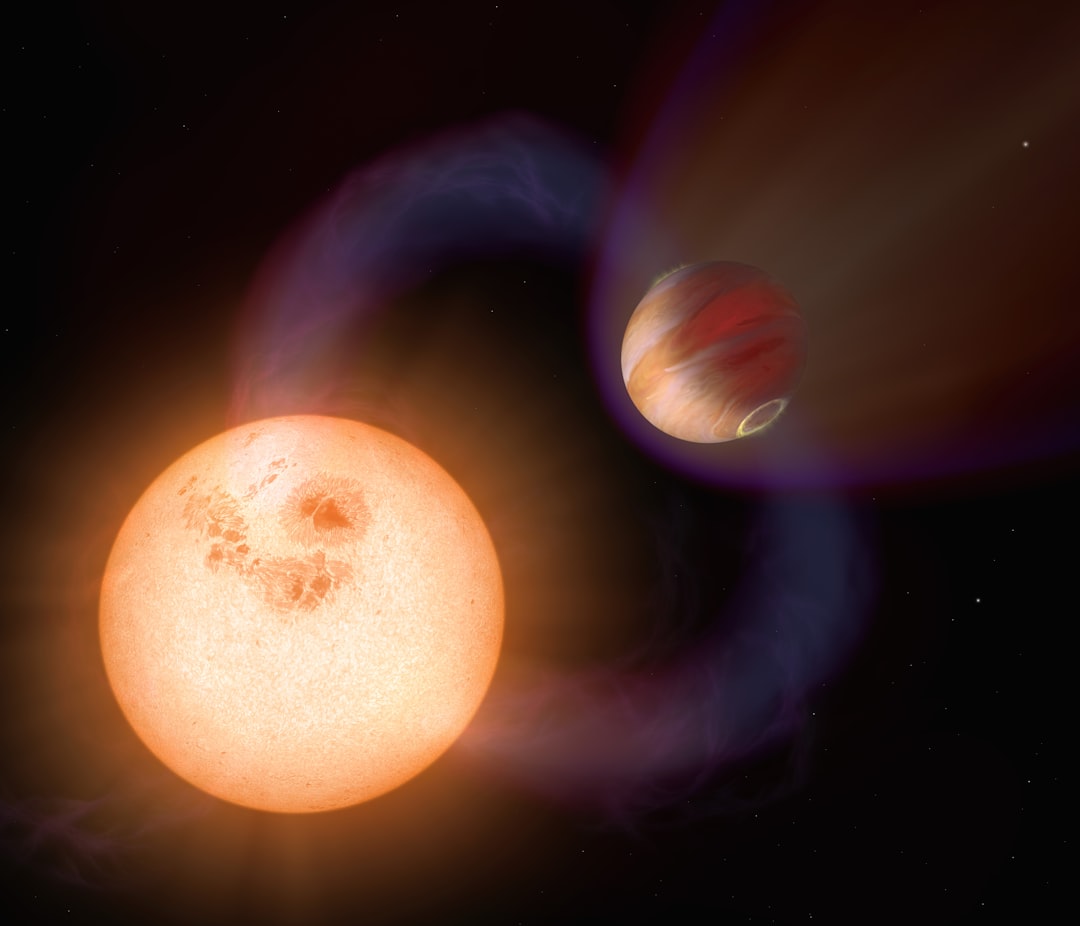
The team theorizes that following the supernova event, a portion of the expelled, niobium-rich material re-coalesced under gravity into a gas giant planet roughly comparable in size to Jupiter, while the remainder was dispersed into the interstellar medium over time.
Multi-Mission Confirmation and Orbital Characteristics
The research team did not rely solely on Hubble's archival data. They corroborated the observations using data from the now-retired Far Ultraviolet Spectroscopic Explorer (FUSE) mission, which had also observed the system and provided complementary spectroscopic evidence. Additionally, the team consulted observations from NASA's Transiting Exoplanet Survey Satellite (TESS), which monitored HS 0209+0832 continuously for four months, providing critical photometric data about the system's variability.
Based on the combined dataset, the team has estimated the following key characteristics of the candidate second-generation planet:
- Size: A gas giant estimated to be comparable to Jupiter in scale
- Orbital distance: Approximately 6 million km (3.7 million miles) from its host white dwarf
- Comparative context: This is dramatically closer than Mercury's average orbital distance from the Sun (~58 million km; 36 million mi), placing it in an environment of extreme stellar radiation
- Composition: Enriched in heavy elements including niobium, suggesting formation from supernova-processed material
- Atmospheric status: Likely experiencing rapid atmospheric stripping due to intense UV and X-ray radiation from the young, hot white dwarf
A Planet Being Slowly Devoured by Its Own Star
Because HS 0209+0832 is a relatively young white dwarf, it remains extraordinarily hot — blazing with intense high-energy radiation. Combined with the candidate planet's dangerously close orbit, this creates a situation where the planet's atmosphere is being progressively and rapidly eroded, much like the way a comet's volatile ices sublimate as it approaches the Sun. The result, the team believes, is a comet-like tail of evaporated atmospheric material that streams off the planet, enters orbit around the white dwarf, and is gradually accreted onto the stellar surface.
This accretion process is, in fact, the mechanism that allowed Hubble to detect the niobium signature in the first place. The heavy elements from the planet's composition are being deposited onto the white dwarf's surface through this ongoing atmospheric loss, where they leave detectable spectral imprints that Hubble's sensitive UV spectrographs can identify. It is a remarkable example of one astronomical object inadvertently revealing the existence of another.
Long-Term Fate: A Habitable Zone Around a Dead Star?
While the planet's current environment is one of intense irradiation and atmospheric erosion, its long-term prospects may actually be surprisingly favorable. As white dwarfs age, they gradually cool over billions of years — eventually dimming to a steady, stable luminosity. The research team suggests that as HS 0209+0832 cools, the candidate planet could eventually find itself within the star's habitable zone, where conditions might theoretically support liquid water on a planetary surface.
"Rather than the white dwarf stage being a kind of epilogue to the story of a star and its planets, this research points to the systems we are familiar with only being the first chapter of a potentially much longer tale, with some new characters showing up. That's a really exciting prospect to pursue." — Dr. Abbigail Kathleen Williams
"If the second-generation planet is there, I think it is likely to survive," Williams added. "Eventually the white dwarf will cool and then maintain a consistent temperature, with the planet in its stable habitable zone for millions of years." The notion that a post-stellar remnant system could harbor a habitable world is a startling one — and one with profound implications for the search for life beyond Earth. HubbleSite and the broader astronomical community are watching this system with considerable interest.
Broader Implications for Planetary Science
The potential confirmation of a second-generation planet around HS 0209+0832 would fundamentally reshape our understanding of the planetary lifecycle. It would demonstrate that planetary formation is not a one-time event unique to the early history of a stellar system, but rather a potentially recurring phenomenon that can be triggered at multiple stages of a star's evolution. It raises tantalizing questions: How common are second-generation planets? Do they form around all white dwarfs given sufficient material? Could some harbor conditions conducive to life?
The team plans to continue monitoring HS 0209+0832 for several more years using next-generation observational facilities, including potentially the James Webb Space Telescope (JWST), which possesses the infrared sensitivity to probe such systems in unprecedented detail. Their goal is to better characterize second-generation planets as a class: how they form, how they evolve, and what role they play in the larger cosmic story of matter, energy, and perhaps even life.
As our telescopes grow ever more powerful and our chemical databases ever more complete, the universe continues to surprise us — revealing that even in death, stars may give rise to entirely new worlds. The story of HS 0209+0832, like the best scientific discoveries, raises more questions than it answers — and that, as any astronomer will tell you, is exactly what makes it so compelling.