Hubble Will Give the Nancy Grace Roman Space Telescope a Helping Hand
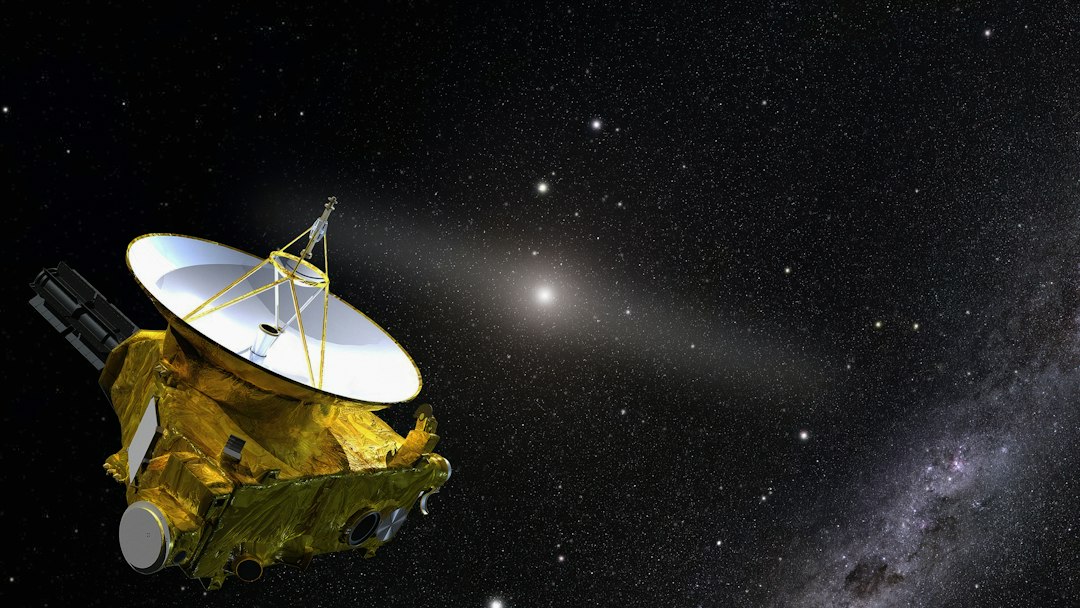
The Nancy Grace Roman Space Telescope (NGRST) — NASA's next flagship observatory — is en route to its operational station at the Sun–Earth L2 Lagrange point, approximately 1.5 million kilometers from Earth. There, shielded from solar interference and thermally stable, it will begin a projected five-year mission that promises to revolutionize our understanding of the cosmos. Among its most ambitious scientific objectives: measuring the influence of dark energy on the Universe's accelerating expansion, tracing the large-scale growth of cosmic structure, and rigorously testing general relativity's consistency across vast stretches of time and space. Central to achieving all of these goals is a phenomenon known as gravitational lensing — and surprisingly, the aging but resilient Hubble Space Telescope will play a critical supporting role in making it work.
The Physics of Gravitational Lensing: Bending Light Across the Cosmos
Gravitational lensing is one of the most elegant consequences of Einstein's General Theory of Relativity. When a massive object — such as a galaxy or a galaxy cluster — lies between Earth and a more distant background source, the foreground object's gravity warps the fabric of spacetime around it. Light from the background source follows these curved spacetime geodesics, bending as it passes the foreground mass. From our vantage point, this produces distorted, magnified, or even multiplied images of the background object.
Astronomers recognize two distinct regimes of this phenomenon:
- Strong Gravitational Lensing: Occurs when the alignment between foreground mass, background source, and observer is nearly perfect. The result is dramatic — producing spectacular Einstein rings, luminous arcs, and multiple images of the background object. These features are directly observable and allow astronomers to precisely map the mass distribution of the foreground object.
- Weak Gravitational Lensing: A far subtler effect, in which the shapes of background galaxies are only slightly distorted by intervening mass. No single galaxy's distortion is detectable by eye, but by statistically analyzing the shapes of millions of background galaxies, astronomers can reconstruct the invisible mass distribution — including dark matter — across vast cosmic scales.
The Roman Space Telescope is designed to exploit both regimes, but it is particularly powerful as a tool for weak lensing surveys. By mapping subtle shape distortions across enormous swaths of sky, it will construct the most detailed census yet of how dark matter is distributed throughout the Universe — and how that distribution has evolved over billions of years.
"Gravitational lensing allows us to weigh the Universe's invisible scaffolding — the dark matter that shapes every galaxy and cosmic web filament we see. Roman will do this on an unprecedented scale."
Strong Lensing: Reading Dark Matter Through Distorted Light
In a classic strong lensing event, the foreground galaxy or cluster acts as a cosmic magnifying glass. The visible matter — stars, gas, and dust — within the foreground object cannot alone account for the degree of bending and magnification observed. The discrepancy is striking: visible matter contributes only a fraction of the total mass needed to produce the observed lensing geometry. The remainder must be attributed to dark matter, the enigmatic, non-luminous substance that constitutes roughly 27% of the Universe's total energy content.
Consider a beautiful example: a red foreground galaxy that produces two luminous arcs — a large arc curving above, and a smaller one below — both of which are distorted, magnified images of a single background galaxy far behind it. By measuring the angular positions of these arcs, their brightness, and the degree of magnification, astronomers can calculate the total enclosed mass of the foreground galaxy. Comparing this to the galaxy's luminous mass directly reveals the dark matter contribution — a powerful, independent line of evidence for dark matter's existence and distribution.
Beyond dark matter mapping, strong lensing substructure analysis can reveal dark matter subhalos — small clumps of dark matter predicted by cosmological simulations that may or may not host visible galaxies. Detecting or constraining these substructures puts direct pressure on competing dark matter models, including cold dark matter, warm dark matter, and self-interacting dark matter scenarios.
For more on gravitational lensing fundamentals, visit the HubbleSite's guide to gravitational lensing.
Roman vs. Hubble: Two Telescopes, Two Complementary Visions
To understand why Hubble remains indispensable even in the era of Roman and the James Webb Space Telescope (JWST), it helps to appreciate how differently these observatories are engineered — and how those differences translate into scientific capabilities.
The Hubble Space Telescope, launched in 1990, observes primarily in visible and ultraviolet wavelengths, with some near-infrared capability. Its 2.4-meter mirror delivers extraordinarily sharp images of individual objects, but its field of view is comparatively narrow — roughly 202 × 202 arcseconds for its primary Wide Field Camera 3 (WFC3). This makes Hubble a precision instrument: an unmatched tool for detailed, targeted observations of specific cosmic objects.
The Nancy Grace Roman Space Telescope, by contrast, carries a 2.4-meter mirror of identical size to Hubble's — but its Wide Field Instrument (WFI) delivers a field of view 200 times larger than Hubble's, covering approximately 0.28 square degrees in a single pointing. Roman operates primarily in near-infrared wavelengths (spanning roughly 0.5 to 2.3 microns), making it sensitive to the redshifted light of distant galaxies whose photons have been stretched by the Universe's expansion over billions of years.
This wide-field architecture is Roman's defining strength — and its fundamental trade-off. The telescope is optimized for large-area surveys, sweeping the sky systematically to build statistical samples of millions of galaxies. It is not designed for the kind of leisurely, pixel-by-pixel scrutiny of individual objects at which Hubble excels.
Learn more about the Roman Space Telescope's science goals at NASA's official Roman Space Telescope website.
The Challenge of the Point-Spread Function at Scale
One of the most technically demanding challenges in gravitational lensing science — particularly for weak lensing — is accurately characterizing the telescope's Point-Spread Function (PSF). In an ideal world, a telescope would image a point source of light (such as a distant star) as a perfect, infinitesimal point on its detector. In reality, no telescope achieves this. Every optical system spreads the light from a point source into a characteristic pattern — the PSF — shaped by diffraction, optical aberrations, detector effects, and the telescope's specific geometry.
The PSF manifests as familiar artifacts: the iconic diffraction spikes radiating from bright stars in Hubble images, the soft halos surrounding stellar sources, and subtle asymmetries introduced by optical misalignments. For gravitational lensing science, the PSF is a critical concern because it can mimic the very signal astronomers are trying to measure. A poorly characterized PSF can introduce spurious apparent distortions in galaxy shapes — false shear signals that masquerade as the gravitational lensing effect the scientist is trying to detect.
For Hubble, PSF characterization is comparatively tractable. When examining a single gravitational lens at a time on a single detector, astronomers can use nearby stars in the same image to model and subtract the PSF with high fidelity. The PSF's spatial variation across Hubble's relatively small detector is well-understood and manageable.
For Roman, the challenge scales dramatically. Roman's focal plane contains 18 individual H4RG-10 infrared detectors, each positioned differently in the focal plane and each possessing its own subtly different PSF characteristics. When Roman surveys the sky in its High Latitude Wide Area Survey (HLWAS), its images span all 18 detectors simultaneously. A single gravitational lens may be detected across detector boundaries, subject to a PSF that varies not only across a single detector but across the entire 0.28-square-degree field of view.
This complexity is compounded by the sheer volume of lensing events Roman will detect. According to NASA's Roman mission documentation, the HLWAS will cover approximately 5,000 square degrees of sky — roughly 12% of the entire celestial sphere. A 2025 paper forecasting Roman's strong lensing yield estimates that the HLWAS will detect approximately 160,000 strong gravitational lenses, with roughly 15 strong lenses detected per exposure. Of these, only about 500 will have sufficient signal-to-noise to permit detailed substructure characterization — the kind of analysis that can distinguish between dark matter models.
"For a fiducial case of single 146-second exposures, we predict around 160,000 detectable strong lenses in the HLWAS, of which about 500 will have sufficient signal-to-noise to be amenable to detailed substructure characterization."
— From a 2025 research paper forecasting NGRST strong lensing detections
With 15 strong lenses present in every single exposure, each detected across a mosaic of 18 detectors with spatially varying PSFs, the mathematical complexity of PSF modeling becomes formidable. Errors in PSF characterization at this scale could systematically bias Roman's dark matter and dark energy measurements — precisely the quantities the mission is designed to measure with percent-level precision.
Hubble as Calibrator: Building the PSF Bridge
This is where Hubble's unique role becomes clear. Astronomers are constructing sophisticated computer models of the PSF for Roman's detectors, and Hubble's decades of high-resolution strong lensing observations form a foundational dataset for this effort. The strategy works on multiple levels:
- PSF Transfer Modeling: Hubble's precisely characterized PSFs — derived from its single-detector, high-resolution observations of individual lenses — are being used to calibrate and validate PSF models for Roman's multi-detector wide-field data. By observing the same gravitational lenses with both telescopes, astronomers can cross-check PSF models and identify systematic errors.
- Lens Catalog Construction: Hubble has been systematically building a library of well-studied strong gravitational lenses over decades. This catalog serves as a training set for the machine learning algorithms and analytical pipelines that Roman will use to identify and classify its 160,000 lensing events automatically.
- Follow-Up Characterization: For the ~500 high-value lenses that Roman identifies as having sufficient signal-to-noise for substructure analysis, Hubble can serve as a follow-up instrument, providing high-resolution visible-light imaging that complements Roman's infrared survey data. Hubble's sharp eyes can resolve fine structural details — arcs, counter-images, and substructure — that Roman's wide-field architecture cannot.
- Wavelength Complementarity: Because Hubble observes in visible and UV wavelengths while Roman observes in the infrared, their combined data provide multi-wavelength coverage of the same lensing systems. This is scientifically valuable for disentangling the colors and stellar populations of lensed background galaxies from the lensing geometry itself.
For further details on how space telescopes collaborate scientifically, the ESA/Hubble Science page provides an excellent overview of Hubble's ongoing scientific contributions.
Roman's High Latitude Wide Area Survey: A Cosmic Census
The High Latitude Wide Area Survey (HLWAS) is Roman's flagship observational program and one of the most ambitious astronomical surveys ever conceived. Covering 5,000 square degrees of high-galactic-latitude sky — regions far from the obscuring dust and stellar crowding of the Milky Way's plane — the HLWAS will image hundreds of millions of galaxies in multiple infrared bands over the course of Roman's five-year mission.
The scientific returns extend far beyond gravitational lensing. The HLWAS will simultaneously deliver:
- Weak lensing cosmic shear measurements — mapping the large-scale distribution of dark matter through statistical shape correlations of background galaxies.
- Galaxy clustering statistics — tracing how galaxies cluster under the influence of dark matter and dark energy over cosmic time.
- Type Ia supernova cosmology — discovering and characterizing thousands of supernovae to measure the Universe's expansion history with unprecedented precision.
- Baryon acoustic oscillations (BAO) — using the characteristic scale imprinted by sound waves in the early Universe as a "standard ruler" to measure cosmic distances.
Together, these multiple independent cosmological probes will allow Roman to cross-check its own measurements internally, providing robustness against systematic errors — including PSF mischaracterization — that would affect any single probe in isolation.
Explore the full scope of Roman's planned surveys at the Space Telescope Science Institute's Roman mission page.
The Twilight of Hubble: A Legacy in Its Final Chapter
Even as Roman prepares to begin its survey of the Universe, the Hubble Space Telescope is navigating the challenges of advancing age. Launched aboard Space Shuttle Discovery on April 24, 1990, Hubble has operated for more than three decades — far exceeding its original 15-year design lifetime — thanks to five heroic servicing missions that replaced and upgraded its instruments and systems.
Today, Hubble faces an insurmountable challenge: the gradual failure of its gyroscopes, the precision sensors that allow the telescope to lock onto and track celestial targets with extraordinary stability. Without functioning gyroscopes, Hubble cannot point accurately enough to conduct science. As of its most recent operational adjustments, Hubble has been placed in a one-gyroscope mode to extend its operational life, accepting some limitations on its pointing capability in exchange for longevity.
With no further servicing missions planned — the Space Shuttle fleet was retired in 2011, and no alternative crewed servicing vehicle has been developed for Hubble — the telescope's scientific life is ultimately bounded by the lifespan of its remaining gyroscopes. When the last gyroscope fails, Hubble's science operations will end. NASA's current planning anticipates that Hubble could remain scientifically productive into the late 2020s or early 2030s, though the precise timeline is inherently uncertain.
The poignancy of Hubble's situation is real, but so is its continued scientific relevance. Even in its twilight years, Hubble remains the only space observatory capable of ultraviolet astronomy — a wavelength range inaccessible to JWST and Roman. Its sharp visible-light resolution continues to produce world-class science.