In a stunning revelation that challenges our understanding of stellar death throes, astronomers have documented an extraordinary mass-ejection event from Mira A, a dying red giant star located approximately 300 light-years from Earth. This remarkable outburst, captured through observations spanning nearly a decade, has expelled material equivalent to seven times the mass of our Sun—hundreds of times more than the star's typical ejections. The discovery, led by Dr. Theo Khouri of Chalmers University of Technology in Sweden, reveals an unprecedented cosmic phenomenon that may fundamentally reshape our understanding of how intermediate-mass stars shed their outer layers during their final evolutionary stages.
The observations, conducted using the Very Large Telescope (VLT) and the Atacama Large Millimeter/submillimeter Array (ALMA) in Chile between 2015 and 2023, have unveiled a spectacular heart-shaped structure of expanding gas and dust surrounding the ancient star. This asymmetrical double-lobed cloud represents one of the most dramatic stellar mass-loss events ever documented in real-time, offering astronomers a rare window into the violent processes that govern the final chapters of stellar evolution.
What makes this discovery particularly significant is not merely the scale of the ejection, but its unexpected characteristics. The cloud's remarkable density, its asymmetrical structure, and the apparent rapidity of the event have prompted researchers to reconsider established models of stellar mass loss. As these massive clouds continue to expand through space, they carry with them the heavy elements forged in Mira A's interior—the very building blocks that will eventually form new generations of stars, planets, and potentially, life itself.
The Cosmic Lighthouse: Understanding Mira A's Unique Behavior
Located in the constellation Cetus (the Whale), Mira A has captivated astronomers for centuries as the prototype of an entire class of variable stars. These so-called Mira variables are evolved red giants that undergo regular pulsations, causing their brightness to vary dramatically over periods of months or years. Mira A itself completes a pulsation cycle approximately every 332 days, during which its luminosity can change by factors of hundreds.
What sets this recent observation apart is the star's unexpected behavior as what Khouri describes as a "cosmic lighthouse." The research team discovered that Mira A illuminates its surrounding environment in a highly uneven pattern, suggesting complex dynamics within the star's outer layers that scientists are only beginning to understand.
"We know that stars like Mira lose mass as they age, but we did not expect it to happen in such large and sudden bursts. We were very surprised to see this structure. The star's illumination of the surrounding dust varies in an unexpected way, which implies that the star acts like a lighthouse—illuminating its environment unevenly," explained Dr. Theo Khouri, lead author of the study.
The heart-shaped cloud structure reveals a fascinating dichotomy: while gas dominates the interior regions of both lobes, dust appears confined almost exclusively to the outer edges. This spatial separation provides crucial clues about the physical processes driving the ejection and the subsequent evolution of the expelled material as it moves away from the star.
Advanced Observational Techniques Reveal Hidden Complexity
The breakthrough observations required the combined capabilities of two of the world's most powerful astronomical facilities. The ALMA telescope array, with its exceptional sensitivity to millimeter and submillimeter wavelengths, proved instrumental in mapping the distribution of gas molecules within the expanding cloud. Meanwhile, the VLT's advanced adaptive optics systems allowed researchers to penetrate the dusty veil surrounding Mira A and study the star's inner envelope in unprecedented detail.
By analyzing the spectroscopic signatures of various molecular species within the ejected material, the research team could reconstruct the timeline and dynamics of the mass-loss event. The observations revealed that the two lobes of the heart-shaped structure likely originated from the same ejection episode, which the team estimates occurred sometime between 2010 and 2012.
The density measurements proved particularly surprising. Traditional models of stellar mass loss predict relatively gradual, continuous outflows from evolved red giants. However, the concentration of material in Mira A's ejected clouds suggests a far more violent and episodic process than previously anticipated. This finding has significant implications for our understanding of how asymptotic giant branch (AGB) stars contribute to the chemical enrichment of the interstellar medium.
The Binary System: Mira A and Its White Dwarf Companion
Adding another layer of complexity to this cosmic drama is the presence of Mira B, a white dwarf companion star orbiting Mira A. This binary system creates a dynamic environment where the expanding cloud of material from Mira A has already begun to interact with its smaller, denser companion. According to NASA's Chandra X-ray Observatory, which has monitored the system for years, Mira B is actively accreting material from its giant companion.
The ongoing mass transfer between these two stars adds urgency to continued monitoring of the system. As Khouri notes, "We will keep monitoring the expanding cloud around Mira A, as it is becoming so large that it may start to affect its companion star, the white dwarf Mira B. It is already gathering some of the material ejected by Mira A." This interaction could trigger additional X-ray emissions and potentially influence the future evolution of both stars.
Competing Theories: Periodic Eruptions or Catastrophic Events?
The research team has proposed two primary scenarios to explain Mira A's extraordinary outburst, each with profound implications for our understanding of stellar evolution:
- The Periodic Ejection Model: This hypothesis suggests that massive ejection events like the current one occur regularly throughout a Mira variable's lifetime, with intervals ranging from 50 to 200 years between major outbursts. If correct, this model would explain the star's overall mass-loss history and the existence of its spectacular 13-light-year-long tail of gas and dust, which has been forming over approximately 30,000 years. Under this scenario, the star loses roughly one Earth mass of material every decade through a combination of continuous stellar winds and periodic violent ejections.
- The Explosive Event Scenario: Alternatively, the ejection might represent a truly exceptional event, possibly linked to an X-ray outburst detected around the same timeframe. This model suggests that certain conditions—perhaps related to the star's interaction with its companion or unusual dynamics within its convective envelope—triggered an unusually violent mass-loss episode. If this proves correct, such events might be rare even in the lifetimes of Mira variables, making this observation particularly fortunate.
Distinguishing between these scenarios requires detailed analysis of the cloud's chemical composition, kinematics, and thermal structure. The team is currently conducting follow-up observations to measure the expansion velocities of different regions within the cloud and to search for chemical signatures that might reveal the physical conditions at the moment of ejection.
The Physics Behind Stellar Mass Loss
The fundamental mechanism driving mass loss in stars like Mira A is well-established in principle, though the details remain subjects of active research. Radiation pressure acting on dust grains that form in the star's extended atmosphere provides the primary force pushing material away from the star. As the star pulsates, its outer layers cool sufficiently for molecules and then dust grains to condense. Photons from the star's interior then interact with these dust particles, transferring momentum and driving them—along with associated gas—outward into space.
However, this basic picture cannot fully explain the dramatic asymmetries and episodic nature of events like the one observed in Mira A. Researchers at the European Southern Observatory suggest that convective cells within the star's envelope, combined with complex magnetic field structures, may create localized regions of enhanced dust formation. When these regions align with the star's pulsation cycle, they could trigger the kind of massive, directional ejections observed in the current study.
Chemical Legacy: Building Blocks for Future Worlds
Beyond their intrinsic scientific interest, the mass-loss events from stars like Mira A play a crucial role in cosmic chemical evolution. During their lifetimes, these intermediate-mass stars (between 1 and 8 solar masses) synthesize significant quantities of carbon, nitrogen, and s-process elements through nuclear reactions in their interiors. When ejected into space, these elements become available for incorporation into subsequent generations of stars and planetary systems.
The heart-shaped cloud surrounding Mira A contains a rich inventory of these processed elements, including complex molecules that serve as precursors to more sophisticated organic compounds. Spectroscopic analysis has revealed the presence of carbon monoxide, silicon oxide, and various other molecular species that trace the star's internal nucleosynthesis history.
A Preview of Our Sun's Distant Future
Perhaps the most personally relevant aspect of studying Mira A lies in what it reveals about the eventual fate of our own Sun. In approximately 5 billion years, after exhausting the hydrogen fuel in its core, the Sun will begin fusing helium into heavier elements. This transition will cause our star to expand dramatically, transforming it into a red giant similar to Mira A.
During this red giant phase, the Sun will likely undergo similar mass-loss processes, though the exact details remain uncertain. The Sun's outer layers will expand beyond the orbit of Mercury and possibly Venus, while stellar winds and episodic ejections strip away much of its mass. Eventually, after perhaps a few hundred million years as a red giant, the Sun will shed its entire outer envelope in a spectacular planetary nebula, leaving behind a slowly cooling white dwarf remnant.
By studying stars like Mira A in detail, astronomers can refine their predictions about the Sun's future evolution and better understand the ultimate fate of planetary systems, including our own. The observations also provide insights into the conditions that future generations of stars and planets will inherit from the current stellar population.
Future Observations and Ongoing Mysteries
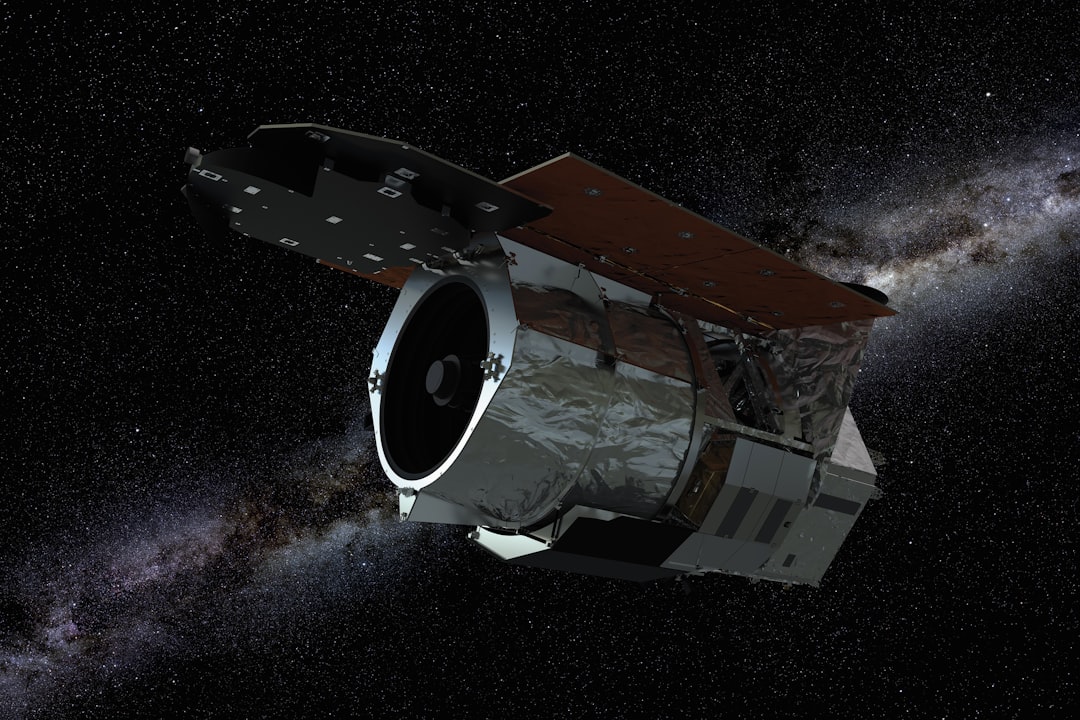
The Mira A system remains a high-priority target for astronomical observation. Upcoming facilities, including the James Webb Space Telescope's advanced infrared capabilities, promise even more detailed views of the expanding cloud and the star's inner envelope. These observations will help resolve key questions about the ejection mechanism and the frequency of such events.
Particular attention will focus on monitoring the interaction between the expanding cloud and Mira B, which could provide unique insights into how binary systems influence stellar mass loss. The team also plans to search for similar structures around other Mira variables, which would help determine whether such dramatic ejections represent common but previously undetected phenomena or truly exceptional events.
As Dr. Khouri and his colleagues continue their work, each new observation adds pieces to the puzzle of stellar evolution. The heart-shaped cloud around Mira A stands as a beautiful reminder that even in their death throes, stars continue to surprise us, revealing new facets of the cosmic processes that shape our universe and seed it with the elements necessary for planets, and ultimately, for life itself.