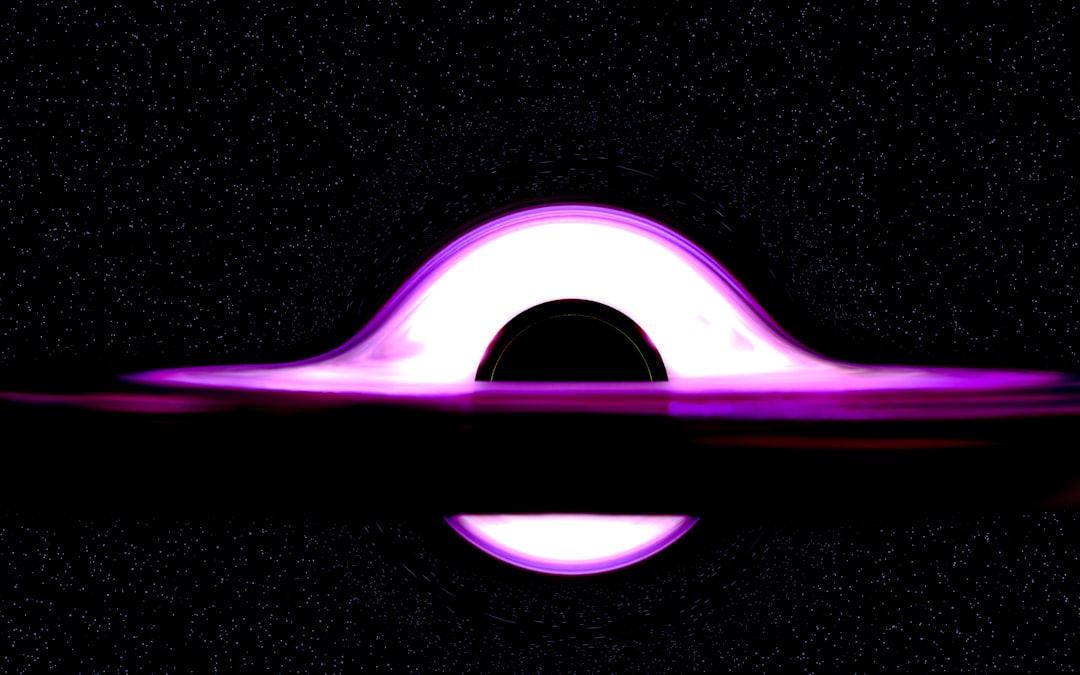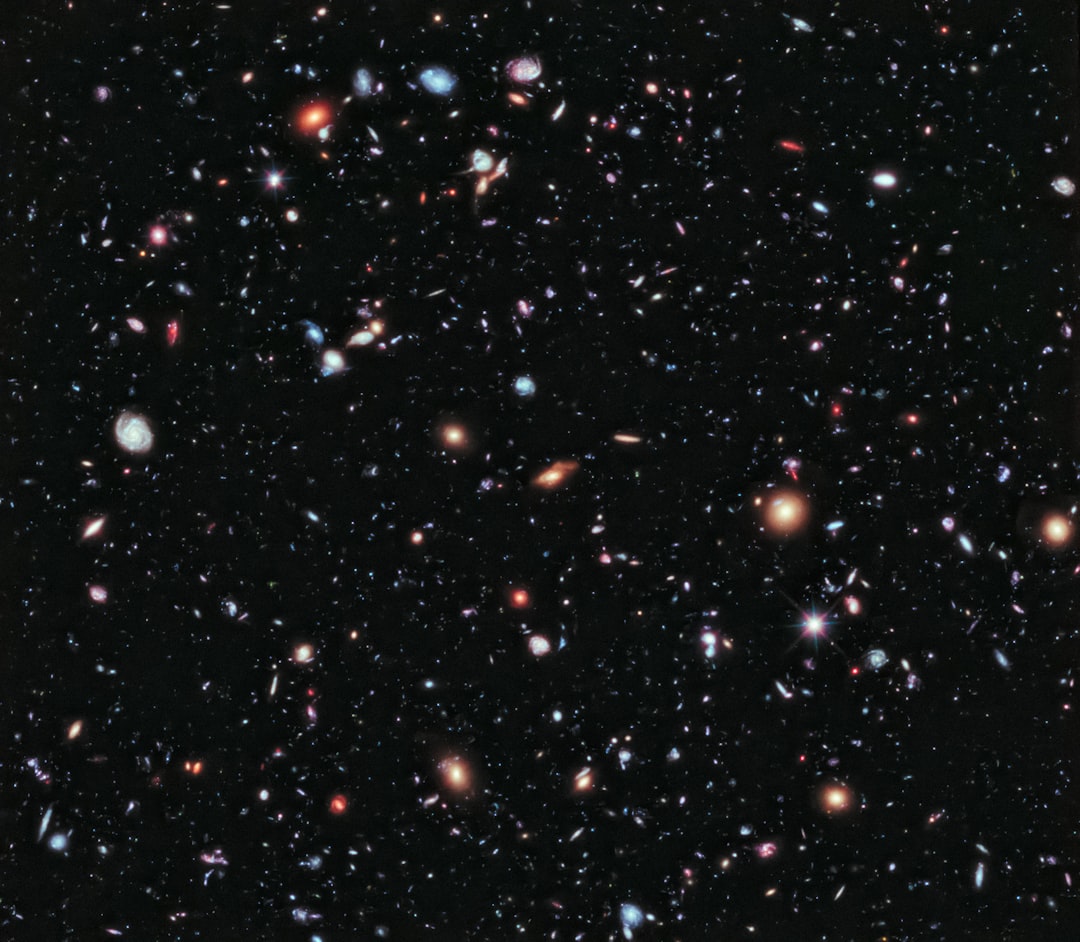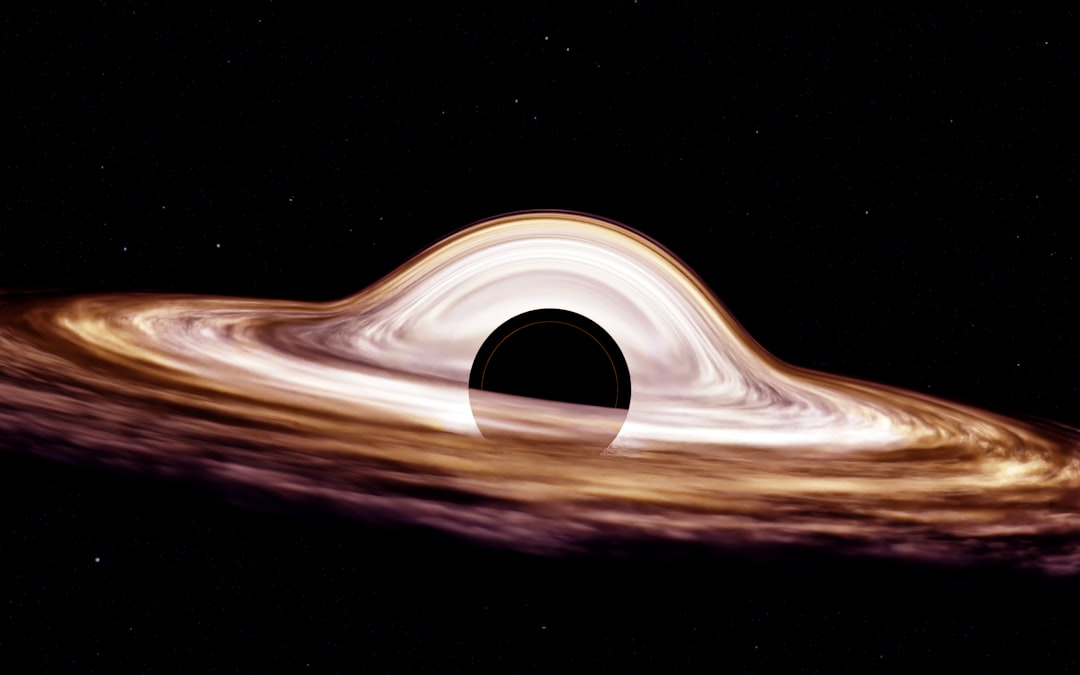
The cosmos continues to challenge our understanding of how the universe evolved during its infancy. Among the most perplexing enigmas facing modern astrophysics is the presence of supermassive black holes in the early universe—gravitational behemoths containing billions of solar masses that appeared when the cosmos was merely a fraction of its current age. These cosmic titans, discovered through observations by the James Webb Space Telescope and other advanced observatories, seemingly defy conventional theories about how black holes form and grow over time.
According to standard cosmological models, these primordial supermassive black holes simply shouldn't exist when they do. The timeline doesn't add up: there wasn't enough time in the early universe for black holes to accumulate the staggering amounts of matter needed to reach masses exceeding a billion times that of our Sun. Yet astronomical observations continue to reveal these massive objects lurking at the hearts of ancient galaxies, challenging our fundamental understanding of cosmic evolution. The Chandra X-Ray Observatory has detected them in distant quasars, while JWST has unveiled an unexpectedly large population of these early-forming giants.
Now, groundbreaking research from the University of California, Riverside suggests a revolutionary solution to this cosmic puzzle: decaying dark matter may have served as the catalyst that enabled these supermassive black holes to form so rapidly in the universe's youth. This innovative hypothesis bridges the gap between theoretical predictions and observational reality, potentially solving one of cosmology's most vexing mysteries while simultaneously offering new insights into the nature of dark matter itself.
The Dark Matter Connection: A New Paradigm for Black Hole Formation
The research team, led by graduate student Yash Aggarwal, proposes that dark matter particles played a far more active role in shaping the early universe than previously recognized. Their theoretical framework suggests that as dark matter decayed during the cosmos's formative epochs, it released small but significant amounts of energy into the primordial hydrogen gas clouds that pervaded the early universe. While each individual decay event might seem inconsequential—releasing energy equivalent to merely a billionth of a trillionth of a standard AA battery—the cumulative effect across vast clouds of dark matter could have been transformative.
"Our study suggests that decaying dark matter could profoundly reshape the evolution of the first stars and galaxies, with widespread effects across the Universe. With the James Webb Space Telescope now revealing more supermassive black holes in the early Universe, this mechanism may help bridge the gap between theory and observation," explained Aggarwal.
This energy injection would have fundamentally altered the thermochemical properties of primordial gas clouds, creating conditions conducive to the formation of what astrophysicists call "seed" black holes. These seeds could then rapidly accrete surrounding matter, growing into the supermassive black holes we observe today. The mechanism offers an elegant explanation for how these cosmic giants could have achieved their enormous masses within the limited timeframe available in the early universe.
Axions and the Chemistry of Primordial Hydrogen
To investigate this hypothesis rigorously, the research team developed sophisticated computer simulations modeling the behavior of primordial hydrogen gas in the presence of decaying axions—hypothetical subatomic particles that represent one of the leading candidates for dark matter. Axions have been proposed as a solution to the dark matter mystery for over four decades, and this new research suggests they may have played multiple crucial roles in cosmic evolution.
According to Professor Flip Tanedo, Aggarwal's advisor and a key collaborator on the project, the early universe provided ideal conditions for detecting the subtle effects of dark matter decay. "The first galaxies are essentially balls of pristine hydrogen gas whose chemistry is incredibly sensitive to atomic-scale energy injection," Tanedo explained. "These are the properties that we want for a dark matter detector—the signature of these 'detectors' might be the supermassive black holes that we see today."
The team's models revealed a specific window of dark matter particle masses—between 24 and 27 electronvolts—that could optimally influence the formation of direct collapse black holes. This precision in the modeling demonstrates the sophisticated interplay between particle physics and astrophysics required to understand cosmic evolution.
The Direct Collapse Mechanism: Fast-Tracking Black Hole Growth
Traditional black hole formation follows a well-understood pathway: massive stars exhaust their nuclear fuel, undergo catastrophic supernova explosions, and leave behind stellar-mass black holes as remnants. These stellar black holes then gradually accumulate mass over billions of years through accretion and mergers. However, this conventional process cannot explain the existence of billion-solar-mass black holes appearing just a few hundred million years after the Big Bang—there simply isn't enough time.
The direct collapse black hole scenario offers an alternative pathway. In this model, massive clouds of primordial hydrogen gas—untainted by heavier elements produced in stellar fusion—collapse directly into black holes without first forming stars. This process bypasses the stellar evolution stage entirely, creating "seed" black holes with initial masses potentially thousands of times greater than those produced through stellar collapse. These more massive seeds could then rapidly grow into supermassive black holes through efficient accretion of surrounding gas.
The challenge has always been explaining what conditions would trigger such direct collapse events. The UCR team's research suggests that decaying dark matter provided precisely the right environmental conditions to make these events not just possible, but probable during the universe's first few hundred million years.
Interdisciplinary Collaboration: Bridging Particle Physics and Cosmology
This breakthrough emerged from an innovative series of workshops that brought together experts from traditionally separate fields—particle physicists and astrophysicists—to tackle cosmology's most pressing questions with fresh perspectives. The collaboration between James Dent of Sam Houston State University and Tao Xu of the University of Oklahoma, alongside the UCR team, exemplifies the power of interdisciplinary research in modern science.
The researchers modeled the thermo-chemical dynamics of primordial gas with unprecedented detail, tracking how energy from decaying axions would affect temperature distributions, chemical reaction rates, and gravitational collapse thresholds. Their simulations revealed that the right dark matter environment could dramatically increase the probability of direct collapse events, transforming what seemed like an unlikely cosmic coincidence into an expected outcome.
"We showed that the right dark matter environment can help make the 'coincidence' of direct collapse black holes much more likely. In the same way, the support for interdisciplinary work helped make the 'coincidence' leading to this work possible," noted Tanedo.
Observational Implications and Future Research Directions
The implications of this research extend far beyond solving a single cosmic puzzle. If confirmed, this mechanism would provide crucial constraints on the nature of dark matter itself—one of physics' most fundamental unsolved problems. The specific mass range and decay properties required to produce the observed population of early supermassive black holes could help narrow the search for dark matter particles in laboratory experiments and astronomical observations.
Future observations with JWST and next-generation telescopes like the Extremely Large Telescope will be crucial for testing this hypothesis. Key observational predictions include:
- Population statistics: The theory predicts specific distributions of supermassive black hole masses and formation times that can be compared against observational surveys
- Environmental correlations: Direct collapse black holes should preferentially form in regions with higher dark matter densities, creating testable spatial patterns
- Chemical signatures: The energy injection from decaying dark matter should leave distinctive imprints in the chemical composition of gas surrounding these early black holes
- Redshift distribution: The timing of dark matter decay should produce characteristic patterns in when these black holes appear throughout cosmic history
Unresolved Questions and Ongoing Challenges
While this research represents a significant advance, numerous questions remain unanswered. The precise decay mechanism for dark matter particles requires further theoretical development, and the interaction between dark matter decay products and baryonic matter needs more detailed modeling. Additionally, alternative explanations for early supermassive black holes—including scenarios involving primordial black holes formed directly after the Big Bang or exotic accretion mechanisms—must be carefully evaluated and compared.
The research team acknowledges that their work opens as many questions as it answers. What triggers the decay of dark matter particles? Why would decay rates be particularly significant during the universe's first few hundred million years? How do we reconcile this mechanism with other constraints on dark matter properties from particle physics experiments and cosmological observations?
A New Window into the Universe's Infancy
This groundbreaking research demonstrates how studying supermassive black holes in the early universe can serve as a powerful probe of fundamental physics. The pristine conditions of the infant cosmos—before stellar nucleosynthesis had enriched the universe with heavy elements—created an exquisitely sensitive laboratory for detecting the subtle effects of dark matter decay. In essence, the first galaxies may have functioned as cosmic-scale dark matter detectors, with supermassive black holes as their readout mechanism.
The convergence of cutting-edge observational capabilities, sophisticated theoretical modeling, and interdisciplinary collaboration has positioned the astronomical community to potentially solve multiple cosmic mysteries simultaneously. As JWST continues to peer deeper into cosmic history, revealing ever more distant and ancient supermassive black holes, each discovery provides new data to test and refine this innovative theoretical framework.
The ultimate resolution of the early supermassive black hole puzzle may fundamentally transform our understanding not just of how galaxies evolved, but of the very nature of the dark matter that comprises 85% of the universe's matter content. By studying the largest structures in the cosmos—supermassive black holes—we may finally illuminate the properties of the universe's most elusive constituent, bringing us closer to a complete picture of cosmic evolution from the Big Bang to the present day.