In a groundbreaking astronomical observation, scientists have witnessed a supermassive black hole exhibiting behavior remarkably similar to our Sun's most violent eruptions. Located at the heart of the galaxy" class="glossary-term-link" title="Learn more about Barred Spiral Galaxy">barred spiral galaxy NGC 3783, approximately 135 million light-years from Earth, this cosmic behemoth has produced an ultrafast outflow of material traveling at an astonishing 60,000 kilometers per second—roughly 20% the speed of light. This discovery, made possible through coordinated observations by the XRISM and XMM-Newton X-ray space telescopes, represents the first time astronomers have observed the rapid formation of such powerful winds in real-time, challenging our understanding of how supermassive black holes interact with their surrounding environments.
What makes this discovery particularly fascinating is the mechanism driving these extreme ejections. Rather than being powered by the gravitational forces typically associated with black holes, these ultrafast outflows appear to be generated by magnetic processes strikingly similar to the coronal mass ejections our Sun regularly produces. However, the scale is almost incomprehensible—this single event released approximately 10 billion times more energy than a typical solar eruption, highlighting the immense power wielded by these galactic titans.
Understanding Active Galactic Nuclei and Their Extreme Environments
To appreciate the significance of this discovery, we must first understand the nature of active galactic nuclei (AGN). At the center of NGC 3783, classified as a Seyfert galaxy due to its exceptionally bright core, lurks a supermassive black hole with an estimated mass of 30 million times that of our Sun. When such massive black holes actively consume surrounding matter, they become what astronomers call AGN, creating some of the most energetic phenomena in the universe.
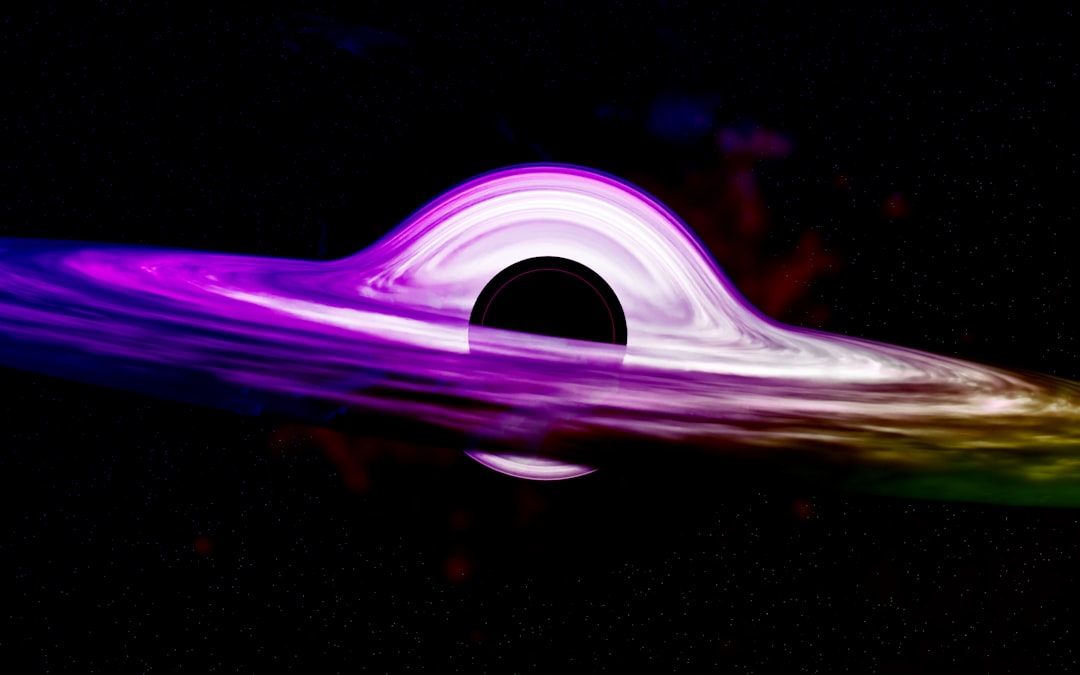
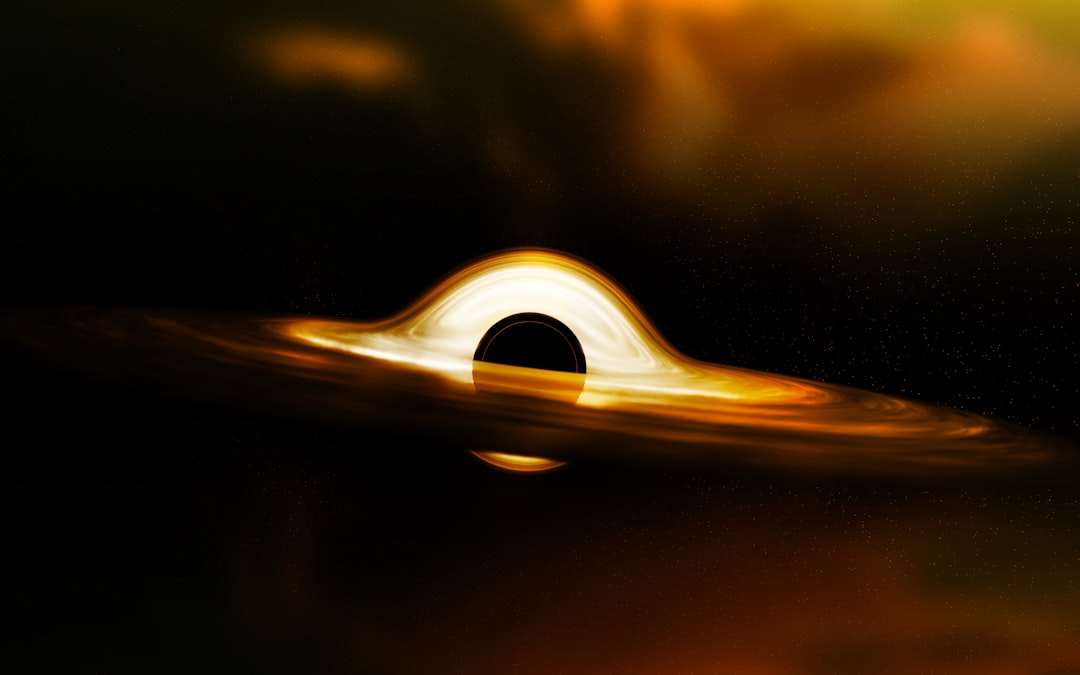
As material spirals inward toward the black hole, it forms an accretion disk—a swirling maelstrom of superheated gas and plasma. The immense gravitational and frictional forces within this disk heat the material to millions of degrees, causing it to emit radiation across the entire electromagnetic spectrum, from radio waves to gamma rays. The Hubble Space Telescope's recent imaging of NGC 3783 beautifully captures this galaxy's face-on orientation, revealing its elegant spiral arms and the intensely luminous core where this cosmic drama unfolds.
Recent research published in Astronomy and Astrophysics by lead author Liyi Gu from the Space Research Organisation Netherlands (SRON) and colleagues has now added a crucial new chapter to our understanding of these extreme environments. Over a ten-day observation period, the team meticulously tracked variations in X-ray emissions from the AGN, documenting not just the typical brightness fluctuations associated with black hole activity, but something far more unexpected.
The Discovery: Real-Time Formation of Ultrafast Winds
"We've not watched a black hole create winds this speedily before. For the first time, we've seen how a rapid burst of X-ray light from a black hole immediately triggers ultra-fast winds, with these winds forming in just a single day."
This statement from lead researcher Liyi Gu encapsulates the revolutionary nature of the observation. The team detected a simultaneous gas ejection from the accretion disk that coincided with intense X-ray flaring activity. The expelled material achieved velocities of 60,000 kilometers per second, earning it the classification of an ultrafast outflow (UFO)—a term reserved for the most extreme wind phenomena associated with supermassive black holes.
What sets this discovery apart is the timing. Previous observations had detected evidence of such outflows after the fact, but this marked the first instance where astronomers could observe the birth and development of an UFO in real-time. The coordinated capabilities of XRISM and XMM-Newton proved crucial: XMM-Newton initially detected the flare, while XRISM's advanced spectroscopic instruments dissected the wind's velocity structure and composition with unprecedented detail.
Magnetic Reconnection: The Solar Connection
Perhaps the most surprising aspect of this discovery is the mechanism believed to power these ultrafast outflows. Rather than being driven purely by the black hole's gravitational influence or radiation pressure, the evidence points to magnetic reconnection as the primary driver—the same process responsible for solar flares and coronal mass ejections on our Sun.
In magnetic reconnection, tangled magnetic field lines suddenly snap and reconfigure into a lower-energy state. This rapid rearrangement converts stored magnetic energy into kinetic energy and heat, accelerating charged particles to extreme velocities. On the Sun, this process can launch billions of tons of plasma into space at speeds of 1,500 kilometers per second. At NGC 3783's supermassive black hole, the same fundamental physics operates on a scale almost beyond comprehension, accelerating material to forty times the velocity of typical solar eruptions.
ESA XRISM Project Scientist Matteo Guainazzi, a co-author of the study, elaborated on this connection: "The winds around this black hole seem to have been created as the AGN's tangled magnetic field suddenly 'untwisted'—similar to the flares that erupt from the Sun, but on a scale almost too big to imagine."
Detailed Analysis of the Flare Structure and Evolution
The research team's meticulous analysis revealed a complex, multi-phase event rather than a simple singular eruption. By dividing the primary flare into five distinct temporal periods and carefully plotting the X-ray variability throughout, the scientists were able to trace the evolution of this cosmic outburst with remarkable precision.
The data indicated that the ultrafast outflow originated from a region located approximately 50 times the Schwarzschild radius of the black hole—the boundary that defines the event horizon. This places the ejection source in an extreme environment where the black hole's gravitational field remains immensely powerful, yet magnetic forces can still dominate the dynamics of the surrounding plasma.
Intriguingly, the observations revealed that this wasn't an isolated phenomenon. A secondary outflow with a velocity of approximately 3,700 kilometers per second was detected coinciding with the primary ultrafast outflow. The researchers suggest that the entire event may have been part of a broader outburst lasting approximately three days, with multiple smaller flares accompanying the main eruption. This complex structure hints at the intricate interplay of forces at work in the immediate vicinity of supermassive black holes.
Black Hole Feedback and Galaxy Evolution
This discovery carries profound implications that extend far beyond the immediate excitement of observing such an extreme event. Black hole feedback—the process by which supermassive black holes influence their host galaxies through jets, winds, and radiation—represents one of the most important unsolved problems in modern astrophysics.
Understanding the mechanisms that drive these outflows is crucial for explaining how galaxies evolve over cosmic time. When supermassive black holes launch powerful winds into their host galaxies, they can heat the surrounding gas to temperatures that prevent it from cooling and collapsing to form new stars. In some cases, these winds can completely expel star-forming material from the galaxy, effectively shutting down future stellar birth. Conversely, the shockwaves from AGN outbursts can sometimes compress gas clouds, actually triggering enhanced star formation in localized regions.
The key question that has puzzled astrophysicists is what controls this feedback—what determines when it turns on or off, and what governs its intensity. The discovery that magnetic reconnection can rapidly trigger ultrafast outflows provides a crucial piece of this puzzle.
"Windy AGNs also play a big role in how their host galaxies evolve over time, and how they form new stars. Because they're so influential, knowing more about the magnetism of AGNs, and how they whip up winds such as these, is key to understanding the history of galaxies throughout the Universe."
This insight from team member Camille Diez, an ESA Research Fellow, underscores the broader significance of the research. If magnetic activity similar to solar processes operates in AGN environments, it suggests that the feedback mechanisms may be more variable and episodic than previously thought, potentially switching on and off on timescales of days rather than millions of years.
Technological Synergy: XRISM and XMM-Newton's Complementary Capabilities
The success of this observation highlights the power of coordinated multi-telescope campaigns in modern astronomy. XMM-Newton, launched by the European Space Agency in 1999, has spent more than two decades studying X-ray sources across the universe with exceptional sensitivity. Its large collecting area makes it ideal for detecting faint signals and tracking brightness variations over time.
XRISM (X-Ray Imaging and Spectroscopy Mission), a joint project of JAXA, NASA, and ESA launched in 2023, brings cutting-edge spectroscopic capabilities to X-ray astronomy. Its Resolve instrument can measure X-ray energies with unprecedented precision, allowing astronomers to determine the velocities, temperatures, and chemical compositions of hot plasmas with extraordinary accuracy. Together, these two observatories provided complementary views of the NGC 3783 event: XMM-Newton tracked the overall flare evolution, while XRISM dissected the detailed physics of the resulting winds.
ESA XMM-Newton Project Scientist Erik Kuulkers captured the excitement of this synergy: "By zeroing in on an active supermassive black hole, the two telescopes have found something we've not seen before: rapid, ultra-fast, flare-triggered winds reminiscent of those that form at the Sun. Excitingly, this suggests that solar and high-energy physics may work in surprisingly familiar ways throughout the Universe."
Implications and Future Directions
This discovery opens numerous avenues for future research and raises several compelling questions. First, how common are these magnetically-driven ultrafast outflows? Are they a regular feature of AGN activity that has simply gone undetected due to observational limitations, or does NGC 3783 represent a special case?
The research also suggests intriguing connections between different scales of astrophysical phenomena. The fact that magnetic reconnection—a process we can study in detail on our Sun and even reproduce in laboratory plasma experiments—operates in the extreme environment just outside a supermassive black hole's event horizon is remarkable. It hints at universal physical principles that govern plasma behavior across vastly different scales and conditions.
Future observations with XRISM, XMM-Newton, and other X-ray observatories will undoubtedly target additional AGN to determine whether similar ultrafast outflow events can be detected elsewhere. Statistical studies of these phenomena will help astronomers understand their frequency, typical energetics, and impact on galaxy evolution. Additionally, theoretical work using advanced computer simulations will be crucial for modeling the complex magnetohydrodynamic processes at work in these extreme environments.
Key Takeaways from This Research
- First real-time observation: Astronomers witnessed the formation of an ultrafast outflow from a supermassive black hole within a single day, providing unprecedented insights into the timing and mechanisms of these events
- Solar-like processes at cosmic scales: Magnetic reconnection, the same process driving solar flares and coronal mass ejections, appears to operate in AGN environments but with energies 10 billion times greater
- Extreme velocities: The observed gas ejection traveled at 60,000 km/s (20% the speed of light), representing some of the fastest material ever detected from an AGN accretion disk
- Complex multi-phase event: The outburst consisted of multiple flares over approximately three days, with both primary ultrafast winds and secondary slower outflows detected simultaneously
- Galaxy evolution implications: Understanding these magnetically-driven feedback mechanisms is crucial for explaining how supermassive black holes regulate star formation in their host galaxies throughout cosmic history
A New Window on Black Hole Physics
The observation of this ultrafast outflow from NGC 3783 represents more than just an isolated discovery—it opens a new window on the physics of supermassive black holes and their interaction with surrounding matter. By revealing that magnetic processes similar to those on our Sun can operate in these extreme environments, this research bridges the gap between solar physics and high-energy astrophysics in unexpected ways.
As X-ray astronomy continues to advance with missions like XRISM and the continued operation of veteran observatories like XMM-Newton, astronomers will undoubtedly uncover more surprises about how black holes shape the evolution of galaxies across cosmic time. The universe, it seems, has a tendency to use similar physical processes across vastly different scales—from the surface of our modest yellow dwarf star to the vicinity of supermassive black holes millions of times more massive. This fundamental unity of physical law, operating across such diverse environments, remains one of the most profound and beautiful aspects of modern astrophysics.
The research team's findings, published in Astronomy and Astrophysics, will undoubtedly inspire follow-up observations and theoretical investigations for years to come. As we continue to probe the extreme environments surrounding supermassive black holes, each new discovery brings us closer to understanding the intricate cosmic dance between gravity, magnetism, and matter that shapes the universe we observe today.