New Research Suggests Earth and Theia were Neighbors Before Cataclysmic Collision
In a groundbreaking study published in the journal Science, researchers from the Max Planck Institute for Solar System Research (MPS) have shed new light on the origins of Earth's moon. By analyzing the ratios of iron isotopes in lunar rocks returned by Apollo astronauts and comparing them to terrestrial samples, the team has determined that the Mars-sized object Theia, which collided with Earth 4.5 billion years ago, likely originated in the inner Solar System as a "neighbor" to our planet.
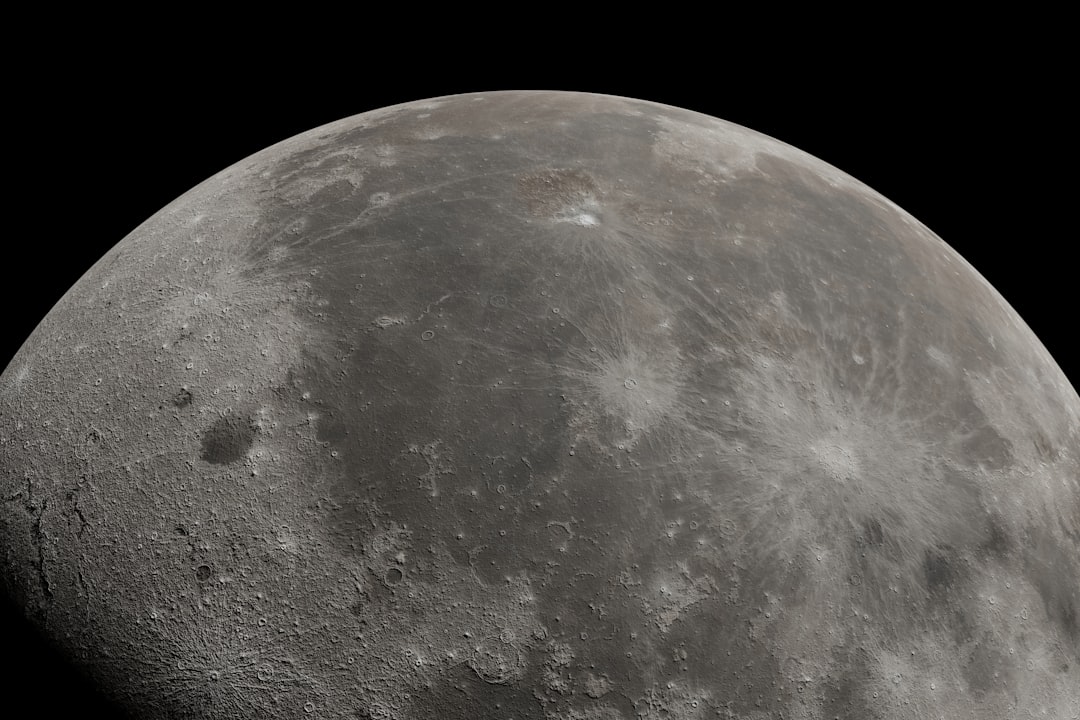
The Giant Impact Hypothesis, the leading theory of how the Earth-Moon system formed, posits that the collision between Theia and a proto-Earth turned both objects into molten lava, which eventually cooled and coalesced to form the Earth and Moon we know today. Over billions of years, the Moon migrated outward to its current tidally locked orbit, with one side permanently facing Earth.
"The most convincing scenario is that most of the building blocks of Earth and Theia originated in the inner Solar System," said lead author Timo Hopp, a geoscientist and Lab Manager with the MPS and the University of Chicago. "Earth and Theia are likely to have been neighbors."
Tracing Theia's Origins through Isotope Analysis
To determine Theia's origins, the research team examined the ratios of iron isotopes in 15 terrestrial rocks and 6 lunar samples returned by the Apollo missions. They compared these ratios to each other and to several meteorites, which represent leftover material from the Solar System's formation. Different classes of meteorites formed in different regions of the early Solar System, providing clues about the building materials available at that time.
The team's analysis revealed that Earth and the Moon have indistinguishable mass-independent iron-isotopic compositions, supporting earlier isotope-ratio measurements for elements such as chromium, calcium, titanium, and zirconium. This similarity suggests that Earth and Theia likely formed from the same pool of materials in the inner Solar System.
Constraining Collision Scenarios through Mass-Balance Calculations
Using mass-balance calculations of unprecedented accuracy, the researchers considered various scenarios based on different compositions and sizes of proto-Earth and Theia. While most models contend that the Moon formed almost entirely from Theia's material, it's also possible that it's mainly composed of the proto-Earth's mantle or that the materials from both bodies mixed to the point of becoming inseparable.
The team's results allowed them to constrain the possible collision scenarios and get a clearer picture of the planets and the impact event that shaped the Earth-Moon system we see today. Co-author Nicolas Dauphas of the University of Chicago and the University of Hong Kong explained:
"These elements have different affinities for metal and therefore partition into planetary mantles in different proportions; this is why gold is so rare and precious! They give us access to different phases of planetary formation."
Implications for the Early Solar System
The study's findings provide additional clues about the nature of the early Solar System. Between the Giant Impact that created the Earth-Moon system, the Late Heavy Bombardment, and the migration of objects from the outer Solar System causing collisions along the way, it's clear that our cosmic neighborhood was a violent and dynamic place billions of years ago.
Yet, it was from this destruction and recombination that our planet and its only natural satellite emerged, eventually giving rise to life as we know it. As Pablo Picasso famously said, "Every act of creation is first an act of destruction" - a sentiment that rings true for the tumultuous birth of the Earth-Moon system.
Future Directions and Ongoing Research
While this study provides compelling evidence for Theia's inner Solar System origins, many questions remain about the exact nature of the collision and the distribution of materials between Earth and the Moon. Future missions, such as ESA's planned lunar exploration, may help to refine our understanding by returning additional samples and data.
As scientists continue to piece together the puzzle of our planet's origins, studies like this one demonstrate the power of combining cutting-edge analytical techniques with samples collected decades ago. By unraveling the secrets locked within ancient rocks, we can gain a clearer picture of the dramatic events that shaped our world and paved the way for the emergence of life.